
What Are Hydroponic Strawberries? How They Are Grown
Strawberries grown in nutrient solution rather than soil, usually in towers or gutters. What the method changes, what it costs, and whether taste suffers.
 By

On this page
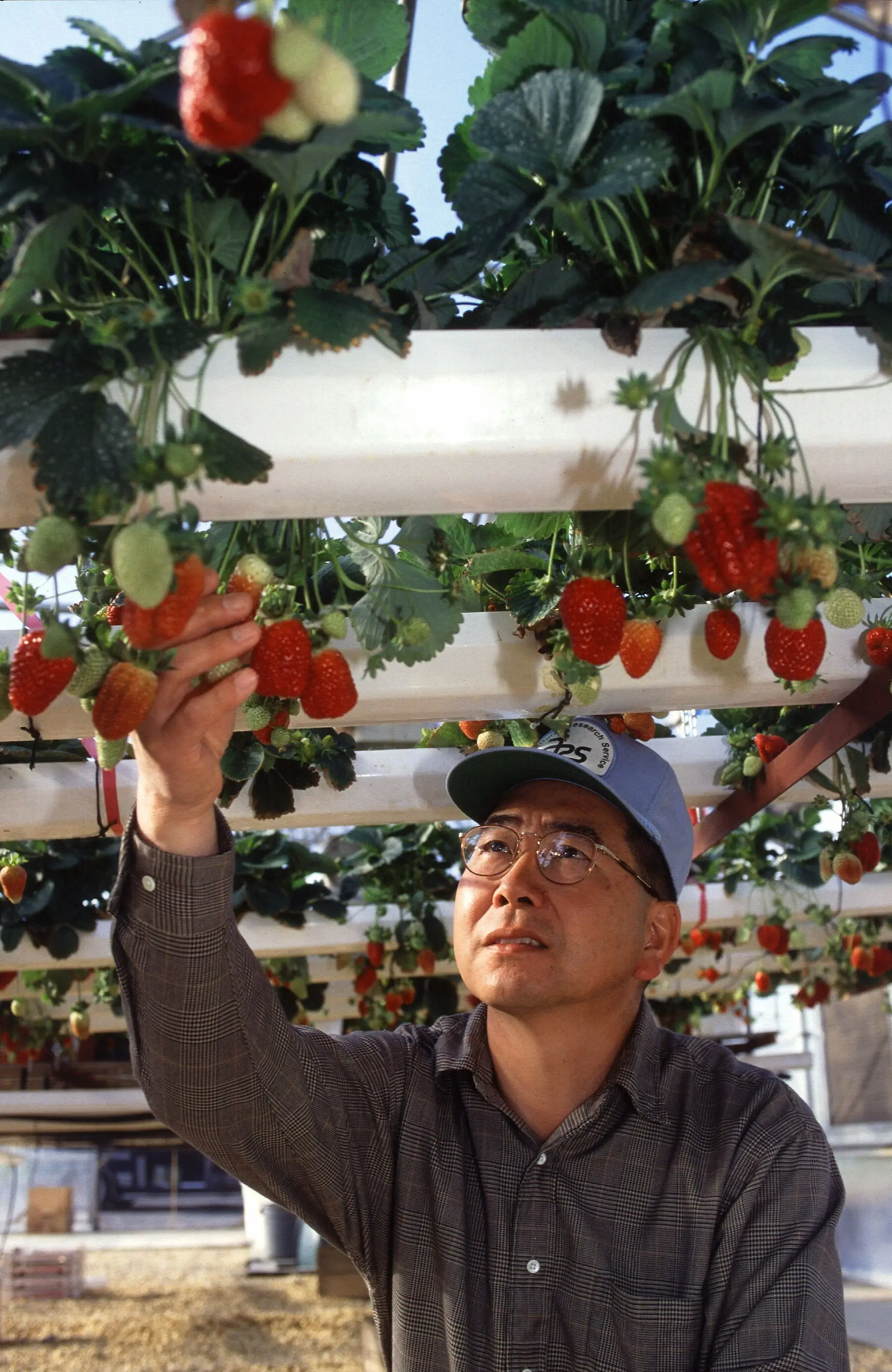
Hydroponic strawberries are ordinary strawberry plants with their roots in nutrient solution instead of soil, usually held in an inert medium and grown in raised gutters or vertical towers. The plant does not change. What changes is the root environment, and everything else follows from that.
Why strawberries in particular
Strawberries turn up in hydroponic systems more than almost any other fruit, for reasons specific to the crop:
- Shallow roots. They do not need depth, so a shallow gutter or a tower pocket suits them.
- The fruit touches the ground in soil, which is where rot, slugs and grit come from. Raise it and the problem disappears.
- Vertical stacking works, because the plants are small. A tower puts twenty plants in the footprint of one.
- High value per square foot, which is what makes it pay commercially.
- Picking at waist height rather than on your knees.
The systems
| System | How it works | Suits strawberries? |
|---|---|---|
| Vertical tower | Stacked pockets, solution dripped from the top | Very well — the classic home setup |
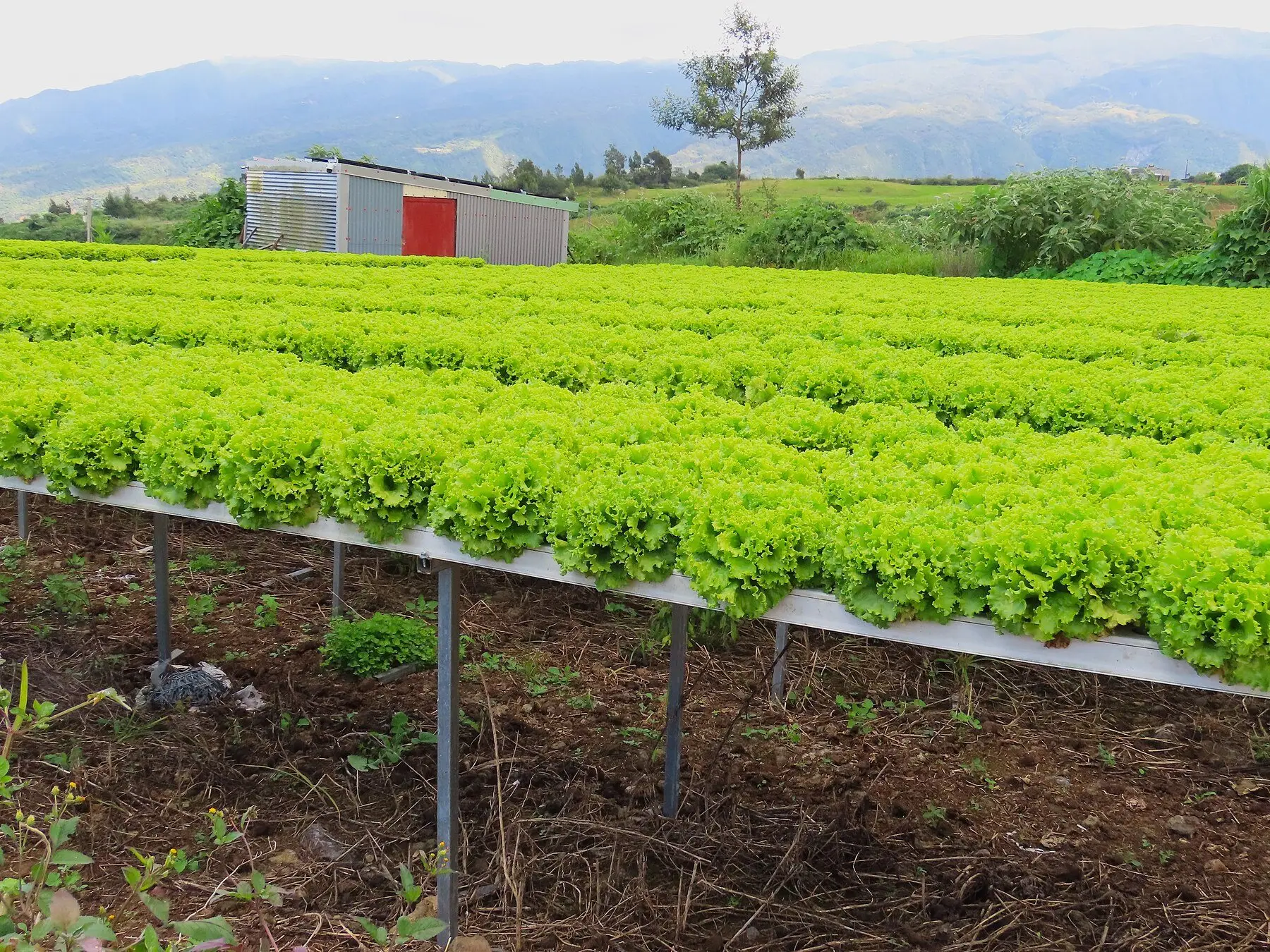
| Horizontal gutters (drip) | Raised troughs of coir, drip line per plant | Very well — the commercial standard |
| Nutrient film technique (NFT) | Thin film of solution over bare roots | Works, but unforgiving of pump failure |
| Deep water culture | Roots suspended in aerated solution | Poorly — strawberries hate sitting wet |
| Ebb and flow | Periodic flood and drain | Workable, middling |
Drip into a free-draining medium is the answer for most people. Strawberry roots want moisture and air at the same time, and coco coir holds that balance better than anything else at this scale.
What the plant needs
- Medium: coco coir, or a coir–perlite mix. Rockwool works and is common commercially.
- Light: 8–12 hours of strong light. Outdoors this is free; indoors it is the largest running cost and the main determinant of whether the fruit tastes of anything.
- Nutrient solution at EC around 1.2–1.8 and pH 5.5–6.5, shifting toward more potassium once flowering starts.
- Temperature: 60–75°F. Strawberries drop flowers above about 85°F, which is the usual reason a summer system stops producing.
- Air movement, for pollination and to keep botrytis down.
Start from runners or plugs, not seed
Seed-grown strawberries are slow and do not come true to type, so a packet of seed is a year of work for unpredictable fruit. Buy cold-stored runners or plugs of a named variety. Day-neutral types such as Albion and Seascape are the usual pick, because they fruit continuously rather than in a single flush — which is the point of a controlled system.
Pollination is the part people miss
Strawberry flowers are self-fertile, but the pollen still has to physically move across the flower face. Outdoors, insects and wind do it without you noticing.
Indoors, nothing does — and under-pollinated flowers produce small, lumpy, misshapen berries. That is the single most common complaint about indoor hydroponic strawberries, and it is not a nutrient problem.
Fixes, in order of effort:
- A fan providing constant gentle air movement. Easiest, and it also suppresses fungal disease.
- A soft brush over each open flower every two days. Tedious but reliable.
- Bumblebee colonies, which is what commercial glasshouses do and which is not a home option.
Does the taste suffer?
Not inherently. Flavour comes from sugars and volatile aroma compounds that develop in the final days of ripening, and those depend on:
- Variety. Some are bred for shelf life and yield, not flavour, and no growing method rescues that.
- Light. Sugars need photosynthesis. A dim indoor system gives watery fruit.
- Ripeness at picking. A berry picked fully red and warm beats one picked pale for transport, every time.
A well-run home system picking fully ripe fruit beats a supermarket punnet comfortably. The reputation hydroponic strawberries have comes from the commercial end of the trade optimising for the wrong things.
The honest economics
| Hydroponic | Soil raised bed | |
|---|---|---|
| Setup cost | Higher — tower, pump, reservoir, nutrients | Lower |
| Running cost | Power, nutrients, medium replacement | Almost nothing |
| Weeding | None | Regular |
| Slug and rot losses | Very low | Significant |
| Footprint | Small, vertical | Larger |
| Failure mode | Pump or power failure kills plants in a day | Slow and forgiving |
| Fruit cleanliness | Excellent | Needs washing |
Worth it if you have no usable soil, a balcony or patio, or you want clean fruit at picking height. Not worth it as a way to grow a lot of strawberries cheaply — soil still wins that comparison, and it does not stop working when the power goes off.
The failure mode is fast
A soil bed forgives a week of neglect. A hydroponic tower with a failed pump can lose the plants in a hot afternoon. If you go this route, plan for the pump failing: a simple low-level alarm, or a medium with enough water-holding capacity to buy you a day.
Common questions
What are hydroponic strawberries?
Do hydroponic strawberries taste as good?
What system is best for hydroponic strawberries?
How long do hydroponic strawberries take to fruit?
Do hydroponic strawberries need pollinating by hand?
Is growing strawberries hydroponically worth it?
Backyard Weekly
Know what to plant, week by week
Join the weekly email for seasonal jobs, fixes for what is going wrong, and gear worth buying.
Not ready to subscribe? The planting calendar is free and needs no email.
By subscribing you agree to our privacy policy. Grow In Backyard will never sell your address.
Keep reading
Deep Water Culture: The Simplest Hydroponic System
Roots sit in aerated nutrient solution and grow fast — until the pump stops. How DWC works, the numbers to hold, and why root rot is its one real failure mode.
How to Grow Strawberries (And Get Fruit the First Year)
Strawberries are easy to grow and easy to get wrong. Which of the three types to plant, why you pinch the first flowers, and how to keep a bed producing.
How to Grow Watermelon: Heat, Space, and Knowing When
Watermelon needs 70 to 100 warm days and more room than people give it. The three ripeness signs that work, and why thumping mostly does not.
Is Hydroponics Better Than Soil? An Honest Comparison
Hydroponics wins on yield, speed, water use and footprint. Soil wins on cost, resilience and flavour risk. Which one is right depends on what you lack.