Tradescantia Zebrina Care: Light, Pinching, and Legginess
The stripes fade and the stems go bare in low light, and no amount of feeding fixes it. What this plant needs, and how to rebuild one that has gone straggly.

On this page
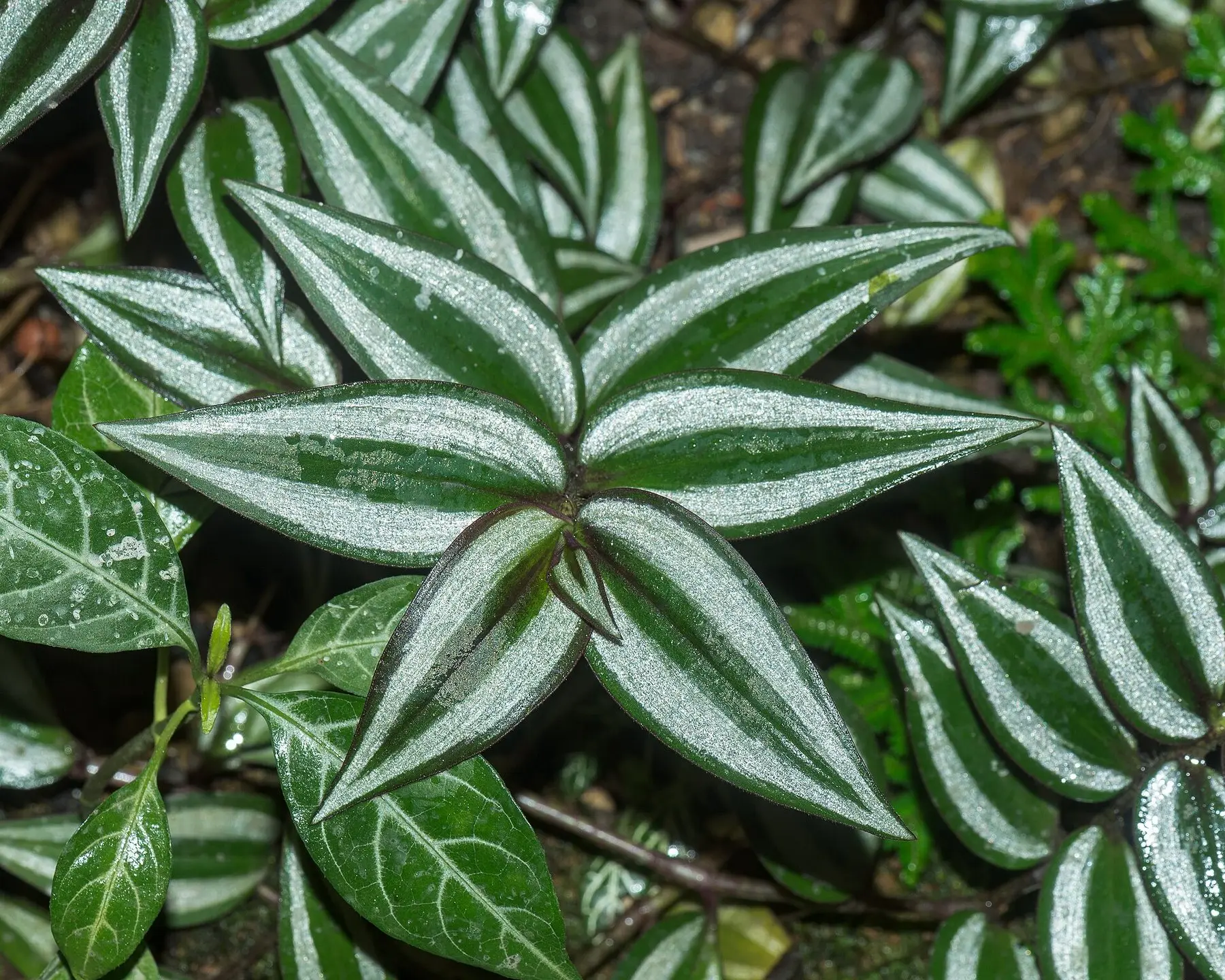
Tradescantia zebrina is one of the easiest houseplants to keep alive and one of the easiest to let become ugly — long bare stems with a tuft of faded leaves at the end.
Both outcomes come from the same variable. Light controls the colour and the spacing between leaves, and nothing else you do compensates for getting it wrong.
A note on the name
This plant has long been sold under a common name referencing a medieval legend, which many growers and nurseries now avoid. It is properly Tradescantia zebrina, and is also sold as inch plant, silver inch plant, or wandering dude. All refer to the same plant, and the botanical name is the one that is never ambiguous.
Light is the whole plant
The silver bands and deep purple undersides are a response to light. In a dim corner the plant does not die — it fades toward plain green and stretches, putting more and more stem between each pair of leaves.
- Bright indirect light. An east-facing window, or a few feet back from a south or west one.
- Some direct morning sun intensifies the purple and is fine.
- Harsh midday sun scorches and bleaches the leaves.
Faded leaves do not recolour when you move the plant. New growth does, so a move plus a cut back gets you a coloured plant within a couple of months.
Legginess is a light problem, not an age problem
Long bare stems are the plant reaching for light. People commonly respond by feeding it, which produces more of the same weak growth. The fix is more light plus hard pruning — and pinching from the start, before it stretches.
Water
Tradescantia stems are semi-succulent and store water, so the plant handles a missed watering far better than a wet pot.
- Water when the top inch of compost is dry. Roughly weekly in summer, every ten to fourteen days in winter.
- Water thoroughly, then let it drain completely. Never leave it standing in a saucer.
- Overwatering shows as mushy blackening stems at soil level — often fatal by the time it is visible.
- Underwatering shows as limp, crisping leaves, and the plant usually recovers within hours of a drink.
Persistently damp compost also invites fungus gnats, which is a reliable sign you are watering too often.
Everything else it needs
Compost: ordinary potting mix with added perlite for drainage. See potting soil.
Pot: modest sized, with drainage. A hanging pot or a shelf edge suits the trailing habit and keeps the sap away from pets.
Temperature: 60–80°F. Keep it above 50°F and away from cold draughts.
Humidity: average room humidity is fine. Higher is better; it is not fussy.
Feed: a balanced liquid feed monthly through spring and summer, at half strength. Stop in winter. Overfeeding produces soft, pale, stretched growth — the same look as insufficient light.
Pinching, constantly
This is the difference between a full plant and a few long strings.
Pinch out the growing tip of every stem, regularly, from the moment the plant is established. Each pinch forces the plant to branch from the nodes below.
Do it whenever a stem is getting longer than you want. There is no season for it and no limit — the plant responds to it all year.
Renewing a leggy plant
Once it has gone bare at the base, trimming the tips will not fill it back in. Rebuild it:
- Cut every stem back to two or three inches from the compost.
- Keep the cuttings. Trim each to about 4 inches, cutting just below a node, and strip the lowest leaves.
- Root them — in water on a windowsill, or pushed directly into moist compost. One to two weeks.
- Plant several rooted cuttings back into the parent pot, around the cut-back stems.
You get a dense, full plant in a couple of months, and the old base reshoots at the same time.
Propagation, and why it is the maintenance plan
Cuttings root almost without fail. A stem cut below a node, in water or compost, roots in one to two weeks.
This matters because Tradescantia declines after two or three years regardless of care — the base gets woody and the plant thins out. Nobody keeps a specimen going for a decade.
So the routine is: take cuttings before you need them, start a fresh pot each year or two, and treat the old one as expendable. That is not a failure of care; it is how the plant is grown.
Problems
Brown crispy leaf tips — dry air, underwatering, or salt build-up from tap water. Flush the pot through occasionally.
Mushy black stems at the base — overwatering. Take healthy cuttings from the tips immediately and start again; the parent usually cannot be saved.
Fine webbing and stippling — spider mite, from hot dry air. Rinse the foliage and raise humidity.
Small flies from the compost — fungus gnats, meaning the surface is staying too wet.
Sap on your hands — mildly irritant. Wash after pruning, and keep the plant out of reach of pets, who get mouth and stomach irritation from chewing it.
Common questions
Why is my Tradescantia losing its stripes and colour?
How do you fix a leggy Tradescantia?
How often should you water a Tradescantia?
Is Tradescantia toxic to cats and dogs?
How do you propagate Tradescantia zebrina?
Why is this plant called wandering jew, and what should it be called?
Backyard Weekly
Know what to plant, week by week
Free planting calendar. Join the weekly email for seasonal jobs, fixes for what is going wrong, and gear worth buying.
Set MONETIZATION.email.endpoint in src/config/site.ts to enable this form.
By subscribing you agree to our privacy policy. Grow In Backyard will never sell your address.
Keep reading
Rubber Tree Plant Care: Light, Water, and Why Leaves Drop
Ficus elastica drops leaves when it is moved, overwatered, or cold — usually all three. What it actually needs indoors, and how to prune one that has gone leggy.
Potting Soil: What Is Actually in the Bag, and Which to Buy
Potting mix contains no soil at all, and that is the point. What each ingredient does, why garden soil fails in a container, and how to read a bag honestly.
Fungus Gnats: Kill the Larvae, Not the Flies You See
The adults are harmless; the larvae in the top inch of compost are what damage roots. Why letting the surface dry works, and what actually breaks the cycle.
How to Grow Garlic in Pots: Depth, Size and Overwintering
Garlic needs a cold spell and eight months in the pot, so container size and winter protection decide whether you get bulbs or scallions.