Fungus Gnats: Kill the Larvae, Not the Flies You See
The adults are harmless; the larvae in the top inch of compost are what damage roots. Why letting the surface dry works, and what actually breaks the cycle.
.jpg)
On this page
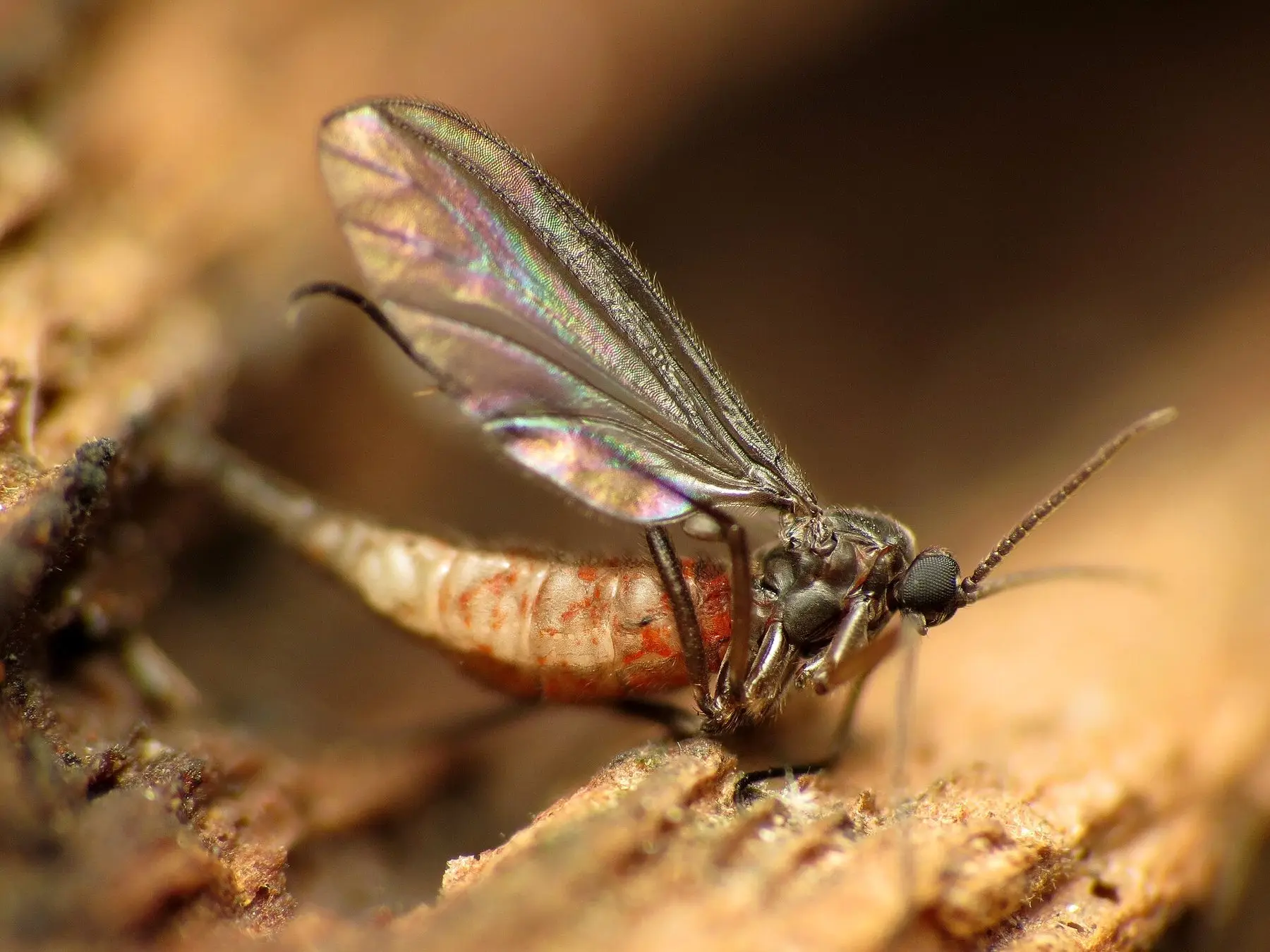
The small dark flies drifting up from a houseplant every time you water it are irritating and essentially harmless. Killing them accomplishes very little.
The larvae are the pest, and they are in the top inch of the compost — up to two hundred eggs per adult, hatching in under a week.
The life cycle is the whole problem
Roughly three to four weeks, and it runs continuously indoors:
- Eggs — up to 200 per female, laid in damp compost in the top half inch. Hatch in 4 to 6 days.
- Larvae — tiny, translucent, with a distinct black head. Two weeks feeding on fungi, algae, decaying matter and root hairs. This is the damaging stage.
- Pupae — 3 to 4 days in the compost.
- Adults — about a week, flying, mating and laying.
Which means: killing the adults you can see leaves several overlapping generations underground, and the flies are back within days. Any approach that targets only adults will feel like it is failing, because it is.
Why it matters, and when it doesn’t
On seedlings, cuttings and young plants, larvae can be genuinely destructive. Those plants have few roots and no reserves, and larvae grazing the fine root hairs is enough to kill them or stall them permanently.
On an established houseplant, the damage is subtler: unexplained wilting despite damp compost, slow or stalled growth, yellowing lower leaves. The plant is losing root function to something you cannot see.
Heavy infestations can also spread Pythium and other root-rot pathogens between pots.
Fungus gnats are a symptom of how you water
They only establish in compost that stays damp at the surface. Persistent gnats almost always mean a plant is being watered a little and often, or is sitting in a saucer, or is in a pot too large for its root ball. Fixing the watering fixes the gnats — and usually fixes a slow root-rot problem you had not noticed yet.
What to do, in order
1. Let the surface dry. The top inch or two, properly dry, between waterings. This alone removes the habitat. Push a finger in to check rather than judging by the look of it.
2. Water from the bottom. Stand the pot in water for twenty minutes and drain it. The roots drink, the surface stays dry, and the eggs have nowhere to hatch.
3. Add a barrier. Half an inch of horticultural grit, coarse sand or perlite on the surface stops adults reaching the compost to lay. This works well and looks better than the alternatives.
4. Yellow sticky traps. Adults are strongly attracted to yellow. Traps do not solve the problem, but they catch egg-laying females, and — more usefully — they tell you whether the population is going up or down.
5. Biological control, for an established infestation:
| Treatment | How it works | Notes |
|---|---|---|
| Bacillus thuringiensis israelensis | Bacterial toxin, larvae only | Very effective; safe; repeat weekly ×3 |
| Steinernema feltiae nematodes | Parasitic nematodes seek larvae | Excellent; needs damp compost to work |
| Hypoaspis / Stratiolaelaps mites | Predatory soil mites | Long-term prevention, slow to act |
| Hydrogen peroxide drench (3%, 1:4) | Kills larvae on contact | Does nothing to eggs; repeat every 4 days |
| Sticky traps | Catches adults | Monitoring, not control |
| Household insect spray | Kills visible adults | Achieves almost nothing |
6. Repot, if it is severe. Remove as much old compost as you can, check for root rot, and repot into fresh, free-draining mix — see potting soil. Add extra perlite to open it up.
Give it three to four weeks. You are outlasting eggs already in the compost. Numbers should fall noticeably by week two.
Not letting them come back
- Water properly: thoroughly, then not again until the plant needs it.
- Never leave standing water in saucers or cachepots.
- Right-sized pots. An oversized pot holds wet compost the roots cannot use.
- Store compost sealed and dry. Open bags left damp are how infestations arrive.
- Quarantine new plants for two or three weeks. Nursery plants are the other common route in.
- Clear dead leaves off the compost surface — that decaying material is what the larvae eat.
Is it actually a fungus gnat?
- Fungus gnat — dark, slender, long legs, weak erratic flight, comes out of pots.
- Fruit fly — stubby, tan, red eyes, purposeful flight, around fruit, bins and drains.
- Shore fly — darker and stockier than a fungus gnat, short legs, spotted wings, also from damp compost; the same controls work.
- Whitefly — white, on the undersides of leaves, flies up in a cloud when disturbed. A different pest entirely.
Common questions
Are fungus gnats harmful to plants?
How do you get rid of fungus gnats permanently?
Does letting the soil dry out kill fungus gnats?
What is the difference between fungus gnats and fruit flies?
Do cinnamon, hydrogen peroxide, or sand actually work on fungus gnats?
Why do I keep getting fungus gnats in new potting mix?
Backyard Weekly
Know what to plant, week by week
Free planting calendar. Join the weekly email for seasonal jobs, fixes for what is going wrong, and gear worth buying.
Set MONETIZATION.email.endpoint in src/config/site.ts to enable this form.
By subscribing you agree to our privacy policy. Grow In Backyard will never sell your address.
Keep reading
Rubber Tree Plant Care: Light, Water, and Why Leaves Drop
Ficus elastica drops leaves when it is moved, overwatered, or cold — usually all three. What it actually needs indoors, and how to prune one that has gone leggy.
Potting Soil: What Is Actually in the Bag, and Which to Buy
Potting mix contains no soil at all, and that is the point. What each ingredient does, why garden soil fails in a container, and how to read a bag honestly.
Outdoor Plants in Pots: What Survives, and What Kills Them
A pot outdoors is a harsher place than the ground — hotter, drier, and colder in winter. How to pick plants and pots that cope, and get through the cold.
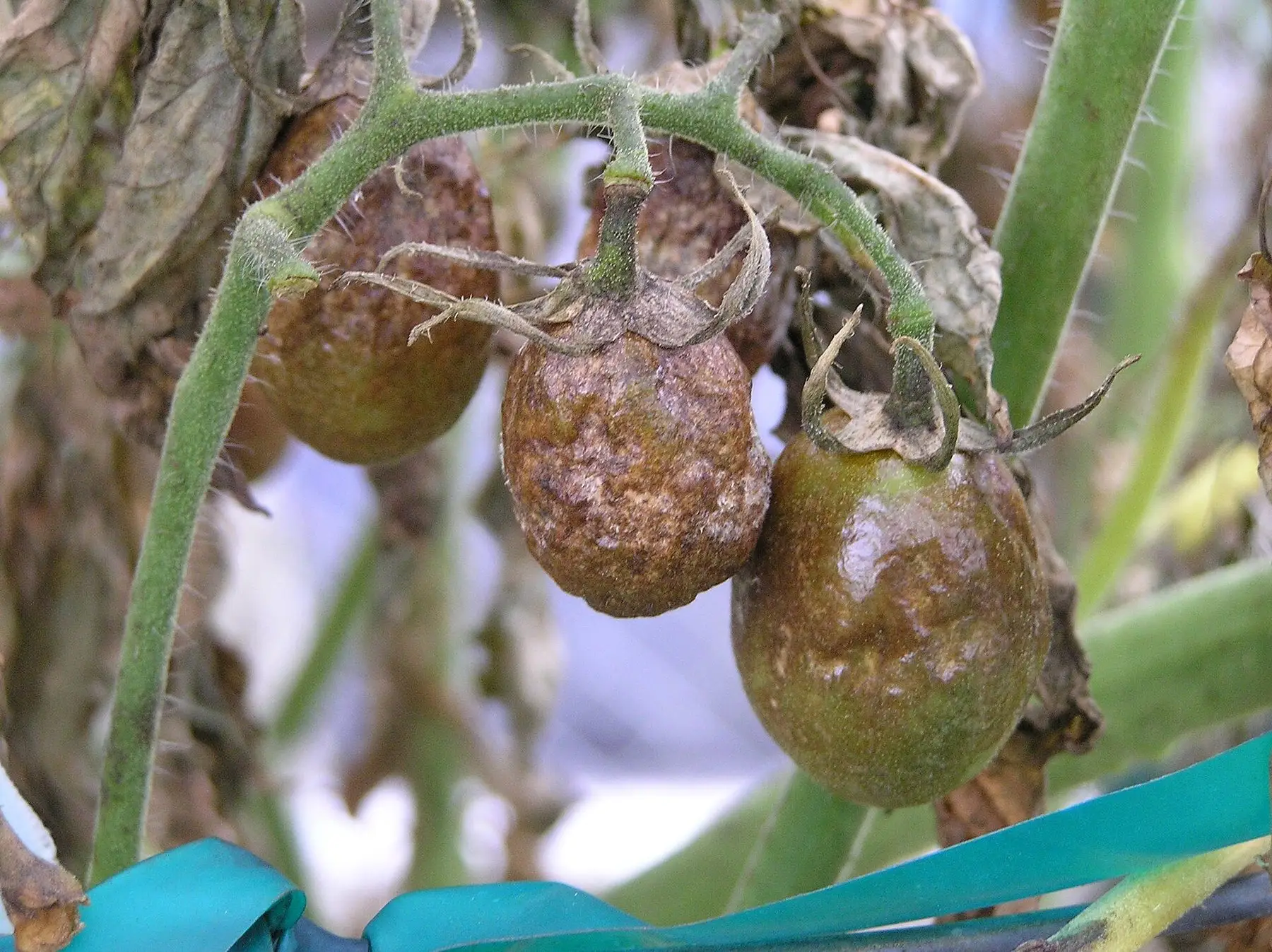
Tomato Blight: Telling Early From Late, and What to Do
Late blight destroys a plant in days and there is no cure. How to identify it against early blight, act fast enough to save the fruit, and prevent it next year.