
Radish Plant Growth Stages: Seed to Seed in Six Weeks
Germination in three days, true leaves at a week, root swelling from day ten, harvest by day 25. Knowing the stages tells you when something went wrong.
 By
On this page
Six stages in about five weeks. Knowing which one a plant is stuck at is how you work out what went wrong, which is usually one of three things.
The six stages
| Stage | Days | What you see |
|---|---|---|
| Germination | 3–7 | Seed splits, radicle emerges downward |
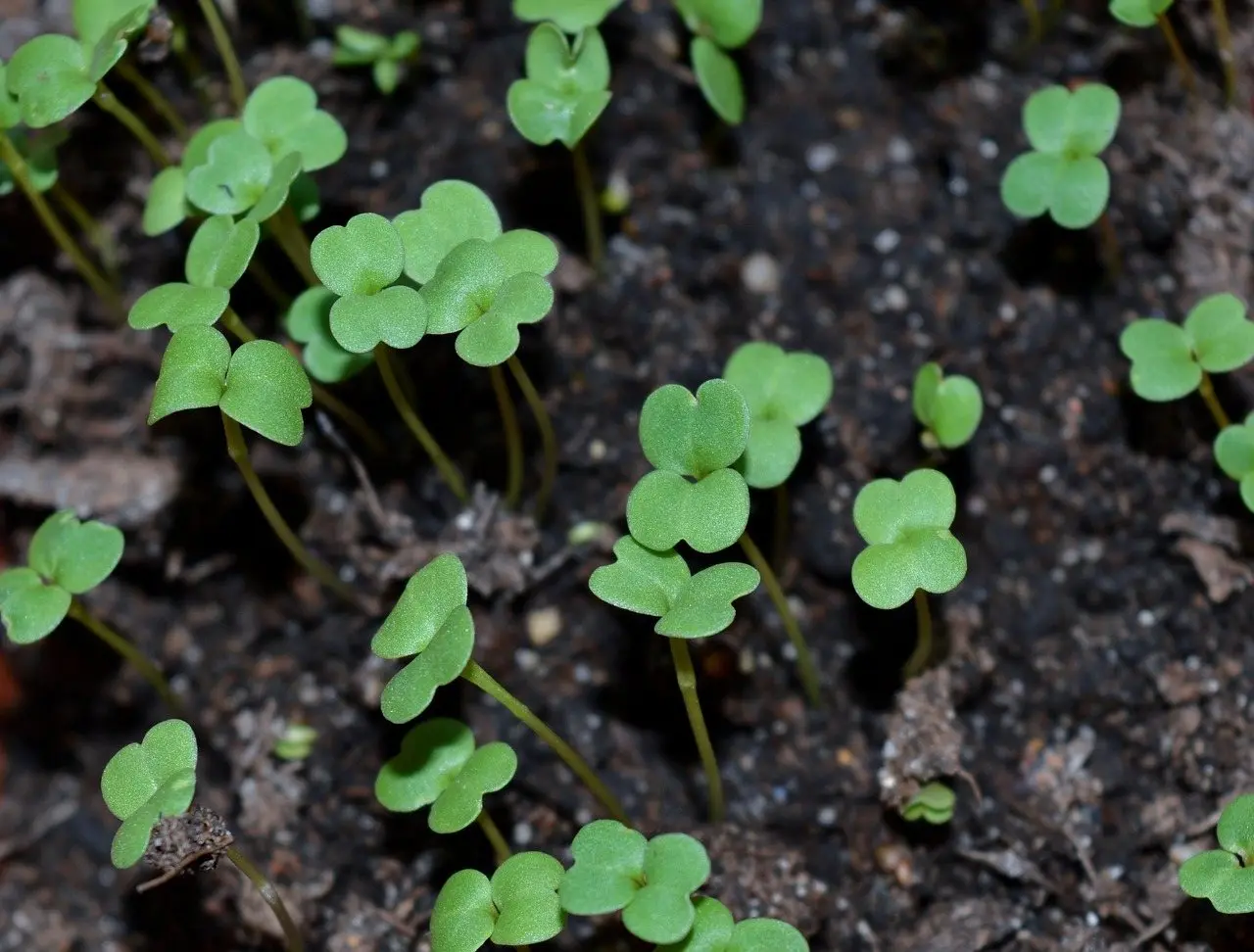
| Cotyledon | 5–10 | Two heart-shaped seed leaves |
| True leaves | 7–14 | Oval, slightly bristly, often lobed |
| Root swelling | 10–12 onward | Hypocotyl thickens below the stem |
| Harvest | 21–30 | About 2.5 cm across at the shoulder |
| Bolting | 35+ | Central stem rises; root turns pithy |
| Flower and seed | 45–60 | Pale flowers, then edible pods |
Germination, 3 to 7 days
Among the fastest of any garden vegetable, and reliable enough that radishes are commonly sown as a row marker alongside slow germinators like carrots and parsnips — they mark the line within a week and are harvested long before the carrots need the space.
Cotyledons, 5 to 10 days
Two heart-shaped seed leaves, bright green and smooth. These are not true leaves; they are the seed’s own food reserve unfolding, and they look nothing like the adult plant.
This is the moment to thin. Everything that goes wrong with radishes later is decided here.
True leaves, 7 to 14 days
Oval, rough or bristly to the touch, often lobed. These do the actual photosynthesis, and once they are established the plant starts building a root.
Root swelling, from about day 10
Technically the swelling is the hypocotyl — the stem section between the seed leaves and the root proper — rather than the root itself. It pushes up slightly as it expands, which is why you can scrape a little soil away and see the shoulder.
Check the shoulder, not the leaves
Leaf growth continues whether or not a root is forming, so tops tell you nothing about readiness.
Scrape soil from the top of one root and look. It takes five seconds and is the only reliable test — see when to harvest radish.
Harvest, 21 to 30 days
About 2.5 cm across for round salad types. The window is short — days, not weeks — and in warm weather a perfect radish becomes a pithy one inside a week.
Bolting, from around day 35
A central stem rises, the root goes spongy and hollow, and the flavour sharpens considerably. This is the plant moving on, and nothing reverses it.
Why “all leaves and no root” happens
In order of how often it is the cause:
1. Overcrowding. Radish seed is small and easy to sow thickly, and unthinned seedlings compete for light and space, producing a mat of foliage with nothing underneath. Thin to about 2.5 cm apart as soon as the seedlings can be handled. This is the job everyone skips.
2. Too much nitrogen. A bed that has just had a nitrogen-rich feed, or fresh manure, pushes leaf growth at the expense of root storage. Radishes want modest fertility.
3. Heat. Above about 25°C the plant heads for flowering rather than building a root, which is why spring and autumn sowings succeed where midsummer ones often do not.
4. Not enough light. Long, pale, weak leaves and no root means the plants are too shaded.
Timing by type
| Type | Days to harvest |
|---|---|
| Round salad (Cherry Belle, Sparkler) | 21–30 |
| French Breakfast | 25–30 |
| Long types (White Icicle) | 30–40 |
| Daikon / winter | 55–70 |
| Black Spanish | 55–75 |
Winter radishes behave like a different vegetable: slower, far more forgiving of being left in the ground, and storable.
Using the whole plant
Worth knowing, because it changes what a bolted row is worth:
- Leaves — edible at every stage. Hairy raw, excellent wilted, in soup, or as pesto
- Roots — usable as soon as they are worth pulling; mildest when young
- Seed pods — crisp and peppery, formed after flowering. Rat-tail radish is grown specifically for them
- Flowers — edible, and good for hoverflies
A bed that has bolted has not failed. It has moved on to a different crop, and the pods are genuinely good.
Succession, which is the real technique
Salad radishes go from perfect to pithy within a week, and no household eats three metres of them in that window.
Sow a 60 cm row every two weeks rather than one long row at once. That single habit converts radishes from a crop people grow once and give up on into one that produces continuously from early spring to late autumn.
Common questions
What are the growth stages of a radish?
How long do radishes take to grow?
Why are my radishes all leaves and no root?
What do radish seedlings look like?
Can you eat radishes at any stage?
Backyard Weekly
Know what to plant, week by week
Join the weekly email for seasonal jobs, fixes for what is going wrong, and gear worth buying.
Not ready to subscribe? The planting calendar is free and needs no email.
By subscribing you agree to our privacy policy. Grow In Backyard will never sell your address.
Keep reading
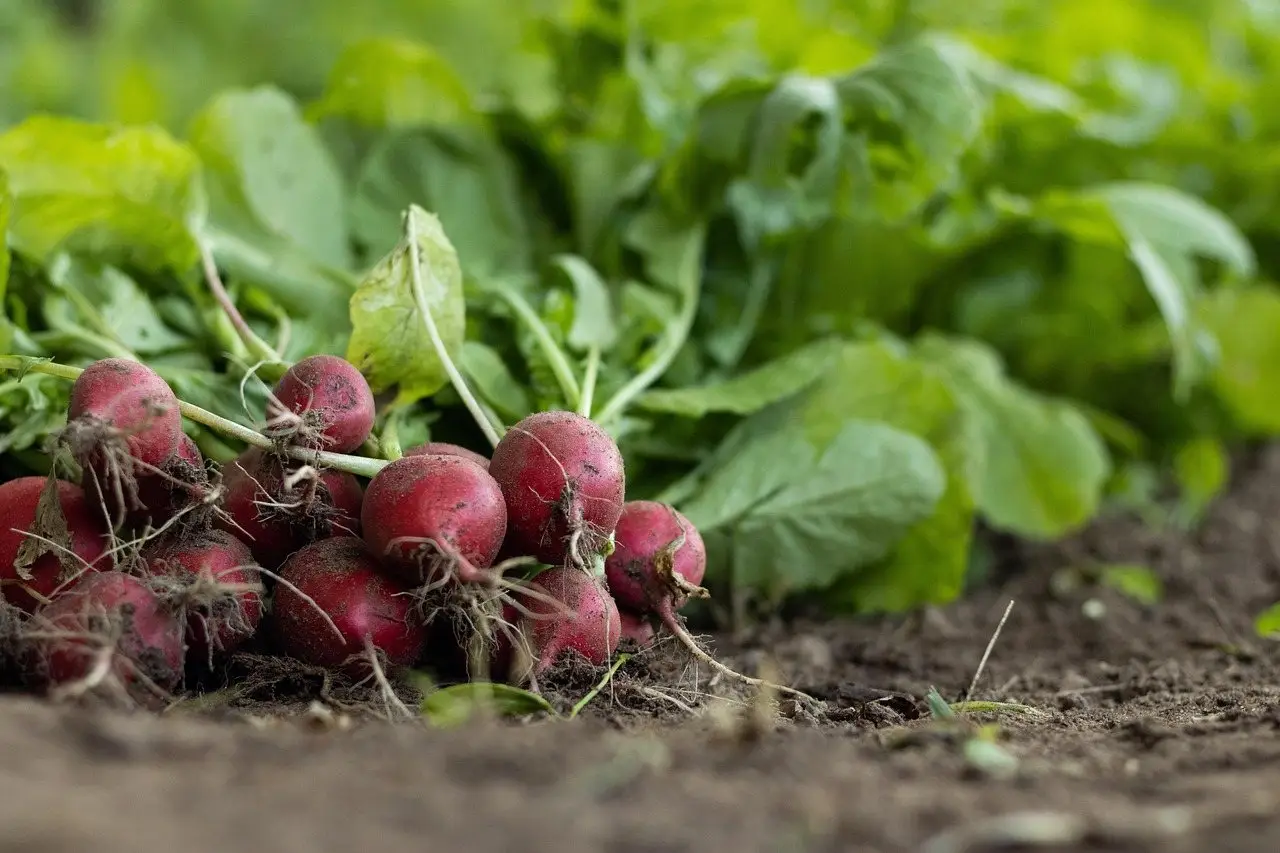
When to Harvest Radish: Pull at 1 Inch, Not by the Calendar
Most salad radishes are ready 3–4 weeks from sowing, at about an inch across. Left longer they go pithy and hot — and the leaves tell you nothing.
When to Harvest Spinach: Cut-and-Come-Again vs One Cut
Baby leaves at 3–4 weeks, full leaves at 6–8. Picking outer leaves keeps a plant going for weeks — until it bolts, which heat decides, not you.
Vegetables to Plant in July: A Second Season
July sowings catch the autumn window that spring crops miss. Count back from your first frost, add the short-day factor, and sow accordingly.
Snow Peas: Sowing, Supporting and Picking Them Flat
Snow peas are a cool-season crop picked before the pod fills. Sowing windows, how they differ from sugar snaps, trellising, and why yours turned tough.