
Peperomia Varieties — 12 Worth Growing, in 3 Care Groups
Peperomia varieties number over 1,500 species, but 12 cover the houseplant trade. Which group yours is in decides the watering, and that is the whole job.
 By
On this page
The genus runs to more than 1,500 species, which sounds unmanageable and is not. A dozen varieties cover almost everything sold, and they sort into three groups by leaf — which is the only thing you need in order to water them correctly.
The three care groups
| Group | Leaf | Light | Water | Humidity |
|---|---|---|---|---|
| Succulent-leaved | Thick, firm, glossy | Bright indirect to some sun | Dry through, then soak | Indifferent |
| Rippled / textured | Thinner, corrugated | Bright indirect, no sun | When top third dries | Prefers 50%+ |
| Trailing | Small, beaded | Bright indirect | Sparingly; rots fastest | Moderate |
Succulent-leaved varieties
1. Peperomia obtusifolia — baby rubber plant. The toughest in the genus and the one to start with. Thick spoon-shaped leaves, upright to about ten inches, available plain green or variegated. Forgives a missed fortnight.
2. Peperomia polybotrya — raindrop. Large glossy teardrop leaves on upright stems, often mistaken for a pilea. Same care as obtusifolia, slightly more inclined to get leggy in low light.
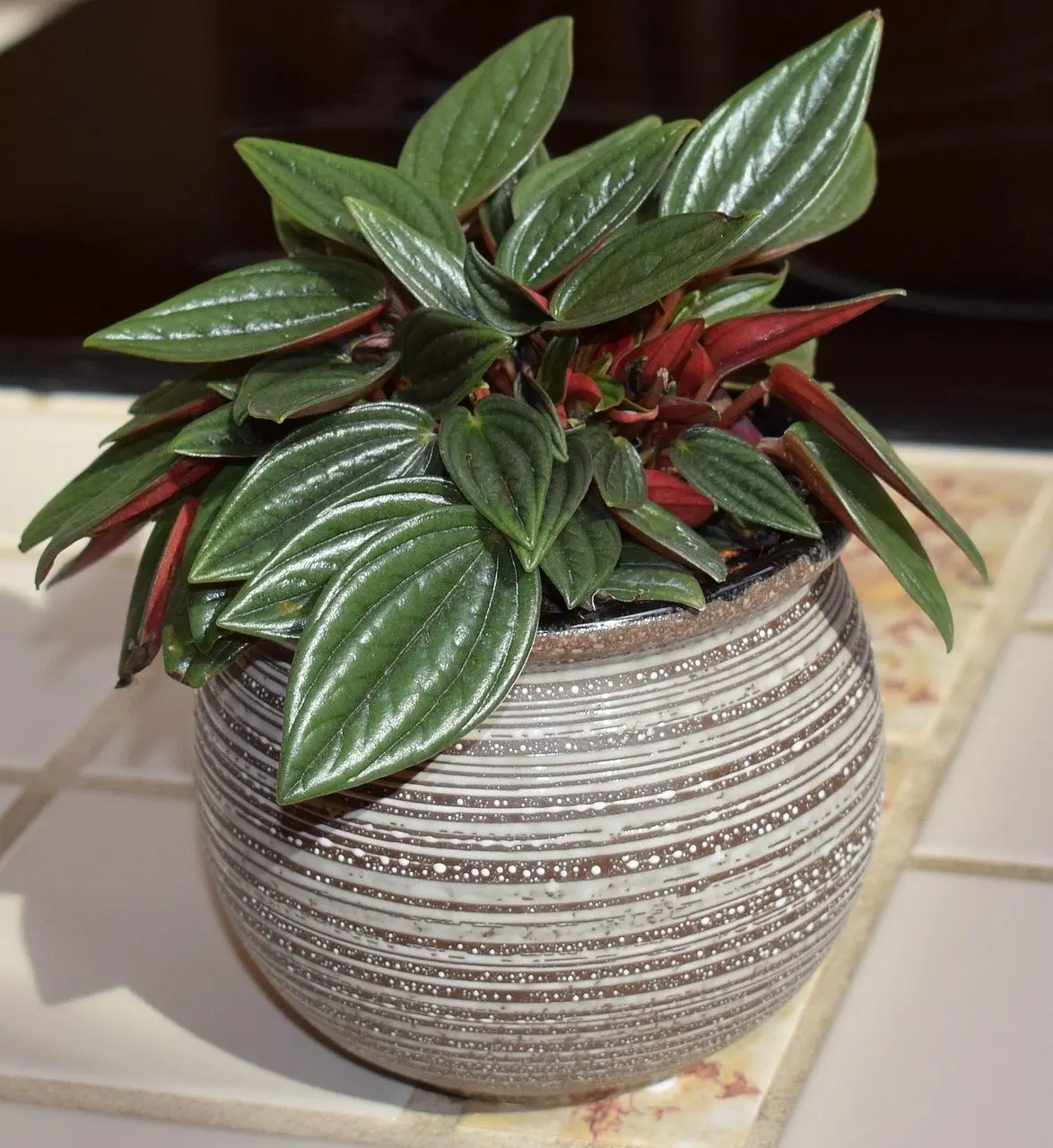
3. Peperomia graveolens — ruby glow. Boat-shaped leaves, green on top and deep red underneath, genuinely succulent. The most sun-tolerant of the group and the one that most resents a damp winter.
4. Peperomia ferreyrae — happy bean. Narrow folded leaves like green beans. Looks nothing like the rest of the genus and is treated as a succulent in practice.
5. Peperomia clusiifolia — red-edge, ‘Ginny’, ‘Rainbow’. Thick leaves edged cream and pink. Needs good light to hold the colouring; reverts to green in a dim corner.
Rippled and textured varieties
6. Peperomia argyreia — watermelon peperomia. The famous one: silver and green banded leaves on red stems. Thinner-leaved than it looks, so it wants more regular water than obtusifolia and suffers in dry heated air.
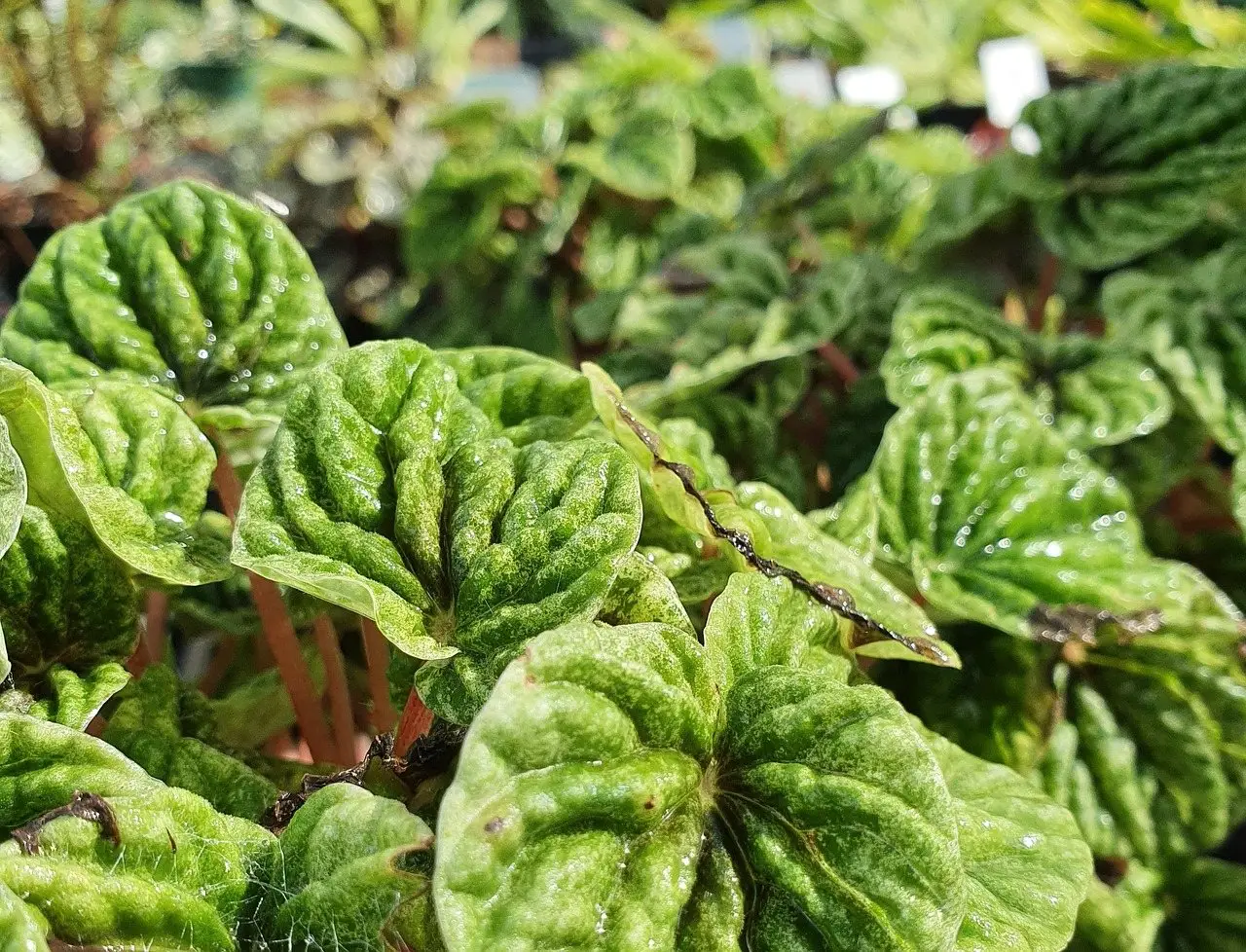
7. Peperomia caperata — emerald ripple. Deeply corrugated heart-shaped leaves, in green, ‘Rosso’ red, or near-black ‘Schumi Red’. Compact, and the group most prone to rot at the crown if water sits in the centre.
8. Peperomia griseoargentea — ivy-leaf peperomia. Silvery, quilted, with sunken veins. Slow and handsome; the same care as caperata.
9. Peperomia metallica var. colombiana. Dark bronze leaves with a metallic sheen and a pale central stripe. Wants the humidity of the group and the brightest light it can get without sun.
Trailing varieties
10. Peperomia prostrata — string of turtles. Tiny round leaves patterned like a shell, on fine trailing stems. Beautiful, and the least forgiving plant in the genus: fine roots, a shallow pot, and no tolerance for sitting wet.
11. Peperomia rotundifolia — trailing jade. Round pea-like leaves on thread stems. Easier than string of turtles and does well in a hanging pot.
12. Peperomia puteolata — parallel peperomia. Pointed leaves with cream parallel veins on red stems, semi-trailing. A good middle choice between the upright and the fully trailing kinds.
Watch out
The commonest way to kill any of these is a pot that is too big. Peperomias are semi-epiphytes — in the wild they grow in leaf litter and moss on tree bases, not in soil — so a deep pot of ordinary compost holds a reservoir of water the fine roots never reach and never dries. Pot up one size only, and use a mix with bark or perlite at a third by volume.
Care that applies to all twelve
- Light. Bright indirect. The succulent-leaved kinds take an hour or two of direct morning sun; the rippled ones scorch in it.
- Water. By weight, not by schedule. Lift the pot — light means water, any heft means wait.
- Temperature. Above 55°F. They are tropical understorey plants and cold does visible damage fast.
- Feeding. Half-strength balanced feed monthly in spring and summer only.
- Propagation. Leaf cuttings work across the genus, which is unusual and makes a damaged plant recoverable from a single leaf.
Common questions
How many peperomia varieties are there?
Are peperomias toxic to cats and dogs?
Why are my peperomia leaves dropping?
Which peperomia is easiest to grow?
Do peperomias need big pots?
Backyard Weekly
Know what to plant, week by week
Join the weekly email for seasonal jobs, fixes for what is going wrong, and gear worth buying.
Not ready to subscribe? The planting calendar is free and needs no email.
By subscribing you agree to our privacy policy. Grow In Backyard will never sell your address.
Keep reading
How to Propagate Peperomia: Leaf Cuttings That Work
Most peperomias root from a single leaf with its stalk attached, in water or compost. Petiole length and humidity decide whether it works.
Types of Worms in Potted Plants — 6 and Which Harm Roots
Types of worms in potted plants are mostly harmless decomposers, but 2 of the 6 eat living roots. How to tell them apart before you repot anything.
Best Time to Repot Indoor Plants: Early Spring
Repot as growth resumes, not on a schedule. Most houseplants need it every two to three years — and several are better off left pot-bound.
Problems With Hydrangeas in Pots: Why Yours Keeps Wilting
A potted hydrangea drinks more than any other shrub and wilts daily in summer. Pot size, compost and afternoon shade fix most of it.