
How to Propagate Peperomia: Leaf Cuttings That Work
Most peperomias root from a single leaf with its stalk attached, in water or compost. Petiole length and humidity decide whether it works.
 By
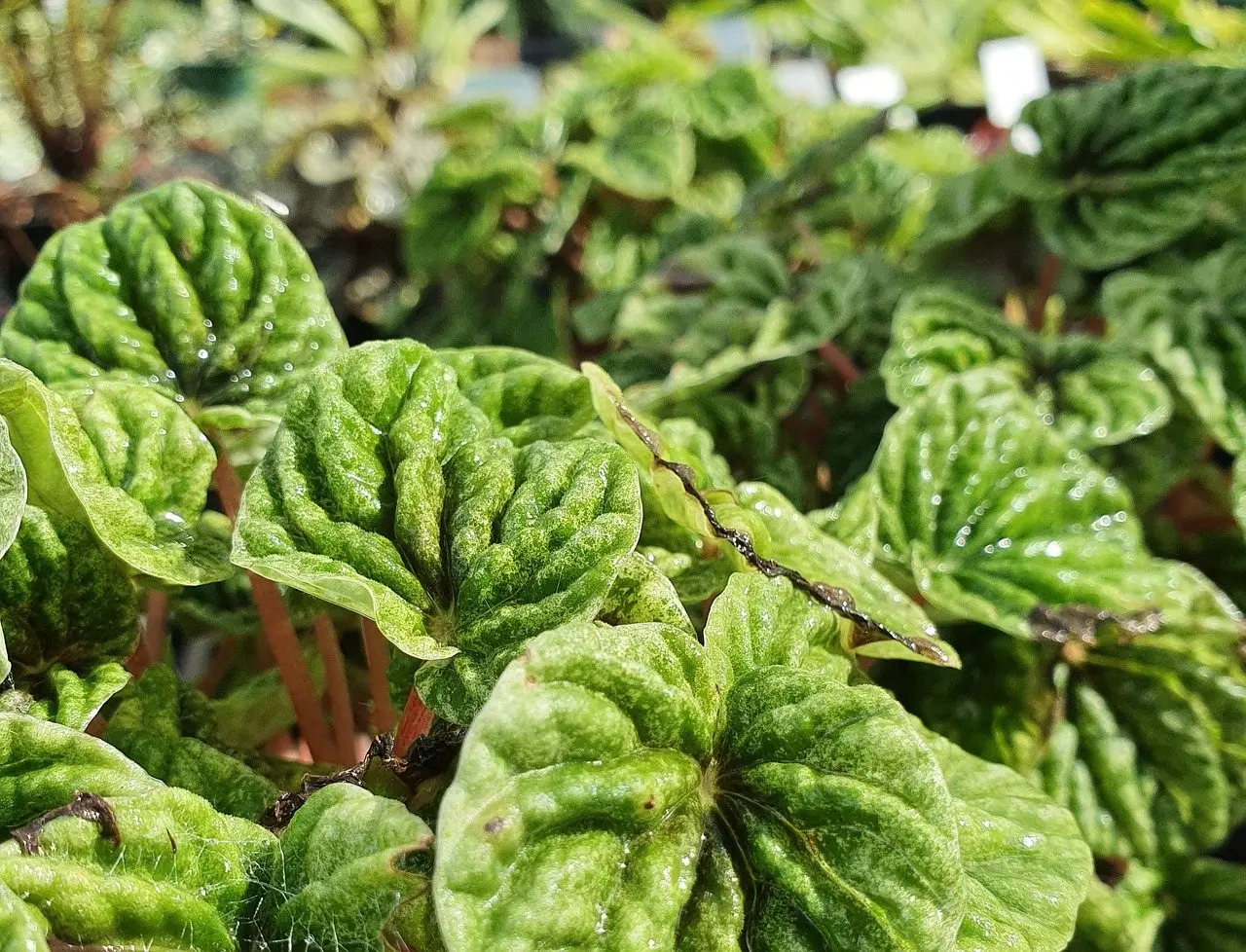
On this page
Peperomia roots from a leaf plus its stalk — the stalk being the part that matters, and the part people throw away.
Why the petiole is the whole thing
The new plant forms at the base of the leaf stalk, not from the leaf itself. A leaf detached bare has no tissue in the right place, so it sits there looking healthy and eventually yellows.
This is the single difference between peperomia cuttings that work and ones that do not, and it is easy to get wrong because the leaf is the part that looks important.
Three methods
| Method | Suits | Notes |
|---|---|---|
| Leaf + petiole in water | Most types | Visible progress; roots adapt later |
| Leaf + petiole in compost | Most types | Sturdier roots, no transition |
| Leaf halved, cut edge in compost | Large-leaved — watermelon, raindrop | Several plantlets per leaf |
| Stem cuttings | Trailing and upright types | Fastest where the plant has stems |
Humidity is not optional here
Peperomia cuttings root slowly, which means they have to survive weeks without a root system. A clear bag or propagator lid is what gets them through it.
Bright, warm, out of direct sun — and open the bag briefly every few days to change the air.
The waiting part
- 3–6 weeks — roots
- 6–10 weeks — a tiny plantlet visible at the base of the stalk
- Several months — a small plant worth potting on
Leave the original leaf attached the whole time. It is feeding the plantlet and will yellow and detach by itself when it is finished. Pulling it off early slows everything down.
Resist checking. Lifting a cutting to inspect the roots breaks the fine new ones, and this is already the slowest common houseplant to propagate.
When it fails
- Nothing happening after 8 weeks → check there was a petiole; check the temperature
- Leaf gone soft and brown at the base → the blade was touching water or damp compost
- Leaf shrivelled and dry → humidity too low, or direct sun
- Roots but no plantlet → normal. Keep waiting, often several more weeks
Step by step
- Time
- P60D
- Cost
- 0
- You need
- A healthy peperomia, Light free-draining compost, or a glass of water
- Tools
- Clean scissors or a scalpel, A clear bag or propagator lid
Pick a healthy mature leaf
Choose a firm undamaged leaf from the middle of the plant rather than the newest growth or the oldest outer leaves. Soft young leaves rot more readily, and tired old ones have less in reserve.
Cut with 2 to 3 cm of stalk attached
The petiole — the leaf stalk — is where roots and the new plantlet form, so a leaf pulled off without it is far less likely to produce anything. Cut cleanly where the stalk meets the stem.
Decide between water and compost
Water lets you watch progress and suits trailing and upright types; compost avoids the later transition and generally gives sturdier roots. Both work for most peperomias.
Set the stalk, not the leaf, into the medium
Only the petiole goes in — about a centimetre. A leaf blade sitting in water or buried in damp compost will rot within days.
Or halve a large leaf for several plantlets
On large-leaved types such as watermelon peperomia, a leaf can be cut across into halves and the cut edge set into compost. Plantlets then form along that edge, often several per piece.
Keep it warm and humid
A clear bag or propagator lid over the pot, somewhere warm and bright but out of direct sun. Humidity is what prevents the cutting drying out before it has roots.
Wait four to eight weeks
Roots usually appear in three to six weeks, and the tiny plantlet at the base of the stalk takes longer still. The original leaf stays attached and feeds the plantlet, so leave it until it yellows naturally.
Pot on once the plantlet has leaves of its own
When the new plant has two or three of its own leaves it can be potted into light free-draining compost and treated as an adult — bright indirect light, watering only when the top of the compost is dry.
Common questions
Can you propagate peperomia from a single leaf?
Should I propagate peperomia in water or soil?
Why is my peperomia cutting not rooting?
How long does peperomia take to propagate?
Can watermelon peperomia be propagated from leaf sections?
Backyard Weekly
Know what to plant, week by week
Join the weekly email for seasonal jobs, fixes for what is going wrong, and gear worth buying.
Not ready to subscribe? The planting calendar is free and needs no email.
By subscribing you agree to our privacy policy. Grow In Backyard will never sell your address.
Keep reading
Propagating Pothos in Water: The Node Is What Matters
A cutting roots only if it includes a node. Leaves alone never will. Here is where to cut, how long it takes, and when to move it to soil.
Heart Leaf Philodendron Care: Why Yours Has Gone Leggy
Long bare stems with leaves only at the ends means too little light. Pinching, not more water, is what turns a straggly plant back into a full one.
How to Repot a Snake Plant: Only When It Has To Be Done
Snake plants flower better and rot less when slightly pot-bound. Repot every 3–5 years, one size up, into gritty mix — and keep it dry afterwards.
Hoya Plant Care: Light, Water and Getting It to Bloom
Hoyas are easy to keep alive and hard to flower. Light levels, why the pot should stay small, and the peduncle you must never cut off.