
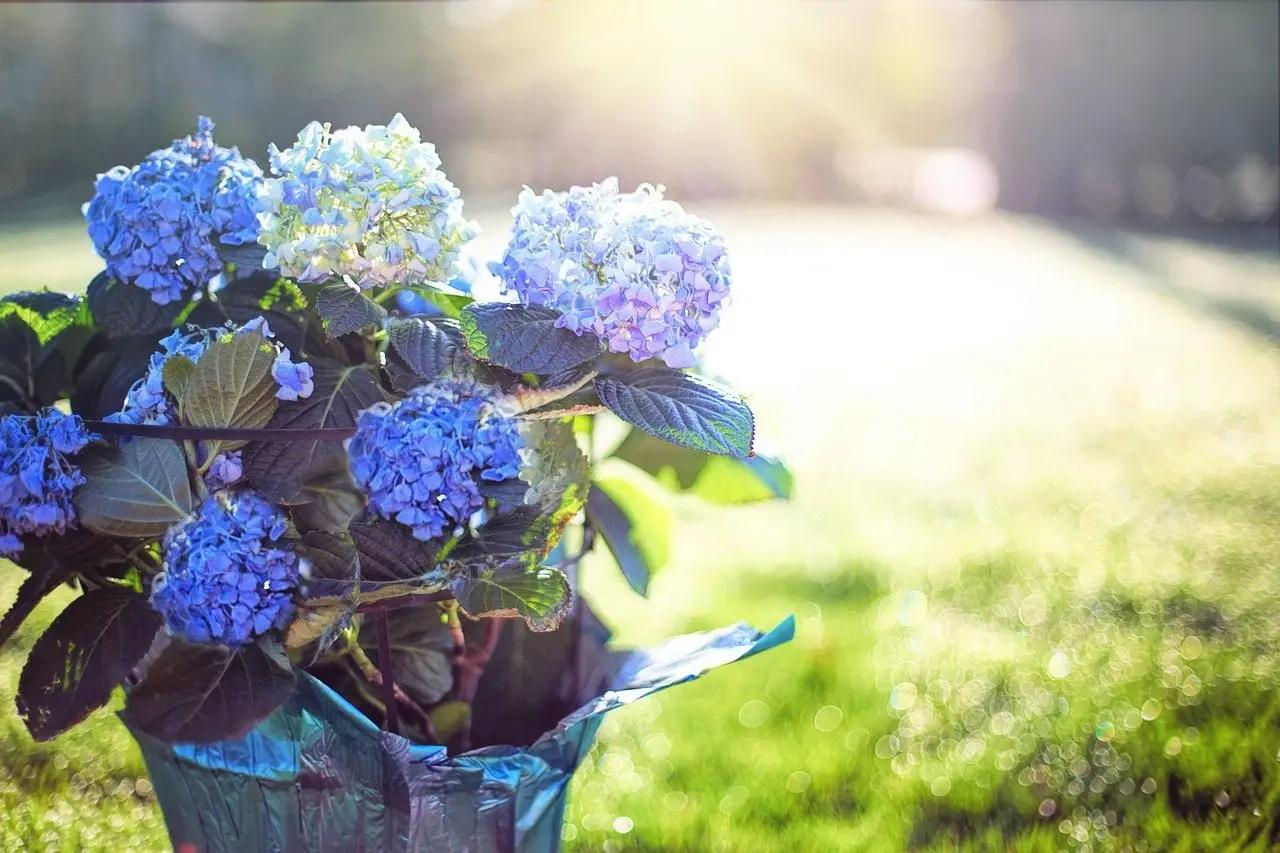
Problems With Hydrangeas in Pots: Why Yours Keeps Wilting
A potted hydrangea drinks more than any other shrub and wilts daily in summer. Pot size, compost and afternoon shade fix most of it.
 By
On this page
A potted hydrangea drinks more than any other common shrub and has a fraction of the roots to do it with. Nearly every problem traces back to that.
Why it wilts every afternoon
Large thin leaves lose water fast. In the ground the roots range widely to keep up; in a pot they have maybe a tenth of that volume.
So on a hot day the plant simply outruns its reservoir, and wilts. It is not necessarily diseased, underfed or dying.
| Change | Effect |
|---|---|
| Bigger pot | Largest single improvement |
| Afternoon shade | Very large. Halves the demand |
| Moisture-retentive compost | Significant — loam-based holds better than peat-free multipurpose alone |
| Mulch on the compost surface | Significant, and free |
| Larger saucer, briefly | Short-term relief in heat; do not leave it standing |
| Watering more often | Necessary, but it treats the symptom |
Repeated severe wilting does lasting damage
A plant that collapses daily and recovers each evening still ends up with scorched leaf margins and fewer flowers the following year.
Treat chronic wilting as a setup problem, not a watering schedule problem.
The flowering question
Mophead and lacecap hydrangeas (H. macrophylla) flower on last year’s wood. Cut them back in autumn or spring and you have removed this year’s flowers.
- Deadhead only, down to the first fat pair of buds, in spring
- Leave old flowerheads on over winter — they shelter the buds beneath
- Remove a few of the oldest stems at the base for renewal, not the whole plant
- Paniculata and arborescens types are different — those flower on new wood and can be cut back hard in late winter
Other reasons a potted one does not flower: too much shade, a pot too small to support blooming, too much nitrogen, and frost damage to buds — which is a real risk in a container, where roots and stems are far more exposed than in open ground.
Compost and feeding
- Loam-based compost (John Innes No. 3 or equivalent) holds water and nutrients better than multipurpose alone
- Mix in some multipurpose for structure if it feels heavy
- Mulch the surface with bark or gravel
- Feed in spring with a balanced or high-potash feed. Avoid high nitrogen, which makes leaves at the expense of flowers
- Repot every two or three years, going up a size
Winter
The roots are the vulnerable part — in a pot they sit in air on all sides rather than insulated by soil.
- Move the pot to a sheltered spot against a wall
- Raise it on feet so it drains freely
- Wrap the container in bubble wrap, hessian or straw
- Do not wrap the plant in plastic — it needs air
- Keep compost just moist. Frozen saturated compost damages roots
- Leave last year’s stems on mophead types
Common questions
Why does my potted hydrangea keep wilting?
What size pot does a hydrangea need?
Why is my potted hydrangea not flowering?
Should I move a potted hydrangea out of the sun?
How do I overwinter a hydrangea in a pot?
Backyard Weekly
Know what to plant, week by week
Join the weekly email for seasonal jobs, fixes for what is going wrong, and gear worth buying.
Not ready to subscribe? The planting calendar is free and needs no email.
By subscribing you agree to our privacy policy. Grow In Backyard will never sell your address.
Keep reading
Growing Cucumbers in Pots: Size, Support, and Water
Cucumbers grow well in containers if the pot is big enough and they climb. Pot size, variety choice, and the watering rhythm that prevents bitter fruit.
How to Repot a Snake Plant: Only When It Has To Be Done
Snake plants flower better and rot less when slightly pot-bound. Repot every 3–5 years, one size up, into gritty mix — and keep it dry afterwards.
What Is Perlite Made Of? Volcanic Glass, Popped Like Corn
Perlite is volcanic glass heated to 900°C until its trapped water flashes to steam and expands it. That is why it is white, light and permanent.
Propagating Pothos in Water: The Node Is What Matters
A cutting roots only if it includes a node. Leaves alone never will. Here is where to cut, how long it takes, and when to move it to soil.