Japanese Maple: Choosing One, Siting It, and Leaf Scorch
Crisp brown leaf edges are wind and sun, not disease. How to pick between upright and dissected forms, where to plant, and why you should barely prune one.

On this page
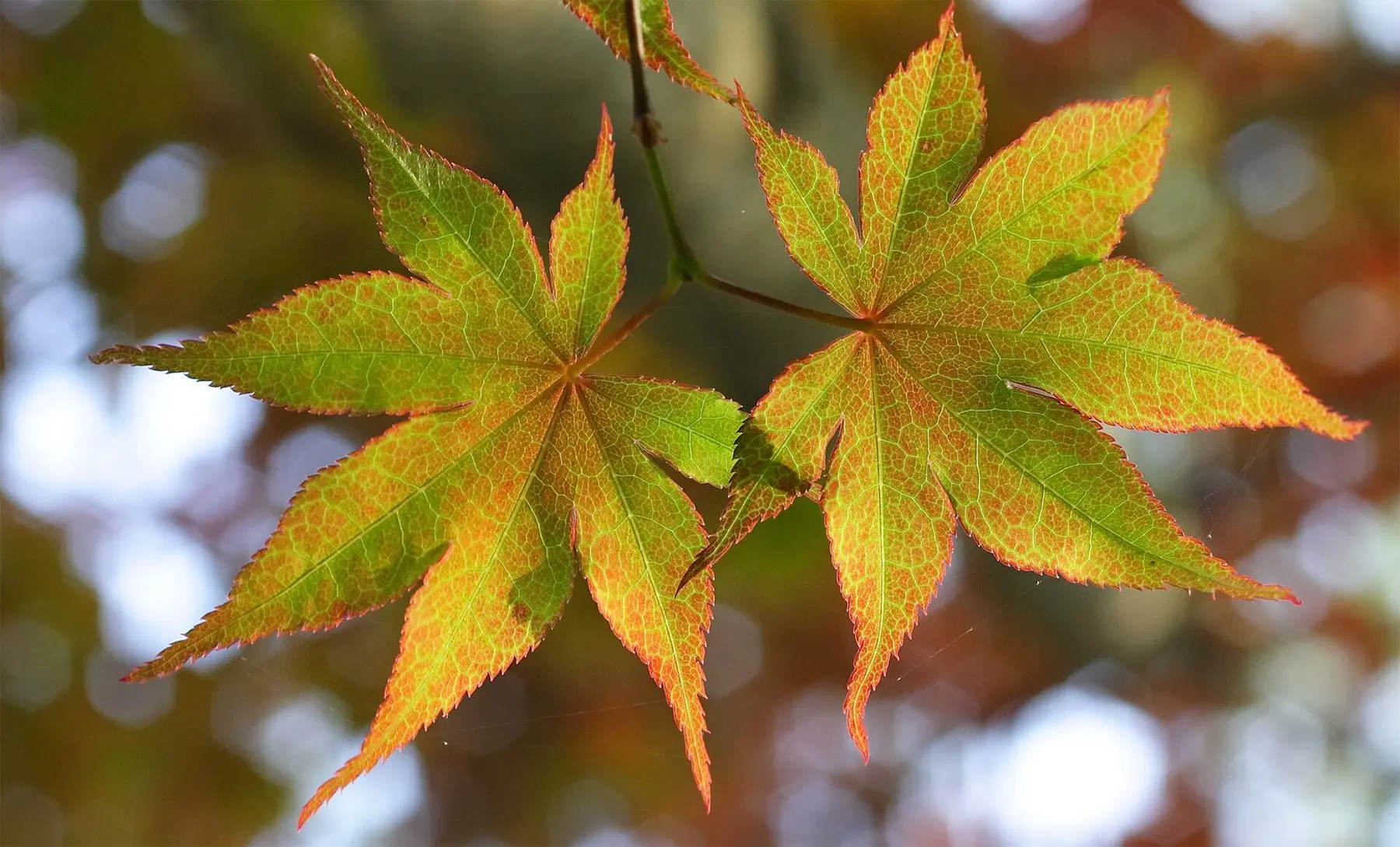
Almost every problem people have with a Japanese maple is the same problem: crisp brown leaf edges, appearing in midsummer, on a tree that looked perfect in spring.
That is leaf scorch, and it is a siting and watering issue rather than a disease. Getting the position right at planting is most of the work of growing one.
Choosing a form first, a colour second
The single most useful distinction is habit, because it decides how much space the tree needs and how tough it is.
| Group | Habit | Size | Leaf | Toughness |
|---|---|---|---|---|
| Palmatum, upright | Small tree, vase-shaped | 15–25 ft | Broad, 5–7 lobes | Most sun-tolerant |
| Dissectum | Low, weeping mound | 6–10 ft | Finely cut, lacy | Scorches easily |
| Dwarf / witch’s broom | Dense, compact | 2–5 ft | Small | Good in pots |
| Variegated | Varies | Varies | Pink, white margins | Least sun-tolerant |
| Acer japonicum / shirasawanum | Rounded, larger leaf | 15–30 ft | Fan-shaped | Vigorous, hardy |
Bloodgood is the reference upright: deep purple-red through summer, 15 to 20 feet, and one of the more sun-tolerant cultivars. Crimson Queen and Tamukeyama are the reference dissectums — cascading mounds of lace-like foliage, superb in a courtyard or over a rock, and noticeably fussier about wind and afternoon sun.
Sango-kaku (coral bark) is worth naming separately: green leaves, gold in autumn, and coral-red young stems that carry the winter. Osakazuki is grown for what is arguably the best red autumn colour of any of them, from plain green summer leaves.
Green-leaved varieties often colour best
It is counter-intuitive when shopping, because the purple ones look more dramatic on the nursery bench. But a green leaf has the furthest to travel in autumn, and varieties like Osakazuki and Sango-kaku produce a far more spectacular change than a tree that was already dark red in July.
Siting: this is the whole game
- Morning sun, afternoon shade. Enough light for good colour, without the heat that scorches.
- Shelter from wind. Wind is at least as damaging as sun — those thin leaves lose water fast, and a windy site scorches even in shade.
- Free-draining but moisture-retentive soil. They dislike drought and they dislike waterlogging equally.
- Neutral to slightly acidic, roughly pH 5.5 to 6.8. Very alkaline soil causes yellowing between the veins — see lowering soil pH.
- Not against a hot wall or over a paved area, both of which radiate heat back at the canopy.
Plant in autumn or early spring, at the same depth it sat in the pot — never deeper — and mulch with compost or bark, keeping the mulch clear of the trunk.
Water and mulch
Japanese maples are shallow-rooted. That is why they respond so quickly to dry surface soil, and why mulch does so much for them.
Water deeply and regularly through the first two or three years, and in any dry spell after that. A 2 to 3 inch mulch of compost or bark keeps the root zone cool and damp and is worth more than any feeding.
Feeding is barely needed. A light balanced feed in spring is plenty; heavy nitrogen produces soft, sappy growth that scorches and breaks.
Leaf scorch, diagnosed
Brown, crisp margins with the leaf centre still green. It appears from midsummer, worst on the windward and sunniest side.
| Cause | Sign | Fix |
|---|---|---|
| Drying wind | Worst on exposed side | Shelter, hedge, or move it |
| Hot afternoon sun | Worst on the sunny side | Shade, or resite in autumn |
| Dry roots | Whole canopy affected | Deep water, mulch |
| Container drying out | Sudden, severe | Bigger pot, consistent watering |
| Hard or softened water | Gradual, over seasons | Rainwater for potted trees |
| Over-feeding | Soft growth scorching first | Stop feeding |
Scorch is disfiguring rather than fatal. The tree usually comes back fine the following spring — but it will do it again every year until the cause is removed.
Verticillium wilt is the one that is not scorch
If whole branches wilt and die suddenly while others look normal, suspect verticillium wilt rather than scorch. Cut into an affected branch and look for dark staining in the wood beneath the bark. There is no cure. Remove affected wood well below the staining, sterilise tools between cuts, and do not replant another susceptible species in the same spot.
Pruning: less than you think
The reason to own a Japanese maple is its natural shape. Hard pruning destroys it and provokes congested, upright regrowth that never looks right.
Limit yourself to:
- Dead, damaged, diseased wood, at any time.
- Crossing and rubbing branches, in late autumn or winter when dormant.
- Light thinning to open the canopy and show the branch structure.
Never take more than about a fifth of the canopy in one year. Avoid pruning in late winter and early spring, when the sap is rising and cuts bleed heavily.
In a container
Japanese maples are among the best trees for a large pot, and dwarf and dissected forms are made for it.
Use a large, heavy container with good drainage and a loam-based or ericaceous mix — see potting soil. Then the two rules that matter:
- Never let it dry out. Drought kills more potted maples than cold does.
- Shelter it. A pot in wind and afternoon sun is the worst-case combination for scorch.
Repot or root-prune every two to three years in late winter, and use rainwater if your tap water is hard.
Common questions
Why are my Japanese maple leaves turning brown and crispy at the edges?
How much sun does a Japanese maple need?
What is the difference between Bloodgood and a dissected Japanese maple?
Should you prune a Japanese maple?
Can you grow a Japanese maple in a pot?
When do Japanese maples turn colour?
Backyard Weekly
Know what to plant, week by week
Free planting calendar. Join the weekly email for seasonal jobs, fixes for what is going wrong, and gear worth buying.
Set MONETIZATION.email.endpoint in src/config/site.ts to enable this form.
By subscribing you agree to our privacy policy. Grow In Backyard will never sell your address.
Keep reading
How to Grow an Apple Tree From Seed (Read This First)
Apple seeds grow, but never into the apple you ate — every seed is a new variety. How to germinate them anyway, and what you will actually get.
Outdoor Plants in Pots: What Survives, and What Kills Them
A pot outdoors is a harsher place than the ground — hotter, drier, and colder in winter. How to pick plants and pots that cope, and get through the cold.
Rock Garden Ideas That Look Like They Belong There
The difference between a rockery and a pile of stones is drainage and burial. How to set rock so it reads as outcrop, and what actually survives in it.
Southern Magnolia: Size It Before You Plant It
Magnolia grandiflora reaches 60 to 80 feet and drops leathery leaves all year. The cultivars that stay small, and what it needs to flower well.