
Is Chamomile a Perennial? Two Plants, Two Answers
Roman chamomile is a perennial that spreads; German chamomile is an annual that self-seeds. Both come back — by completely different mechanisms.
 By
On this page
Both answers are correct, for different plants. Roman chamomile is a perennial. German chamomile is an annual that self-seeds so freely nobody notices.
Telling them apart
| Roman chamomile | German chamomile | |
|---|---|---|
| Botanical name | Chamaemelum nobile | Matricaria chamomilla |
| Life cycle | Perennial | Annual (self-seeds) |
| Height | 10–30 cm | 50–60 cm |
| Habit | Low spreading mat | Upright, branching |
| Foliage | Soft, dense, strongly apple-scented | Finer, sparser |
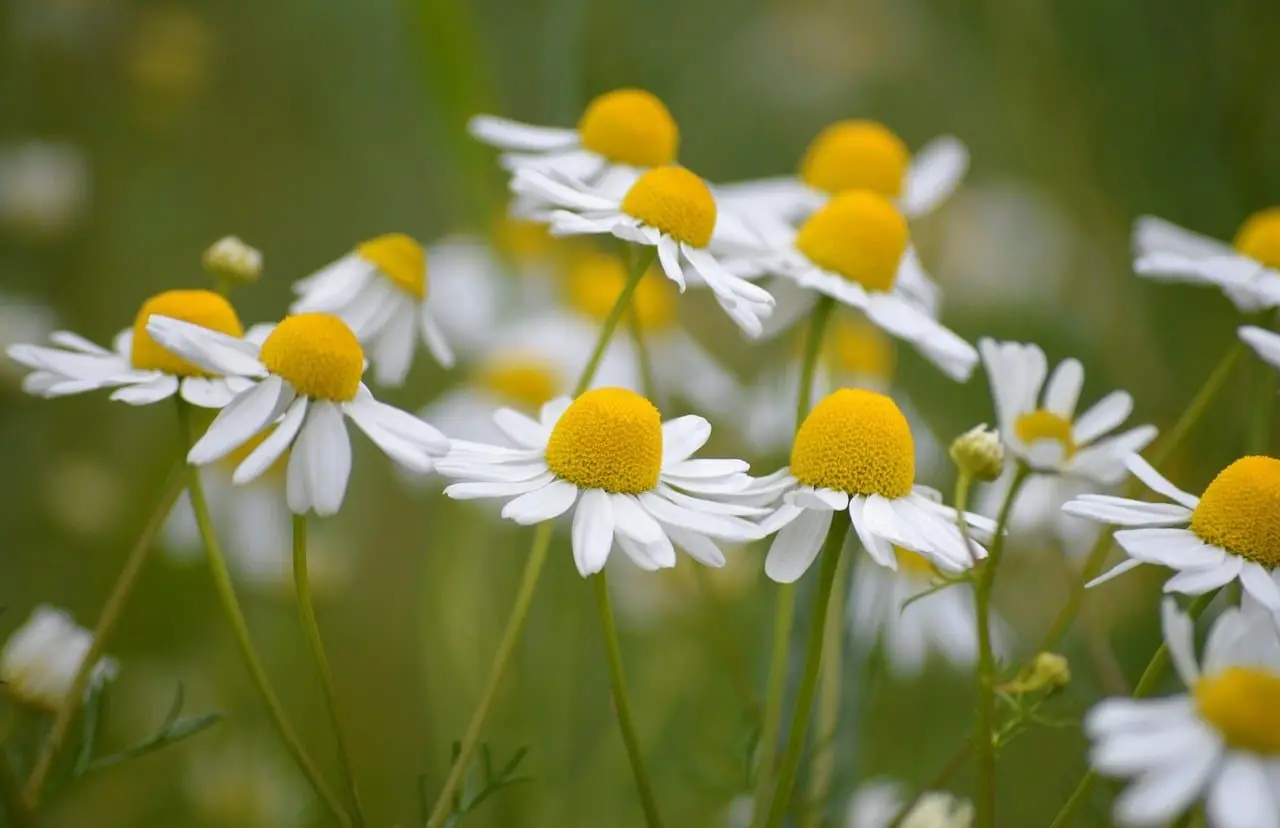
| Flower centre | Flat-ish, solid | Conical, hollow |
| Flowers per plant | Few | Many |
| Flavour | More bitter, medicinal | Sweeter, apple-like |
| Best for | Lawns, paths, ground cover | Tea |
The hollow cone is the definitive test
Pick a flower and slice the yellow centre in half.
German chamomile’s centre is conical and hollow inside. Roman chamomile’s is flatter and solid. Nothing else distinguishes them as reliably, and it works even on a plant that is not yet in full growth.
“Comes back” means two different things
Roman chamomile overwinters as a living plant. The mat persists, spreads outward from established roots, and gets wider every year. You can divide it, move it, and expect the same individual plants for years.
German chamomile dies completely after flowering. What returns is the next generation, germinating from seed dropped the previous summer. The patch persists; the plants do not.
That distinction has one practical consequence worth acting on:
- Let German chamomile set seed if you want it next year. Deadheading the whole plant ends the colony
- Deadhead Roman chamomile freely — it costs nothing, since the plant itself persists
Growing either one
Both want much the same conditions, which are not the rich moist conditions people often assume:
- Full sun — part shade at a push in hot regions
- Free-draining soil. Both dislike waterlogging, Roman particularly
- Poor to average fertility. Rich soil produces leafy plants with fewer flowers
- Light watering. Established plants are fairly drought-tolerant
- No feeding beyond a scrape of compost
German chamomile is sown direct in spring, barely covered — it needs light to germinate, so burying the seed is a common reason it fails. Roman chamomile is usually bought as plants or divisions, since ‘Treneague’ produces no seed at all.
The chamomile lawn, honestly
It is a genuinely lovely thing and a frequently disappointing one.
What it needs:
- Roman chamomile ‘Treneague’ — non-flowering, so no mowing
- Full sun
- Sharply drained soil
- Light traffic only
- Hand weeding, since nothing selective can be used on it
What it is not: a lawn substitute. It will not take children, dogs, football or a garden party, and it thins badly under repeated walking. A chamomile path, a seat, or a panel set within paving all work far better than a chamomile lawn, because each keeps the traffic occasional.
Harvesting for tea
German chamomile, almost always:
- Pick flowers fully open, on a dry morning after the dew has gone
- Pick often — the more you take, the more the plant produces
- Dry on a tray somewhere warm, dark and airy for one to two weeks
- Store airtight once completely dry and crisp
- Expect a lot of picking. Dried flowers weigh very little, so a useful supply takes a substantial patch and repeated harvesting through the season
Common questions
Is chamomile a perennial or an annual?
Which chamomile is better for tea?
Which chamomile is used for a chamomile lawn?
Does chamomile come back every year?
How do you tell Roman and German chamomile apart?
Backyard Weekly
Know what to plant, week by week
Join the weekly email for seasonal jobs, fixes for what is going wrong, and gear worth buying.
Not ready to subscribe? The planting calendar is free and needs no email.
By subscribing you agree to our privacy policy. Grow In Backyard will never sell your address.
Keep reading
How to Grow Oregano: Poor Soil and Full Sun Make It Taste
Oregano grown rich and wet is bland. Lean soil, full sun and sparse water concentrate the oils — and it comes back every year once established.
How to Grow Thyme: The Hardest Herb to Kill, If It Drains
Thyme wants gravel, sun and neglect. It survives drought and frost easily and dies in wet clay — which is the only real decision you have to make.
How to Prune Cilantro: Cutting Outer Stems Delays Bolting
Take outer stems at the base, never the centre. It buys a few weeks — but cilantro bolts on day length, so succession sowing is the real answer.
What Herbs Grow Well Together in the Same Container
Group herbs by what they want, not by what you cook with. Mediterranean herbs in one pot, thirsty soft herbs in another, and mint always alone.