
How to Prune Cilantro: Cutting Outer Stems Delays Bolting
Take outer stems at the base, never the centre. It buys a few weeks — but cilantro bolts on day length, so succession sowing is the real answer.
 By
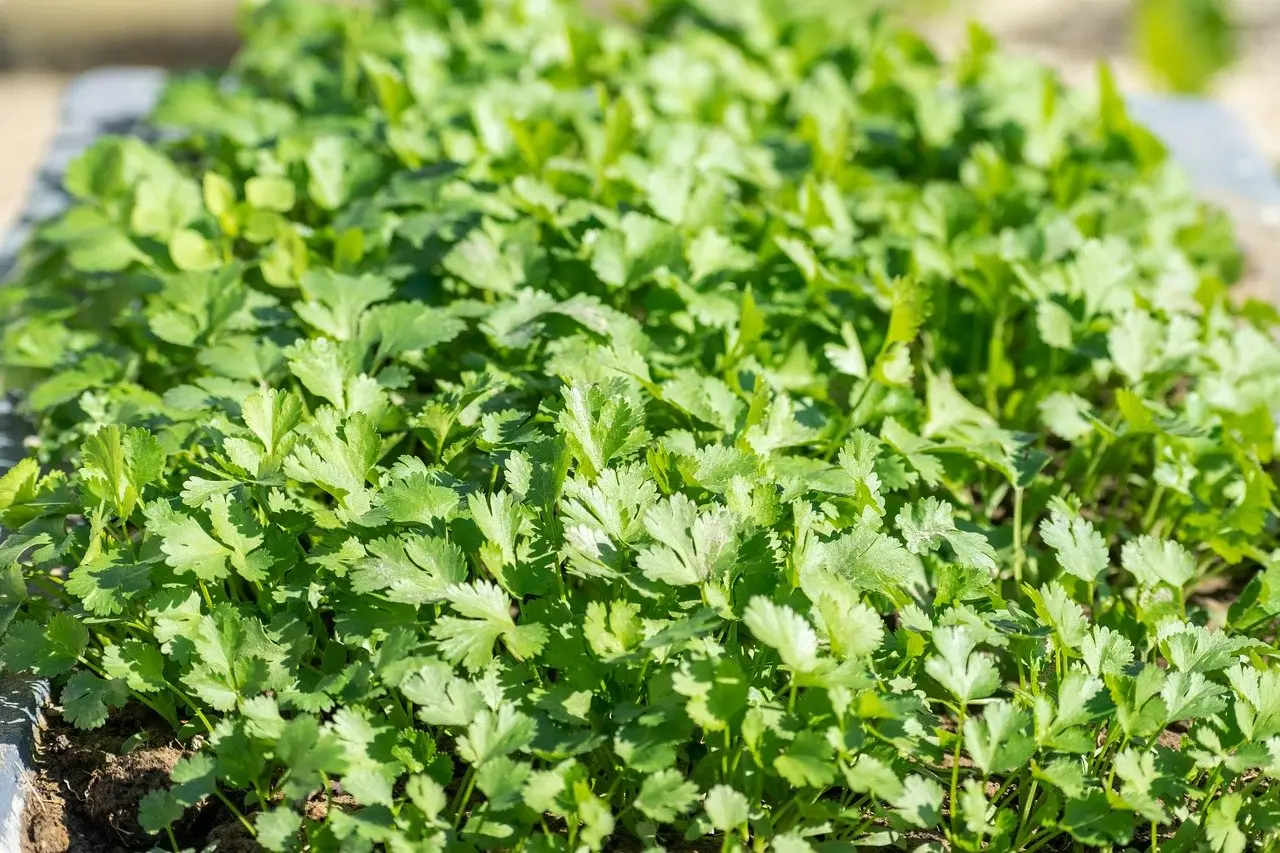
On this page
Outer stems at the base, centre untouched. That buys weeks, not months — cilantro is a short-lived plant and sowing again is the real answer.
Cutting it correctly
| Method | Result |
|---|---|
| Whole outer stems at the base | Correct. Centre keeps producing |
| Snipping leaf tips | Stubby bare stems, little regrowth |
| Shearing the whole plant | One flush at best, often bolts after |
| Cutting into the centre | Plant finished |
Recognising the bolt
In order, over about a week:
- A tall thin stem rises from the centre
- Leaves change shape — narrow, feathery, fern-like instead of broad and scalloped
- Leaf production stops; everything goes into the stem
- Flower umbels open, white to pale pink
- Green seed, which becomes coriander when brown
Let the bolted ones flower
A plant that has gone is not worth fighting. The flowers are excellent for hoverflies and parasitic wasps — both useful predators of aphids — and the seed is coriander, harvested when the heads brown.
Pull the plant and you lose both.
Why it bolts whatever you do
Cilantro is a short-lived annual that flowers on day length and heat. Neither is adjustable, and the plant is not being difficult — it is doing the only thing it was ever going to do.
What helps at the margins:
- Sow direct. Root disturbance from transplanting triggers bolting
- Afternoon shade in summer
- Consistent moisture. Drying out accelerates it
- Slow-bolt varieties — Calypso, Santo, Leisure — buy a couple of weeks
- Sow in autumn and spring rather than midsummer
And then sow again. Every two to three weeks, a short row. That is how people who always have cilantro manage it, and no pruning technique substitutes for it.
Step by step
- Time
- PT10M
- Cost
- 0
- You need
- An established cilantro plant with at least six leaves
- Tools
- Clean scissors
Wait until it has six leaves
A seedling cut too early never builds the base it needs. Let the plant reach about 15 cm with six or more true leaves before taking anything.
Cut the outer stems at the base
Take whole stems from the outside of the plant, cutting about 2 cm above the soil. Snipping leaf tips off produces a stubby plant and no regrowth, because the stem keeps the growing point.
Leave the centre alone
New growth comes from the middle of the rosette. Cutting into the centre removes the growing point and ends the plant.
Take no more than a third
In one session. A plant stripped bare has nothing left to photosynthesise with and either stalls or bolts outright.
Harvest in the cool of the morning
Leaves are turgid and keep better, and the plant is under less stress than in afternoon heat.
Remove flower stems the moment you see them
A tall thin stem rising from the centre means bolting has begun. Cutting it buys a week or two at most, and the leaves are already changing flavour.
Sow the next batch now
Every two to three weeks through the season. This, not pruning, is what gives continuous cilantro — the plant is short-lived by design.
Common questions
How do you cut cilantro so it keeps growing?
Does pruning stop cilantro from bolting?
Can you eat cilantro after it bolts?
Why is my cilantro tall and thin with small leaves?
Should you cut cilantro from the top or the bottom?
Backyard Weekly
Know what to plant, week by week
Join the weekly email for seasonal jobs, fixes for what is going wrong, and gear worth buying.
Not ready to subscribe? The planting calendar is free and needs no email.
By subscribing you agree to our privacy policy. Grow In Backyard will never sell your address.
Keep reading
How to Grow Oregano: Poor Soil and Full Sun Make It Taste
Oregano grown rich and wet is bland. Lean soil, full sun and sparse water concentrate the oils — and it comes back every year once established.
How to Grow Basil: Pinch It Early, Pinch It Often
Basil is easy to grow and easy to lose to one mistake — letting it flower. How to sow it, where to put it, and the pinching routine that keeps it producing.
When to Harvest Spinach: Cut-and-Come-Again vs One Cut
Baby leaves at 3–4 weeks, full leaves at 6–8. Picking outer leaves keeps a plant going for weeks — until it bolts, which heat decides, not you.

How to Prune Lavender — 3 Cuts, Never Into Old Wood
How to prune lavender: cut back into green growth, never old wood. 3 tools cover the main cut and the shaping. See which you already own.