How to Grow Basil: Pinch It Early, Pinch It Often
Basil is easy to grow and easy to lose to one mistake — letting it flower. How to sow it, where to put it, and the pinching routine that keeps it producing.

On this page
Basil is genuinely easy to grow, which is why it is so frustrating that most people’s plants are finished by August. The plant does not fail from neglect. It fails because it is allowed to do the one thing it is trying to do all summer: flower.
It is a tropical annual, and it acts like one
Almost every basil problem is a temperature problem in disguise. Sweet basil originates in tropical Asia, growth effectively halts below about 50°F, and a night in the low 40s will blacken leaf edges on a plant that looked perfect the day before.
This is why the nursery basil bought in April so often sulks: it was raised in a warm greenhouse and put straight into cold spring soil. Wait. Two weeks after your last frost date, with the soil warm to the touch, is far better than two weeks earlier, and the later plant will overtake the earlier one within a month.
The supermarket pot is not a plant
A grocery-store basil pot is twenty or thirty seedlings crammed into one plug, forced fast and sold to be used within a week. It is not a plant that can be kept. If you want to save it, tip it out, divide it into three or four clumps, and pot them separately — but starting a real plant from seed takes six weeks and works far better.
Sun, soil, and space
Six hours of direct sun minimum. Basil grown in part shade stretches, goes pale, and loses flavor concentration — the essential oils that make it taste like basil are produced in response to strong light.
Drainage matters more than fertility. Basil is drought-tolerant and rot-prone, an unusual pairing that means you should choose a free-draining mix and a pot with real holes, then let the top inch dry between waterings. In heavy clay, grow it in a container or a raised bed rather than fighting the ground.
Space plants 10–12 inches apart. A properly pinched plant fills that easily, and the airflow is what keeps downy mildew off it.
The pinching routine
This is the part that separates a plant that produces all summer from one that bolts in six weeks.
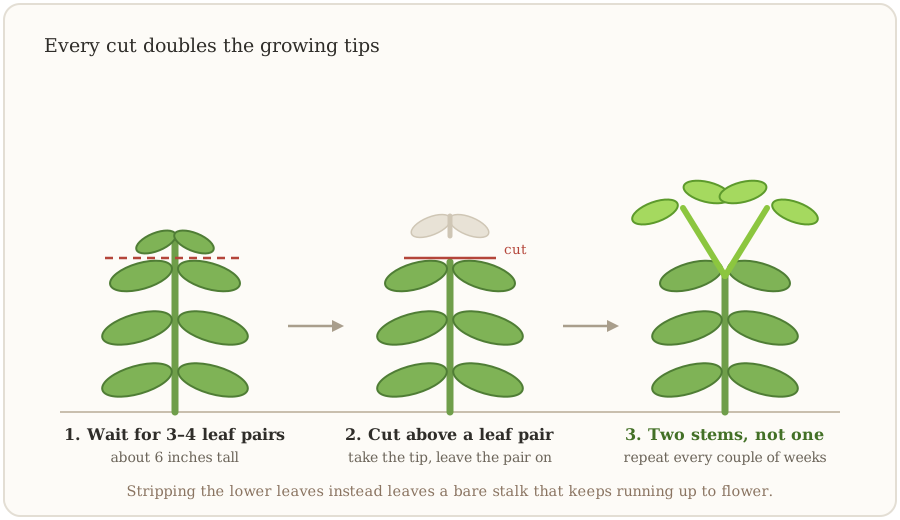
When the seedling has three or four pairs of true leaves and stands about 6 inches tall, cut the main stem cleanly just above a leaf pair. It feels wrong — you are removing the top of a healthy plant — and it is the single most productive thing you will do to it. Two shoots emerge from that junction, and the plant becomes two stems instead of one.
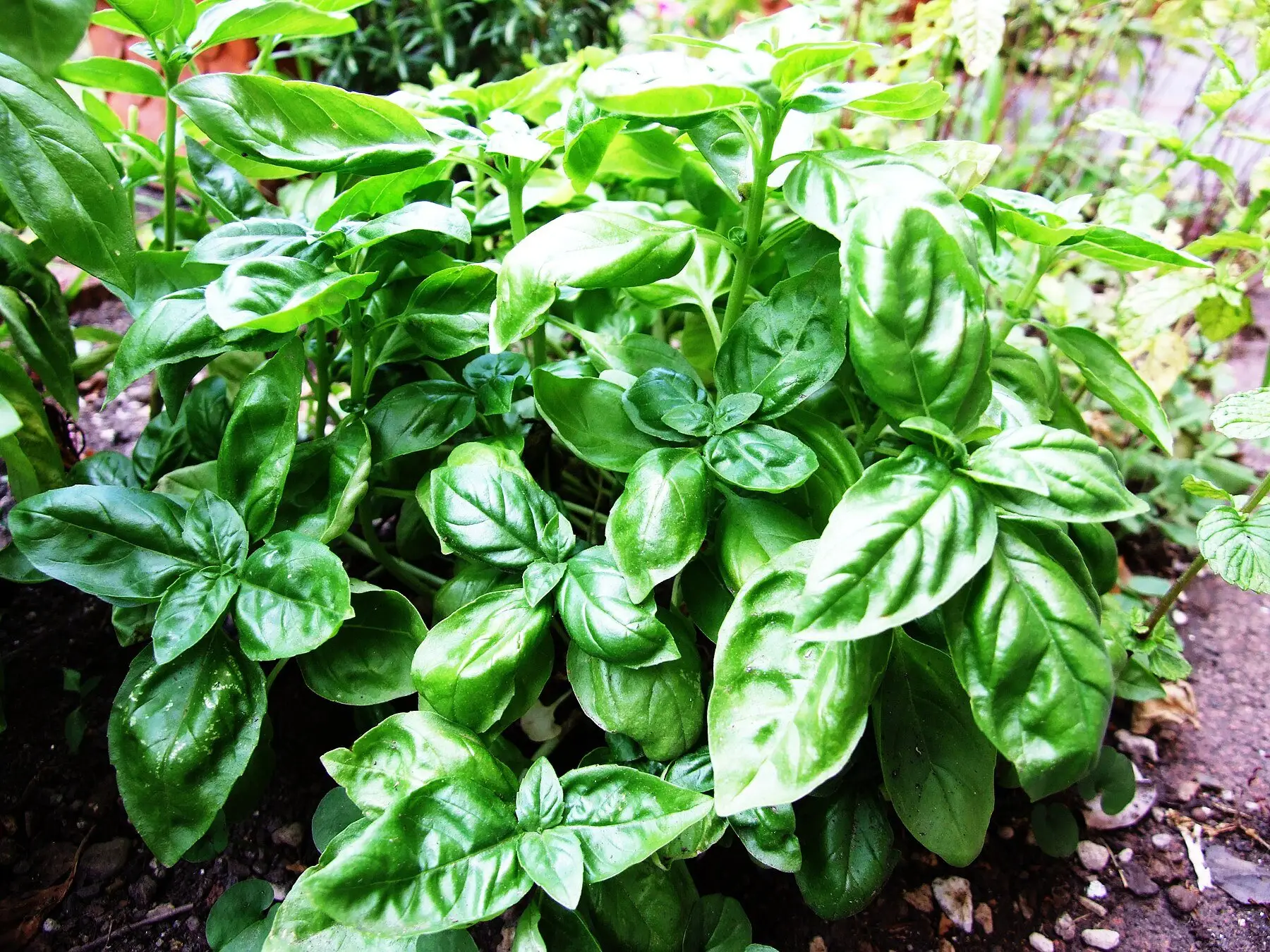
From then on, harvest the same way: take the top two or three inches of a stem, cutting just above a pair of leaves, every couple of weeks. Each cut doubles again. By midsummer a plant pinched from the start is a dense bush, while an unpinched one is a tall stalk with a flower on top.
| Pinched from 6 inches | Left alone | |
|---|---|---|
| Shape by midsummer | Bushy, 12–18 in across | Single leggy stalk |
| Leaf yield | Several harvests, into fall | One or two pickings |
| Flowering | Delayed all season by removal | By early summer |
| Flavor | Holds | Turns bitter after flowering |
Flowering is the end, so prevent it
Basil is an annual with one biological goal: set seed and finish. The flower spike that appears at a stem tip is that plan starting. Once it is allowed to run, the plant redirects resources into seed, leaf production slows sharply, and the remaining leaves take on a distinctly bitter, soapy edge.
Cut every spike off as soon as you spot one, taking the top leaf pair with it. Done consistently, it holds a plant in leaf production for months longer than it would otherwise manage.
Let one plant flower on purpose
If you grow several, allow one to bloom at the end of the season. Basil flowers are excellent for bees and hoverflies, and you can collect the seed. Just keep it away from the plants you are still harvesting, and accept that it is finished for the kitchen.
Common problems
Blackened leaf edges, sudden collapse. Cold. Nothing to fix — move it somewhere warmer, and plant out later next year.
Yellow lower leaves, mushy stem base. Overwatering or poor drainage. Let it dry out; repot into a grittier mix if it is in a container.
Pale, angular yellow patches with gray fuzz underneath the leaf. Downy mildew. It spreads fast and there is no cure for an infected plant — remove it, improve spacing and airflow, water at the base only, and look for a resistant variety next season.
Leggy and pale indoors. Not enough light, and no other cause is likely. A south window is the minimum; a grow light for 12–14 hours a day is what actually works through winter.
Step by step
- Time
- P60D
- Cost
- $5
- You need
- Basil seed or a nursery plant, Free-draining potting mix or compost-enriched soil, Balanced liquid fertilizer
- Tools
- Seed tray or 8-inch pot, Scissors or clean fingers
Wait for genuine warmth
Basil is a tropical annual and stops growing below about 50°F. Sow or plant out only once nights are reliably above 50°F and the soil has warmed — two weeks after your last frost, not on it. Cold-shocked basil blackens at the leaf edges and rarely recovers its vigor.
Sow seed shallow and warm
Press seed onto the surface of moist mix and cover with no more than a quarter-inch. Basil germinates in 5–10 days at 70°F. Keep the surface damp but not sodden until seedlings appear.
Give it six hours of sun and free-draining soil
Full sun produces compact, strongly flavored plants; shade produces leggy ones. The soil must drain — basil tolerates dry far better than wet, and permanently damp roots are the single most common way it dies.
Space plants 10–12 inches apart
A well-pinched basil plant becomes a bush a foot across. Crowding restricts airflow, which is what invites downy mildew, the disease most likely to end the crop early.
Pinch above a leaf pair at 6 inches
When the plant has three or four sets of true leaves and is around 6 inches tall, cut the main stem just above a pair of leaves. Two new stems grow from that junction. This is the step that turns one stalk into a bush, and skipping it is why supermarket-style plants collapse.
Keep pinching every two weeks
Harvest by taking the top few inches of each stem above a leaf pair, rather than stripping individual leaves from the bottom. Every cut doubles the growing tips and keeps the plant in leaf production.
Remove flower buds on sight
As soon as a flower spike forms at a stem tip, cut it off along with the top pair of leaves. Once basil sets flowers it diverts energy to seed, leaf production slows, and the flavor turns noticeably bitter.
Water at the base in the morning
Water the soil, not the foliage, and do it early so any splashed leaves dry within the hour. Wet leaves overnight is the standing invitation for downy mildew and leaf spot.
Feed lightly, not heavily
A half-strength balanced liquid feed every three to four weeks is plenty in a container, and in decent garden soil often nothing is needed. Heavily fed basil grows fast, soft, and bland — high nitrogen dilutes the essential oils that give it flavor.
Common questions
Why is my basil dying?
How do you keep basil growing all summer?
Can you grow basil indoors year-round?
How often should I water basil?
Should I pick basil leaves from the top or the bottom?
Backyard Weekly
Know what to plant, week by week
Free planting calendar. Join the weekly email for seasonal jobs, fixes for what is going wrong, and gear worth buying.
Set MONETIZATION.email.endpoint in src/config/site.ts to enable this form.
By subscribing you agree to our privacy policy. Grow In Backyard will never sell your address.
Keep reading
How to Prune Lavender (and Never Cut Into Old Wood)
Lavender goes woody and splits open when it is pruned too timidly. The one rule that prevents it, the two cuts a year, and what to do with a plant already leggy.
Companion Plants for Tomatoes (And 5 to Keep Away)
Basil, marigolds, and borage earn their place next to tomatoes. Fennel, potatoes, and brassicas do not. What to plant together, and why each pairing works.
How to Harvest Basil So the Plant Gets Bushier
Cut above a leaf pair, never strip the bottom leaves, and pinch the flowers. The harvesting method that doubles the size of a basil plant instead of ending it.
How to Grow Cilantro Without It Bolting in Three Weeks
Cilantro bolts on heat and day length and nothing stops it, so the answer is succession sowing. Direct sowing, why it hates transplanting, and the seed crop.