
How to Preserve Willow Branches: Glycerine, Drying or Both
Glycerine keeps branches supple for years; air drying makes them brittle but keeps the catkins. Which you choose depends on what you plan to do with them.
 By
On this page
Two completely different methods for two different outcomes. Glycerine keeps branches supple for years. Air drying keeps the catkins — and the usual vase-of-water advice ruins both.
Choosing the method
| Glycerine | Air dry | |
|---|---|---|
| Result | Supple, bendable | Hard, brittle |
| Catkins | Usually lost or altered | Preserved silvery |
| Colour | Darkens slightly, sometimes browns | Stays close to natural |
| Longevity | Years | Years, if handled gently |
| Time | 1–3 weeks | 2–3 weeks |
| Cost | Glycerine, a few pounds | Free |
| Best for | Arrangements, wreaths, structures that bend | Pussy willow displays |
The water advice is backwards for pussy willow
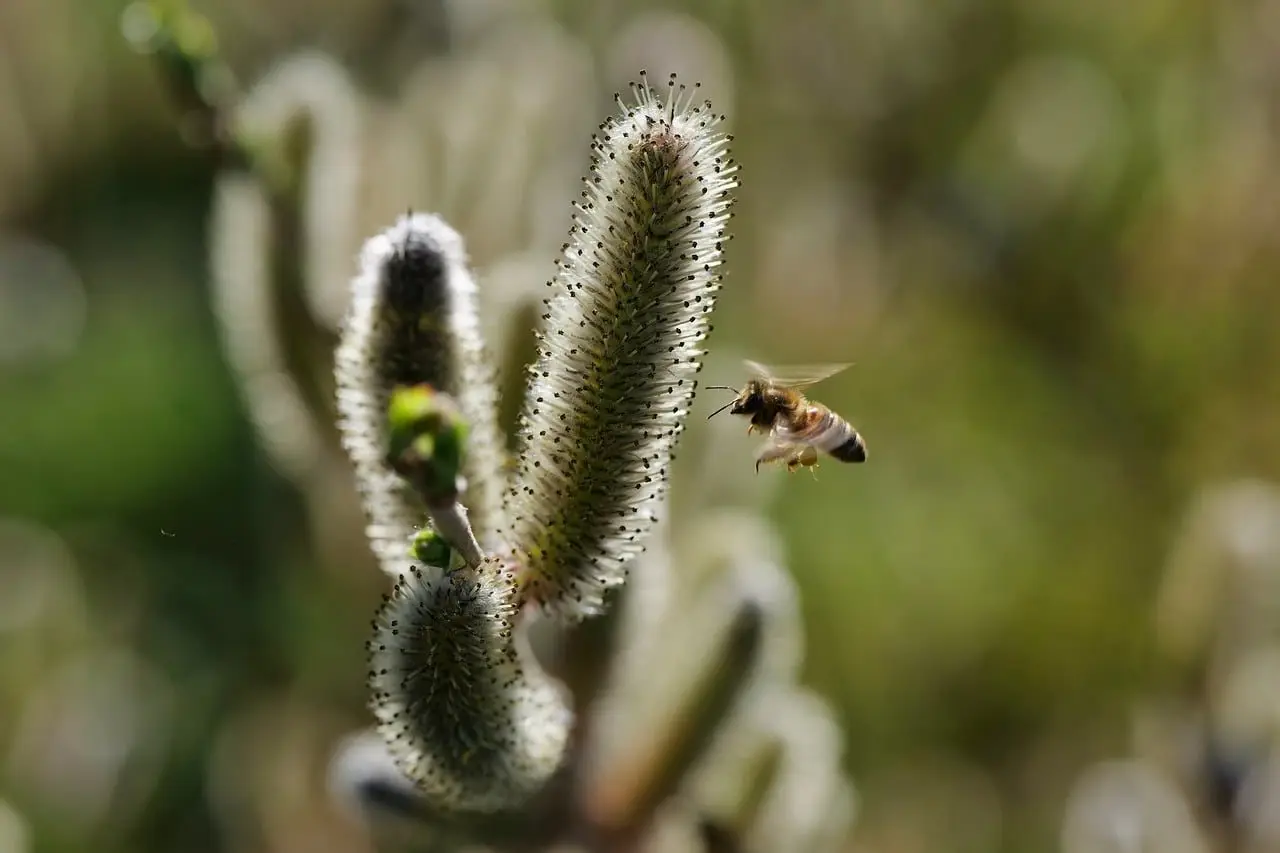
Standing pussy willow in a vase of water is the standard instruction and it is exactly how you lose what you wanted. The stems take up water, the catkins continue developing — opening, yellowing with pollen, and dropping — and often the stems root as well.
To keep the silver buds, keep them dry from the moment they are cut.
Glycerine, in detail
The glycerine replaces water in the plant’s tissue. Because glycerine does not evaporate the way water does, the branch never dries out and never becomes brittle.
The mixture: one part vegetable glycerine to two parts hot water. Hot matters — it dissolves properly and the warm solution moves up the stem faster.
Signs it has worked: the stems darken slightly, often to a deeper brown or bronze, and feel noticeably pliable rather than stiff. Beads of glycerine sometimes appear on the surface, which simply means it is finished and can be wiped off.
If it is not drawing up: the cut end has sealed, or the branch was not fresh. Recut the ends at an angle, crush or split them again, and top the solution up — it should never be allowed to run dry.
Air drying for catkins
- Cut at the silvery bud stage — before the catkins open
- Strip any leaves
- Bundle loosely, so air moves between the stems
- Hang upside down somewhere dark, dry and airy
- Two to three weeks
- Handle gently afterwards. Dried willow snaps
Darkness matters for colour retention, and air movement matters more than warmth. An airing cupboard, a dry shed or a spare room all work; a damp garage does not.
Why willow roots in the vase
Willow contains unusually high levels of natural auxins — the plant hormones that trigger root formation. That is the basis of “willow water”, the home-made rooting solution people steep willow stems in to help other cuttings strike.
The practical consequences:
- Fresh willow in plain water will root, usually within two to three weeks
- Then it leafs out, and you have a plant rather than an arrangement
- This is not a problem to solve unless you want it to be — rooted stems can simply be planted, and willow grows readily from them
If you want branches, keep them out of water: glycerine or dry.
Cutting, and the plant’s side of it
- Dormant season, late autumn through early spring
- Pussy willow specifically: late winter, catkins at the silver bud stage
- Avoid cutting in full leaf — leafy stems preserve badly
- Cut cleanly above a bud
Willow responds to hard pruning with vigorous straight new growth, which is exactly what basketry, plant supports and structural work want. Coppicing or pollarding a willow on a two or three year cycle gives a renewable supply of uniform rods and keeps the tree at a manageable size — which matters, because an unmanaged willow becomes very large and its roots are famously enthusiastic about drains.
Step by step
- Time
- P14D
- Cost
- 12
- You need
- Freshly cut willow branches, Vegetable glycerine, Hot water
- Tools
- Secateurs, A tall sturdy vase or bucket, A hammer or a sharp knife
Cut during the dormant season
Late autumn to early spring. For pussy willow, cut in late winter while the catkins are still silvery buds, before they open.
Strip leaves and side twigs
Remove anything you do not want in the finished arrangement. Leafy stems preserve poorly and lose far more water.
Crush or split the cut ends
Tap the bottom few centimetres with a hammer or split them with a knife so the stem can draw solution up efficiently.
Mix one part glycerine to two parts hot water
Hot water dissolves the glycerine properly and moves up the stem faster. Make enough to stand the branches in about ten centimetres of solution.
Stand the branches in the solution
Use a tall sturdy container somewhere cool and out of direct sun. Top the solution up as it is taken in — it must never run dry.
Wait one to three weeks
The branches are ready when the colour has darkened slightly and the stems feel supple rather than stiff. Beads of glycerine on the surface mean it is finished.
Wipe and store
Wipe off any surface glycerine with a cloth. Keep the finished branches out of direct sunlight and away from radiators.
Air dry instead if you want the catkins
For pussy willow, skip the glycerine entirely. Bundle the stems loosely and hang them upside down somewhere dark, dry and airy for two to three weeks, and never stand them in water.
Common questions
How do you preserve willow branches so they stay flexible?
How do you preserve pussy willow with the catkins intact?
Why do my willow branches sprout roots in the vase?
How long does glycerine-preserved willow last?
When is the best time to cut willow for preserving?
Backyard Weekly
Know what to plant, week by week
Join the weekly email for seasonal jobs, fixes for what is going wrong, and gear worth buying.
Not ready to subscribe? The planting calendar is free and needs no email.
By subscribing you agree to our privacy policy. Grow In Backyard will never sell your address.
Keep reading

Beech Tree Bark: How to Identify It and What Damages It
Smooth grey bark that stays smooth for two centuries is the giveaway. It is also unusually thin, which is why beech is easily killed by carving and sun.
How to Cut Rosemary: Where to Cut So It Grows Back Bushy
Cut above a leaf node in the green growth, never into bare brown wood. Old rosemary will not resprout from it — which is how plants get killed.
Tree Sprouts in Lawn: Why They Appear and How to Stop Them
Shoots coming up across a lawn are usually root suckers from one living tree, not seedlings. Which they are decides whether mowing ever ends it.
Japanese Maple: Choosing One, Siting It, and Leaf Scorch
Crisp brown leaf edges are wind and sun, not disease. How to pick between upright and dissected forms, where to plant, and why you should barely prune one.