
How to Grow Plums: Rootstock, Pollination and Pruning
Plums crop within three to five years if you get the rootstock, pollination group and pruning season right — prune in summer, never winter.
 By
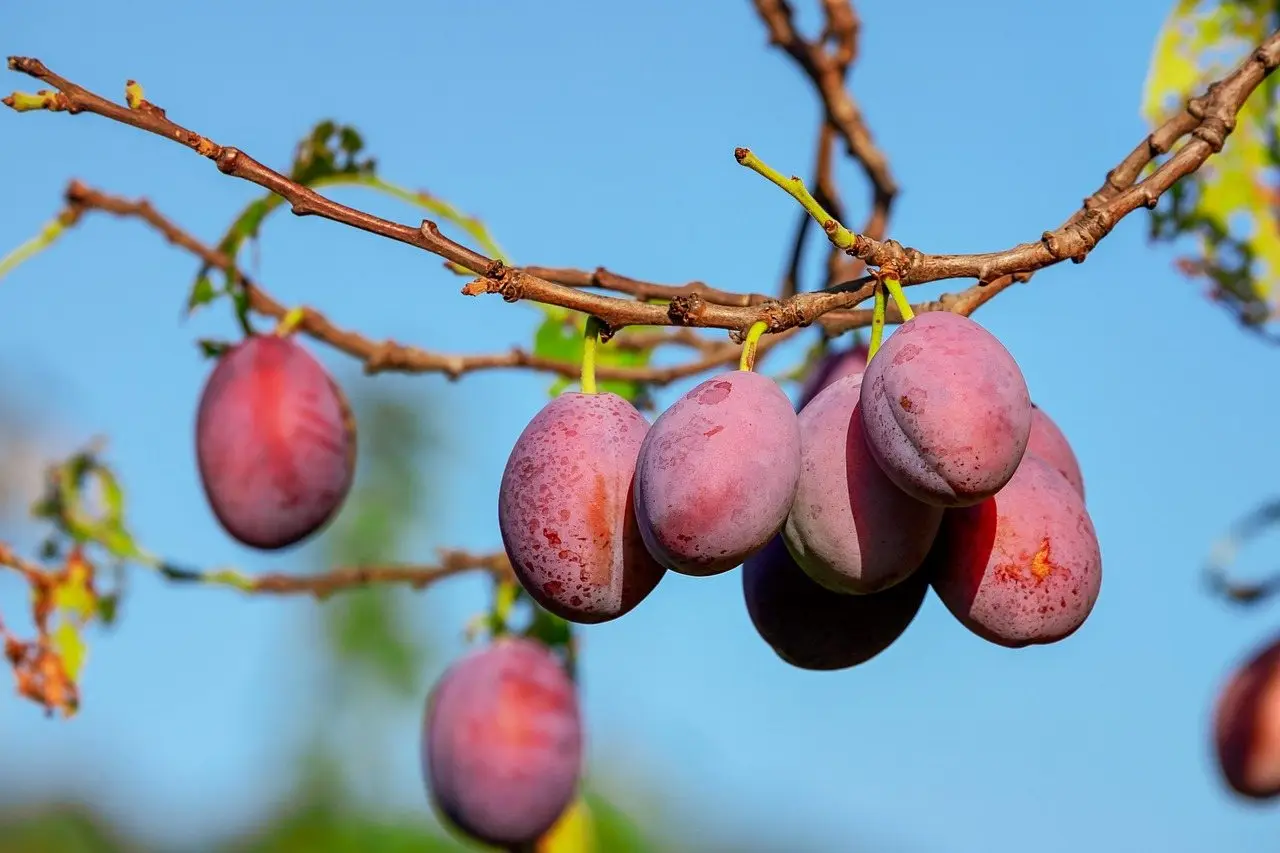
On this page
Plums are straightforward with three decisions made correctly: rootstock, pollination group, and pruning in summer rather than winter.
Planting
- Full sun, sheltered from wind and late frost. Plums flower early
- Well-drained soil, pH 6.0–7.0. They dislike waterlogging
- Plant bare-root in late autumn to early spring, container-grown any time the ground is workable
- Same depth as it grew — the graft union stays well clear of the soil
- Stake a dwarf tree permanently, a larger one for the first two years
- Mulch a wide ring, kept clear of the trunk
- Water weekly through the first two or three summers
Rootstocks
| rootstock | mature height | notes |
|---|---|---|
| Pixy | 8–10 ft | Small gardens; needs good soil and water |
| St Julien A | 12–15 ft | The standard garden choice |
| Myrobalan B | 20 ft+ | Full standard; vigorous |
| Marianna 2624 | 12–18 ft | Common in the US |
Pollination
| self-fertile | needs a partner |
|---|---|
| Victoria | Coe’s Golden Drop |
| Opal | Jefferson |
| Czar | Most gages |
| Stanley | Kirke’s Blue |
| Marjorie’s Seedling | Early Laxton |
A partner must flower in the same period and sit within roughly fifty feet.
Winter pruning is how plum trees die
Silver leaf and bacterial canker infect through wounds in cool damp weather. Prune young trees in spring as growth starts and established trees lightly in mid-summer after fruiting. Make clean cuts and leave them unsealed.
Pruning by age
- Years 1–3: build an open framework of four or five main branches in spring. Remove anything crossing or heading into the centre
- Established: a light mid-summer tidy — dead, damaged, crossing and crowded wood only. Plums fruit on both old and young wood, so heavy pruning is unnecessary
- Never take out more than about a fifth of the canopy in a year
Thinning and support
- Thin to 2–3 inches apart after the natural June drop
- Support heavy branches with props before they bend, not after
- A full unthinned crop breaks limbs, and the break invites silver leaf
Why it might not fruit
| cause | fix |
|---|---|
| No pollination partner | Plant a compatible variety, or a family tree |
| Frost at blossom | Site out of frost pockets; fleece a small tree |
| Winter pruning damage | Switch to summer pruning |
| Too much nitrogen | Stop feeding; use potassium instead |
| Too young | Wait — 6 years on a vigorous rootstock |
| Biennial bearing | Thin the heavy crop to even it out |
Common questions
When should a plum tree be pruned?
Do plum trees need a pollination partner?
What rootstock should I choose for a plum?
Why is my plum tree not fruiting?
Should plums be thinned?
How long until a plum tree fruits?
Backyard Weekly
Know what to plant, week by week
Join the weekly email for seasonal jobs, fixes for what is going wrong, and gear worth buying.
Not ready to subscribe? The planting calendar is free and needs no email.
By subscribing you agree to our privacy policy. Grow In Backyard will never sell your address.
Keep reading
How Tall Do Pear Trees Grow? By Rootstock, Not Variety
A standard pear reaches 30 to 40 feet, semi-dwarf 15 to 20, dwarf 8 to 12. The rootstock decides it, and pruning only holds the shape.
Backyard Trees for Shade: Fast, Safe and Right-Sized
Shade in five to ten years without lifting the patio. Species by mature size, root behaviour and distance from the house.
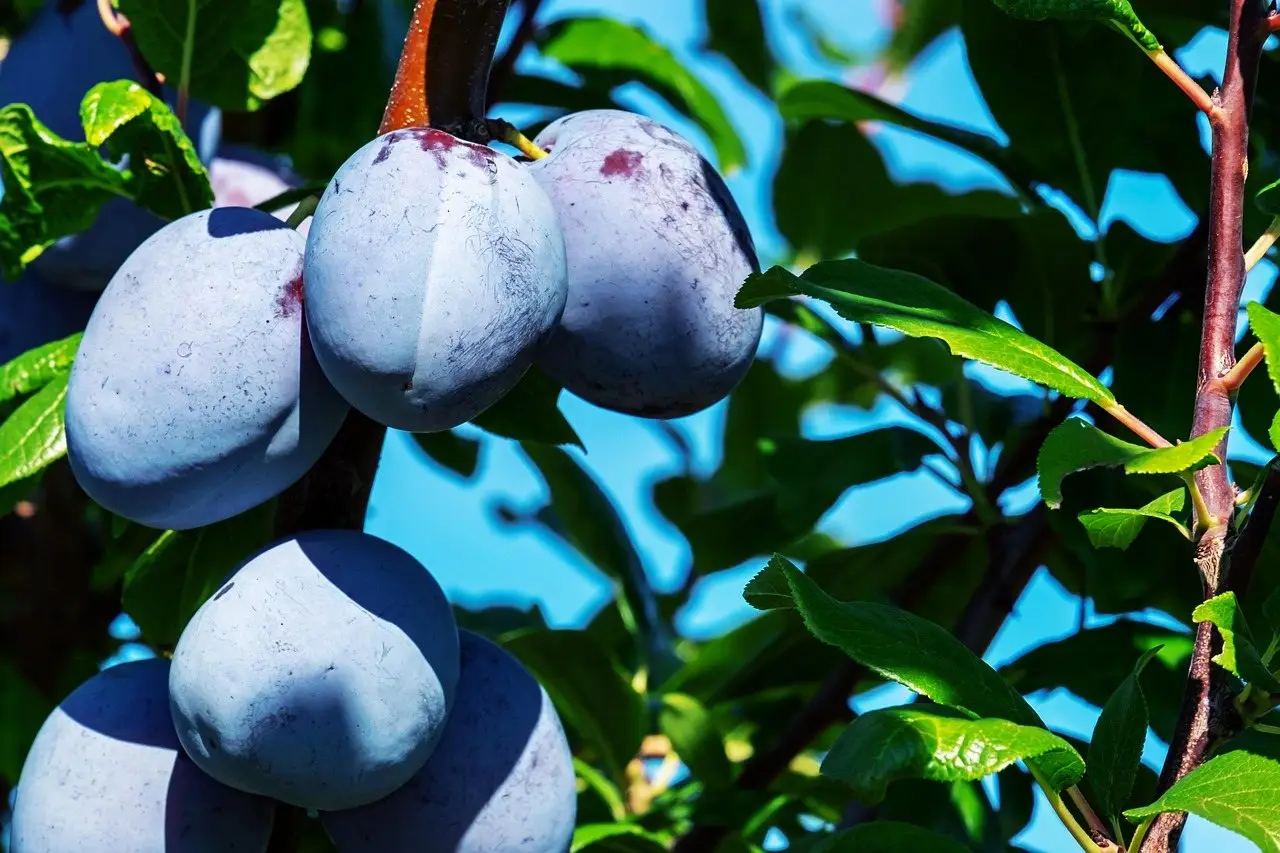
Plum Tree Diseases: Identifying Silver Leaf, Rust and Rot
Most plum problems are one of six things. How to tell them apart by what the leaves, fruit and bark show, and which ones mean the tree is lost.
How to Grow Strawberries (And Get Fruit the First Year)
Strawberries are easy to grow and easy to get wrong. Which of the three types to plant, why you pinch the first flowers, and how to keep a bed producing.