
How to Grow Plumeria: Sun, Sharp Drainage and a Dry Winter
Plumeria wants full sun and soil that drains fast. The thing that kills it is a wet dormant winter, not cold alone — and it flowers on mature tips.
 By
On this page
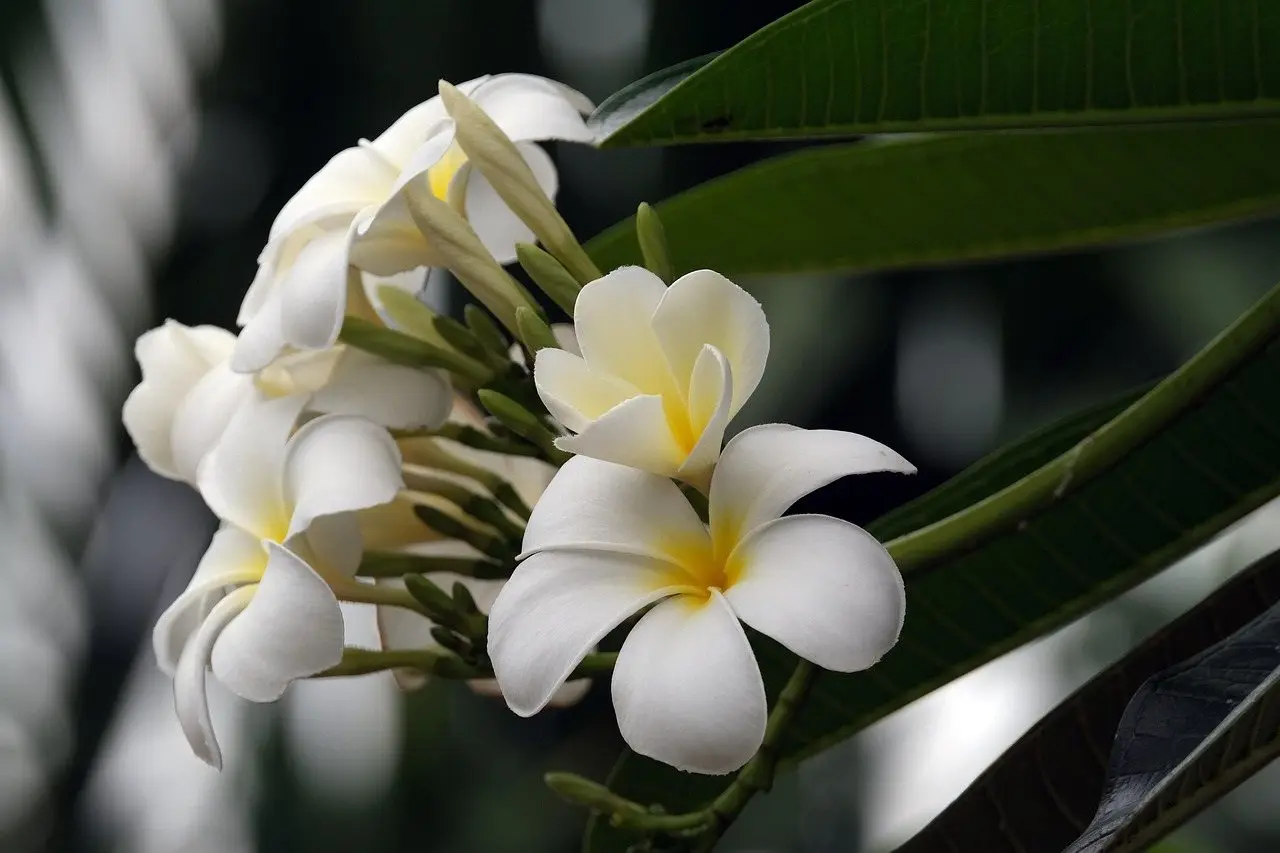
Plumeria is a succulent-stemmed tropical tree, and it is grown successfully in cold climates by people who understand one thing: it has a real dormant season, and it must be kept dry through it.
The dormancy, which is the whole trick
In autumn, plumeria drops its leaves and stops. This looks alarming the first time and it is entirely normal — it is a deciduous tropical tree, not an evergreen houseplant having a crisis.
While dormant:
- Almost no water. The roots are inactive; water sits and the stem rots from the base
- No light required. A bare stick does not photosynthesise, so a garage, a cellar or a dark cool room is fine
- Above about 40 °F. That is the only real requirement
The commonest way to kill a plumeria
Watering it through winter. The plant looks dead, the instinct is to help, and the help is what kills it.
Resume watering only when new leaves actually appear in spring — not on a date, and not because the stem looks shrivelled. Some shrivelling over winter is normal.
Sun and soil
Six to eight hours of direct sun, and more is better. This is the single biggest determinant of whether it flowers.
Gritty, fast-draining compost — cactus or succulent mix with extra perlite or pumice. Generous drainage holes. Plumeria has thick, water-storing roots that rot in anything that holds moisture.
In the growing season water thoroughly, then let it dry out before watering again. The soak-and-dry cycle, same as a cactus.
Feeding for flowers, not leaves
A balanced houseplant feed gives you a large green plumeria with no blooms.
Use a high-phosphorus feed — the middle number — through spring and summer, every two to three weeks. Stop entirely as the plant goes dormant.
Why it is not blooming
| Cause | Fix |
|---|---|
| Too little sun | 6–8 hrs direct. Most common by far |
| Too much nitrogen | Switch to high phosphorus |
| Not mature enough | Flowers form on mature tips. Wait a season |
| Pruned recently | You removed the flowering wood |
| No winter dormancy | A warm wet winter suppresses bloom |
Rooting a cutting
This is how plumeria is usually shared, and the failure mode is the same as everything else here: too much water.
- Callus the cut end one to two weeks somewhere dry and shaded, until hard and dry
- Pot into gritty compost
- Almost no water until roots form — the thick stem carries its own moisture
- Four to eight weeks in warmth. Bottom heat speeds it considerably
Take cuttings in spring. Autumn cuttings root far less reliably because the plant is heading into dormancy.
Plumeria rust
Powdery orange-yellow pustules on leaf undersides, yellow blotches above. Very common, spreads on air and splashed water.
It rarely kills an established plant but causes early leaf drop and weakens it. Remove affected leaves and bin them rather than compost, avoid overhead watering, improve airflow, and clear fallen leaves in autumn — the spores overwinter on them.
Pruning
Only if you need to. Plumeria flowers at the tips of mature branches, so every cut removes potential blooms and costs a season or two.
When you do: early spring, cutting just above a branch junction. Each cut typically produces two or three new tips, which is how a leggy plant is gradually made bushier — at the price of a year’s flowers.
Common questions
Why is my plumeria not blooming?
How do you overwinter a plumeria?
How do you root a plumeria cutting?
What are the orange spots on my plumeria leaves?
Does plumeria need to be pruned?
Can plumeria survive frost?
Backyard Weekly
Know what to plant, week by week
Join the weekly email for seasonal jobs, fixes for what is going wrong, and gear worth buying.
Not ready to subscribe? The planting calendar is free and needs no email.
By subscribing you agree to our privacy policy. Grow In Backyard will never sell your address.
Keep reading
How to Grow a Jade Plant: Underwater It and Give It Sun
Jade plants live for decades on neglect. Soak then dry completely, full sun for solid growth, and repot rarely — overwatering is the only real killer.
How Often Should I Water My Cactus? Every 2 to 4 Weeks
Most cacti need water every two to four weeks in summer and almost none in winter. The schedule is wrong; what matters is how dry the compost is.
How to Propagate Kalanchoe: Leaves, Cuttings or Plantlets
Most kalanchoes root from a leaf or a stem tip after a few days of callusing. One species does the work for you and drops ready-made plantlets.
How to Make Pothos Bushier Instead of Long and Bare
A pothos goes leggy because it is reaching for light. Cut it back, propagate the cuttings into the same pot, and move it brighter — in that order.