
How to Make Pothos Bushier Instead of Long and Bare
A pothos goes leggy because it is reaching for light. Cut it back, propagate the cuttings into the same pot, and move it brighter — in that order.
 By
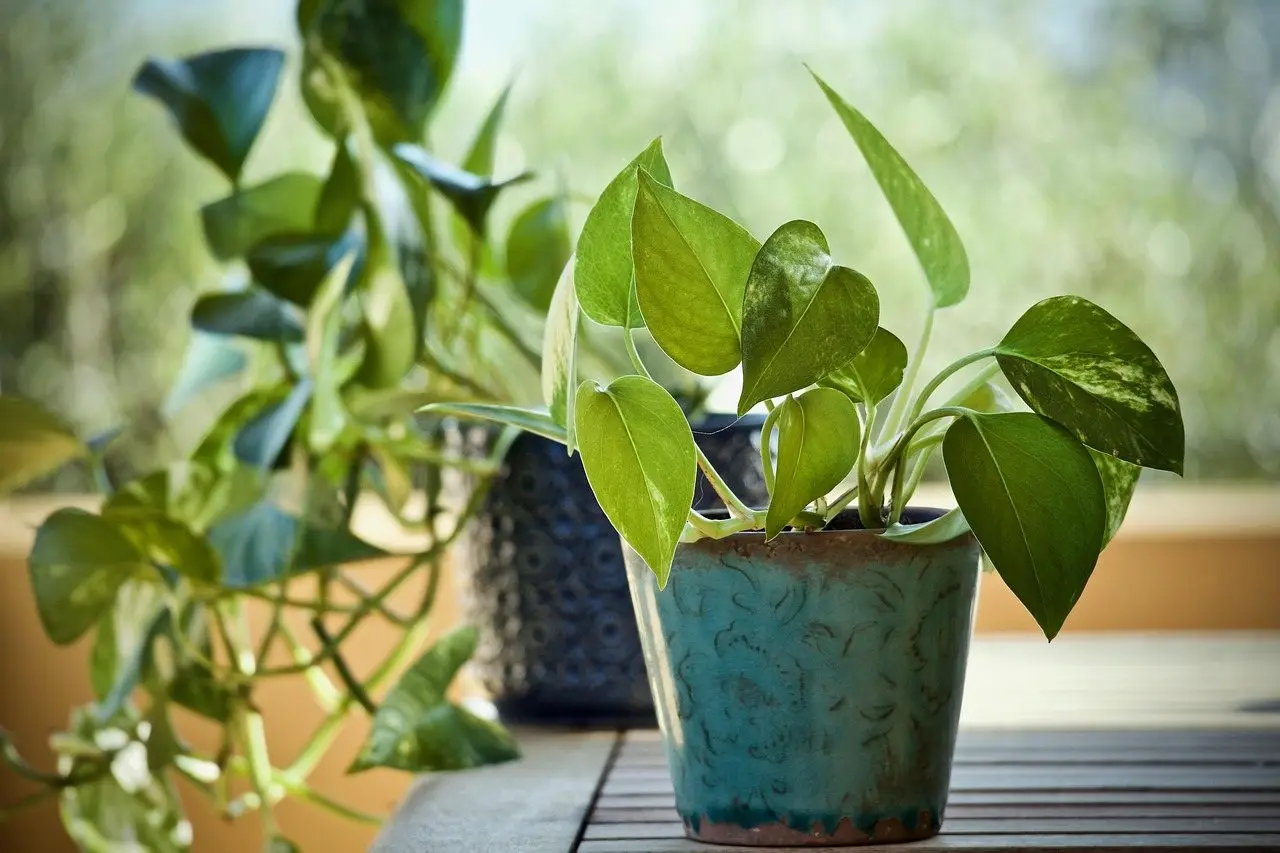
On this page
A leggy pothos is reaching for light, and the bare vine it has already made will never releaf. The fix is three things in order: more light, prune above nodes, and plant the cuttings back into the same pot.
That last step is the one most people skip, and it is the one that actually creates density.
Why pruning alone is not enough
This is the part that explains everything else.
Most houseplants, cut back, push new shoots from the base. Pothos does not. It is a vining aroid: it extends along existing stems from growing tips, and it almost never generates fresh shoots at soil level.
So an empty centre stays empty no matter how carefully you prune. The only way to put new growing points there is to physically add them — which is what rooting cuttings back into the pot does.
The compounding trick
Every time you prune, root the cuttings and tuck them back in. Three to five at a time, into gaps around the centre and edges.
Do it at two or three successive prunings and the difference is dramatic — a pot with fifteen growing points instead of four. A plant that has only ever been cut back, never refilled, stays sparse however tidy it looks.
Find the nodes before you pick up scissors
A node is the small brown bump where a leaf stalk meets the vine and a stubby aerial root pokes out. It matters twice over:
- Pruning: cut just above a node and the dormant bud there breaks into new branching growth. Cut midway along a bare stretch and you get a stub that dies back
- Propagating: a cutting must include at least one node. A leaf with no node will sit in water indefinitely and never root
So every cut serves both purposes at once, which is why the node is the only landmark you need.
The method
- Move it brighter — beside an east or west window, or a few feet from a south-facing one. Direct midday sun scorches, dim corners stretch
- Cut the longest, barest vines back hard, often by half or more, each cut just above a node
- Stagger the lengths. Equal-length cuts give a flat fringe; varied lengths give growth at several heights, which is what reads as full
- Keep every piece with a node and a leaf
- Root them — in water with the node submerged and the leaf above it, or straight into moist compost, which skips the transfer shock later
- Plant three to five back into the parent pot once rooted
- Pinch the tips of new growth periodically to force branching rather than extension
Keep total removal to about a third of the plant per session, in spring or summer while it is actively growing.
Watering, since it causes the other half of the complaints
Pothos tolerates drought far better than wet feet. Water when the top inch of compost is dry, soak thoroughly, drain fully, and never leave it standing.
Yellowing lower leaves are usually overwatering, not thirst — which is the same confusion that kills cacti, and it is worth checking the compost before reaching for the watering can.
What will not happen
The bare vine will not releaf. Those nodes have already dropped their leaves and will not produce new ones along the old stretch. You can prune it off, or you can coil it back into the pot and pin it down so the nodes root where they touch compost — which is a genuinely useful trick for hiding a long bare stem while adding growing points.
What you cannot do is wait for it to fill back in by itself.
Step by step
- Time
- P60D
- Cost
- 0
- You need
- An existing pothos, Fresh potting compost
- Tools
- Clean sharp scissors or secateurs
Move it somewhere brighter first
Legginess is a light problem. Bright indirect light beside an east or west window produces short internodes and large leaves, while a dim corner produces bare vine whatever else you do.
Find the nodes
A node is the small brown bump on the vine where a leaf joins and an aerial root emerges. Every cut and every cutting is defined by node position, so learn to spot them before picking up scissors.
Cut just above a node
Pruning above a node triggers the dormant bud there to break, which is what produces a new branching vine. A cut in the middle of a bare stretch gives you a stub that does nothing.
Take off up to a third at a time
Cut the longest, barest vines back hard — often by half or more — but keep total removal to about a third of the plant in one session so it can recover and push new growth.
Vary the cut lengths
Cutting every vine to the same length gives a flat fringe. Staggering them produces growth at several heights, which is what actually reads as full.
Keep the cuttings
Each piece with at least one node and one leaf will root. These are the fastest route to a fuller pot, because the plant you have cannot fill its own centre.
Root the cuttings in water or compost
Submerge the node, not the leaf. Roots appear in one to two weeks in water, or plant straight into moist compost and skip the transfer shock.
Plant the rooted cuttings back into the parent pot
Tuck three to five rooted cuttings into gaps around the centre and edge. This is the single step that turns a sparse plant into a dense one, and it is why pruning alone rarely fixes legginess.
Water when the top inch dries
Pothos tolerates drought far better than wet feet. Soggy compost rots roots and causes the yellowing lower leaves often mistaken for underwatering.
Pinch new tips as they run
Once regrowth is established, pinch the growing tips periodically. Each pinch removes apical dominance and forces the vine to branch rather than extend.
Common questions
How do you make a pothos bushier?
Why is my pothos long and leggy with no leaves?
Where exactly should you cut a pothos?
Can you plant pothos cuttings back into the same pot?
How much of a pothos can you cut back at once?
Does pothos grow new shoots from the base?
Backyard Weekly
Know what to plant, week by week
Join the weekly email for seasonal jobs, fixes for what is going wrong, and gear worth buying.
Not ready to subscribe? The planting calendar is free and needs no email.
By subscribing you agree to our privacy policy. Grow In Backyard will never sell your address.
Keep reading
Propagating Pothos in Water: The Node Is What Matters
A cutting roots only if it includes a node. Leaves alone never will. Here is where to cut, how long it takes, and when to move it to soil.
Heart Leaf Philodendron Care: Why Yours Has Gone Leggy
Long bare stems with leaves only at the ends means too little light. Pinching, not more water, is what turns a straggly plant back into a full one.
China Doll Plant Care: Why It Drops Leaves, and the Fix
China doll plants drop leaves the week they come home. It is a light problem, not a watering one — and the fix is brighter, not wetter.

How to Make Wandering Dude Bushy: Pinch and Replant
Tradescantia goes leggy in low light and never refills a bare stem. Pinch hard, root the cuttings, and plant them back into the same pot.