
How to Make Wandering Dude Bushy: Pinch and Replant
Tradescantia goes leggy in low light and never refills a bare stem. Pinch hard, root the cuttings, and plant them back into the same pot.
 By
On this page
Cut it back hard, then plant the cuttings back into the same pot. A full tradescantia is almost always several plants, not one.
Why it went leggy
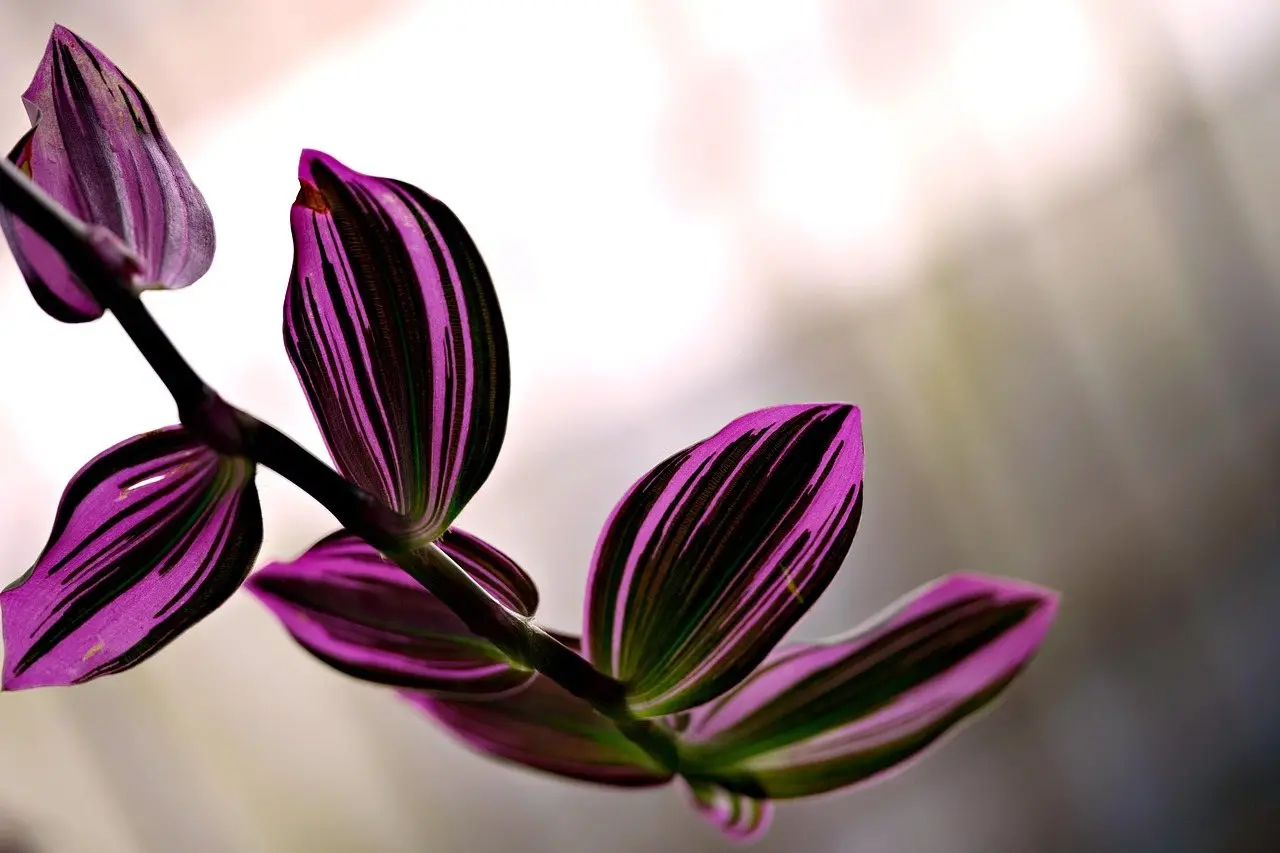
In dim light the plant stretches — longer gaps between leaves, smaller leaves, lower leaves shed. The purple and silver markings fade too, because the plant makes more chlorophyll to cope.
Moving it brighter stops it getting worse. It does not repair what already happened, because those bare internodes will not produce new leaves.
The renovation
- Move it to bright indirect light first, so new growth comes in compact
- Cut every vine back to 10–15 cm, each cut just above a node
- Keep every piece. Discard only the genuinely bare lengths
- Strip the lowest leaves from each cutting
- Root them — a glass of water, or straight into the compost
- Plant four or five back around the edge of the parent pot
- Pinch the tips every month from now on
Straight into the compost usually beats water
Tradescantia roots so readily that the water stage is optional, and skipping it avoids the transition water-grown roots have to make later.
Push the cuttings into damp compost, keep it damp for a fortnight, and they root in place.
Keeping it full
| Symptom | Cause |
|---|---|
| Long bare stems | Low light |
| Faded purple or silver | Low light |
| Crispy brown leaf tips | Dry air or underwatering |
| Soft brown stems at the base | Overwatering |
| Pale, small new leaves | Low light, or exhausted compost |
| Scorched bleached patches | Direct midday sun |
Light answers most of them. Bright, indirect, out of fierce midday sun — and pinch the tips regularly rather than waiting until it needs rescuing again.
A note on the name
This plant is still widely sold as “wandering jew”, a name many growers and nurseries now avoid as a slur. Wandering dude, inch plant, or simply Tradescantia zebrina are the common alternatives, and are what you will increasingly see on labels.
Step by step
- Time
- P30D
- Cost
- 0
- You need
- A leggy tradescantia, Fresh houseplant compost
- Tools
- Clean scissors, A glass of water, or an empty corner of the same pot
Move it into brighter light first
Bright indirect light, out of fierce midday sun. New growth then comes in compact instead of repeating the stretch.
Cut every vine back to 10 to 15 cm
Each cut goes just above a node — the small bump where a leaf joins the stem. New shoots come from the nodes below the cut.
Keep all the cuttings
Every piece with at least two nodes is a new plant. Discard only the genuinely bare lengths of stem.
Strip the lowest leaves
Remove leaves from the bottom node or two of each cutting so nothing sits buried in compost or under water, where it rots.
Root them in compost or water
Push cuttings straight into damp compost, or stand them in water until roots reach a few centimetres. Compost is usually the better route for this plant.
Plant four or five back into the parent pot
Space them around the edge of the same pot. This is what actually fills the gaps — a full tradescantia is several plants, not one.
Keep it damp for a fortnight
New cuttings need consistent moisture while they root. After that, water when the top of the compost feels dry.
Pinch the tips monthly from now on
Each pinch branches the stem below it. Regular pinching is what stops the plant running leggy again.
Common questions
How do you make a tradescantia bushy?
Why is my tradescantia leggy with bare stems?
Where do you cut tradescantia?
Can you put tradescantia cuttings straight into soil?
Why is my tradescantia losing its purple colour?
Backyard Weekly
Know what to plant, week by week
Join the weekly email for seasonal jobs, fixes for what is going wrong, and gear worth buying.
Not ready to subscribe? The planting calendar is free and needs no email.
By subscribing you agree to our privacy policy. Grow In Backyard will never sell your address.
Keep reading
Propagating Pothos in Water: The Node Is What Matters
A cutting roots only if it includes a node. Leaves alone never will. Here is where to cut, how long it takes, and when to move it to soil.
Heart Leaf Philodendron Care: Why Yours Has Gone Leggy
Long bare stems with leaves only at the ends means too little light. Pinching, not more water, is what turns a straggly plant back into a full one.
How to Repot a Snake Plant: Only When It Has To Be Done
Snake plants flower better and rot less when slightly pot-bound. Repot every 3–5 years, one size up, into gritty mix — and keep it dry afterwards.
How to Propagate Aloe: Pups, Not Leaf Cuttings
Aloe multiplies from offsets at the base, and leaf cuttings almost always rot. How to separate a pup, when to do it, and the callusing step.