
How to Grow Fennel: Bulb or Herb, and Why It Bolts
Florence fennel bolts if checked even briefly. Sow direct in midsummer, keep it watered, and earth the bulb up — herb fennel needs none of that.
 By
On this page
Two different plants share the name. Florence fennel makes the bulb and bolts at the slightest check; herb fennel never makes one and barely needs you.
Which fennel
| Florence fennel | Herb / bronze fennel | |
|---|---|---|
| Type | Annual vegetable | Hardy perennial herb |
| Bulb | Yes | Never |
| Height | 40–60 cm | 1.5–2 m |
| Grown for | The bulb | Leaves, seed, looks |
| Sold as | Vegetable seed | Herb plant or seed |
| Difficulty | Fussy | Very easy |
The most common disappointment in growing fennel is sowing herb fennel and waiting for a bulb that was never coming.
Why Florence fennel bolts
Three triggers, and all three are about being checked:
- Sown too early. Long, lengthening days push it to flower rather than bulb
- Transplanted. The taproot resents disturbance badly
- Allowed to dry out. Even a few days can do it
Midsummer is the sowing window, not spring
This is counterintuitive for a vegetable, and it is the single most useful thing to know. Sow after the longest day so the plant swells its bulb while day length is falling.
Spring-sown Florence fennel bolts more often than not.
Growing the bulb
- Sow direct, two or three seeds every 30 cm, thinned to the strongest
- Full sun, fertile moisture-retentive soil with organic matter dug in
- Water consistently. Mulch to hold it
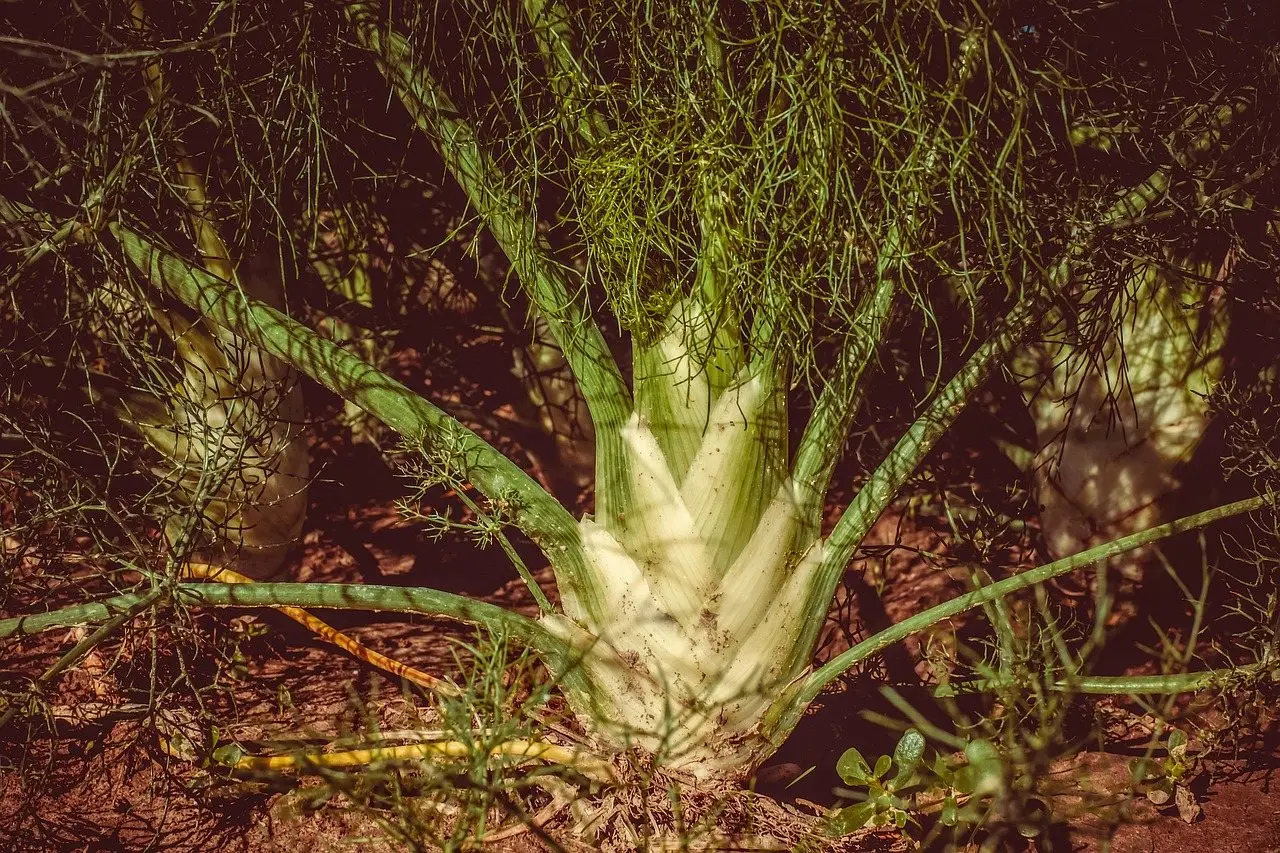
- Earth up once the base starts to swell, to blanch it white and sweet
- Harvest at tennis-ball size, cutting just above soil level
- Leave the stump — it often throws a flush of fine shoots worth eating
Herb fennel, which asks for nothing
Full sun and any reasonable soil. It is hardy, perennial, drought-tolerant once established, and grows to head height.
Two cautions worth knowing:
- It inhibits some neighbours — beans, tomatoes and other umbellifers are the usual reports — so it is often grown in a corner on its own
- It crosses with dill, which matters if you save seed from either
In exchange, the flowers are among the best hoverfly and parasitic wasp plants you can grow, both of which eat aphids. A clump at the end of a bed earns its place even if you never cook with it.
Step by step
- Time
- P90D
- Cost
- 6
- You need
- Florence fennel seed, or a herb fennel plant, Compost or well-rotted organic matter
- Tools
- A hoe or trowel, A watering can
Decide which fennel you want
Florence fennel is the annual vegetable grown for its swollen bulb. Herb fennel, including bronze fennel, is a tall hardy perennial grown for leaves and seed and never forms a bulb. They are not interchangeable, and buying the wrong seed is the commonest reason a bulb never appears.
Sow Florence fennel in midsummer
Sow from midsummer onward, after the longest day, so the plant bulbs up as days shorten. Spring sowings of Florence fennel very often bolt straight to flower without forming a bulb.
Sow direct, never transplant
Fennel has a taproot and resents root disturbance, and a checked plant bolts. Sow where it is to grow, two or three seeds every 30 cm, and thin to the strongest.
Give it good soil and sun
Full sun and fertile, moisture-retentive soil with organic matter dug in. Thin, dry or poor ground produces small tough bulbs and encourages bolting.
Never let it dry out
Consistent moisture is the single biggest factor in bulb formation. A dry spell of even a few days can check the plant enough to send it to flower, so water regularly and mulch to hold moisture.
Earth up the swelling bulb
Once the base begins to swell, draw soil up around it. Blanching keeps the bulb white and sweet rather than green and strong-tasting.
Harvest the bulb at tennis-ball size
Cut just above soil level when the bulb is roughly the size of a tennis ball, about 12 to 16 weeks from sowing. Left longer it becomes tough and splits, and in warm weather it will bolt.
Leave the stump to resprout
A cut stump often produces a flush of fine feathery shoots that are good in salads and with fish. It costs nothing to leave it in the ground and see.
Common questions
Why is my fennel not forming a bulb?
When should you sow Florence fennel?
Can you grow fennel from a transplant?
Is bronze fennel the same as the vegetable?
Does fennel affect other plants in the garden?
Backyard Weekly
Know what to plant, week by week
Join the weekly email for seasonal jobs, fixes for what is going wrong, and gear worth buying.
Not ready to subscribe? The planting calendar is free and needs no email.
By subscribing you agree to our privacy policy. Grow In Backyard will never sell your address.
Keep reading
When to Harvest Dill: Leaves Before Flowers, Seed After
Cut fronds once the plant has four or five leaves, before it bolts. Once flowers open the leaf flavour fades — but then you are growing dill seed.
How to Prune Cilantro: Cutting Outer Stems Delays Bolting
Take outer stems at the base, never the centre. It buys a few weeks — but cilantro bolts on day length, so succession sowing is the real answer.
When to Harvest Radish: Pull at 1 Inch, Not by the Calendar
Most salad radishes are ready 3–4 weeks from sowing, at about an inch across. Left longer they go pithy and hot — and the leaves tell you nothing.
How to Grow Garlic: Plant in Fall, Harvest in July
Garlic is the easiest crop in the garden if you plant it at the right time. Here is the full cycle — choosing bulbs, planting depth, mulch, scapes, and harvest.