Can You Grow a Banana Tree From a Banana? Not From That
Supermarket bananas are seedless clones, so there is nothing in one to plant. What actually works is a pup or a corm — and a banana is not a tree at all.
.jpg)
On this page
You cannot grow a banana plant from a supermarket banana, and the reason is more interesting than the answer. There is nothing in there to plant. The fruit was bred to contain no seed at all.
There is also no tree involved. A banana plant is a giant herb.
Why there is no seed
Wild bananas are full of seeds — hard, black, and large enough to make the fruit barely worth eating around them.
Cultivated dessert bananas are parthenocarpic: the fruit develops without fertilisation ever happening. That trait was selected for over centuries, and the modern Cavendish is sterile. Slice one lengthways and the row of tiny black dots down the centre is where seeds would have been — aborted ovules that never developed.
So every Cavendish banana on earth is a clone of the same plant, propagated by offshoots rather than by seed.
The risk in a monoculture of clones
Because the crop is genetically identical, a disease that defeats one plant defeats all of them. That is not hypothetical: the previous commercial variety, Gros Michel, was effectively wiped out of export production by Panama disease in the twentieth century, and the Cavendish that replaced it now faces a newer strain of the same fungus. It is the clearest illustration going of why genetic diversity in a crop matters.
It is not a tree
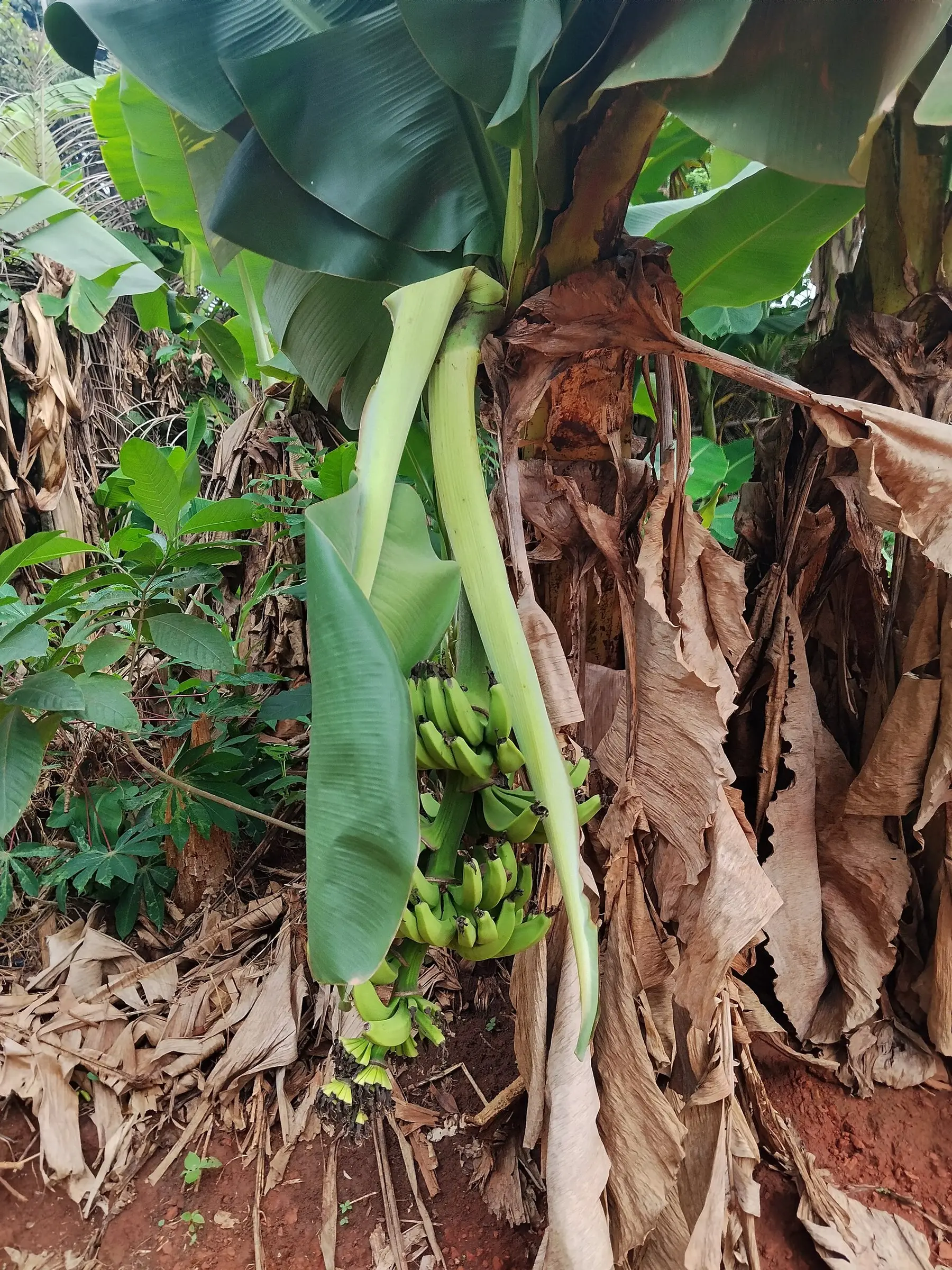
What looks like a trunk is a pseudostem — leaf bases wrapped tightly around each other, with no wood in it at all. You can cut through one with a machete.
The actual stem is the corm, underground. That is where the plant’s reserves are, where new growth comes from, and why a banana plant chopped to the ground simply grows back.
This makes the banana the largest herbaceous perennial in the world, and it explains the growth pattern: each pseudostem flowers once, carries one bunch, and then dies. The plant survives through the pups it has already thrown up around its base.
How they are actually propagated
| Method | What it is | Notes |
|---|---|---|
| Sword sucker (pup) | An offshoot with narrow, blade-like leaves | The best choice — strongly attached to the corm |
| Water sucker | An offshoot with broad leaves | Weakly rooted; poor performer, usually removed |
| Corm division | A cut piece of the underground stem with a bud | Works, slower to establish |
| Tissue culture | Lab-propagated plantlets | What commercial growers use; disease-free |
Taking a pup. Wait until it is 2 to 4 feet tall with its own roots. Cut down between it and the parent with a sharp spade, taking a piece of corm and the roots with it. Trim the leaves back to reduce water loss, and plant it in rich, free-draining soil.
The sucker type matters more than it sounds. Sword suckers have narrow, pointed leaves and a substantial corm connection — they establish well. Water suckers have broad leaves, sit shallowly, and rarely amount to much.
Growing one, realistically
Bananas want heat, light, water, and feeding, in large quantities:
- Warmth. Growth effectively stops below about 50°F, and frost kills the pseudostem outright, though an established corm can survive light frost underground and reshoot.
- Sun. Full sun, all day.
- Water. Constant. Those enormous leaves transpire heavily, and a dry banana plant stops quickly.
- Shelter. Wind shreds the leaves, which is cosmetic rather than fatal but looks dramatic.
- Feeding. Heavy. They are among the hungriest plants a garden can hold.
Outside the tropics, most people grow them as foliage plants — cold-hardy Musa basjoo survives surprisingly cold winters with its corm mulched heavily — or in large containers moved under cover. Fruit outdoors in a temperate climate is unlikely, because the plant needs a long uninterrupted warm season to get there.
Expect 9 to 15 months to fruit in genuinely tropical conditions, and longer anywhere else.
If you want to grow a banana from seed
It is possible, just not with the fruit you bought. Ornamental and wild species — Musa balbisiana, Musa velutina, Musa basjoo — produce viable seed, and it is sold. Expect slow, erratic germination: soak the seed for a day or two, sow warm, and be patient, because months is normal. What you will not get is a Cavendish, for the same reason an apple seed never gives you the apple you ate.
Common questions
Can you grow a banana tree from a store-bought banana?
Do bananas have seeds?
How do you actually grow a banana plant?
Is a banana plant a tree?
How long does a banana plant take to fruit?
Backyard Weekly
Know what to plant, week by week
Free planting calendar. Join the weekly email for seasonal jobs, fixes for what is going wrong, and gear worth buying.
Set MONETIZATION.email.endpoint in src/config/site.ts to enable this form.
By subscribing you agree to our privacy policy. Grow In Backyard will never sell your address.
Keep reading
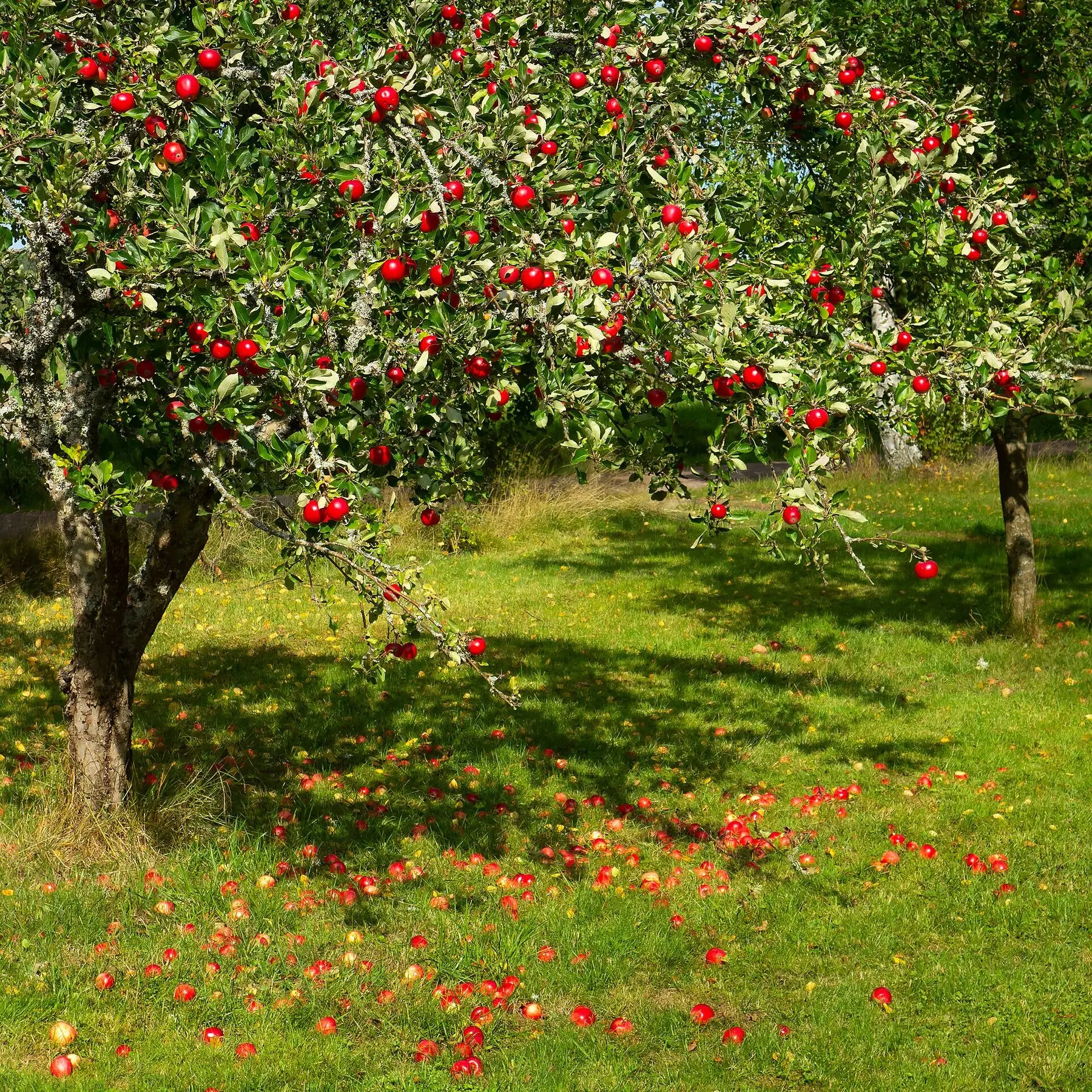
How to Grow an Apple Tree From Seed (Read This First)
Apple seeds grow, but never into the apple you ate — every seed is a new variety. How to germinate them anyway, and what you will actually get.
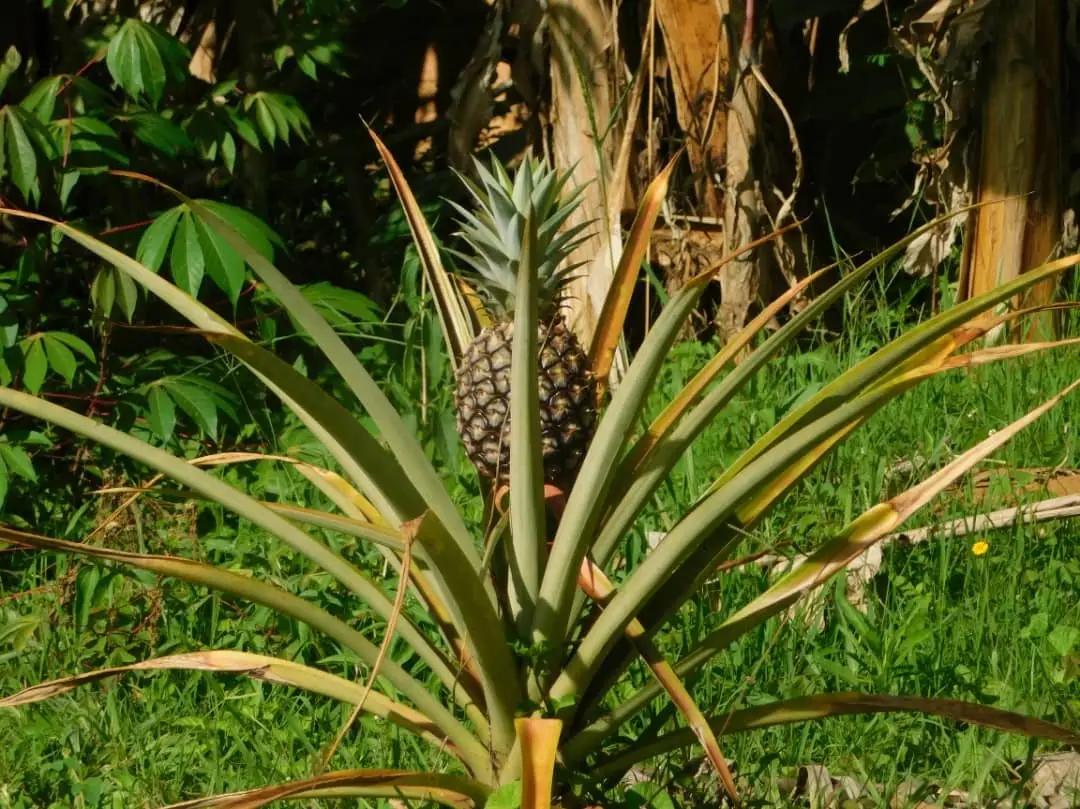
How Do Pineapples Grow? On the Ground, One Per Plant
Pineapples do not grow on trees but on a low ground plant, one fruit per plant, from hundreds of flowers fused into one. How they grow, and how long it takes.
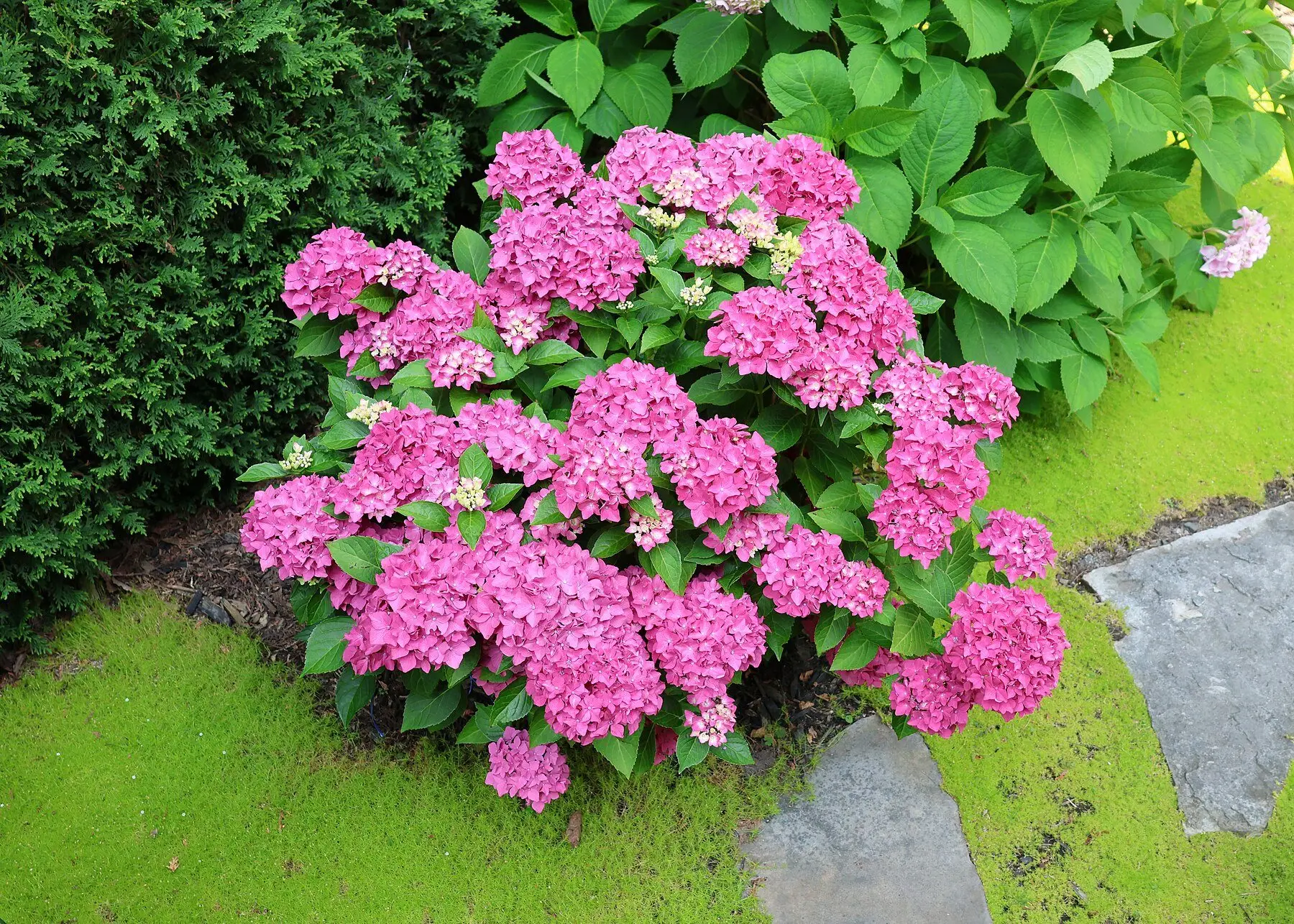
How to Grow Hydrangeas: Where to Plant and When to Prune
Morning sun, afternoon shade, and never let them dry out. Which type you have decides when to prune — and getting that wrong is why hydrangeas stop flowering.
15 Tree Stump Ideas (And When to Just Remove It)
Planters, seating, wildlife habitat, and log stools — what to do with a stump you would rather not grind, and when removal is the only sensible answer.