
What to Put Around a Fire Pit: Surfacing and Seating
Gravel, pavers and decomposed granite all work; mulch and artificial grass do not. Plan a 7-foot clear radius before choosing the material.
 By
On this page
Decide the radius first, then the material. Around 7 feet of clear non-combustible surface from the edge of the pit is the figure to design to — and it is also, conveniently, the distance that makes seating comfortable.
The materials
| Material | Underfoot | Cost | Notes |
|---|---|---|---|
| Crushed stone (angular) | Stable — locks together | Low | Best loose fill. Chairs sit level |
| Pea gravel | Shifts and rolls | Low | Comfortable to look at, awkward to walk on |
| Decomposed granite | Firm when compacted | Low–mid | Tidy finish; needs edging and occasional topping |
| Pavers / brick | Excellent | Mid–high | Easy to sweep; may stain from ash and fat |
| Concrete | Excellent | Mid | Can spall if heated unevenly when damp |
| Bark or rubber mulch | — | — | Never. Both ignite; rubber burns underground |
| Artificial turf | — | — | Never. Melts from radiant heat alone |
Angular, not rounded
Rounded pea gravel rolls underfoot and will not hold a chair leg level. Angular crushed stone knits together and stays where it is put. It is the same material, a different crush.
Laying a gravel surround
- Mark the radius — roughly 7 ft from the pit edge, adjusted to the space you have.
- Strip the turf and level, with a slight fall away from the pit for drainage.
- Weed membrane across the whole area.
- Edging: steel, a soldier course of pavers, or low stone. Not timber — it sits inside the zone you want non-combustible.
- 2–3 inches of angular crushed stone, raked level and compacted.
- Top up every couple of seasons as it settles and migrates.
Seating distances
- About 3 feet from the pit edge to the front of a chair — close enough for warmth, far enough to be comfortable when the fire is at full height
- Another 2–3 feet behind the chairs so people can walk round without stepping over anyone
- Leave one side more open if the pit sits where a prevailing breeze pushes smoke consistently
Mulch is the failure that catches people out
An ember landing in bark chip can smoulder for a long time before it flares, often after everyone has gone inside. Rubber mulch is worse again: it ignites easily, burns hot, and keeps burning below the surface where water does not reach.
Planting near a fire pit
Keep planting outside the surfaced radius, and prefer green, low and well-watered over dry and resinous.
Ornamental grasses, conifers and anything that holds dead material through the season are the worst offenders — effectively kindling standing upright. Containers are useful here, because you can move them out of the way on the evenings you light the pit.
Common questions
What should you put around a fire pit?
Is gravel a good surface around a fire pit?
How much space do you need around a fire pit?
Can you put mulch around a fire pit?
Do you need a border around a fire pit area?
What plants can you put near a fire pit?
Backyard Weekly
Know what to plant, week by week
Join the weekly email for seasonal jobs, fixes for what is going wrong, and gear worth buying.
Not ready to subscribe? The planting calendar is free and needs no email.
By subscribing you agree to our privacy policy. Grow In Backyard will never sell your address.
Keep reading
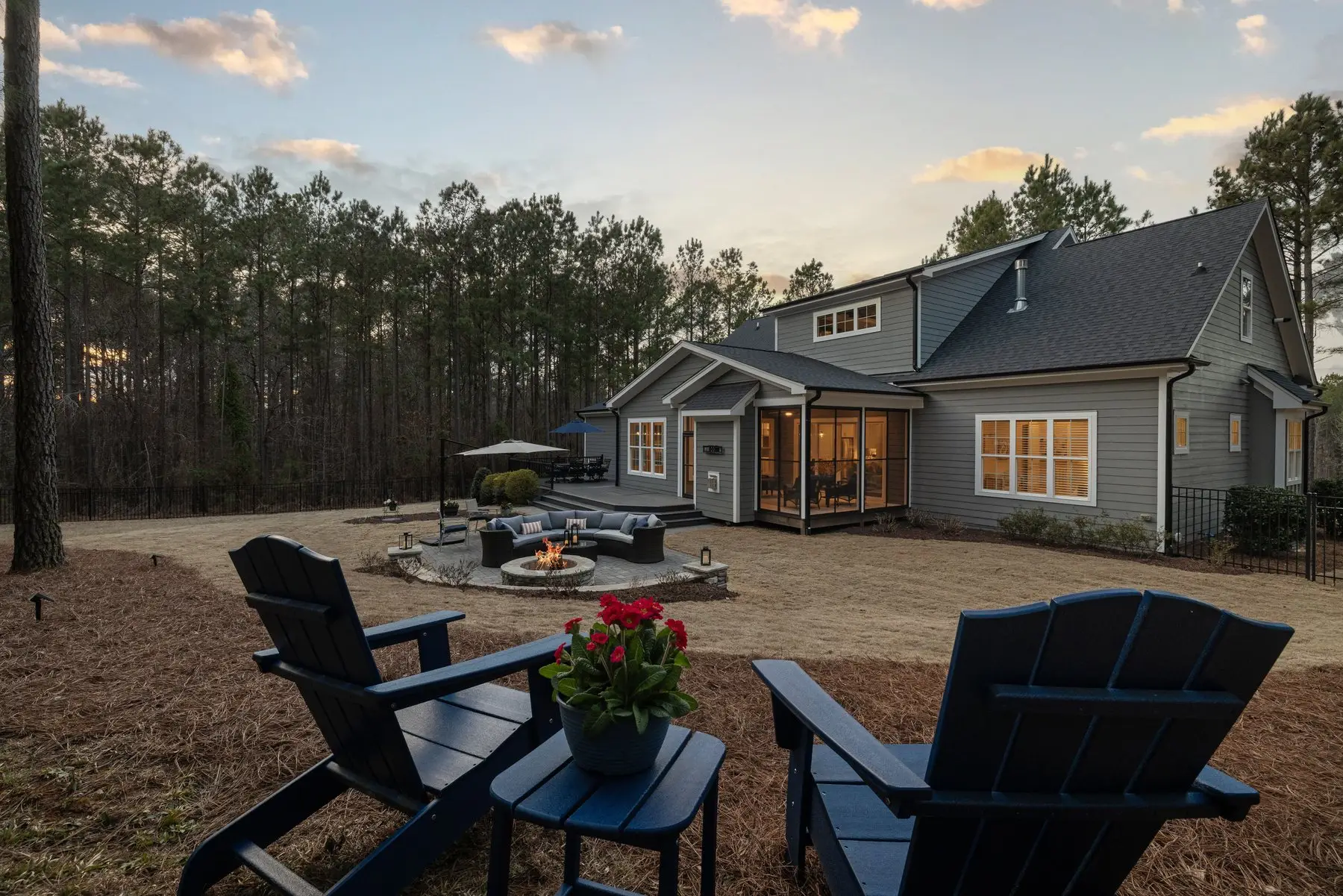
How Far Should a Fire Pit Be From a House? 10 to 25 Feet
Most codes set 10 to 25 feet from structures, but overhead clearance catches more people out. What to measure from, and why local rules decide it.
Fire Pit Ring: Building a Permanent Pit That Lasts
A steel ring is what stops a stone fire pit spalling and collapsing. Sizing, drainage, which blocks are safe to heat, and the clearances that keep it legal.
What to Put Under a Fire Pit: Match It to the Surface
Grass, a wooden deck, pavers and gravel each need a different answer. Radiant heat and ember fall are two separate problems, and only one is obvious.
What to Put in the Bottom of a Fire Pit: Sand, Gravel or Nothing
A metal bowl usually needs nothing. A built-in pit wants a drainage layer of gravel or lava rock — and never ordinary river stone, which can explode.