
How Far Should a Fire Pit Be From a House? 10 to 25 Feet
Most codes set 10 to 25 feet from structures, but overhead clearance catches more people out. What to measure from, and why local rules decide it.
 By
On this page
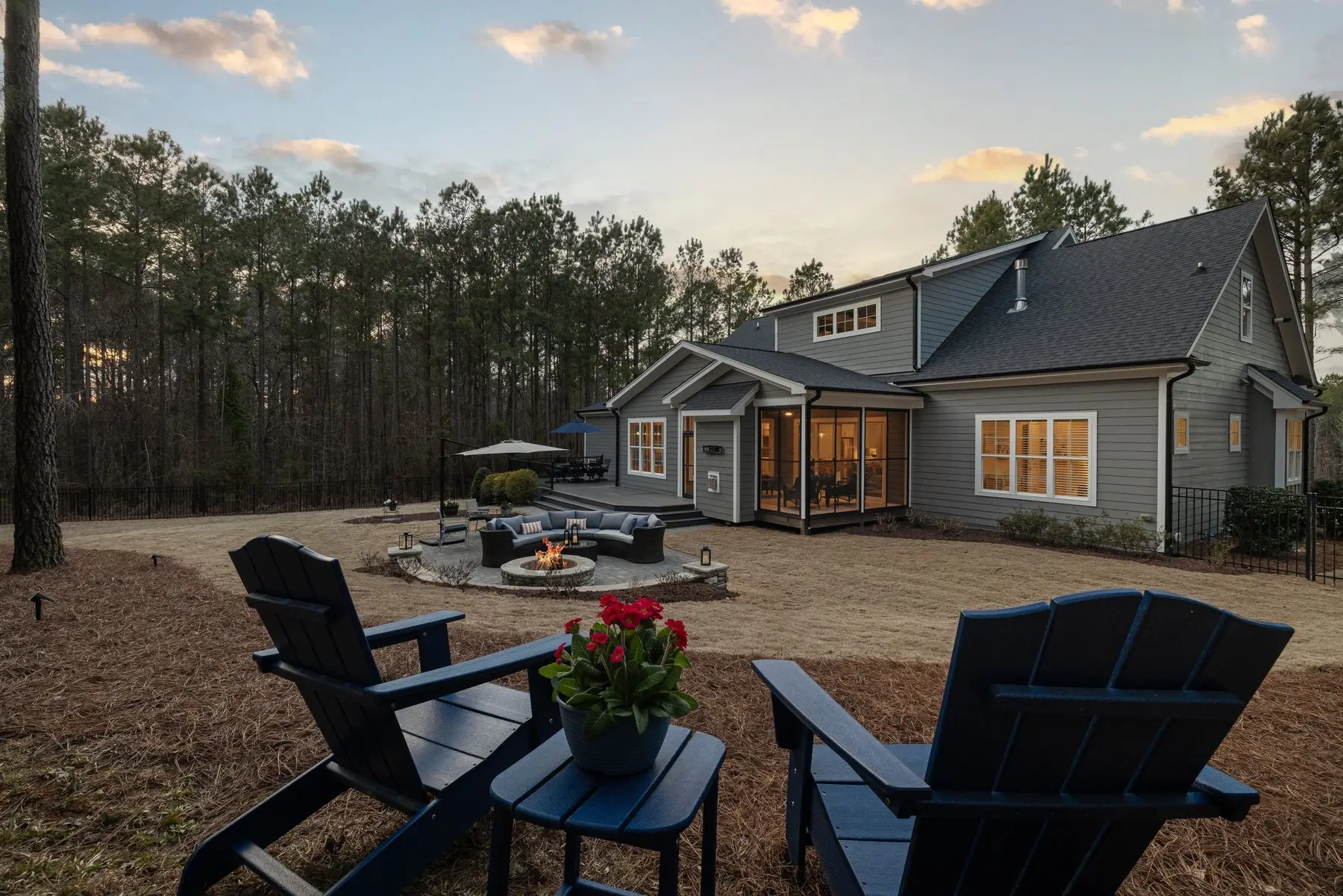
Ten to twenty-five feet from any structure is where most codes and manufacturers land. But there is no national number — this is set locally. And the clearance people get wrong is usually the one above their heads.
What the distance is measured to
Not “the house”. Codes generally say structures and combustible materials.
| Counts? | |
|---|---|
| House wall | Yes |
| Timber fence | Yes |
| Shed, garage, pergola | Yes |
| Deck | Yes |
| Woodpile | Yes |
| Propane cylinder | Yes, with its own separate rules |
| Property line | Often, yes |
The common version of this mistake
Someone measures twenty feet carefully to the house, sites the pit there, and it ends up four feet from a timber fence.
Same hazard, shorter distance, and the fence is drier than the house.
Overhead is the one that bites
Ground distance gets measured. Vertical clearance rarely does — and it matters more, because heat and embers go up.
- Overhanging branches
- Eaves and gutters
- Pergola roofs, awnings, sail shades
- Washing lines
A commonly quoted figure is ten to fifteen feet of clear space above. The practical version is blunter: if something is above the pit, the pit is in the wrong place.
Propane is different, but not exempt
Shorter clearances are common — no flying embers, and the flame stops when you turn it off.
But the manufacturer’s figures are the ones that apply, the cylinder has its own siting rules, and many places that restrict wood burning permit gas under different conditions. Worth checking if open burning is prohibited where you are.
Before you site it at all
Distance is not the only rule, and sometimes not the binding one
- Is open burning permitted? This varies by season and by air-quality rules, and in some places it is simply banned
- Is a permit required?
- What does the HOA say?
One call to the local fire department covers all of it, and gives you a number that actually applies rather than a range off the internet.
Wind beats distance
A legal clearance on a still evening is a different proposition at twenty miles an hour.
Most guidance says do not burn in high wind regardless of siting — because the ember plume stops going up and starts going sideways, and no reasonable distance covers that.
Common questions
How far does a fire pit need to be from a house?
Does the rule apply to fences and sheds too?
What about overhead clearance?
Is the distance different for a propane fire pit?
Can a fire pit go on a deck?
What else should I check besides distance?
Backyard Weekly
Know what to plant, week by week
Join the weekly email for seasonal jobs, fixes for what is going wrong, and gear worth buying.
Not ready to subscribe? The planting calendar is free and needs no email.
By subscribing you agree to our privacy policy. Grow In Backyard will never sell your address.
Keep reading

Fire Pit on a Deck: What Is Safe and What Is Not
A wood fire pit on a wooden deck is a bad idea whatever you put under it. What actually works on decking, and the clearances that make it survivable.
How to Extinguish a Fire Pit, and Know It Is Actually Out
Spread, soak, stir, repeat until there is no hiss and no warmth. Why dirt is the worst option, and how long embers stay hot enough to start a fire.
Propane vs Wood Fire Pit: Which One Suits Your Yard
Gas gives you instant, controllable, smokeless fire with no ash. Wood gives you heat, crackle and smell. The decision is really about frequency, rules, and patience.
How Long Does a Propane Tank Last for a Fire Pit?
A 20 lb tank holds about 430,000 BTU. Divide by your pit's BTU rating and you have the answer — usually four to ten hours. The arithmetic, worked.