Fire Pit Ring: Building a Permanent Pit That Lasts
A steel ring is what stops a stone fire pit spalling and collapsing. Sizing, drainage, which blocks are safe to heat, and the clearances that keep it legal.
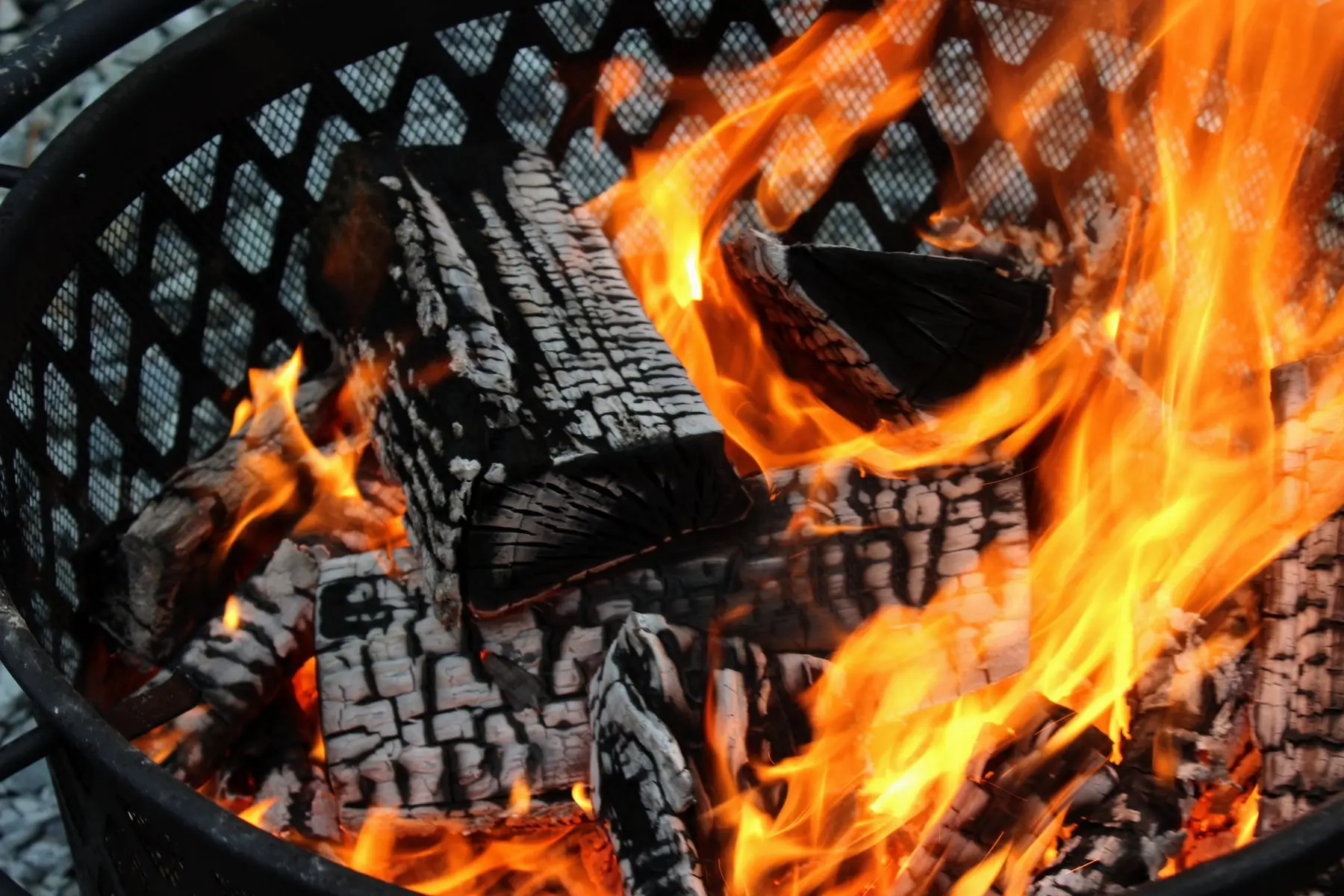

On this page
The reason a home-built stone fire pit crumbles after two seasons is not the fire. It is water inside the stone turning to steam and blowing the face off it, a few millimetres at a time.
A fire pit ring — a heavy steel liner dropped inside the wall — is what prevents that, by putting a piece of metal between the flame and the masonry.
Why masonry fails without a liner
Stone and concrete are porous. They hold water — from rain, from the ground, from the air. Heat that water fast enough and it flashes to steam inside the material, and the pressure blows chips off the surface.
That is spalling, and once it starts it accelerates: each flake exposes fresh porous material.
Some materials are dramatically worse than others because they hold more water or have an internal structure that traps it:
| Material | Safe near flame? | Notes |
|---|---|---|
| Firebrick | Yes | Made for it; needs refractory mortar |
| Lava rock | Yes | Naturally porous but formed by heat |
| Fire-rated retaining wall block | Yes, as the outer wall | Check the manufacturer’s rating |
| Poured concrete | No | Cracks and spalls; also traps water |
| River rock, gravel, pea shingle | Never | Holds water; can explode violently |
| Sandstone, limestone | No | Porous and layered; splits along beds |
| Ordinary house brick | No | Spalls quickly |
River rock in a fire pit is genuinely dangerous
Smooth, rounded stones from a riverbed are the ones people reach for because they look right, and they are the worst possible choice. Water trapped inside can turn to steam and burst the stone hard enough to throw fragments several feet. The same applies to gravel used as a base inside the burn area — keep gravel underneath the ring for drainage, not in the fire.
Sizing
A ring’s stated size is its outside diameter, and the wall you build around it adds to the finished footprint.
- Under 30 in — logs will not sit flat; you end up burning kindling.
- 36 in — the common sweet spot for a small yard.
- 44 in — generous, good for a group, and it takes full-length split logs.
- Over 48 in — you sit further away, so the fire has to be bigger to feel warm, and it burns through a lot more wood.
Ring height is usually 8 to 12 inches. Taller contains sparks better and hides the fire more; shorter throws more radiant heat outward to the people sitting around it.
Building it, in order
- Check the rules first. Local fire regulations, HOA restrictions, and seasonal burn bans. Some areas prohibit open wood fires outright, in which case propane is the way through.
- Site it. At least 10 feet from structures, fences and overhanging branches — often 15 or 25 by local rule. Look up as well as around. Avoid the spot directly downwind of where people sit.
- Mark the circle. A stake and a string gives you a true circle.
- Excavate 6 to 12 inches across the whole footprint.
- Fill with gravel and compact. This is the drainage layer, and on wet sites it is worth running a pipe out to daylight.
- Level a base course of block or brick, checking level all the way round. Everything above depends on this.
- Set the ring and build the wall around it, leaving a small gap so the steel can expand.
- Leave air gaps in the base course, or drill vents through the wall. A fire pit with no air at the bottom smoulders and smokes.
Do not mortar the ring to the wall
Steel expands a great deal when it gets hot; masonry barely does. Mortaring a ring tight against the blocks means one of the two loses, and it is always the blocks. Leave a half-inch gap all round and let the ring float — you can lift it out to replace it later, which you eventually will.
Airflow is what stops the smoke
A fire that smokes badly is usually starved of air at the base, not badly built above it.
Most steel rings come with punched vents around the bottom. If yours does not, leave gaps in the base course of blocks so air can reach under the fire. The draw that results — cool air in low, hot gas out the top — is the same principle a smokeless fire pit uses more aggressively with a double wall.
Dry wood matters at least as much. Seasoned hardwood at under 20 percent moisture burns hot and clean; anything wetter spends its energy boiling water off and produces the smoke. What to burn covers this.
Maintenance
- Cover it when not in use, or at least keep water out of the base.
- Clear the ash regularly. Ash is hygroscopic — it pulls in moisture and holds it against the steel, which is what rusts a ring from the inside.
- Expect to replace the ring eventually. Ten years is a good run for mild steel. That is why it is a drop-in liner rather than part of the structure.
- Never extinguish a hot pit with a bucket of water if you value the masonry. Thermal shock does in one second what a season of use does slowly. Let it burn down, or smother it with sand.
Common questions
What does a fire pit ring actually do?
What size fire pit ring do you need?
Can you use any blocks or stones for a fire pit?
How far should a fire pit be from a house or fence?
Does a fire pit need drainage?
Is a metal fire pit ring better than firebrick?
Backyard Weekly
Know what to plant, week by week
Free planting calendar. Join the weekly email for seasonal jobs, fixes for what is going wrong, and gear worth buying.
Set MONETIZATION.email.endpoint in src/config/site.ts to enable this form.
By subscribing you agree to our privacy policy. Grow In Backyard will never sell your address.
Keep reading
Propane vs Wood Fire Pit: Which One Suits Your Yard
Gas gives you instant, controllable, smokeless fire with no ash. Wood gives you heat, crackle and smell. The decision is really about frequency, rules, and patience.
Firewood: What to Burn, and How Dry It Has to Be
Moisture matters more than species. How long each wood takes to season, how to tell when it is ready, and the things you must never put on a fire.
How a Smokeless Fire Pit Works (and Its Real Limits)
A smokeless fire pit burns the smoke rather than venting it, using a double wall and a second ring of air. Here is the mechanism, and when it stops working.

Fire Pit on a Deck: What Is Safe and What Is Not
A wood fire pit on a wooden deck is a bad idea whatever you put under it. What actually works on decking, and the clearances that make it survivable.