How a Smokeless Fire Pit Works (and Its Real Limits)
A smokeless fire pit burns the smoke rather than venting it, using a double wall and a second ring of air. Here is the mechanism, and when it stops working.

On this page
“Smokeless” is a marketing word, and a slightly dishonest one. These pits do smoke — while you light them, whenever you add a log, and continuously if your wood is damp. What they do genuinely well is burn most of the smoke that an ordinary fire simply releases, and the difference at a normal seating distance is large enough to be worth understanding before you spend the money.
Smoke is fuel you failed to burn
This is the idea the whole design rests on. Wood does not burn directly. Heat drives off volatile gases and tar droplets, and it is those gases that burn as flame. Visible smoke is that mixture escaping unburned — because it did not get hot enough, or did not meet enough oxygen, before it left the fire.
So there are two ways to reduce smoke: give it more heat, and give it more oxygen, at the point where it is leaving. A double-walled pit does both at once, without a fan or a filter.
The mechanism, step by step
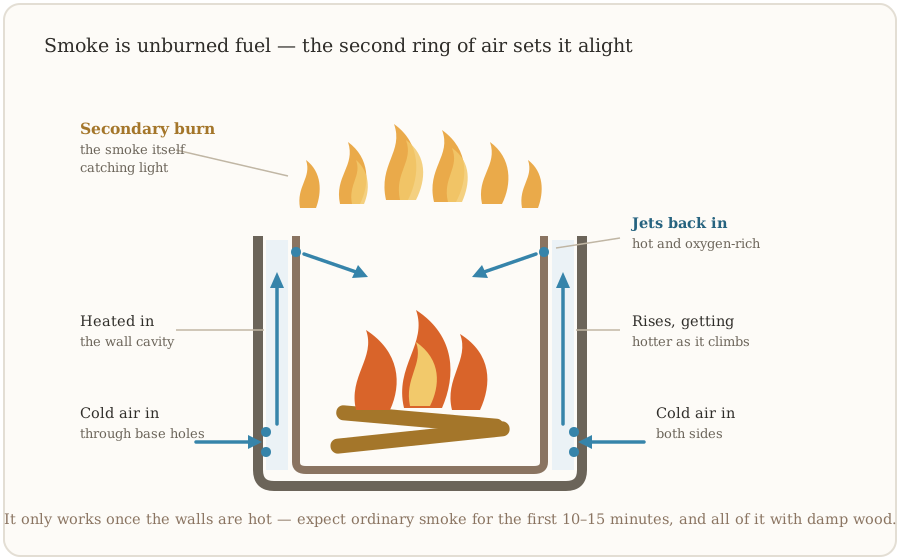
Cold air is pulled in through holes around the base of the outer wall. Instead of going into the fire, it rises through the cavity between the inner and outer walls — and that cavity is being heated hard by the fire on one side. By the time the air reaches the top, it is very hot.
It then exits through a ring of small holes just below the rim of the inner wall, jetting inward and downward across the top of the fire. That is exactly where the smoke is, and the air arriving is both hot and oxygen-rich.
The result is the effect these pits are bought for: a band of flame that appears to hover above the fire, detached from the wood. That is the smoke igniting.
Why the fire has to be established first
Secondary burn needs the cavity air to reach a genuinely high temperature, and the walls need time to get there. For the first ten to fifteen minutes a smokeless pit smokes like any other fire. People who light one, see smoke, and conclude it does not work have usually judged it before it warmed up.
Where it stops working
Wet wood. This is the failure, and it accounts for most disappointed reviews. Wood above roughly 20 percent moisture spends the fire’s energy boiling water off, and the fire never reaches the temperature the secondary burn requires. Seasoned hardwood, split, stored under cover for a year, is the difference between the pit working and not.
Overloading. Filling the pit smothers airflow and drops the temperature. These burn best with a moderate, hot fire rather than a large smouldering one.
Blocked base holes. Ash builds up and closes off the intake. Empty it between fires; without the lower holes clear, the cavity gets no air and the ring above does nothing.
Wind. A strong crosswind disrupts the jet of secondary air and pushes smoke out sideways regardless.
| Smokeless (double wall) | Ordinary open pit | |
|---|---|---|
| Visible smoke, hot fire, dry wood | Very little | Considerable |
| Smoke while lighting | Yes, 10–15 min | Yes, throughout |
| Tolerates damp wood | Poorly | Equally badly, but no promise broken |
| Wood consumption | Higher — it burns hotter | Lower |
| Heat output | High, directed up | Moderate, radiates outward |
| Typical cost | Considerably more | Little |
| Ash cleanout | Needed for airflow | Cosmetic |
Whether it is worth it for you
The honest test is whether smoke is actually your problem.
Buy one if your yard is small, your neighbours are close, you use it on a patio where the seating cannot move, or someone in the household reacts badly to wood smoke. In those situations the difference is not marginal — it is the difference between using the pit and not.
Skip it if you have space, burn a fire a handful of times a year, and nobody minds a bit of smoke. An ordinary pit produces similar warmth for a fraction of the price, and uses less wood doing it.
Radiant heat and the surface underneath
Double-walled pits run hot at the base — hot enough to scorch a lawn permanently and to be a genuine fire risk on a wooden or composite deck. Use the manufacturer’s stand or a proper heat barrier, keep to the stated clearances, and check local rules on open flame before putting one on a raised deck.
Getting the most out of one
Build a small, tight fire and let it establish before adding more. Use split, seasoned hardwood and keep it dry — a rack under cover does more for smoke output than any feature of the pit. Add fuel a log or two at a time rather than filling it. Empty the ash before the next fire so the base holes breathe.
Do that and the pit does what it was designed to do. Skip the dry wood and no amount of engineering in the walls will save it.
Common questions
Do smokeless fire pits really work?
How does a smokeless fire pit work?
Are smokeless fire pits worth the money?
Why is my smokeless fire pit still smoking?
Can you use a smokeless fire pit on a deck?
Backyard Weekly
Know what to plant, week by week
Free planting calendar. Join the weekly email for seasonal jobs, fixes for what is going wrong, and gear worth buying.
Set MONETIZATION.email.endpoint in src/config/site.ts to enable this form.
By subscribing you agree to our privacy policy. Grow In Backyard will never sell your address.
Keep reading
Outdoor Garden Lighting Ideas That Get Used Past Month Two
Most outdoor lighting gets hung once and never turned on again. The five kinds worth the effort, and the color temperature that makes or breaks all of them.
Garden Decor Ideas That Don't Look Cluttered in a Year
Most backyard decor gets added piece by piece until the yard looks like a garden center. A short list of what earns its place, and what to skip.
Fire Pit on a Deck: What Is Safe and What Is Not
A wood fire pit on a wooden deck is a bad idea whatever you put under it. What actually works on decking, and the clearances that make it survivable.
Fire Pit Ring: Building a Permanent Pit That Lasts
A steel ring is what stops a stone fire pit spalling and collapsing. Sizing, drainage, which blocks are safe to heat, and the clearances that keep it legal.