
What Is a Rick of Firewood? A Stack 4 ft by 8 ft, Any Depth
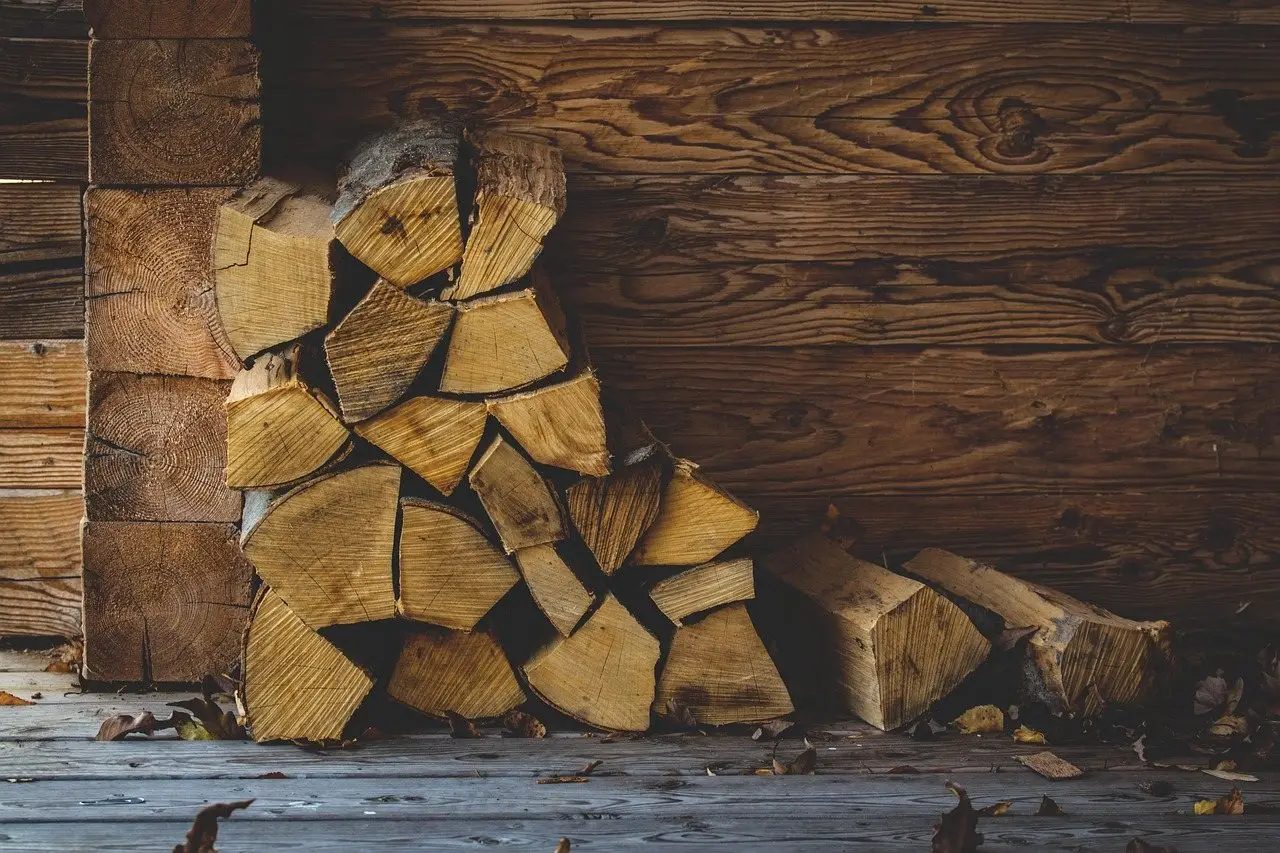
A rick is a stack four feet high and eight feet long. Its depth is whatever the log length is — which is why the word tells you almost nothing.
 By
On this page
A stack 4 ft high by 8 ft long — depth unspecified. The depth is just the log length, which is why a rick can hold anywhere from a quarter to half a cord. Same thing as a face cord.
The arithmetic
| Piece length | Cubic feet in a rick | Fraction of a cord | Ricks per cord |
|---|---|---|---|
| 12 in | 32 | ¼ | 4 |
| 16 in | ~43 | ⅓ | 3 |
| 18 in | 48 | ⅜ | 2.7 |
| 24 in | 64 | ½ | 2 |
A full cord is always 128 cubic feet — 4 ft × 8 ft × 4 ft. Only the rick moves.
The gap this leaves
Two sellers quoting “a rick” can be offering twice as much wood as each other at the same price. In several US states only the full cord is legal for advertising firewood, precisely because of this.
How to compare two prices
- Ask the piece length. Without it, no price is comparable to any other.
- Convert to a cord. Multiply a 16-inch rick price by 3; a 24-inch rick price by 2.
- Then compare species. A cord of cottonwood holds about half the heat of a cord of oak, so a cheap cord is not automatically cheap heat.
- Then ask how long it has been split and stacked. Unseasoned wood is heavier to deliver and worse to burn.
Three questions settle most firewood deals
Piece length? Species? Split and stacked since when? A seller who answers all three plainly is usually selling honestly.
Where the word comes from
Old English rick, meaning a stack or heap — the same word as in haystack and hayrick. It described any orderly outdoor stack built to shed rain, and attached to firewood for the same reason. It describes the stacking, not a quantity, which is exactly how it became such a loose measure.
The other loose units
- Face cord — identical to a rick.
- Truckload / pickup load — meaningless without the truck. A half-ton pickup bed holds roughly a third to a half cord of seasoned hardwood, and it is usually heaped well above the sides.
- Bush cord — an older term for a full cord.
- Stove cord, running cord — regional variants of the same four-by-eight stack.
Only the full cord has a fixed definition. Everything else needs the piece length attached.
Common questions
What is a rick of firewood?
How many ricks are in a cord?
Is a rick the same as a face cord?
Why is it called a rick of wood?
How much does a rick of wood cost?
What should I ask a firewood seller?
Backyard Weekly
Know what to plant, week by week
Join the weekly email for seasonal jobs, fixes for what is going wrong, and gear worth buying.
Not ready to subscribe? The planting calendar is free and needs no email.
By subscribing you agree to our privacy policy. Grow In Backyard will never sell your address.
Keep reading
Firewood: What to Burn, and How Dry It Has to Be
Moisture matters more than species. How long each wood takes to season, how to tell when it is ready, and the things you must never put on a fire.
How to Stack Wood in a Fire Pit: Four Lays Compared
Teepee, log cabin, top-down and lean-to each burn differently. Which one to use for heat, for cooking, for a long evening, and which needs no tending.
How to Dry Firewood Fast: What Actually Speeds It Up
Splitting small does more than anything else, and a tarp over the whole pile undoes it. Realistic timescales, and why there is no shortcut to under 20%.

What to Put Around a Fire Pit: Surfacing and Seating
Gravel, pavers and decomposed granite all work; mulch and artificial grass do not. Plan a 7-foot clear radius before choosing the material.