
Is Poplar Good Firewood? Burnable, But Only Half the Heat
Poplar gives about 13 million BTU a cord against oak's 24, burns fast and leaves little coal. Where it genuinely earns a place in the woodpile.
 By
On this page
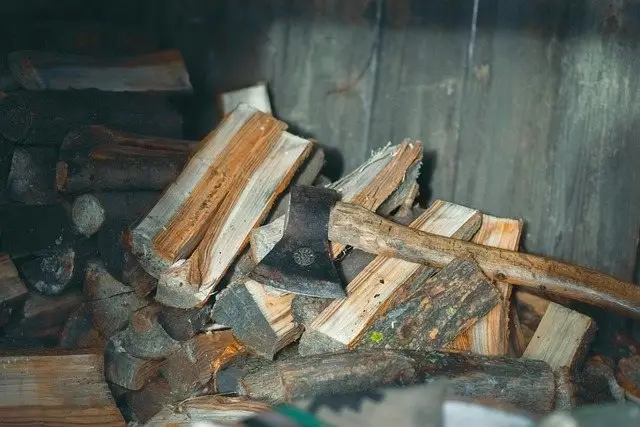
Poplar burns. The question is what you are comparing it to — and the answer is that a cord of poplar carries about half the heat of a cord of oak.
Where it sits
| Wood | Million BTU | Coal bed |
|---|---|---|
| Hickory, white oak | 24–29 | Excellent — burns overnight |
| White ash, beech | 20–24 | Good |
| Birch, red maple | 18–20 | Moderate |
| Pine, spruce | 15–20 | Poor; resinous |
| Tulip poplar | 16 | Poor |
| Aspen, cottonwood | 13–15 | Very little |
All dry wood yields roughly the same heat per pound — about 7,000 BTU. The difference between oak and poplar is not chemistry, it is density. A cord is a fixed volume, and a cord of poplar simply holds far less wood by weight.
Which means the practical consequence is handling, not just heat: you cut, split, stack, carry and load roughly twice as much poplar for the same warmth.
The coal bed problem
This is the thing that decides whether poplar can be your main wood.
Dense hardwoods leave a bed of glowing coals that radiate heat for hours and relight a fresh log at 6 a.m. Poplar burns to fine ash with almost no coals. A stove loaded with poplar at bedtime is cold and dark by two in the morning.
It feels dry before it is dry
Freshly cut poplar can exceed 60% moisture content — wetter than green oak. Because the wood is light, a split that still holds plenty of water feels like seasoned firewood in the hand.
Burning it in that state is what gives poplar its reputation for smoke and creosote. The wood is not at fault; the judgement by weight is. Use a moisture meter and burn it under 20%.
Three jobs it does well
- Kindling and fire-starting. It splits easily, takes a match readily and gets a flue warm fast. Many people who would never heat with poplar keep a crate of it for exactly this
- Shoulder season. On a 50 °F October evening a load of oak drives you out of the room. Poplar gives a quick, modest, short fire, which is precisely what that evening wants
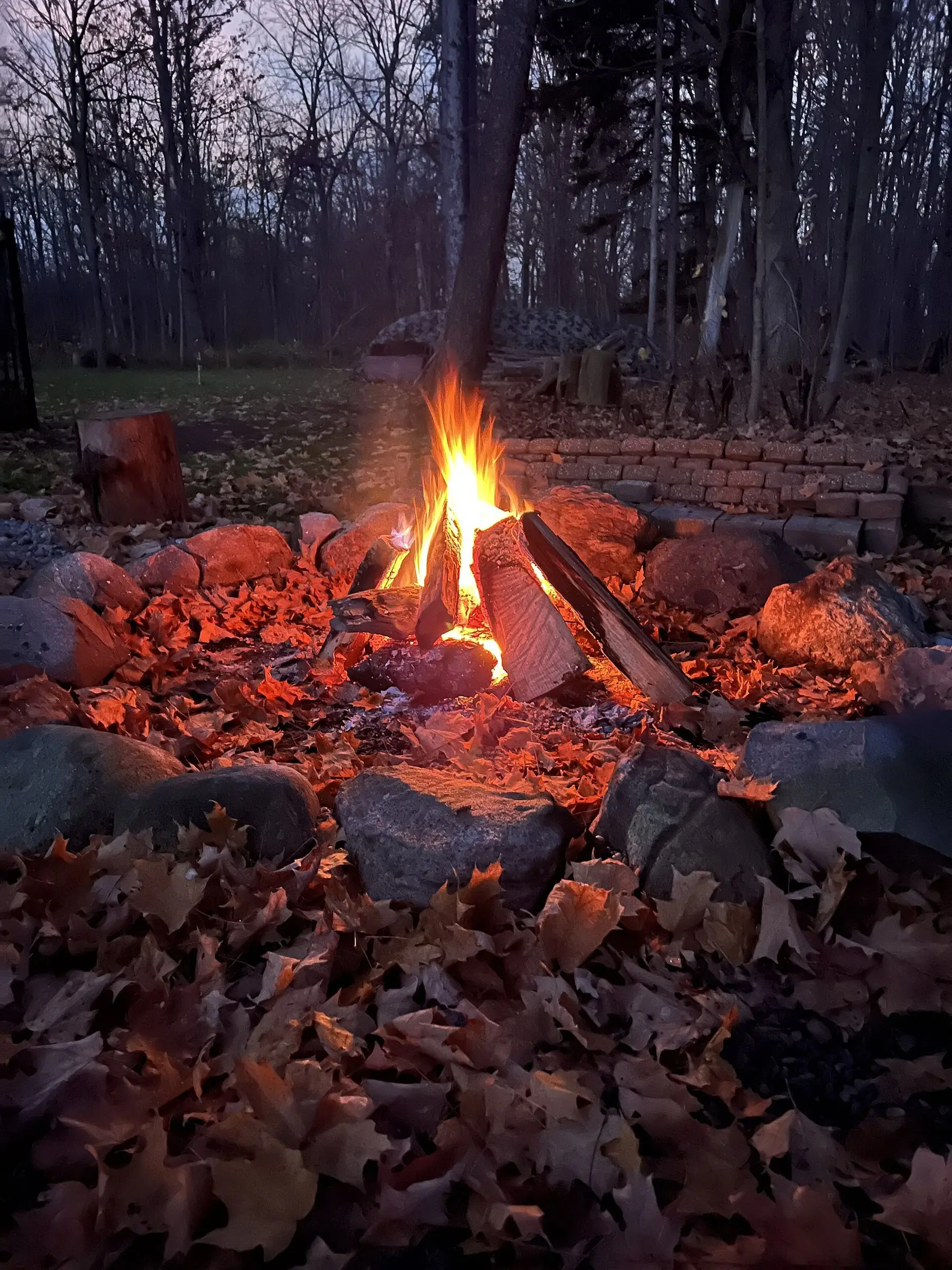
- Fire pits and outdoor fires, where you want flame and a fire that burns down on its own rather than a bed of coals still glowing at midnight
And a fourth, which is the real reason most poplar gets burned: it was free. Poplar grows fast, blows down readily, and nobody charges much for it. A cord you did not pay for at half the heat of oak is still a good trade — stack it separately, label it, and burn it in September, October and April while the oak waits for January.
Tulip poplar is a different tree
Worth knowing because the names collide. Tulip poplar (Liriodendron tulipifera) is a magnolia relative, not a poplar at all; true poplars are Populus — aspen, cottonwood, Lombardy poplar.
Tulip poplar is marginally denser and burns slightly better, around 16 million BTU. In a stove the behaviour is much the same: quick light, fast burn, little left behind.
Common questions
Is poplar good firewood?
How many BTU are in a cord of poplar?
How long does poplar take to season?
Does poplar burn dirty or cause creosote?
Is tulip poplar the same as poplar?
What is poplar firewood actually best for?
Backyard Weekly
Know what to plant, week by week
Join the weekly email for seasonal jobs, fixes for what is going wrong, and gear worth buying.
Not ready to subscribe? The planting calendar is free and needs no email.
By subscribing you agree to our privacy policy. Grow In Backyard will never sell your address.
Keep reading
What to Put Under a Fire Pit: Match It to the Surface
Grass, a wooden deck, pavers and gravel each need a different answer. Radiant heat and ember fall are two separate problems, and only one is obvious.
How to Cut a Tree Down, and When Not to Try
Felling is decided before the saw starts: lean, hazards, escape routes, and whether the tree is within your competence at all. Where the line is, honestly.
Eastern White Pine Growth Rate: Two Feet a Year, and Why
Established trees add 60–90 cm annually and reach 25 m. Fast growth brings weak wood, storm damage and a tree most gardens plant too close to the house.
Propane vs Wood Fire Pit: Which One Suits Your Yard
Gas gives you instant, controllable, smokeless fire with no ash. Wood gives you heat, crackle and smell. The decision is really about frequency, rules, and patience.