How to Cut a Tree Down, and When Not to Try
Felling is decided before the saw starts: lean, hazards, escape routes, and whether the tree is within your competence at all. Where the line is, honestly.

On this page
Felling is decided long before the saw starts. Where the tree leans, what is within reach of it, and whether it is a job you should be doing at all — that is the whole assessment, and getting it wrong is not recoverable.
So this starts with where the line is, because most of the trees people search this question about are on the wrong side of it.
Where the line is
Call a professional if any of these apply
Any one of these puts the job beyond a competent amateur:
- The tree is over about 20 feet, or you cannot see the top clearly
- Anything is within reach of it — house, shed, fence, greenhouse, path, road, neighbour’s garden
- Any power line, at any distance you are not certain of
- It leans toward something you care about
- It is dead, hollow, split, fungal-bracketed or storm-damaged — the wood cannot be trusted and behaves unpredictably
- You would need a ladder for any part of it
- You cannot identify a clear fall zone twice the tree’s height
- You would be working alone
Tree work has one of the highest serious-injury rates of any domestic task, and the injuries are crushing and cutting injuries rather than minor ones. A professional arborist has insurance, climbing and rigging equipment, and a way to bring a tree down in sections when it cannot be felled whole. That last capability is what you are actually paying for.
What follows applies to a small tree in the open — under about 20 feet, sound wood, nothing within two tree-lengths.
Before anything, check the rules
Many trees are legally protected — by preservation orders, conservation area status, size, species, or because they support nesting birds. Removal without consent can carry substantial fines.
Check with your local authority. Also check tenancy agreements, shared boundary ownership, and any homeowner association rules. This takes one phone call and cannot be undone afterwards.
Nesting season is separately protected in many jurisdictions regardless of the tree’s own status.
Reading the tree
Natural lean. Stand well back on two sides at right angles and sight up the trunk with a plumb line or a hanging weight. The tree will want to go where it already leans, and fighting that lean is advanced work.
Weight distribution. Heavy limbs on one side pull that way regardless of trunk lean.
Wind. Never fell in wind. Even a light breeze on a leafy canopy overrides your intentions.
Defects. Cracks, cavities, fungal brackets, dead limbs overhead, bark falling away. Any of these and you stop and call someone.
Overhead. Look up. Dead branches — “widowmakers” — come down when the tree is shaken, and they are the classic cause of fatal injuries.
Setting up
- Clear the fall zone — twice the tree’s height in the intended direction, and to the sides.
- Clear two escape routes, at roughly 45 degrees back and away from the fall line, on both sides. Remove brush, tools and trip hazards, and walk each one.
- Never plan to move straight backwards. The butt of a falling tree can kick backwards off the stump.
- Have a second person well outside the fall zone, watching, with a phone.
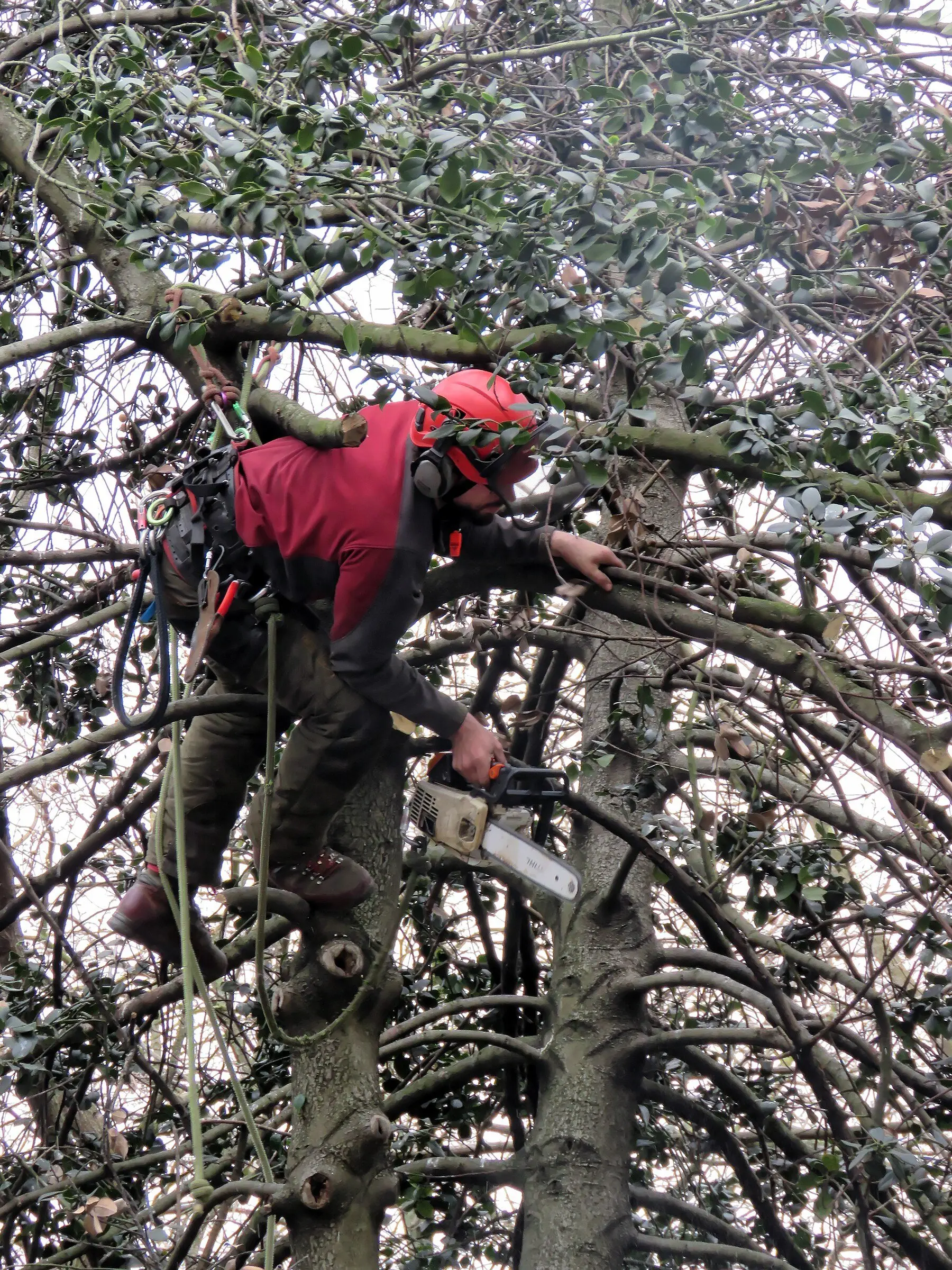
- Wear the gear — chainsaw trousers or chaps, helmet with face screen and ear defenders, cut-resistant boots, gloves. Chainsaw trousers contain fibres that jam the chain on contact, and they prevent the leg injuries that make up a large share of chainsaw wounds.
The three cuts
1. The notch, on the side you want it to fall.
- A horizontal cut, a quarter to a third of the trunk’s diameter deep.
- A sloping cut down to meet it, forming an open wedge of roughly 45 to 70 degrees.
- Remove the wedge. The notch now points where the tree will go.
2. The felling cut, from the opposite side.
- Slightly above the base of the notch — an inch or two higher.
- Cut horizontally toward the notch, and stop before you reach it.
3. The hinge — the uncut wood left between the felling cut and the notch, roughly a tenth of the trunk’s diameter thick, and even across the width.
The hinge is the only steering you have
That band of uncut wood is what holds the tree to the stump and guides it as it goes over. Cut through it and the tree is free to fall in any direction, including backwards onto you. Keep it even in thickness — a hinge thicker on one side pulls the tree that way. If the saw is about to reach the notch, stop.
Drive a felling wedge into the felling cut behind the saw as you go, on anything but the smallest tree. It stops the trunk pinching the bar and helps push the tree over.
When it starts to move: put the saw down, take your escape route, and watch upward as you move.
Afterwards
Limb from the base upward, standing on the uphill side, and keep the trunk between you and the saw where you can. Watch for spring poles — bent branches under tension that whip when cut.
Buck the trunk into lengths, supporting each section so the cut does not pinch the bar. Cut partway from one side and finish from the other where a log is supported at both ends.
The stump can be ground out, dug out, or left. Left in place it rots over years and can sucker depending on species — poplar, willow and lime are particularly persistent.
If the wood is worth burning, it needs seasoning to under 20 percent moisture before it is any use — see what to burn.
The honest summary
The technique above is real and it is what a small tree needs. But the assessment is the part that matters, and the answer to “can I fell this myself” is no far more often than the internet suggests.
An arborist for a medium tree near a house costs a few hundred. A tree through a roof costs considerably more than that, and a tree that lands on a person cannot be priced at all.
Common questions
When should you hire a professional instead of felling a tree yourself?
What is the notch and hinge in tree felling?
Do you need a permit to remove a tree?
What is the correct escape route when felling a tree?
What safety gear do you need to fell a tree?
When is the best time of year to cut down a tree?
Backyard Weekly
Know what to plant, week by week
Free planting calendar. Join the weekly email for seasonal jobs, fixes for what is going wrong, and gear worth buying.
Set MONETIZATION.email.endpoint in src/config/site.ts to enable this form.
By subscribing you agree to our privacy policy. Grow In Backyard will never sell your address.
Keep reading
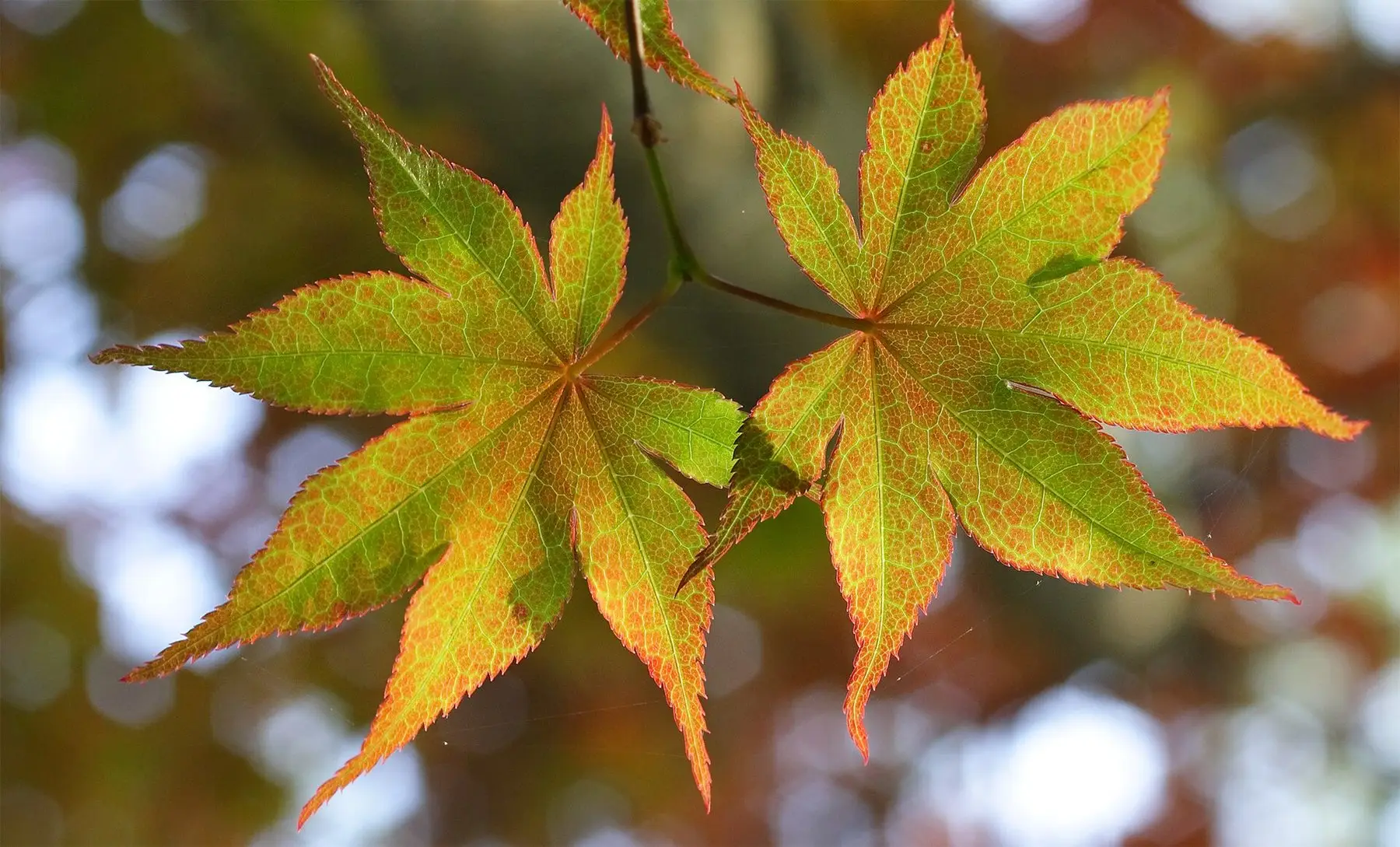
Japanese Maple: Choosing One, Siting It, and Leaf Scorch
Crisp brown leaf edges are wind and sun, not disease. How to pick between upright and dissected forms, where to plant, and why you should barely prune one.
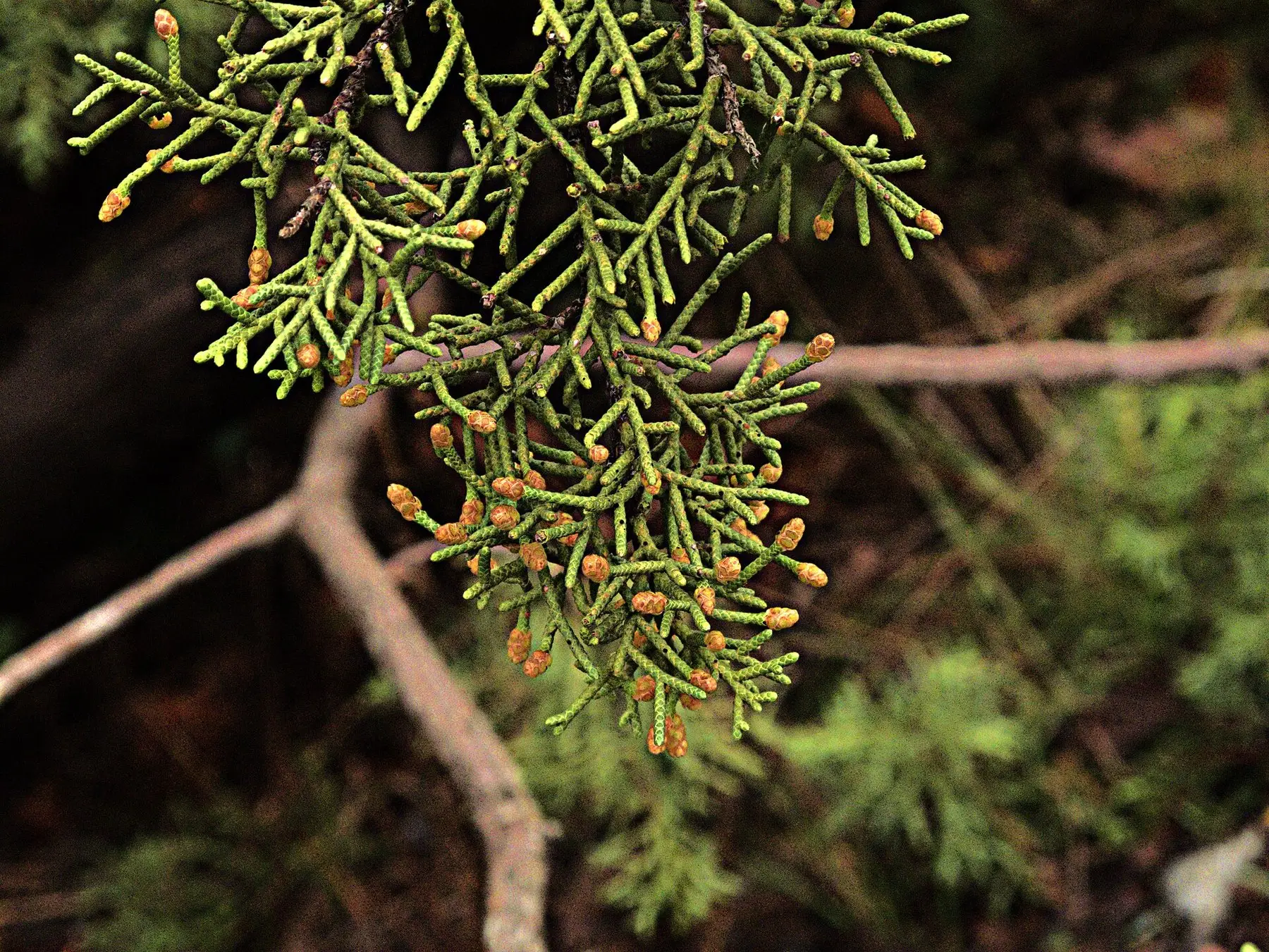
Juniper: Choosing One That Fits, and Keeping It Alive
Junipers are near-indestructible in sun and sharp drainage, and doomed in shade or wet soil. Picking a form that suits the space, and the pruning rule that matters.
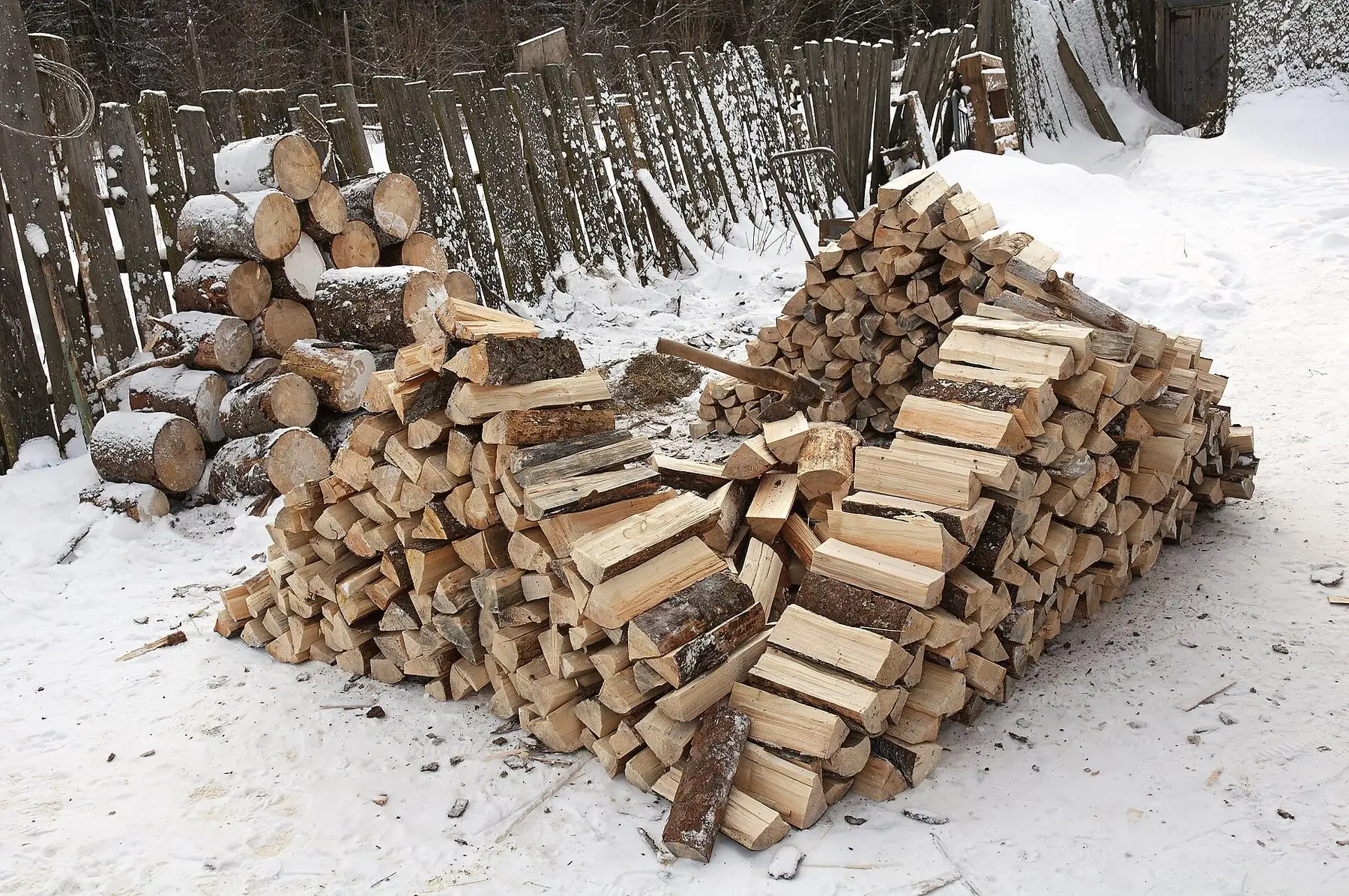
Firewood: What to Burn, and How Dry It Has to Be
Moisture matters more than species. How long each wood takes to season, how to tell when it is ready, and the things you must never put on a fire.

How to Grow Hydrangeas: Where to Plant and When to Prune
Morning sun, afternoon shade, and never let them dry out. Which type you have decides when to prune — and getting that wrong is why hydrangeas stop flowering.