
Is Mulberry Good Firewood? Hot and Long-Burning, But It Pops
Mulberry burns hot at around 25 million BTU a cord with good coals and a pleasant smell, but it sparks enough to need a screen on an open fire.
 By
On this page
Good wood, one real flaw. About 25–26 million BTU a cord, long burn, strong coals, pleasant smell, stores well — and it pops and throws sparks more than most hardwoods.
Where it sits
| Wood | Million BTU / cord | Sparks | Season |
|---|---|---|---|
| Black locust | ~29 | Very few | 12–18 mo |
| Hickory, oak, beech | ~27–28 | Few | 12–24 mo |
| Mulberry | ~25–26 | Many | 9–12 mo |
| Ash | ~24 | Few | 6–12 mo |
| Birch | ~20 | Few | 6–12 mo |
For a tree often written off as a weed, that is a strong placing.
The spark problem, and what it means for you
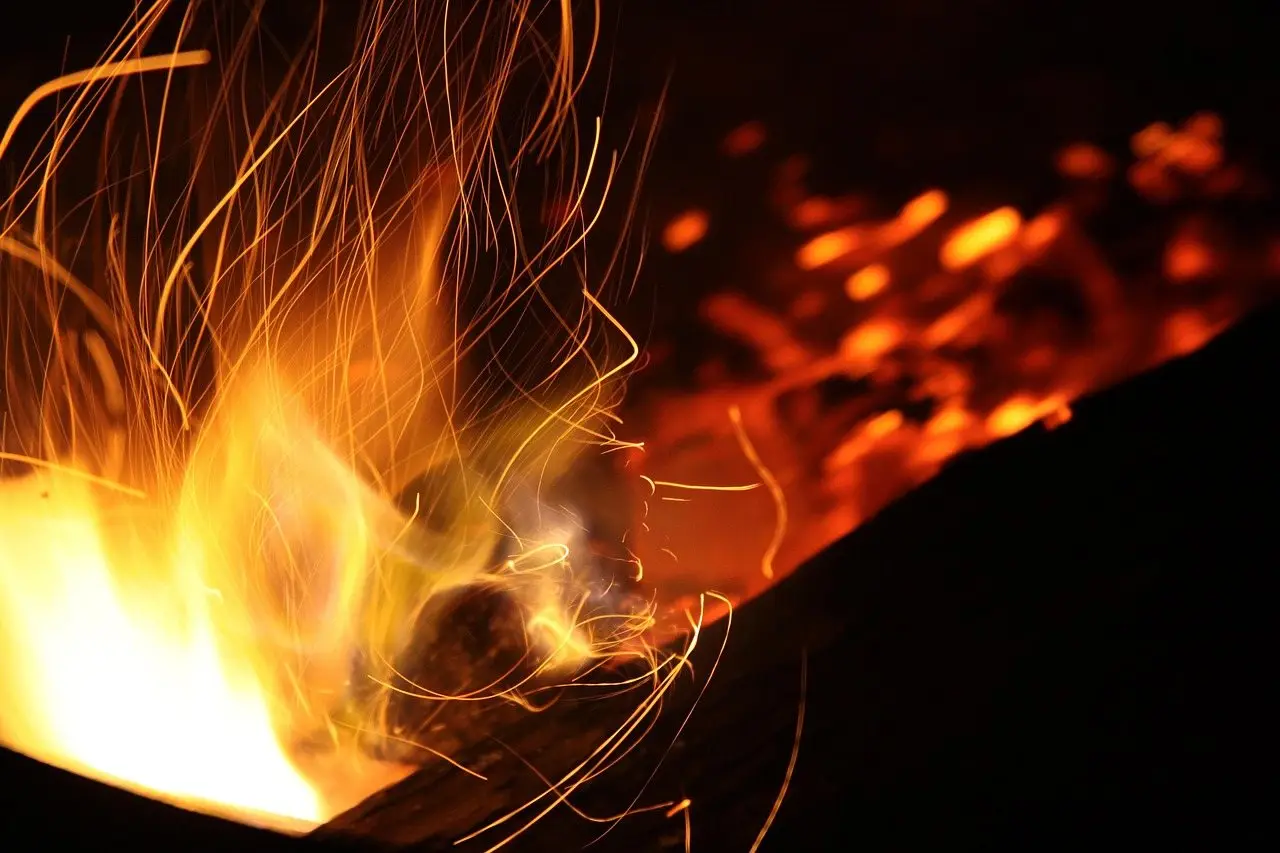
Mulberry holds small pockets that snap as they heat, firing embers out of an open fire.
Where not to burn it
Not in an open pit beside a timber deck, dry grass, or anything flammable, and not without a spark screen. The throw distance is enough to matter. In a stove with the door shut, none of this applies — mulberry is a very good stove wood.
A useful split of the woodpile
Keep mulberry for the stove and burn your low-spark woods — locust, beech, ash — in the fire pit. That uses each where its weakness does not count.
Seasoning and handling
- 9–12 months for normal splits. Faster than its density suggests.
- Split green; it stiffens and goes stringy dry, and splits can hang together by fibres.
- Expect knotty wood. Mulberry grows short, crooked and heavily branched, so clean straight rounds are the exception.
- Stack off the ground, top covered only, ends to the wind.
- It stores well — the natural rot resistance means a stack left an extra year is still fuel.
It stains
Mulberry sap and fresh-cut wood stain hands and clothing a persistent yellow-brown. Gloves, and not your good jacket.
Cooking over it
Mild, slightly sweet smoke — closer to a fruit wood than to hickory — and it suits poultry and pork. Clean, seasoned, untreated wood only when food is involved.
Common questions
Is mulberry good firewood?
Does mulberry spark a lot?
How many BTU is mulberry?
How long does mulberry take to season?
Can you cook over mulberry?
Is mulberry hard to split?
Backyard Weekly
Know what to plant, week by week
Join the weekly email for seasonal jobs, fixes for what is going wrong, and gear worth buying.
Not ready to subscribe? The planting calendar is free and needs no email.
By subscribing you agree to our privacy policy. Grow In Backyard will never sell your address.
Keep reading
Firewood: What to Burn, and How Dry It Has to Be
Moisture matters more than species. How long each wood takes to season, how to tell when it is ready, and the things you must never put on a fire.
What to Put Around a Fire Pit: Surfacing and Seating
Gravel, pavers and decomposed granite all work; mulch and artificial grass do not. Plan a 7-foot clear radius before choosing the material.
How to Dry Firewood Fast: What Actually Speeds It Up
Splitting small does more than anything else, and a tarp over the whole pile undoes it. Realistic timescales, and why there is no shortcut to under 20%.
Is Poplar Good Firewood? Burnable, But Only Half the Heat
Poplar gives about 13 million BTU a cord against oak's 24, burns fast and leaves little coal. Where it genuinely earns a place in the woodpile.