
Why Do Squirrels Chirp? It Is Usually About You
Why do squirrels chirp: most calls are alarm, and the pattern tells you what kind of threat. How to read the 4 main sounds and what each one is reacting to.
 By
On this page
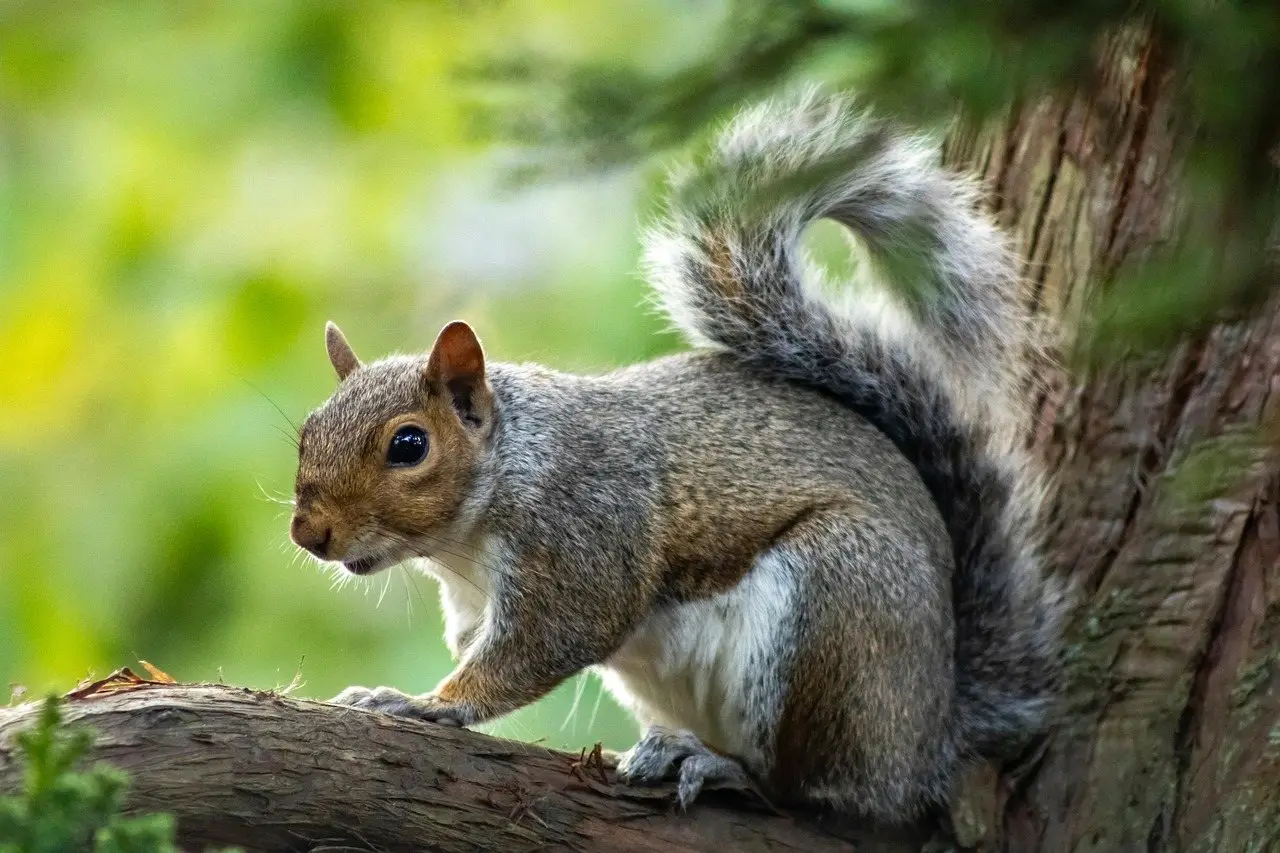
A squirrel chirping repeatedly from a branch is almost always alarm calling, and nine times out of ten in a garden the thing it is alarmed about is the person standing underneath it.
The four sounds, and what each means
| Sound | What it looks like | Usually means |
|---|---|---|
| Repeated short barks | Tail flicking, body tense, facing you | Ground threat — cat, dog, person |
| Longer drawn-out call | Flattened against a branch, still | Aerial threat — hawk, drone, large bird |
| Tooth chatter | Close to another squirrel | Territorial warning, food dispute |
| Thin high squeak | Small animal, often on the ground | Nestling separated from its mother |
Why announcing yourself works
It seems counterproductive for a prey animal to make noise at a predator. It is not, and the reason is the same across many species that do it.
Ambush predators need surprise. A cat that has been seen, and knows it has been seen, has lost the stalk. The call is addressed as much to the predator as to other squirrels: I can see you, this is not going to work, go somewhere else.
That is also why the calling stops when you leave rather than when you stand still. The squirrel is tracking the threat, not reacting to a sound.
The two-threat distinction
Work on grey squirrels and on several ground squirrel species has found that the calls differ by threat type, and — more tellingly — that other squirrels respond differently depending on which call they hear.
- Terrestrial threat: faster, repeated barking. Other squirrels tend to climb and watch.
- Aerial threat: longer, more drawn-out calls or a screech. Other squirrels tend to freeze flat against a trunk or dive for cover.
The second response is the correct one for a hawk and the wrong one for a cat, which is the evidence that the distinction carries information rather than just being louder or quieter alarm.
Note
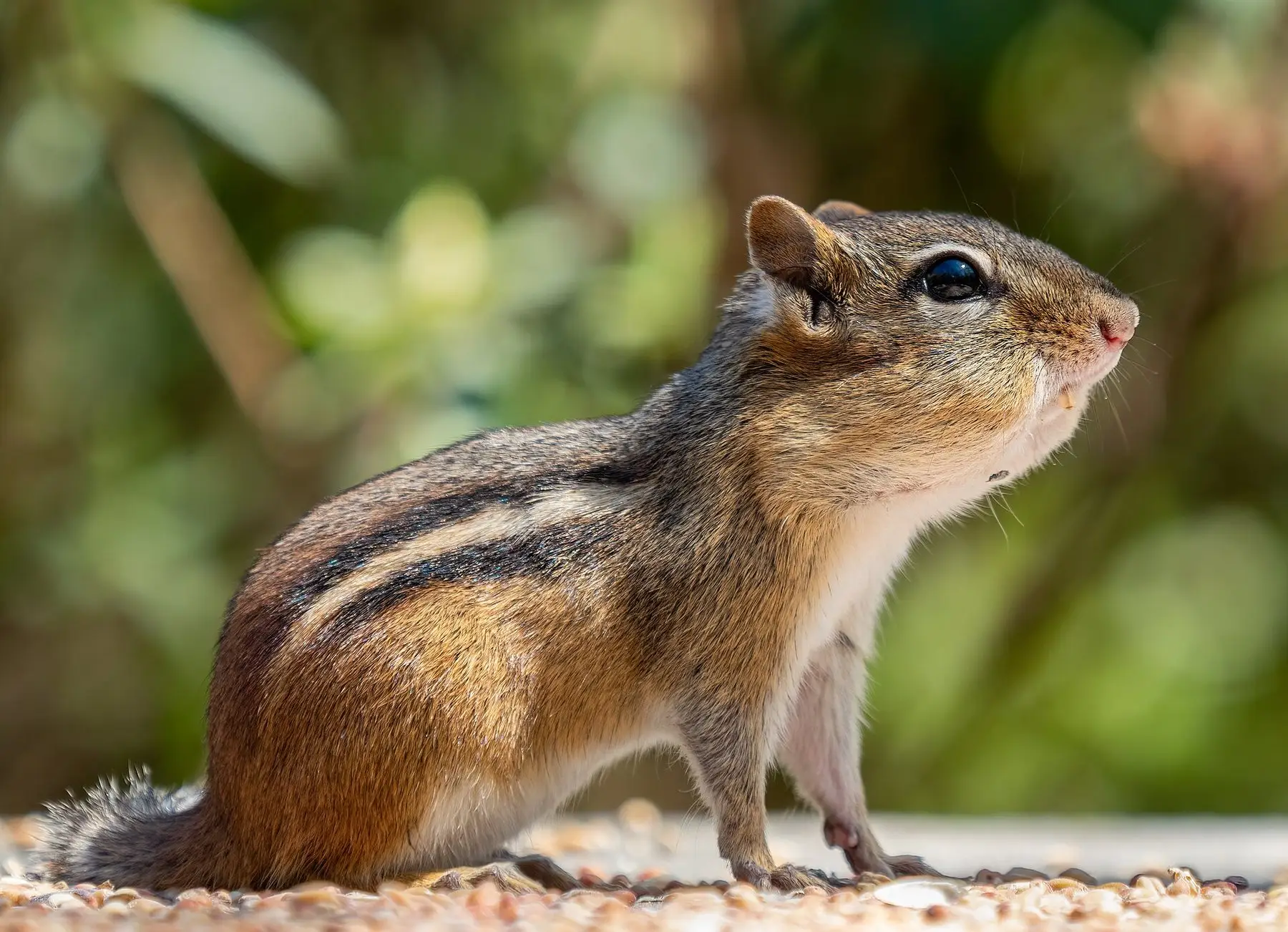
Chipmunks do something comparable, which is why a garden with both can sound like an argument. The chipmunk’s call is higher and more metallic, often a single repeated “chip” at long intervals, and it can continue for a very long time from cover.
What to do about it
Nothing, mostly. It is not aggression and the squirrel is not going to do anything beyond calling.
If it bothers you:
- Move away. The call tracks the threat and ends when the threat leaves.
- Check for a cat. Sustained calling from one tree with nobody around is usually a cat sitting underneath, or a hawk perched nearby.
- Look for a nest if it happens every time you use one part of the garden in spring or late summer. A female with young in a drey calls more readily and at longer range, and the behaviour stops when the young disperse.
Common questions
What does it mean when a squirrel chirps at you?
Why do squirrels make a chattering teeth sound?
Do squirrels have different calls for different predators?
Why does a squirrel chirp for so long?
Do baby squirrels make noise?
Backyard Weekly
Know what to plant, week by week
Join the weekly email for seasonal jobs, fixes for what is going wrong, and gear worth buying.
Not ready to subscribe? The planting calendar is free and needs no email.
By subscribing you agree to our privacy policy. Grow In Backyard will never sell your address.
Keep reading
Why Do Chipmunks Chirp? What Each Sound Actually Means
The chip, the chuck and the trill are three different alarms for three different threats. How to read them, and what the yard is telling you.
When Do Baby Squirrels Leave the Nest? Week by Week
Kits first come out at six or seven weeks and are independent by three months. The timeline, and how to tell an orphan from one that is fine.
Do Squirrels Come Out at Night? Which Ones, and What You Heard
Grey and fox squirrels are strictly daytime animals. If something is moving in the roof after dark, it is almost certainly not one of them.
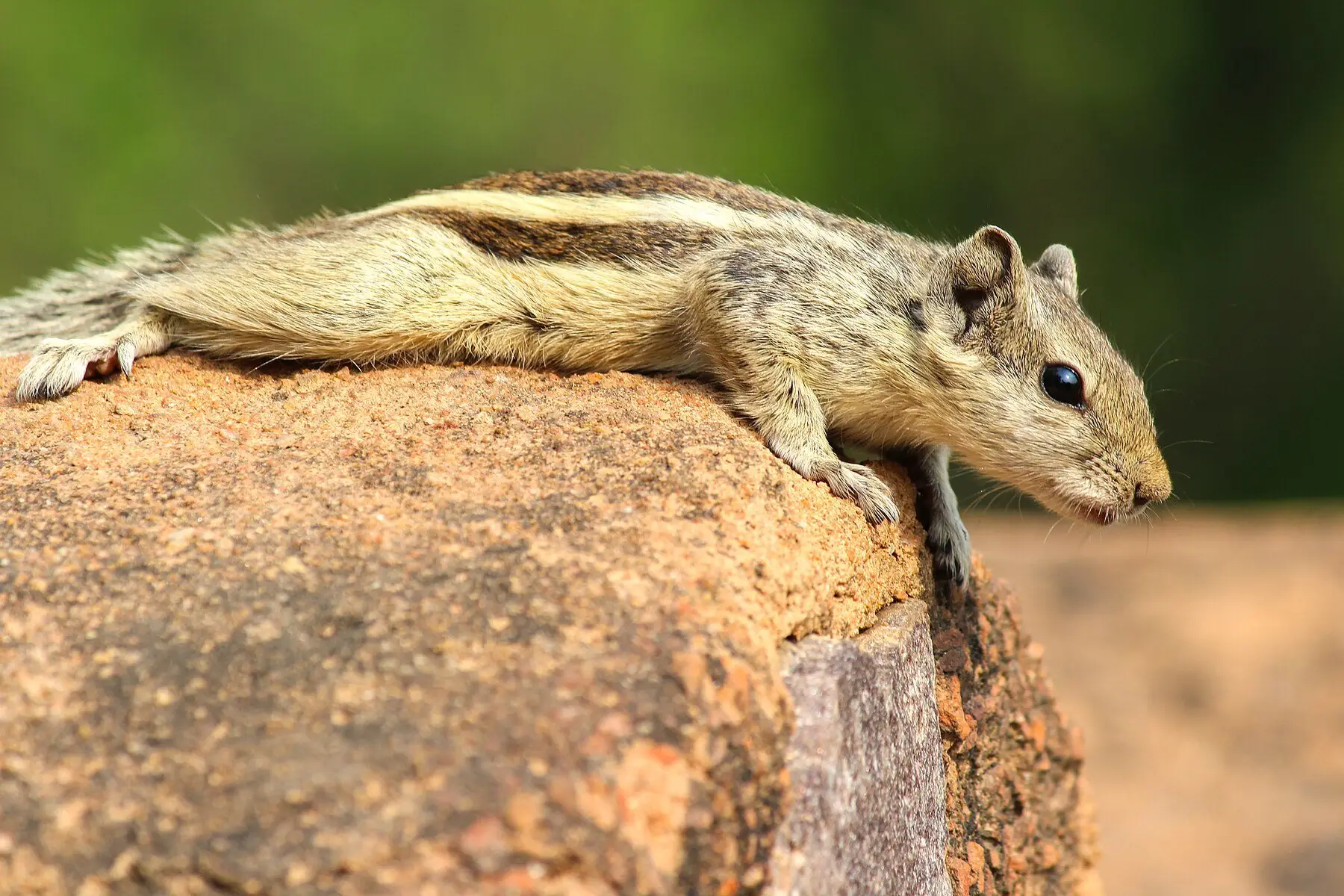
Why Do Squirrels Lay Flat? Splooting Explained, and When to Worry
A squirrel lying flat with its legs spread is usually dumping heat into a cool surface. How to tell normal splooting from a squirrel in real trouble.