
Why Do Possums Play Dead? And How Long It Lasts
Playing possum is an involuntary shock state, not a decision. Why it happens, how long it lasts, and what to do with one lying in your yard.
 By

On this page
Playing possum is not a decision. It is an involuntary shock state — closer to fainting than to acting — triggered when an opossum is frightened past the point its other defences work.
What actually happens
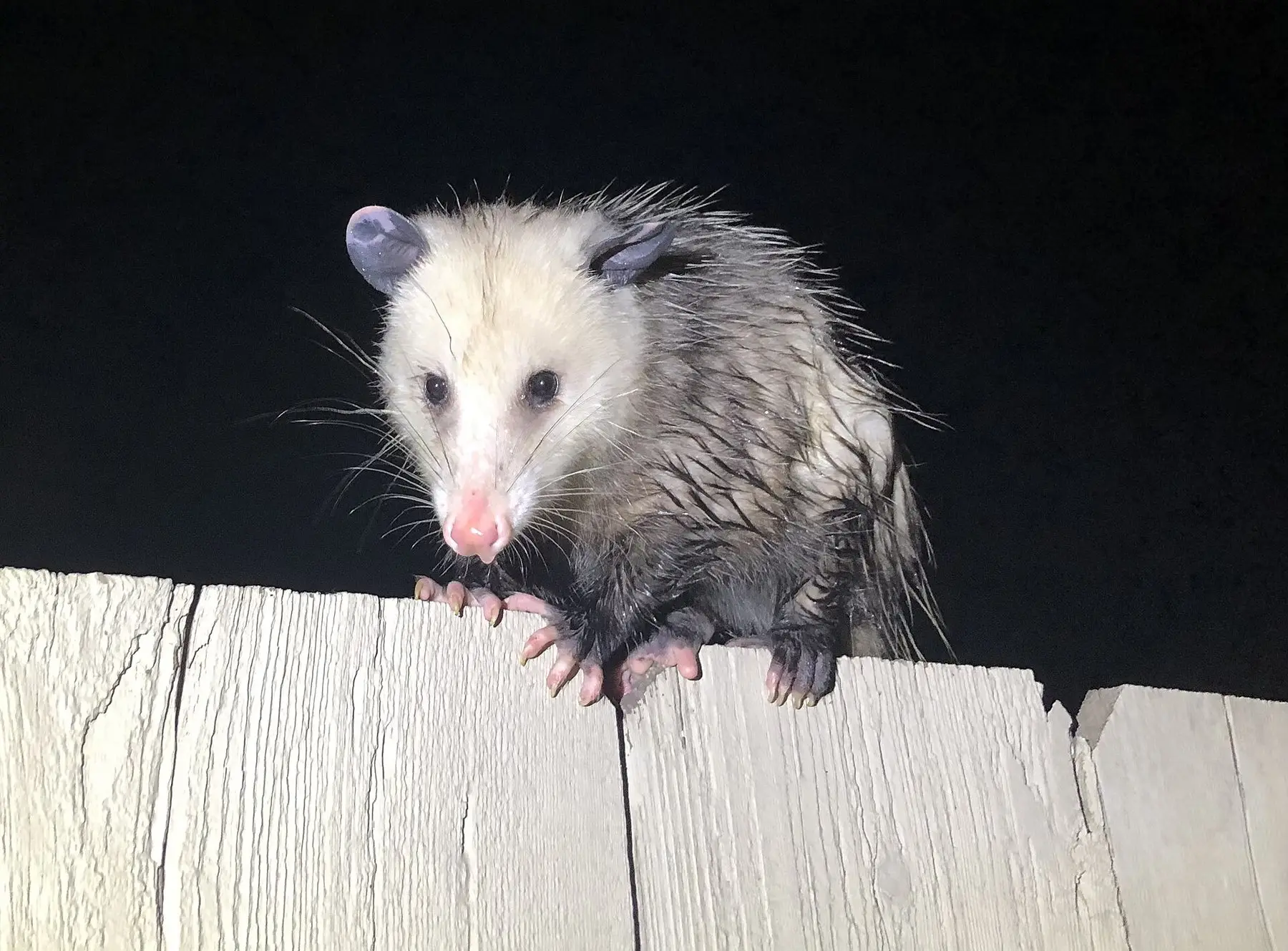
Threatened, an opossum first tries everything else: it hisses, bares an impressive fifty teeth, growls and tries to leave. Those are bluffs — the animal is not a fighter.
When the threat continues, the nervous system takes the decision away from it. The possum:
- Collapses onto its side, body curled and stiff
- Lips drawn back, tongue out, eyes open or half-closed
- Drools heavily
- Heart rate and breathing drop sharply
- Releases a green, foul-smelling fluid from the anal glands
That last part is the detail that makes it work. A predator is not only seeing a dead animal, it is smelling a rotting one — and most predators that kill for themselves will not eat carrion they did not make.
Why the trick works
| Threat | Effective? | Why |
|---|---|---|
| Fox, coyote, bobcat | Yes | Hunt by chasing movement; avoid carrion |
| Large birds of prey | Often | Movement-triggered strike |
| Dog | Poorly | A dog will keep worrying a motionless animal |
| Car | Not at all | The response is triggered by headlights and noise at the worst moment |
| Human | Unnecessary, but triggered anyway | It cannot tell the difference |
This is the tragedy of the behaviour. It evolved against predators that respond to movement, and it is close to useless against the two things that kill most opossums today. A possum frozen in a road is not being stupid — its nervous system has committed it to a strategy that stopped working a century ago.
How long it lasts
A few minutes to about four hours, with most episodes far shorter than the upper figure.
The animal does not choose the moment to get up. Recovery is gradual — typically it starts with the ears twitching as the possum begins sampling its surroundings, then the head lifts, then it leaves quickly.
Which means your job is to go away
The state persists as long as the animal perceives threat. Standing over it, poking it, photographing it from a foot away or letting a dog sniff it all extend the episode and deepen the stress. Bring pets in, go inside, and check from a window.
Dead, or playing?
Do not test it by touching. Look for:
Probably thanatosis: lips drawn back, tongue lolling, drool, stiff curled body, strong foul smell, no visible injury, found near cover or after a dog or a car encounter.
Probably dead: visible injury or blood, flies already present, body limp rather than stiff and cool to the surroundings, or still in exactly the same position many hours later.
The reliable test is time. Leave the area completely and check again in one to two hours.
What to do
- Leave it alone. No poking, no moving, no box.
- Bring pets and children indoors and keep them in.
- Give it space for a couple of hours, checking from a distance.
- Call a licensed wildlife rehabilitator — not animal control, if you can avoid it — if it is visibly injured, if it is still there after several hours, or if it is a female, since her pouch may hold young that will not survive her.
- Never handle one bare-handed. Not because they are dangerous, but because handling terrifies them and it is unnecessary.
Opossums are worth having around
They eat slugs, snails, cockroaches, beetles, rodents, carrion and fallen fruit, they are among the least aggressive backyard mammals, and they very rarely carry rabies — their body temperature is low enough to make the virus difficult to sustain. Secure the trash, the pet food and the chicken run, and there is very little reason to want one gone.
A note on the word
The animal in North American backyards is the Virginia opossum, the only marsupial native to the US and Canada. “Possum” without the O is, strictly, a different group of animals in Australia and New Guinea — which do not play dead. In everyday American use the two words are interchangeable, and “playing possum” has been in the language since the early 1800s.
Common questions
Why do possums play dead?
How long do possums play dead?
Is the possum in my yard dead or playing dead?
Can a possum control playing dead?
What should I do if I find a possum playing dead?
Are possums dangerous or worth having around?
Backyard Weekly
Know what to plant, week by week
Join the weekly email for seasonal jobs, fixes for what is going wrong, and gear worth buying.
Not ready to subscribe? The planting calendar is free and needs no email.
By subscribing you agree to our privacy policy. Grow In Backyard will never sell your address.
Keep reading
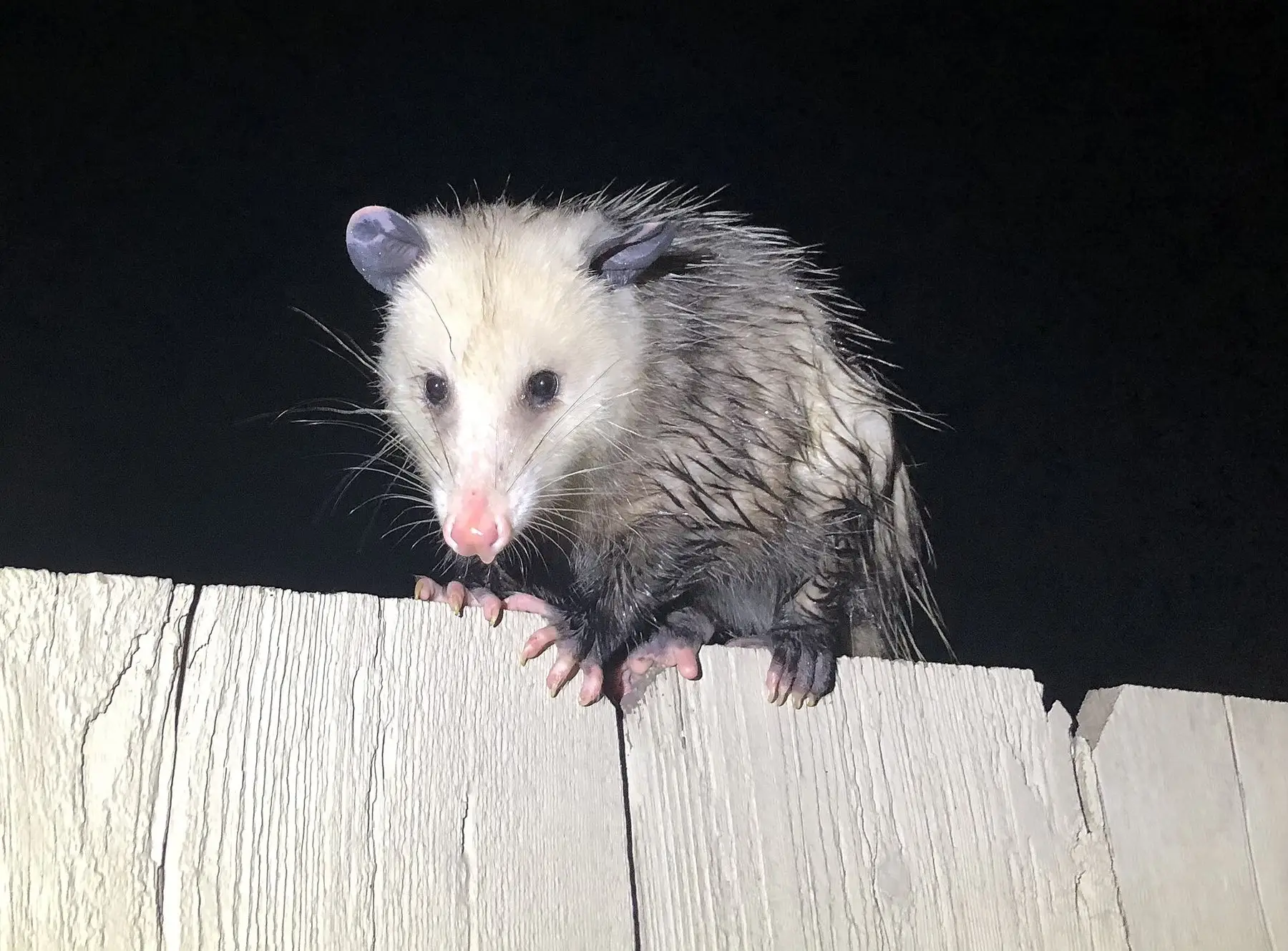
Can Possums Climb? Fences, Trees, and What Stops Them
Opossums are capable, deliberate climbers with a grasping tail built for it. What that means for fencing them out, and where they actually can't get a grip.
What Is Digging Holes in My Yard? Identify It by the Hole
Armadillos, skunks, groundhogs, voles and squirrels all dig differently. Hole size, shape, soil spray and timing identify the animal before you set anything.
How High Can a Rat Jump? And How Far, and How Small a Gap
A brown rat clears about three feet vertically and four horizontally, and fits through a gap the size of a quarter. What that means for rat-proofing.
Why Do Squirrels Bark? Reading the Chatters, Screams and Kuks
A barking squirrel is an alarm call, and the sound tells you what kind of threat it found. Kuks, quaas, screams and the tail flick that goes with them.