
Why Do Hummingbirds Hover in Your Face? They're Assessing You
A hummingbird hovering inches away is gathering information — checking a food source, inspecting red clothing, or telling you the feeder is empty.
 By
On this page
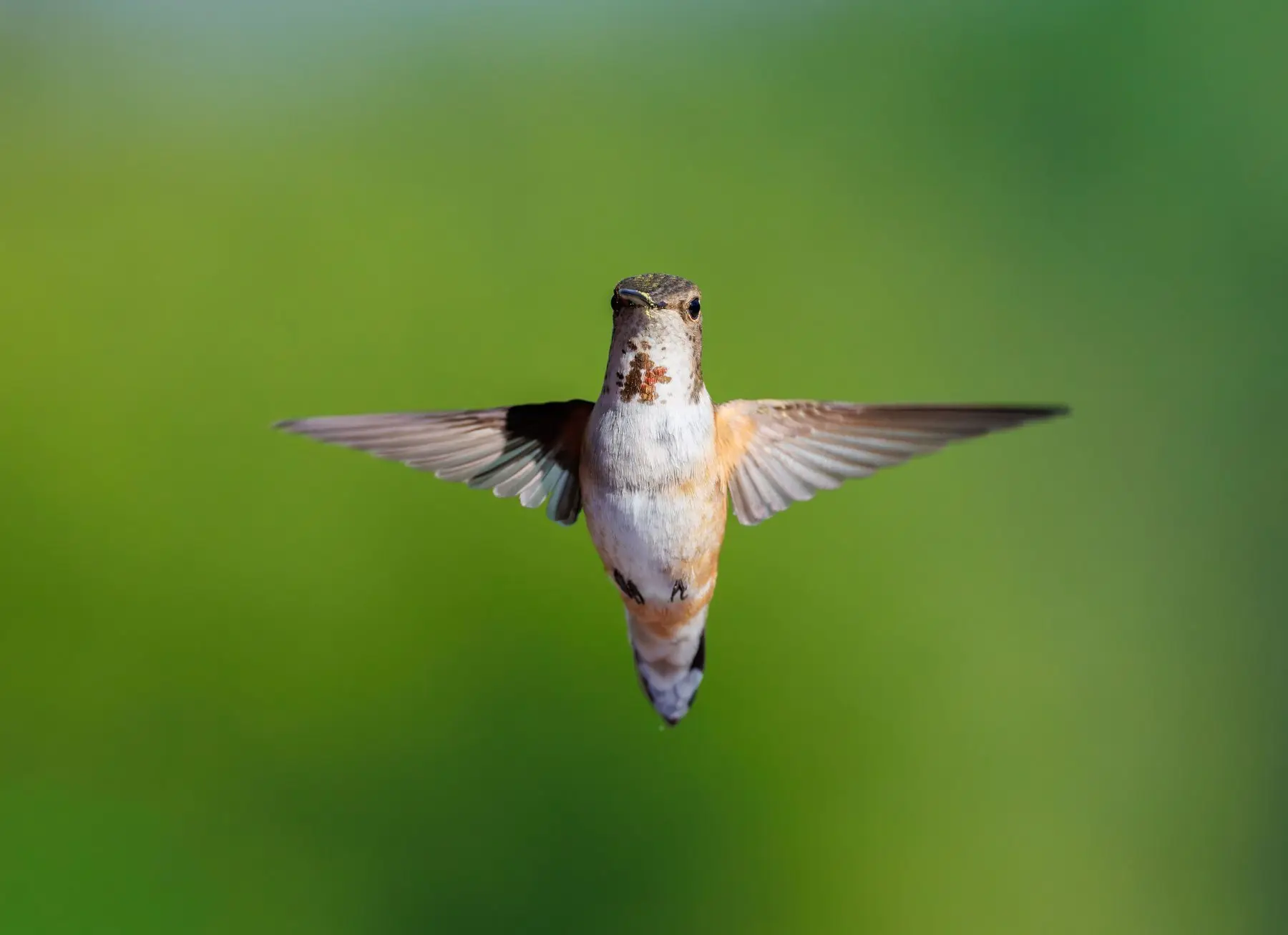
They are looking at you — and hovering is simply how a hummingbird inspects anything. It is the only bird that can hold a position precisely enough to study something at close range, so the behaviour that feels confrontational is really just reading glasses.
What set it off
| Trigger | What the bird is doing |
|---|---|
| Red or bright clothing | Checking whether you are a nectar source |
| You standing near a feeder | Deciding whether it can approach |
| Empty or dirty feeder | Checking a mapped food source that failed |
| A resident bird, mid-season | Inspecting a known non-threat |
Inspection is not aggression
The distinction is in the shape of the flight:
- A hover — stopped, holding position, facing you — is inspection
- A fast pass near a feeder it is defending can include you incidentally
Hummingbirds are relentlessly aggressive toward each other over feeders. Toward people they essentially are not, and actual contact is close to unheard of.
The empty feeder case
Read it as a complaint, because functionally it is one
Hummingbirds map their food sources and check them on a schedule — they track which individual flowers they have emptied and roughly how long each takes to refill.
So a bird arriving at an empty or spoiled feeder and then hovering in front of you nearby is behaving exactly as if it expects the situation to change. Whether it understands you as the cause is unknowable. The association between people and refilled feeders is well within what their memory holds.
Do they recognise you?
Situations and locations, certainly and very precisely. Individuals, probably.
- Their spatial memory is exceptional — flower-by-flower, with refill timings
- Birds return to the same garden across seasons and go straight to where feeders were
- Many people report a resident bird behaving differently toward them than toward strangers, which fits what is known but is harder to demonstrate properly
- They hear human voices easily — speech sits in the band where bird hearing is sharpest, so a voice is something they can learn to associate
What to do while it is happening
Stay still. That is the whole trick — it resolves the question the bird is asking, and it will often go back to feeding a few feet away.
- Do not reach toward it
- No sudden movement. Near a feeder that can send a bird into a window or a wall
- Let it finish looking
Wear red if you want this to happen. It works almost every time.
Common questions
Why do hummingbirds hover in your face?
Are hummingbirds being aggressive when they fly at you?
Do hummingbirds recognise individual people?
What does it mean when a hummingbird hovers in front of an empty feeder?
Why do hummingbirds hover around red clothing?
Should you stay still when a hummingbird hovers near you?
Backyard Weekly
Know what to plant, week by week
Join the weekly email for seasonal jobs, fixes for what is going wrong, and gear worth buying.
Not ready to subscribe? The planting calendar is free and needs no email.
By subscribing you agree to our privacy policy. Grow In Backyard will never sell your address.
Keep reading
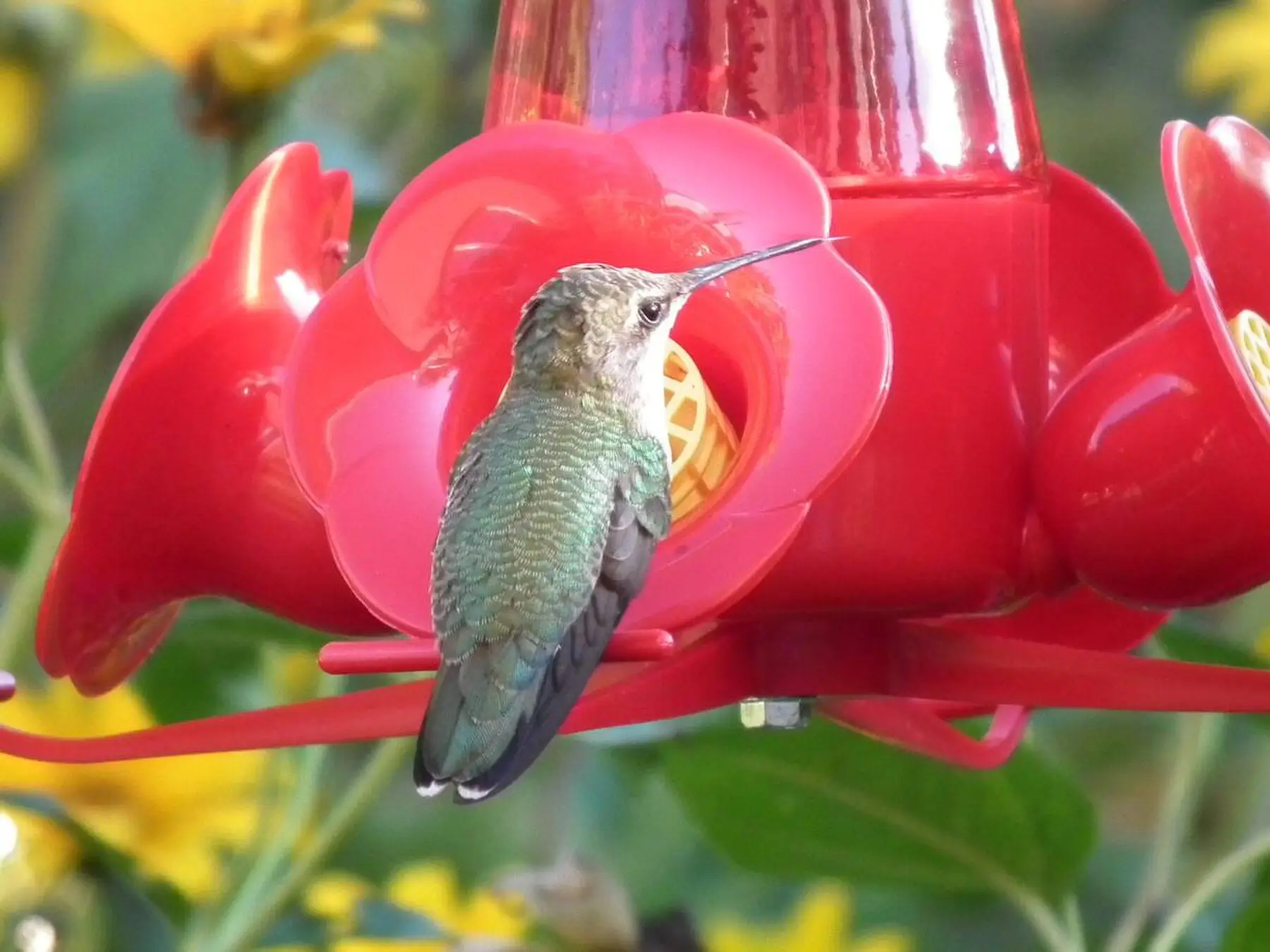
Why Hummingbirds Stopped Coming to Your Feeder
Spoiled nectar, natural flowers, migration, or one bird driving the rest off. The order to check them in, and the feeder mistake most people are making.
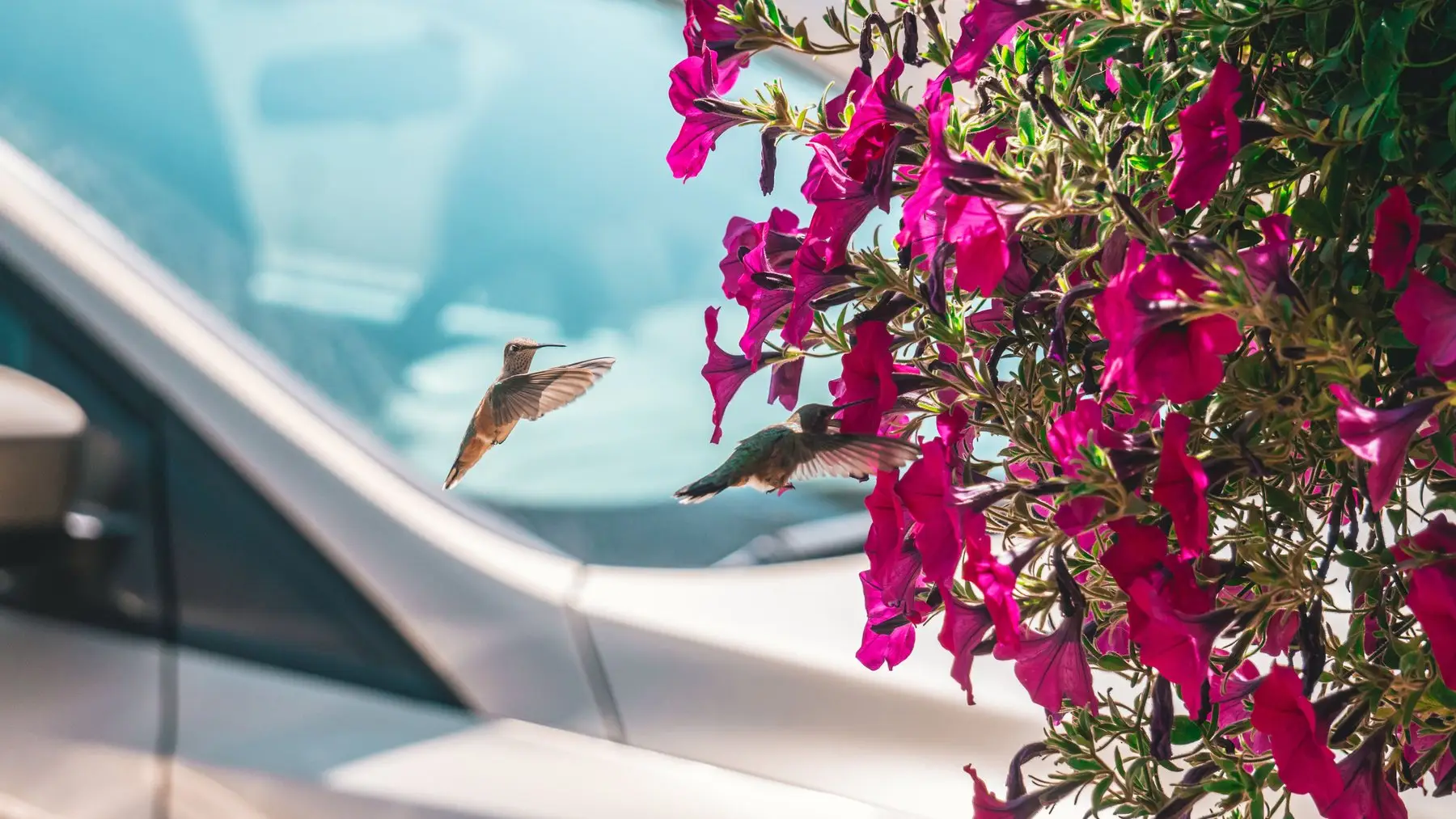
Can Hummingbirds Hurt You? What a Dive-Bomb Actually Means
Hummingbirds cannot meaningfully injure a person, though they will buzz, hover at your face and dive at you. What the behaviour means and how to read it.
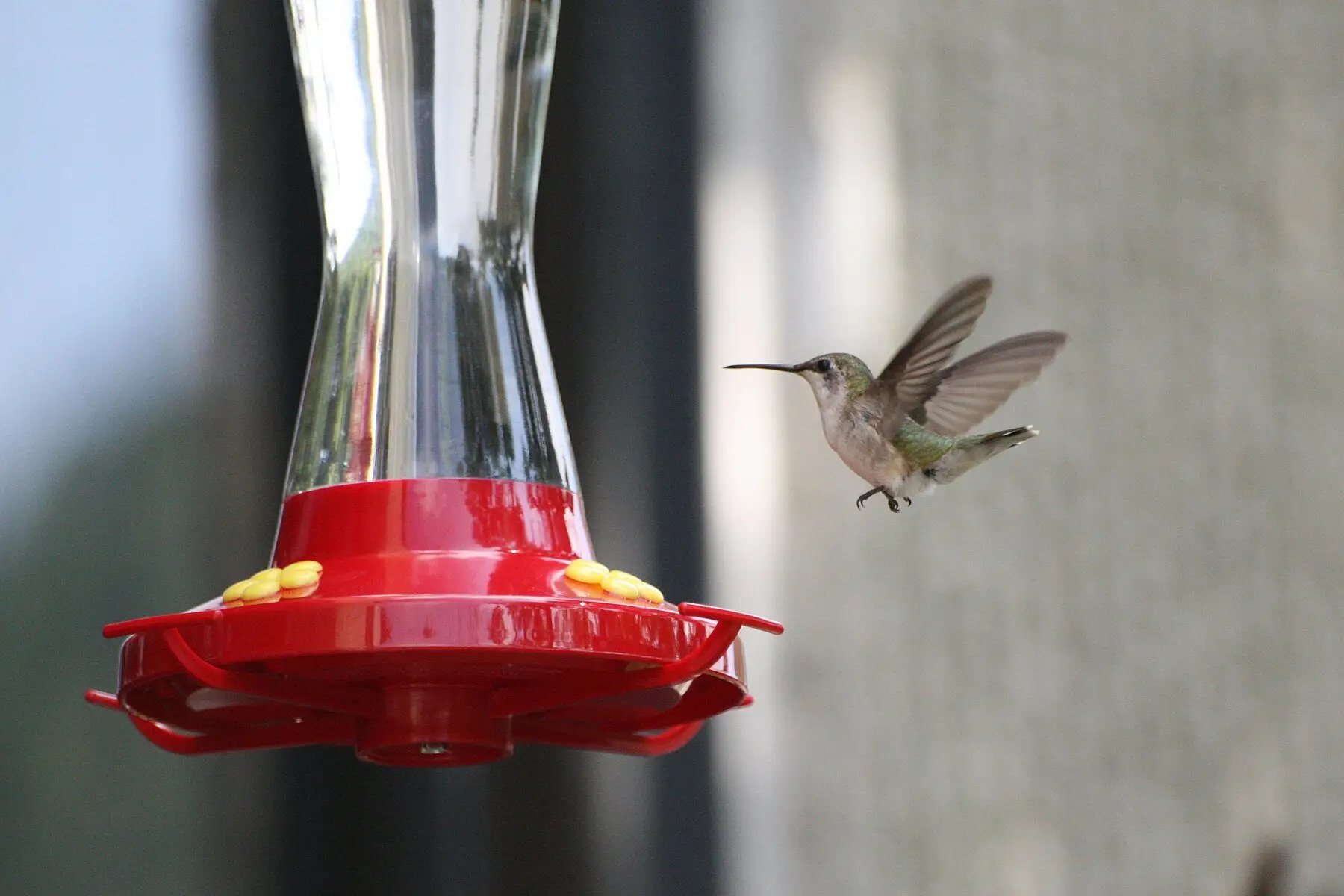
Why Do Hummingbirds Chase Each Other? Territory, Mostly
Hummingbirds are aggressively territorial over food, and a single bird will guard a feeder against all comers. How to stop one monopolising yours.
Why Do Male Hummingbirds Chase Females From Feeders?
Territorial defence, not courtship. A dominant male guards a feeder as a food patch, and the fix is making the feeder impossible to guard.