
Can Hummingbirds Hurt You? What a Dive-Bomb Actually Means
Hummingbirds cannot meaningfully injure a person, though they will buzz, hover at your face and dive at you. What the behaviour means and how to read it.
 By
On this page
A hummingbird weighs roughly what a penny weighs. It can absolutely come at you, and it cannot do anything about it when it arrives.
Why they are so aggressive and still harmless
| Toward other hummingbirds | Toward you | |
|---|---|---|
| Chasing | Constant | Occasional dive-bombs |
| Bill used as a weapon | Yes, in territorial fights | Not aimed at people |
| Body weight involved | ~3 g against ~3 g | ~3 g against ~70,000 g |
| Realistic outcome | Real injury between birds | Startle; at worst a light scratch |
Nectar is a defensible resource, which is the whole explanation. A patch of flowers or a feeder is a fixed, rich, renewing food source, and defending one is worth a bird’s entire energy budget. Everything people read as boldness is that.
Reading the behaviour
- A fast pass with a noise at the bottom — territorial display, aimed at whatever is nearest the feeder. You are just the biggest thing there
- Hovering steadily at your face — assessment. It is looking at you
- Hovering at your red hat, bag, or shirt — being checked for nectar
- Hovering in front of an empty feeder while you watch — that one is fairly pointed
If one hovers in front of you, do nothing at all
Stay still and it leaves in a second or two. A swatting hand is what causes the only injuries in these encounters — and a bird this fragile does not survive being hit.
The situation that actually needs care
A hummingbird trapped in a garage, shed or greenhouse. They fly upward when frightened, exhaust themselves against the roof, and can starve in a few hours because their energy reserves are measured in minutes. Open everything low and wide, darken the top of the space if you can, and leave. If it has already dropped, a shallow dish of sugar water within reach does more than handling it will.
And while you are at the feeder
- One part plain white sugar to four parts water. Nothing else
- No red dye, no honey, no brown sugar
- Clean every two or three days in warm weather — mould and fermentation are the real health risk here, and it is to the birds
- Several feeders out of sight of each other if one male is monopolising the garden, which is usually the fix for both the chasing and the dive-bombing
Common questions
Can hummingbirds hurt you?
Can a hummingbird stab you with its beak?
Why does a hummingbird dive at me?
Do hummingbirds recognise people?
Is it safe to let a hummingbird hover near my face?
Can hummingbirds carry disease?
Backyard Weekly
Know what to plant, week by week
Join the weekly email for seasonal jobs, fixes for what is going wrong, and gear worth buying.
Not ready to subscribe? The planting calendar is free and needs no email.
By subscribing you agree to our privacy policy. Grow In Backyard will never sell your address.
Keep reading
Why Do Hummingbirds Chase Each Other? Territory, Mostly
Hummingbirds are aggressively territorial over food, and a single bird will guard a feeder against all comers. How to stop one monopolising yours.
Do Hummingbirds Make Noise? The Hum, Chirps and Dives
The hum is wings, not voice — but hummingbirds also chip, chatter and make sound with their tail feathers during courtship dives. What each one means.
Why Hummingbirds Stopped Coming to Your Feeder
Spoiled nectar, natural flowers, migration, or one bird driving the rest off. The order to check them in, and the feeder mistake most people are making.
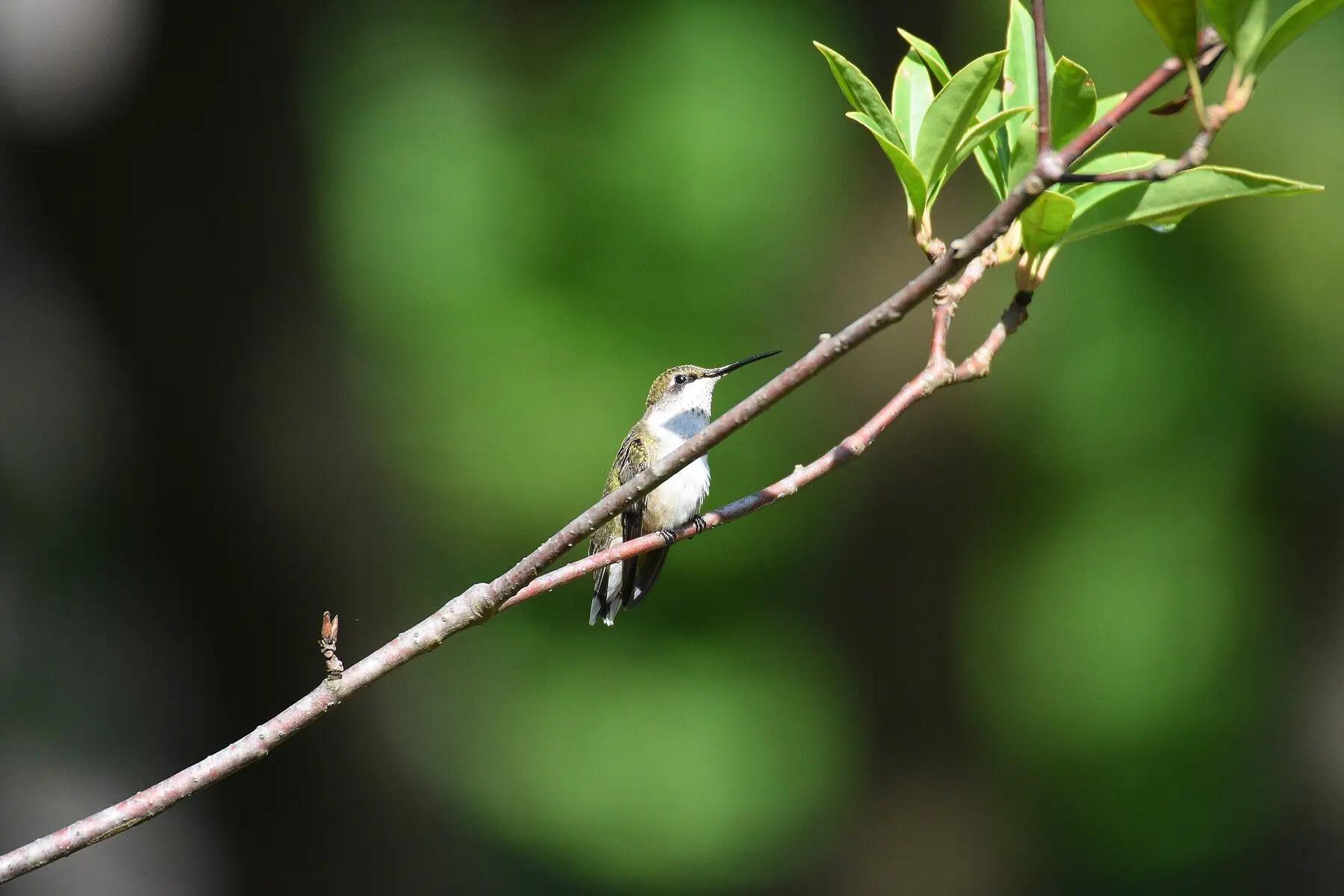
Can Hummingbirds Stop Flying? Yes — and They Do It Often
Hummingbirds perch for most of the day, despite the reputation. Why they cannot walk, how torpor works, and what the constant-flight myth gets wrong.