
Why Do Hummingbirds Chase Each Other? Territory, Mostly
Hummingbirds are aggressively territorial over food, and a single bird will guard a feeder against all comers. How to stop one monopolising yours.
 By

On this page
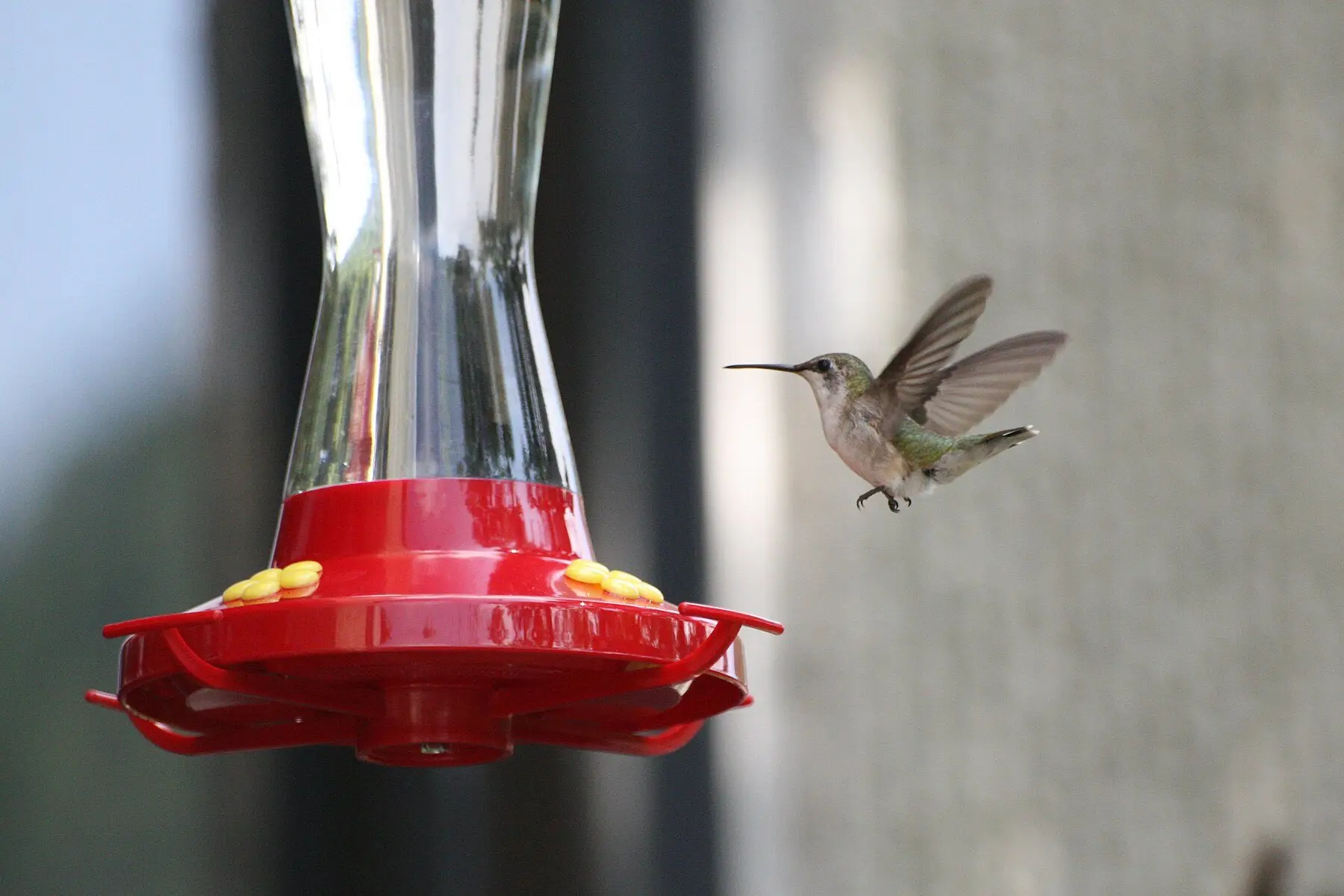
Hummingbirds are relentlessly territorial, and almost all the chasing you see is one bird defending a food source against every other bird that comes near.
For an animal with that metabolism, it is entirely rational behaviour.
The metabolism explains it
A hummingbird’s heart runs at over 1,200 beats per minute in flight. They feed every ten to fifteen minutes through the day and enter torpor overnight — a near-hibernation that drops body temperature and heart rate — because they cannot store enough energy to get through the night awake.
An animal living that close to the edge does not share a food source. A feeder is the difference between surviving the night and not, and the behaviour follows from that.
What the chasing is
Territorial defence. The most common by far. A dominant bird picks a perch with a view of the feeder and intercepts every arrival. Some individuals spend more time guarding than feeding.
Courtship. Males perform steep dive displays — a climb and a plunge, sometimes with a mechanical sound produced by the tail feathers at the bottom.
Young birds testing boundaries and being put in their place.
Mistaken identity. Large bees, moths and even dragonflies get chased off too.
Do they hurt each other?
They try harder than you might expect. Fights involve stabbing with the bill, mid-air grappling, and occasionally two birds falling to the ground still locked together.
Deaths are rare. Most encounters end with the loser leaving. The display is mostly the point — being convincing is cheaper than fighting.
When they buzz you
A hummingbird hovering inches from your face is inspecting or warning, not attacking. Common reasons:
- You are standing near its feeder.
- You are near a nest.
- You are wearing bright red or orange and have been mistaken for a flower.
- The feeder is empty and you are the one who usually fills it — this is a real and well-documented behaviour.
They cannot hurt you. Step back a few feet and it stops.
Stopping one bird owning the feeder
The dominant bird is why you see two hummingbirds in a garden that could support ten.
Break the line of sight
A hummingbird can only defend what it can see. Multiple feeders placed out of view of one another — around a corner, on opposite sides of the house, separated by a shrub — is the single most effective change. Feeders clustered together are simply a bigger territory for one bird to hold.
Also helps:
- Feeders with several ports and perches.
- Flowering plants spread around the garden: salvia, bee balm, cardinal flower, trumpet vine.
- More feeders than you think you need. Three small ones beat one large one.
If they vanish
In rough order of likelihood:
- Migration. Numbers change sharply at both ends of the season.
- Natural flowers came into bloom. Fresh nectar beats a feeder, and they will be back.
- The nectar spoiled. This is the avoidable one — sugar water ferments within two or three days in hot weather, and hummingbirds abandon a feeder that has gone off or grown black mould.
- A dominant bird drove the others off.
- Nesting. Females feed less visibly while sitting.
Nectar recipe: four parts water to one part white sugar. No red dye, no honey, no brown sugar. Change it every two days in heat, every three to five in mild weather, and scrub the feeder each time.
Common questions
Why do hummingbirds chase each other?
Do hummingbirds kill each other?
Do hummingbirds attack humans?
How do you stop one hummingbird dominating a feeder?
Why did my hummingbirds suddenly disappear?
Do hummingbirds make noise?
Backyard Weekly
Know what to plant, week by week
Join the weekly email for seasonal jobs, fixes for what is going wrong, and gear worth buying.
Not ready to subscribe? The planting calendar is free and needs no email.
By subscribing you agree to our privacy policy. Grow In Backyard will never sell your address.
Keep reading
Squirrel-Proof Bird Feeders — 5 Measures That Stop Them
Squirrel-proof bird feeders work on distance and mechanism, not claims. 5 measures compared on cost and success. See which suits your yard.
Bird House Hole Size: The Number That Picks the Tenant
Entrance diameter decides which species can use a box and which predators cannot. A size chart, the dimensions that go with each, and why perches are harmful.
What Butterflies Need to Survive in a Backyard
Nectar flowers feed adult butterflies but cannot raise any. Caterpillars only eat specific host plants — that gap is why most butterfly gardens stay empty.
Why Do Hummingbirds Fly So Close to Me? Five Real Reasons
A hummingbird hovering inches from your face is assessing you, inspecting your clothes, or telling you the feeder is empty. None of it is aggression.