
What Does Deer Urine Smell Like? Sharp Ammonia and Musk
Strong ammonia with a musky edge, heaviest in autumn when bucks rut. If you can smell it in the garden, deer are bedding there, not just passing.
 By
On this page
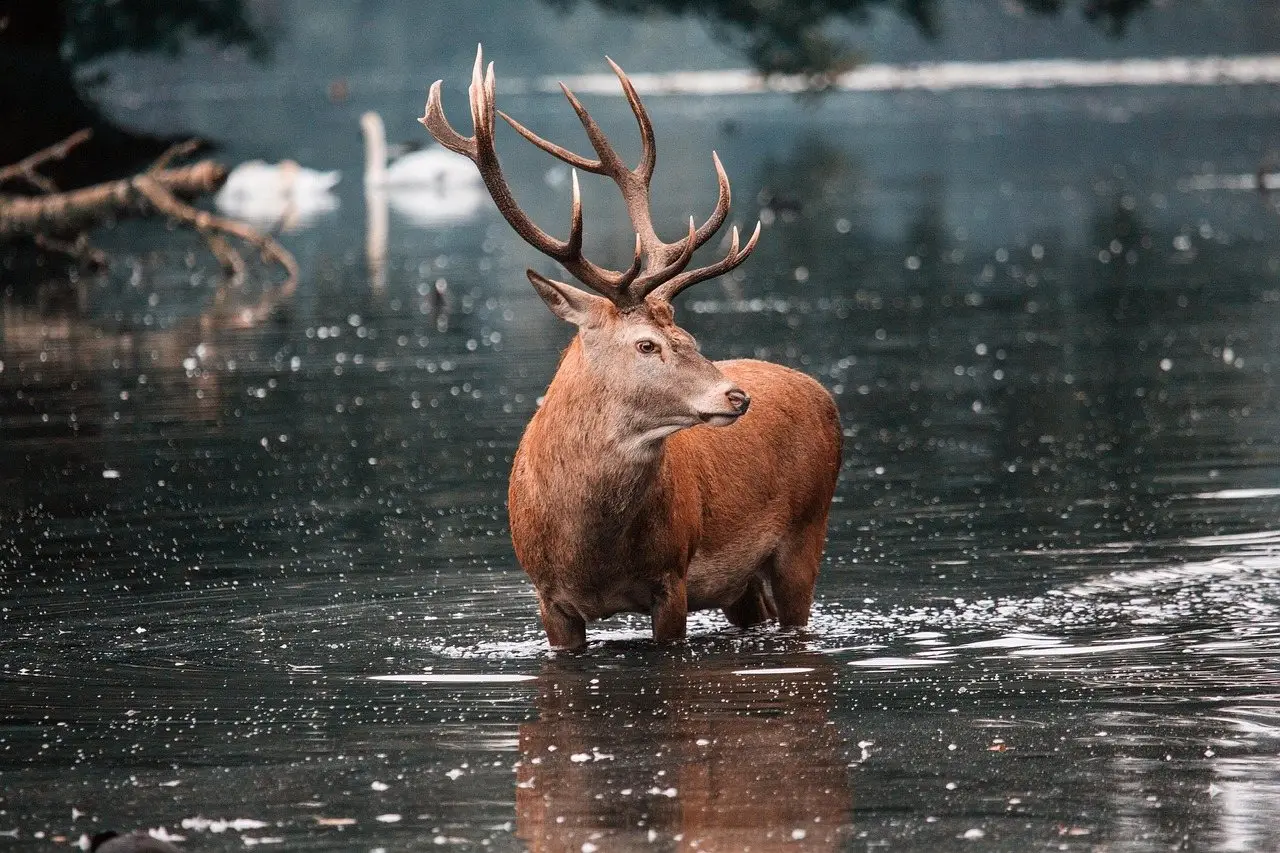
Sharp ammonia with a musky undertone — much like other herbivore urine out of season, and far ranker in autumn, when a buck urinates over his tarsal glands and rubs the hocks together. If you can smell it in the garden, deer are bedding there, not passing through.
Why autumn smells different
A buck deliberately urinates down his hind legs over the tarsal glands on the inside of each hock, then rubs the hocks together. Bacteria living on the glandular tuft break down compounds in the urine and secretion, and the result is far stronger and more complex than urine alone.
It communicates his status and condition to other deer. The darkened, stained tarsal tufts on an autumn buck are the visible side of the same process.
Telling it apart
| Smell | Where you find it | |
|---|---|---|
| Deer | Ammonia, musky, grassy; rank in autumn | Open ground, bedding sites — diffuse |
| Fox | Sharpest of the three — intensely musky, skunky | Deliberately marked, lingers on hard surfaces |
| Cat | Heavy ammonia, sour | Small repeated spots against vertical surfaces |
The other signs settle it faster than the smell
Deer leave large pellet groups and browse damage with a ragged torn edge — they have no upper incisors, so they tear rather than cut. A rabbit leaves a clean 45° cut. That tells you more in five seconds than sniffing will.
What it means for your garden
Urine smell lingers where animals bed. A bedding area is a considerably bigger problem than a transit route, because bedded deer browse the same plants repeatedly.
Look for:
- Flattened oval depressions in long grass
- Droppings nearby
- Repeated browse damage on the same shrubs
- Cover — scrub, long grass, a quiet corner
Do not try to neutralise the smell
It is a symptom. Make the site unattractive instead: remove the cover they are bedding in, fence the plants being browsed, and stop any feeding. Deer reuse bedding areas, so the residual scent makes return more likely until the site itself changes.
On bottled deer urine
Sold as a hunting lure, which is its actual purpose — it attracts deer during the rut rather than repelling anything.
It is not a predator urine, so there is no mechanism by which it would deter garden pests, and several jurisdictions now restrict the sale and use of natural deer urine because of chronic wasting disease transmission risk.
Common questions
What does deer urine smell like?
Why does it smell so much stronger in autumn?
What does smelling it in my garden tell me?
How do I tell deer urine from a fox or cat?
Does deer urine work as a repellent for other animals?
Will the smell attract more deer?
Backyard Weekly
Know what to plant, week by week
Join the weekly email for seasonal jobs, fixes for what is going wrong, and gear worth buying.
Not ready to subscribe? The planting calendar is free and needs no email.
By subscribing you agree to our privacy policy. Grow In Backyard will never sell your address.
Keep reading
Deer Poop in the Yard: Identifying It, and What It Means
Deer droppings are pellet clusters, not scattered singles. How to tell them from rabbit and goat, what they say about your yard, and the real health risk.
Why Do Deer Sleep in My Yard? It Feels Safer Than Woods
Deer bed in yards because suburbs have food, cover and almost no predators. Repeated bedding means they've decided your garden is low risk.
Do Deer Move During the Day? Yes, More Than Expected
Deer are crepuscular, not nocturnal — peak movement is dawn and dusk, but midday activity is real and rises in the rut and in cold weather.
What Keeps Squirrels Out of Tomato Plants? Only a Barrier
Squirrels bite tomatoes for water, not food, so repellents and scare tactics fail. Physical exclusion and a water source are what actually work.