
What Do Snails Eat and Drink? Garden, Pond and Pet
Snails rasp food with a toothed ribbon and absorb most of their water through the skin and foot. What they eat, what they need, and what harms them.
 By
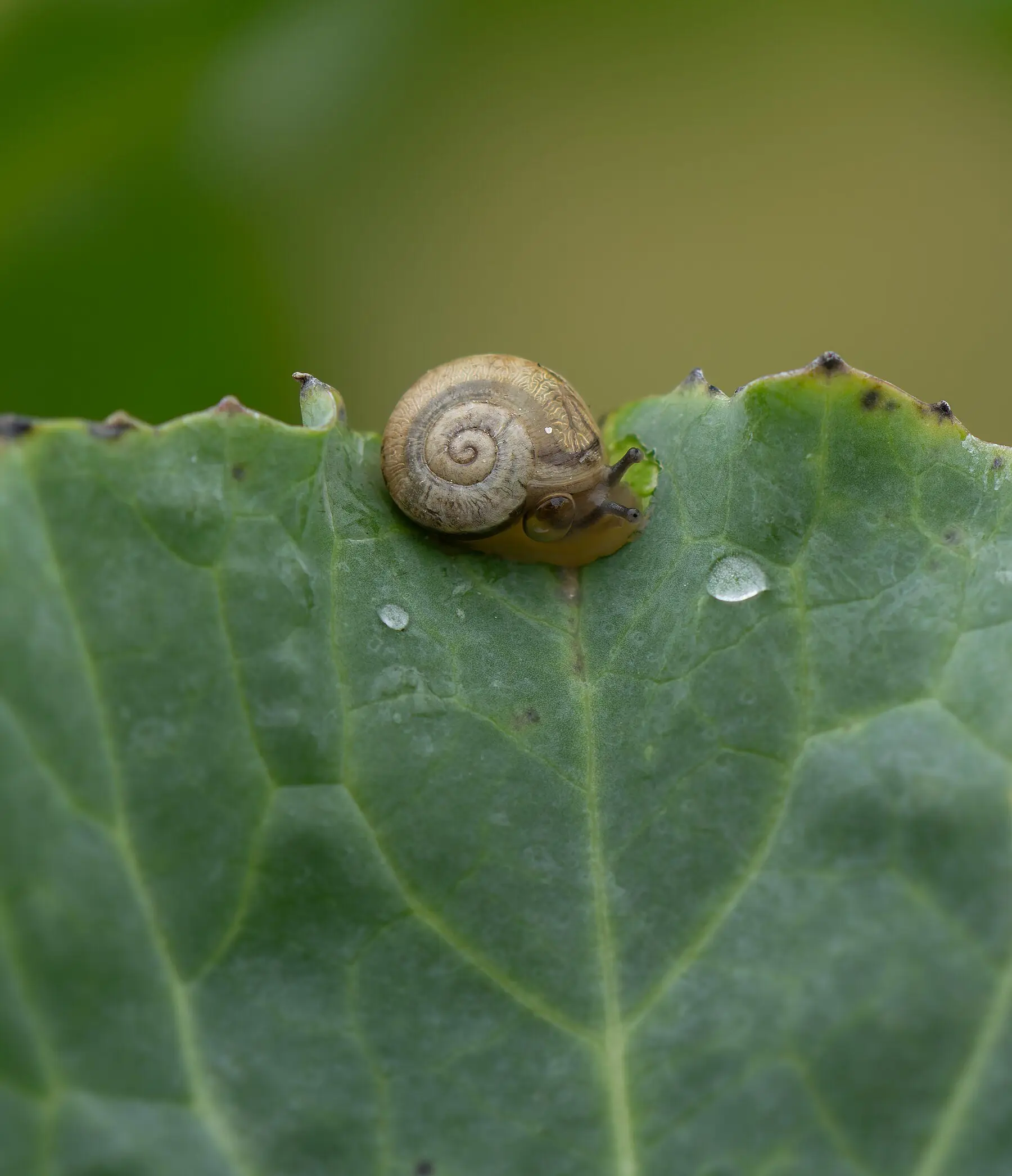

On this page
Snails rasp their food rather than bite it, and they take in most of their water through the skin rather than by drinking. Both facts explain a lot about where they turn up and what harms them.
How a snail eats at all
The mouth contains a radula — a flexible ribbon covered with thousands of microscopic teeth, worked back and forth across the food like a file. Worn teeth are continuously replaced from behind, conveyor-belt fashion.
That is why snail damage looks the way it does: irregular holes with smooth, scalloped edges, often in the middle of a leaf, rather than the clean-cut edges a caterpillar leaves.
What is on the menu
| Setting | Main foods | Also takes |
|---|---|---|
| Garden | Soft leaves, seedlings, hostas, lettuce, low fruit | Fungi, algae, decaying matter, lichen on walls |
| Woodland | Decaying leaves, fungi, rotting wood | Lichen, algal film on bark |
| Pond and aquarium | Algae, biofilm, decaying plants, uneaten fish food | Dead fish, blanketweed |
| Pet enclosure | Leafy vegetables, cucumber, courgette, carrot, fruit | Cuttlebone for calcium |
The calcium part is not optional. A snail’s shell is calcium carbonate, and it has to come from somewhere — so snails actively seek out chalk, limestone, old lime mortar, cuttlebone, and the empty shells of dead snails. It is the reason snail numbers are so much higher on chalky soils than on acidic ones.
What do they drink?
Very little in the way we mean it. A land snail’s skin is highly permeable, and it takes up water directly from:
- Damp soil and leaf litter, through the underside of the foot
- Dew and rain film on leaves and stems
- Humid air, to a degree
It will also lower its head to a shallow film of water and take some in through the mouth. But a snail sitting in a saucer of water is not drinking well — it is at risk of drowning.
For a pet snail
Use a shallow dish with a wet sponge or damp moss rather than open water, and mist the enclosure. That gives access without a drowning hazard, and it keeps the humidity where the animal needs it.
Feeding a pet snail
Good staples, all washed and unsprayed:
- Lettuce (not iceberg — mostly water), spinach in moderation, kale, broccoli leaves, dandelion leaves
- Cucumber, courgette, carrot, sweet potato, pumpkin
- Apple, pear, melon, banana, berries
- A permanent cuttlebone, for the shell
Never:
- Salt or anything salted — it draws water straight out through the skin
- Citrus, tomato and other acidic foods — acid attacks the shell
- Bread, pasta, sugar, processed food, milk and dairy
- Anything that may carry pesticide residue. A snail absorbs contact far more readily than a mammal does, so garden greens from a treated lawn are a real risk.
Salt is not a humane control
Pouring salt on a slug or snail kills it by osmotic dehydration — the animal loses water through its skin and dies slowly. It also salts your soil, which damages plants in that spot for a long time. Beer traps, hand collection or nematodes do the job without either problem.
Do snails eat each other?
Some genuinely hunt. The decollate snail and the rosy wolfsnail are predatory, and among slugs the big spotted leopard slug eats other slugs and is worth leaving in a garden on purpose.
Most ordinary garden snails are not predators but will readily eat a dead snail — the body as food, the shell as calcium.
Why they vanish and come back
In dry or cold conditions a land snail withdraws and seals the shell opening with an epiphragm, a dried mucus membrane, and becomes dormant. In that state it needs almost nothing and can wait out weeks, and some desert species far longer.
So the snails that “disappeared” during a hot dry fortnight did not go anywhere. They are sealed under a pot rim or in a wall cavity waiting for rain — which is why the first wet evening afterwards produces so many at once.
Turning the diet against them
Knowing what they want tells you where to intervene:
- Water in the morning, not the evening, so the soil surface is dry during their active hours.
- Clear the daytime shelter they retreat to: upturned pots, boards, dense groundcover, long grass beside beds.
- Remove the decaying material that supports a resident population close to the vegetable bed.
- Protect seedlings only. Most damage is done to plants in the first few weeks; mature plants shrug it off.
- Encourage the predators that eat them — frogs, toads, hedgehogs, slow-worms, thrushes and ground beetles. A pond does more over a season than any barrier product.
Common questions
What do snails drink?
What do snails eat?
What do pet snails eat?
Do snails eat other snails?
What should you never feed a snail?
How long can a snail go without food or water?
Backyard Weekly
Know what to plant, week by week
Join the weekly email for seasonal jobs, fixes for what is going wrong, and gear worth buying.
Not ready to subscribe? The planting calendar is free and needs no email.
By subscribing you agree to our privacy policy. Grow In Backyard will never sell your address.
Keep reading
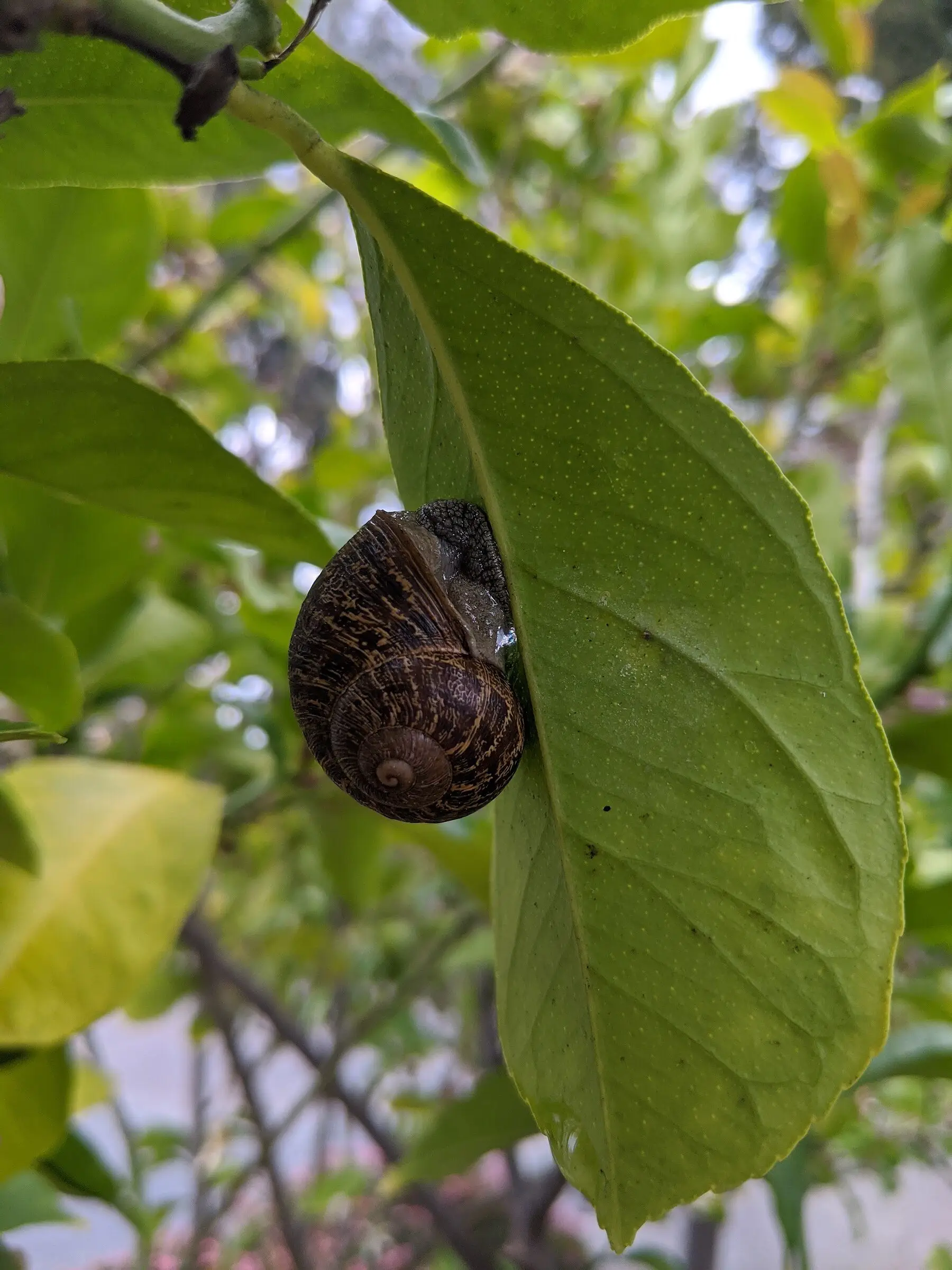
Slugs vs Snails: The Difference, and Why It Matters
A slug is essentially a snail that gave up its shell. What that one change did to where they live, what they eat, and how hard each is to keep off plants.
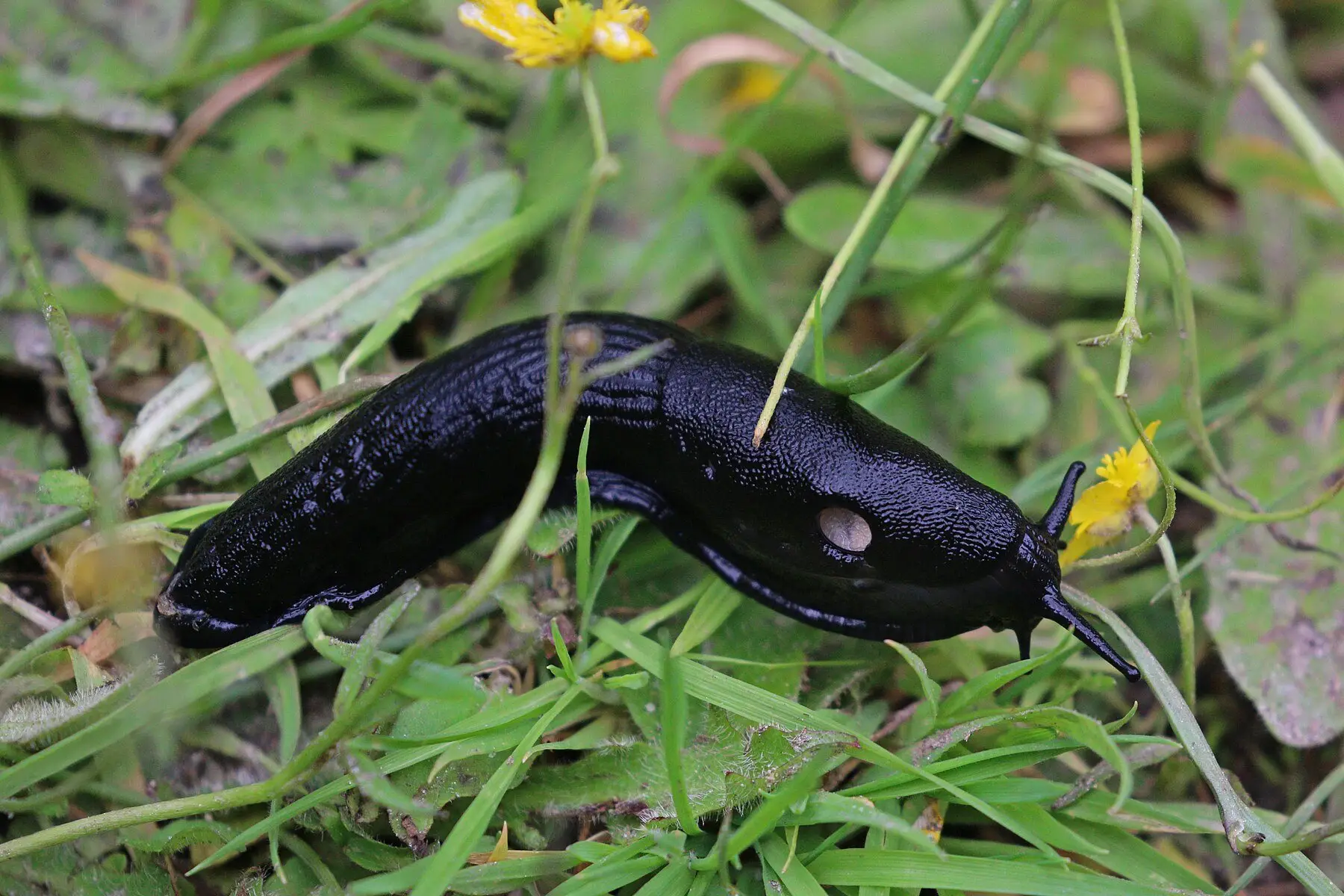
Where Do Slugs Live, and Where Do They Go in the Day?
Slugs spend daylight underground or under damp cover within feet of where they feed. Where to look, and why finding the shelter beats any barrier.
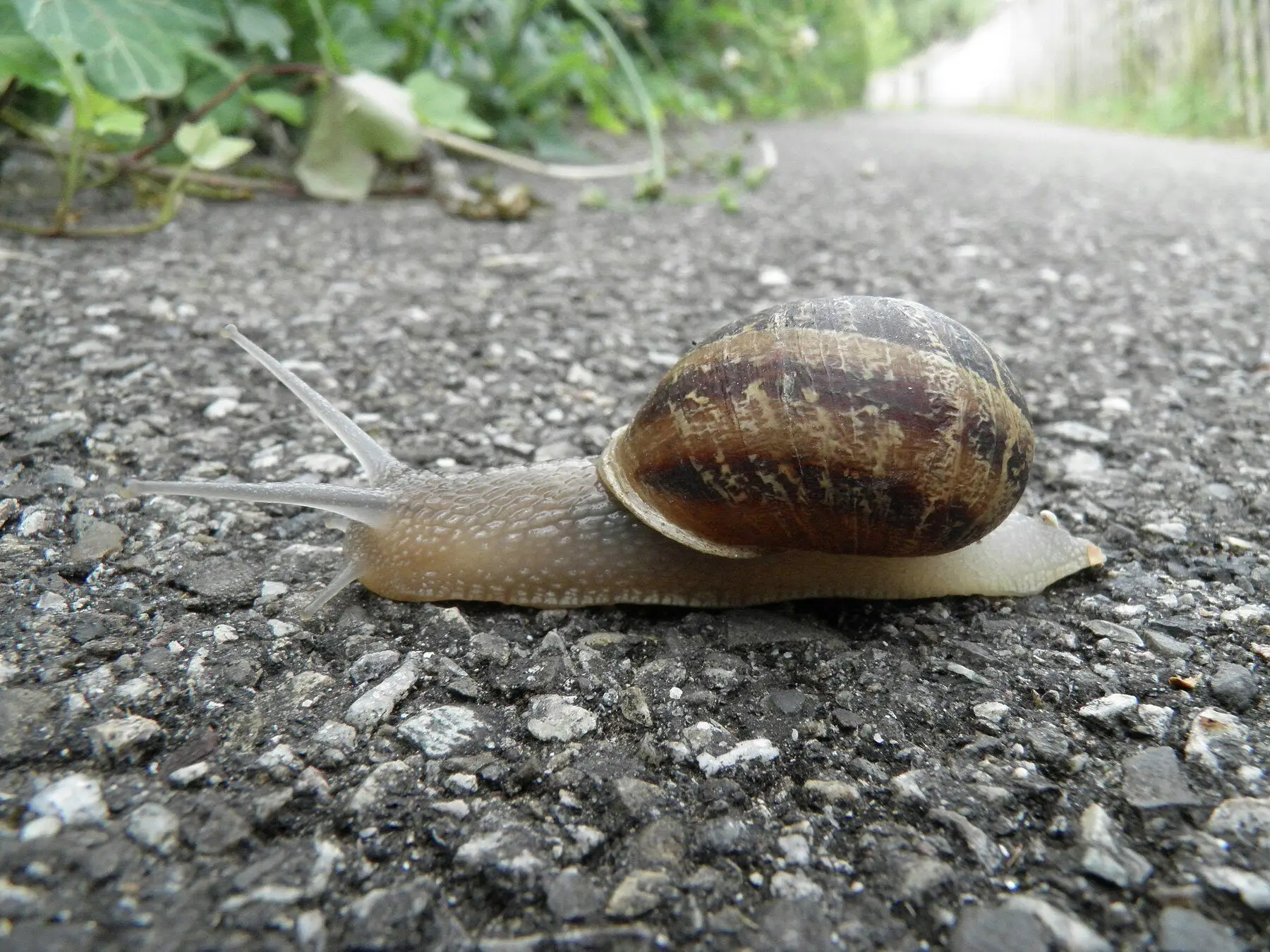
Is a Snail an Insect? No — Here Is What It Actually Is
Snails are molluscs, not insects, and they are more closely related to an octopus than to a beetle. What that means for controlling them in a garden.
What Plant Repels Snails? None Reliably — Some Are Just Ignored
No plant drives snails away. What exists is a list they rarely eat: rough, aromatic or bitter foliage they walk past on their way to your hostas.