
Water Glassing Eggs: Storing a Glut Without a Freezer
Lime water keeps unwashed fresh eggs for a year at room temperature. The ratio, which eggs qualify, what the method cannot do, and how to use them.
 By
On this page
Hens lay hardest in spring and barely at all in midwinter. Water glassing is how households bridged that gap before refrigeration — and it still keeps a spring glut edible a year later.
What it is
Eggs submerged in calcium hydroxide solution — pickling lime and water. The alkaline liquid seals the shell’s pores from the outside, blocking the bacteria and the moisture loss that otherwise spoil an egg on a shelf.
The name is a holdover. The Victorian version used sodium silicate, literally called water glass. Modern practice uses pickling lime, which is cheaper, easier to buy and easier to handle.
The rule that decides everything
Unwashed eggs, or the method does not work
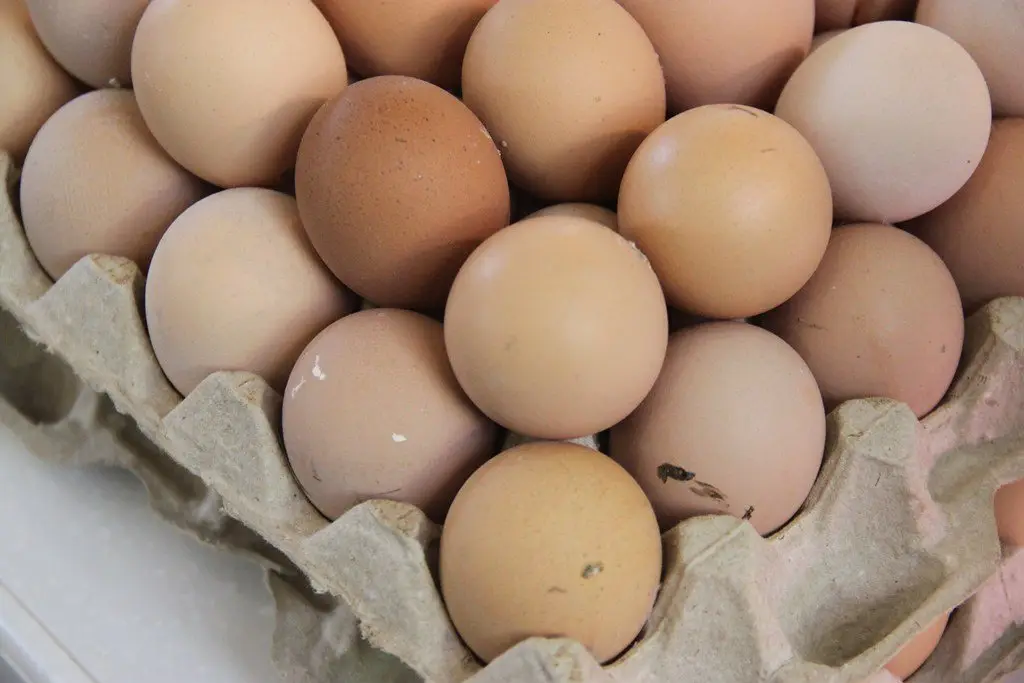
A freshly laid egg carries a bloom — a thin natural coating sealing thousands of pores in the shell. Washing removes it. Without it, bacteria pass straight through and the egg rots in the jar, contaminating the batch.
In the United States, commercial eggs are washed by law. Supermarket eggs cannot be water glassed, whatever the packaging says about freshness. This method is for eggs from your own hens, or from a farm that does not wash.
Which eggs qualify:
- Unwashed, bloom intact
- Clean from the nest. Not wiped, not rinsed, not scrubbed
- Fresh — a few days old at most
- Uncracked. Check each one in good light
- Not refrigerated first, which causes condensation and shortens their life
An egg with a smear of dirt can be dry-brushed gently with a cloth or fine sandpaper. Anything that needs water is a breakfast egg, not a storage egg. Keep your nest boxes clean and this problem mostly disappears.
What you need
- Pickling lime — calcium hydroxide, food grade. Sold for canning. Not garden lime, not dolomitic lime, not quicklime
- Distilled or cooled boiled water. Tap water minerals can interfere
- A food-grade bucket or wide-mouth glass jar with a lid
- A kitchen scale, for getting the ratio right
The method
- Sterilise the container and let it dry
- Mix the solution: 1 oz lime per 1 quart water (30 g per litre). Make enough to cover the eggs by an inch with room to spare
- Stir well. The lime will not fully dissolve; a white sediment on the bottom is normal
- Lower the eggs in gently, pointed end down, stacking carefully. Do not drop them
- Check every egg is submerged by at least an inch. Anything breaking the surface will spoil
- Lid it loosely and store somewhere cool, dark and stable — a pantry, cellar or unheated cupboard
- Add eggs over days or weeks as they are laid, topping up the solution as needed
Label the container with the date you started
Eggs go in over weeks, so the batch has a range rather than a date. Marking the first egg’s date tells you when the whole batch is approaching a year old, which is when the whites have thinned enough to change what the eggs are good for.
Using them
- Lift out what you need and rinse thoroughly in cool water
- Crack into a separate bowl, always, so one bad egg does not ruin a mixing bowl
- Use within a day or two once out of the solution — the protection is gone
- Do not hard-boil them. Sealed pores mean trapped air cannot escape and the shells crack and leak. If you must, prick the wide end with a pin first
- Older eggs, with thinner whites, go to baking, scrambling, custards and quiche rather than frying or poaching
| Stored | Whites | Best for |
|---|---|---|
| 0–3 months | Near fresh | Anything, frying and poaching included |
| 3–9 months | Noticeably thinner | Scrambling, baking, omelettes |
| 9–18 months | Thin and runny | Baking and custards |
Checking an egg
- Float test: in plain water, a good egg sinks and lies flat. One that floats has lost too much moisture — discard it
- Smell it after cracking into a separate bowl. A bad egg announces itself
- Look at it. Cloudy or discoloured white, anything unusual — bin it
- Scan the container periodically. Cloudiness or a smell means something in there has failed, and that batch needs going through egg by egg
Honest limits
- Not USDA approved. Current guidance is refrigeration; this is a traditional method with a long track record rather than an officially endorsed one
- Unwashed eggs only — the single most common reason it fails
- Not for hard-boiling without pricking
- Takes space. A year of eggs is a lot of bucket
- Lime is caustic in powder form. Avoid breathing the dust and keep it off your skin; the mixed solution is mild
| Method | Keeps | Needs power? | Eggs usable for |
|---|---|---|---|
| Water glassing | 12–18 months | No | Most things; baking late on |
| Refrigeration, unwashed | 3–6 months | Yes | Everything |
| Freezing (cracked, beaten) | 12 months | Yes | Baking, scrambling |
| Dehydrating to powder | Years | Yes, to make | Baking |
| Oiling with mineral oil | 6–9 months | No | Most things |
Water glassing wins on one axis: a year of shelf-stable whole eggs with no electricity. That is exactly the problem it was invented to solve, and nothing else does it as simply.
Common questions
What is water glassing eggs?
What is the ratio for water glassing eggs?
Can you water glass washed or store-bought eggs?
How long do water glassed eggs last?
Do water glassed eggs need to be refrigerated?
Is it safe to eat water glassed eggs?
Backyard Weekly
Know what to plant, week by week
Join the weekly email for seasonal jobs, fixes for what is going wrong, and gear worth buying.
Not ready to subscribe? The planting calendar is free and needs no email.
By subscribing you agree to our privacy policy. Grow In Backyard will never sell your address.
Keep reading
Backyard Chickens: What It Actually Takes
Space, cost, time, and the rules nobody mentions. An honest account of keeping backyard chickens before you buy the coop — including why the eggs are not free.
How Long Do Hens Lay Eggs? The Honest Answer
Hens lay best for two years, then decline about 15–20% annually. Most keep laying into year six or seven — just not many. Here is the real production curve.
Why Your Chickens Stopped Laying: Work Through This List
Nine reasons hens stop laying, in the order to check them. Most are seasonal and fix themselves — but three are worth acting on before the flock loses condition.
What Chicken Lays the Most Eggs Per Day? None Lay Two
No hen lays more than one egg a day, and the biology sets that ceiling. Which breeds come closest to daily laying, and why the question matters.