
The Most Common Backyard Birds, and How to Tell Them Apart
The ten birds you will almost certainly see at a feeder in North America, what each one eats, and the field marks that separate the confusing pairs.
 By
On this page
Ten birds account for most of what turns up at a feeder in North America. Learn these and you can identify the large majority of what you see — and the two or three pairs that genuinely confuse people are worth separating properly.
The ten
| Bird | Feeds | Where |
|---|---|---|
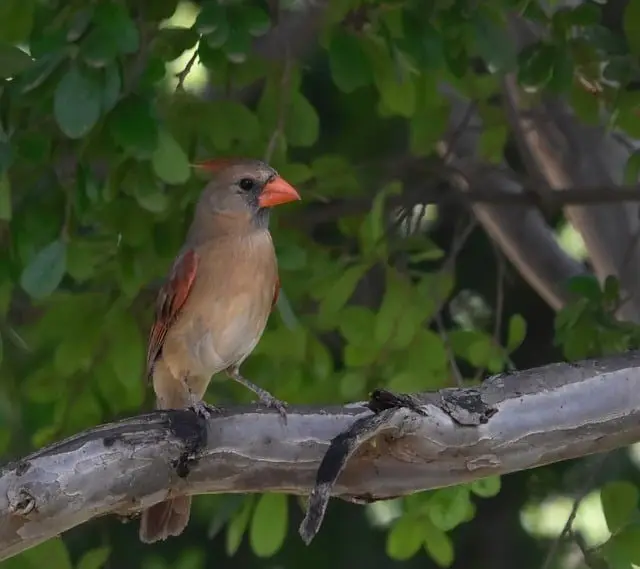
| Northern cardinal | Sunflower, safflower | Platform or hopper; dense shrubs |
| American robin | Worms, berries — rarely seed | Lawns, fruiting shrubs |
| House finch | Sunflower, nyjer | Tube feeders, in small flocks |
| American goldfinch | Nyjer, sunflower chips | Tube and sock feeders |
| Mourning dove | Millet, cracked corn | Ground, beneath feeders |
| Blue jay | Peanuts, sunflower, suet | Platform; noisy, in groups |
| Chickadee | Sunflower, suet | Takes one seed and leaves |
| Tufted titmouse | Sunflower, peanuts | As chickadees, often with them |
| Downy woodpecker | Suet, sunflower | Suet cage, tree trunks |
| House sparrow | Millet, almost anything | Ground and feeders, in flocks |
Regional substitutions worth knowing: cardinals are largely absent from much of the west; Steller’s jay replaces the blue jay there; Carolina chickadee replaces black-capped across the southeast; and juncos and white-throated sparrows join the list for winter across much of the US.
The pairs people mix up
House finch vs purple finch. Look at the flanks. House finch has red on the head and upper breast with clear brown streaking down the flanks and a flattish head. Purple finch is washed raspberry more evenly over head, back and breast with clean unstreaked flanks, a chunkier bill and a peaked crown. House finch is far commoner at feeders, so streaky flanks usually settle it.
Downy vs hairy woodpecker. Size and bill length. A downy’s bill is noticeably shorter than its head is deep; a hairy’s bill is nearly as long as its head. The hairy is also substantially bigger, which is only useful with both present.
Black-capped vs Carolina chickadee. Essentially a range question — they overlap in a narrow band and even experienced birders rely on voice there.
House sparrow vs native sparrows. House sparrow males have a grey crown and a black bib; the birds are chunkier, bolder and almost always in flocks around buildings. Native sparrows are generally shyer and more finely marked.
If you run one feeder with one seed
Black oil sunflower. Thin shell, so chickadees and finches can open it; high fat content; and taken by cardinals, jays, titmice, finches, chickadees, nuthatches and woodpeckers alike.
Then, in order of what each adds:
- Suet — brings woodpeckers, and matters most in winter
- Nyjer — goldfinches specifically, in a feeder with small ports
- Peanuts — jays, titmice, woodpeckers
- White millet on the ground — doves and native sparrows
What is not worth buying
Cheap mixed seed heavy on red millet, wheat and cracked corn. Most birds throw the filler on the ground looking for the few sunflower seeds in it, which wastes the bag, feeds rodents, and builds a soggy mat under the feeder.
Buy straight black oil sunflower and add specific seeds separately.
Why a quiet midday feeder is not a problem
Activity peaks shortly after dawn, when birds have burned overnight reserves, and again in late afternoon as they build stores for the night.
Beyond that, species differ in ways that make a feeder look empty:
- Chickadees and titmice take a single seed and carry it off, repeatedly — dozens of visits that never look like a crowd
- Doves and sparrows feed on the ground through the middle of the day
- Woodpeckers visit suet irregularly, at any hour
Habitat adds more species than seed does
This is the part worth acting on if the list has stopped growing. A garden with a feeder, water and shrub cover commonly records twenty to forty species over a year.
What adds birds, roughly in order of effect:
- Water — moving water especially, and it works in winter when it is scarce
- A dense native shrub for cover and berries
- A dead branch left for perching and for woodpeckers
- An unmown corner that holds insects and seed heads
- No insecticide, since most summer visitors eat insects and ignore seed entirely
Migration in spring and autumn produces most of the unusual records — and those birds come for habitat, not for the feeder.
Common questions
What are the most common backyard birds?
What single seed attracts the most birds?
How do you tell a house finch from a purple finch?
Why do different birds come at different times of day?
Do backyard birds change through the year?
How many bird species will a typical yard see?
Backyard Weekly
Know what to plant, week by week
Join the weekly email for seasonal jobs, fixes for what is going wrong, and gear worth buying.
Not ready to subscribe? The planting calendar is free and needs no email.
By subscribing you agree to our privacy policy. Grow In Backyard will never sell your address.
Keep reading
Do Birds Use Birdhouses in Winter? Yes — as Roosts, Not Nests
Birds shelter in boxes overnight through winter, sometimes a dozen at once. Why you should leave boxes up, and the two changes that make one a better roost.
How Far Apart Should Birdhouses Be? It Depends on Species
Most songbirds want 100 to 200 feet between boxes, but bluebirds pair at 15 feet and martins nest in colonies. Spacing is a territory question.
What Backyard Birds Mate for Life? Fewer Than You Think
Geese, swans, cranes and some corvids form long pair bonds. Most garden songbirds re-pair each season, and even faithful pairs are rarely monogamous.
Do Birds Eat Meat? Which Ones, and What to Put Out
Far more garden birds eat meat than people assume — insects are meat. What raptors, corvids and even chickadees take, and what is safe to offer.