
How to Stop Birds Pooping on Your Patio or Balcony
Droppings on a patio come from a perch, not from the sky. Find the perch, make it unusable, and the mess stops — plus how to clean it safely.
 By
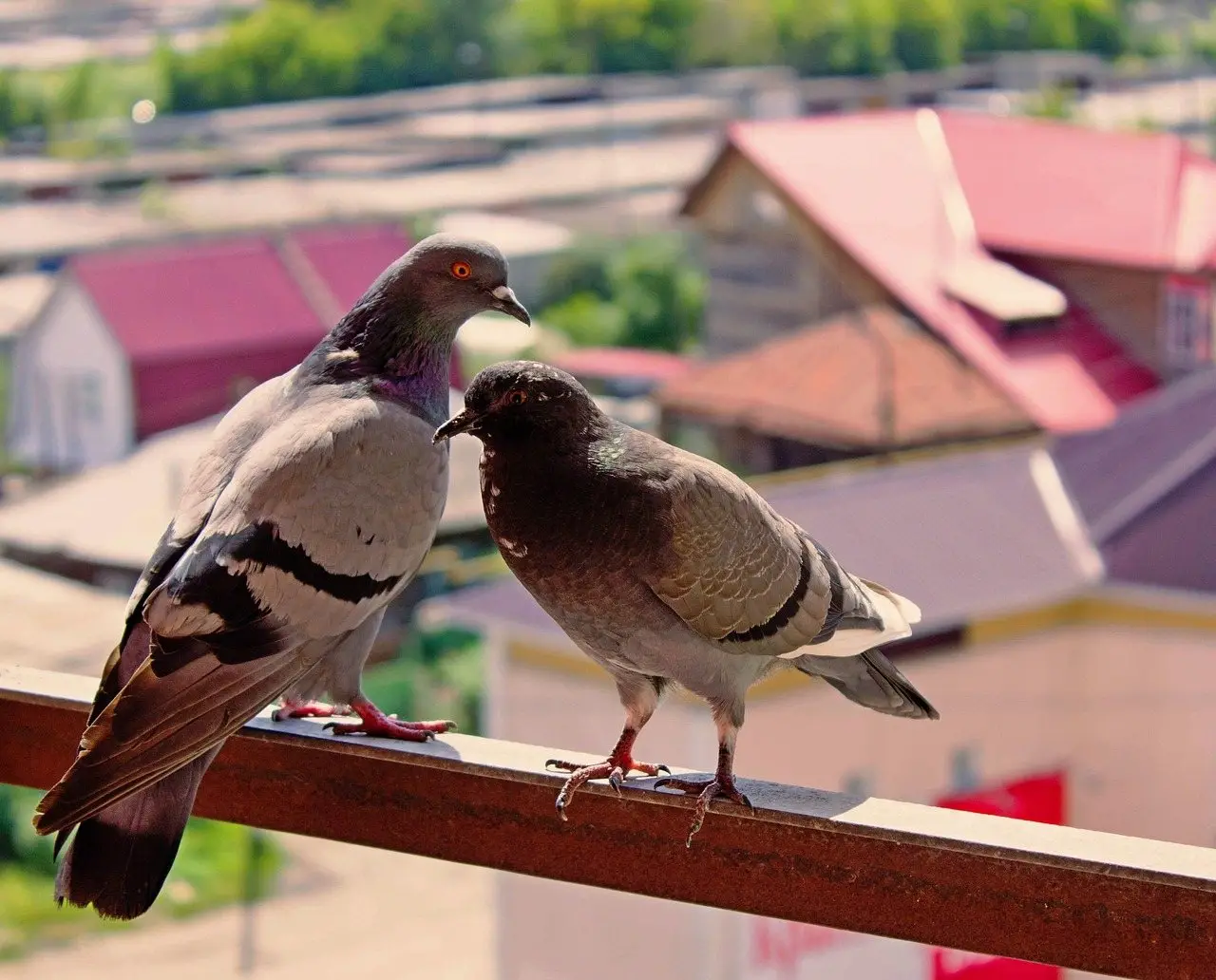
On this page
Droppings arrive in a patch, not a scatter. That patch is directly under a perch, and the perch is the only thing worth treating.
Step one: find the perch
This takes two minutes and it decides everything that follows.
- Stand on the heaviest patch of droppings and look straight up
- Note everything above you: railing, pergola beam, gutter edge, downpipe bracket, light fitting, satellite dish arm, washing line, telephone wire, branch
- Check at dusk, which is when a roost assembles and the perch becomes obvious
- Look for the smear line. A regularly used perch has droppings on it as well as under it
If the droppings are under a wire or a branch you do not own, skip to the sheltering options — a sail, an awning or moving the table is the realistic answer there.
Step two: make that one spot unusable
| The perch | Best fix | Notes |
|---|---|---|
| Balcony or deck railing | Taut wire 2 in above the rail | Cheap, nearly invisible |
| Wide flat rail or ledge | Anti-perch strips or blunt spikes | Bond, do not screw into render |
| Pergola or beam | Reflective streamers, then a prune of cover | Rotate every few days |
| Light fitting or bracket | A cone or a spike cluster | Smallest fix on the list |
| Gutter edge | Gutter spikes | Check it still drains |
| Overhanging branch | Dormant-season prune | Not during nesting |
| Overhead wire | A shade sail or awning below | The perch is not yours |
The wire trick is the one to try first on a railing. A single strand of stainless wire or heavy fishing line, strung tight on small eyelets two inches above the top rail, makes landing awkward enough that birds go elsewhere. It costs almost nothing, it does not look like bird control, and it does not hurt anything.
Nothing sticky, ever
Gel and paste bird repellents work by being unpleasant to stand in, and in practice they coat feathers like an oil spill. Small birds get stuck in them outright in hot weather.
Spikes are blunt and humane; gels are not. This is the one product category to refuse.
Step three: break the habit while the fix settles
A perch that has been used for months has a habit attached to it, and the physical fix lands faster with a fortnight of disturbance behind it.
- Reflective scare tape cut into two-foot streamers, tied along the railing or beam
- Spinners where there is any breeze
- Move them every two or three days. Static deterrents are habituated inside a week
- Keep it up one to two weeks after the droppings stop
- Move the bird feeder if there is one within about twenty feet of the patio. A feeder is a reason to perch nearby, and nothing else you do will outweigh it
On a balcony, check the gap under the rail
Pigeons do not just perch on balconies — they nest in them, on the slab under the railing, behind a planter, or in the corner you never look at.
Fine mesh across the gap under the railing, fitted taut, ends that permanently. Do it outside the nesting season, and check nothing is already in there.
Cleaning it properly
- Soak first. Wet the droppings and leave them ten minutes. Dry droppings release spores when disturbed, and that is the whole reason not to rush this
- Stiff brush, then rinse. Warm water with dish soap handles most of it
- An enzyme cleaner for stains ground into concrete or stone — droppings are protein, and enzyme cleaners break them down where bleach only lightens the paving
- No dry sweeping, no dry pressure washing. Both aerosolise an accumulation
- Gloves always; an N95 respirator for any dry build-up in a sheltered corner or an enclosed balcony
- Disinfect a table or a grill before food touches it
Accumulated dry droppings in a confined space can carry Histoplasma, the fungus behind histoplasmosis. On an open patio hosed down regularly this is a negligible risk. In a disused balcony corner with years of build-up it is a real one, and worth a respirator.
What does not work
- Ultrasonic repellers. Birds do not hear usefully in that range
- A plastic owl, left in one place. A perch within a week
- Mothballs. No effect, and illegal used this way outdoors in most places
- Cleaning harder. The droppings come back on the same schedule as the perch
- Removing the feeder but keeping the bird bath twelve feet from the table, which is the same mistake with a different fitting
Common questions
How do I stop birds pooping on my patio?
What keeps birds off a balcony railing?
Is bird poop on a patio dangerous?
Does anything repel birds from a patio?
How do I clean bird poop off a patio?
Why do birds keep coming back to the same spot?
Backyard Weekly
Know what to plant, week by week
Join the weekly email for seasonal jobs, fixes for what is going wrong, and gear worth buying.
Not ready to subscribe? The planting calendar is free and needs no email.
By subscribing you agree to our privacy policy. Grow In Backyard will never sell your address.
Keep reading
How to Keep Birds From Nesting on a Porch, Deck or Ledge
Deter birds before they build, because once eggs are laid the nest is protected by law. Physical blocking, timing, and what deterrents fail at.
How to Get Rid of Bats on a Porch, Legally and Humanely
Bats roosting on a porch are protected in most places and cannot be sealed in. Exclusion timing, the maternity season, and what to do about droppings.
The Most Common Backyard Birds, and How to Tell Them Apart
The ten birds you will almost certainly see at a feeder in North America, what each one eats, and the field marks that separate the confusing pairs.
Mourning Dove Bird Feeder — 5 Trays and Platforms
A mourning dove bird feeder needs a flat surface, not a perch. 5 trays and platforms compared, plus the seed. See which fits your yard.