
How Long Do Backyard Chicken Eggs Last? Washed vs Unwashed
Unwashed eggs keep for weeks on the counter; washed ones must be refrigerated. Why the bloom decides it, plus the float test and real storage times.
 By
On this page
The answer swings from three weeks to three months on one decision: whether you washed it.
The bloom
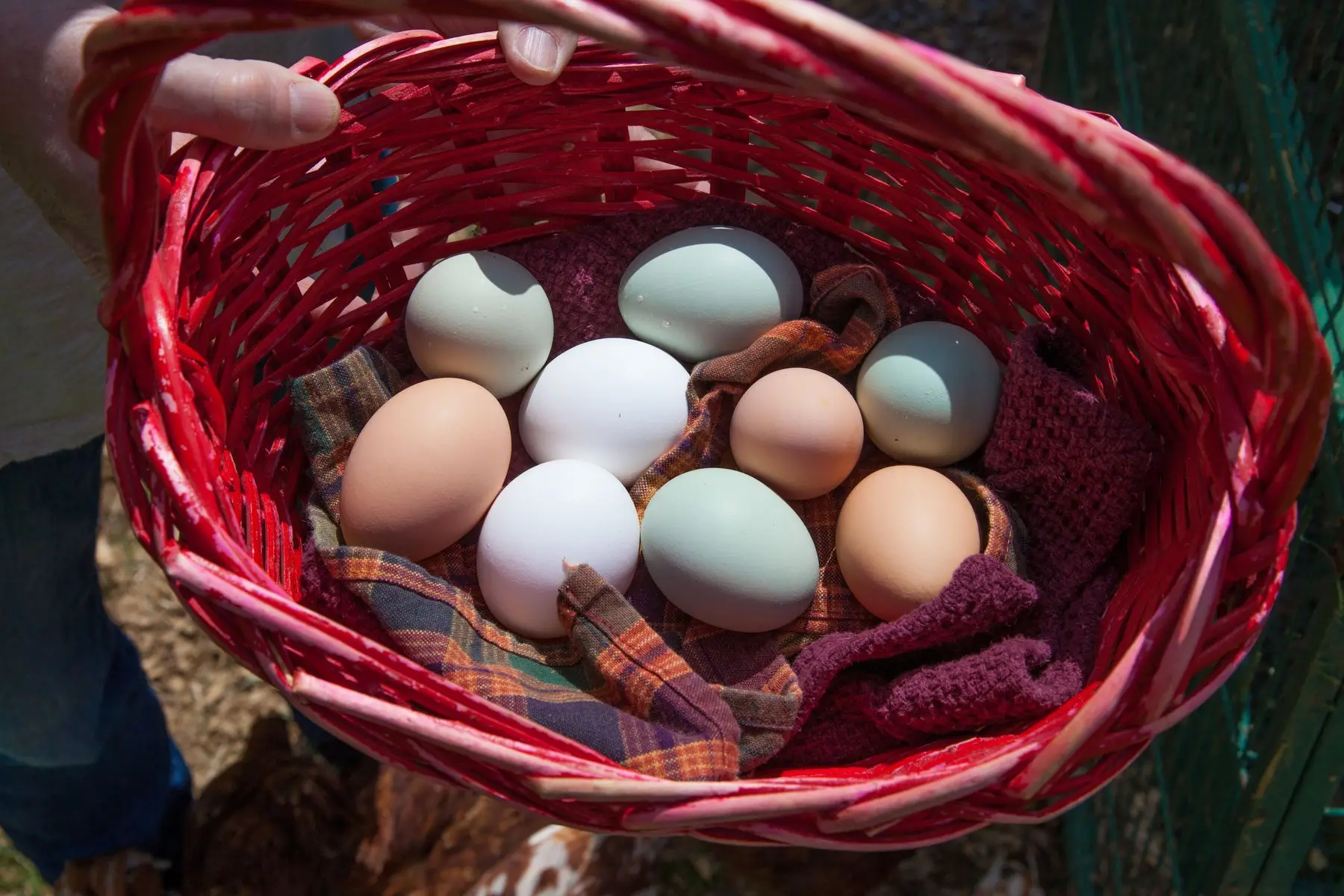
A hen coats each egg as it is laid. That coating — the bloom, or cuticle — plugs the several thousand pores in the shell, and it is doing two jobs: keeping bacteria out and keeping moisture in.
| Cool counter | Refrigerated | |
|---|---|---|
| Unwashed | 2–3 weeks | ~3 months |
| Washed | Not advisable | A few weeks |
| Bloom intact | Yes | Yes / no |
| Can be moved to the other method | No | No |
This is also the whole explanation for why eggs sit unrefrigerated in shops across Europe and chilled in the United States: US commercial eggs are washed by regulation, and a washed egg has to be kept cold. Neither system is wrong; they are two coherent answers to the same problem.
Pick one and stay with it
A refrigerated egg left out condenses moisture on the shell, and that film carries surface bacteria in through the pores. Committing an egg to the fridge is a one-way decision.
Handling that keeps eggs clean in the first place
- Collect at least once a day, twice in bad weather
- Clean, dry bedding in the nest boxes, topped up rather than left
- Enough boxes — roughly one per four hens — so they are not laying on the floor
- Wash only the dirty ones, refrigerate those, and use them first
- If you wash, use water warmer than the egg. Cold water contracts the contents and pulls surface bacteria inward
The float test, honestly
It measures the air cell, which grows as the egg loses moisture. So:
- Lies flat on the bottom — fresh
- Tilts up at one end — a week or two old, fine
- Stands upright on the bottom — older, use it cooked through
- Floats clear of the bottom — bin it
It does not detect contamination, and a fresh egg can be bad. Crack anything doubtful into a separate bowl, which costs nothing and protects the other eleven. A spoiled egg announces itself.
For a spring glut
Hens lay hard in spring and little in midwinter, which is the actual problem behind this question. Two useful options:
- Freeze them beaten — whisked lightly, portioned, about a year. Yolks alone need a pinch of salt or sugar beaten in or they go gluey
- Water glassing — unwashed eggs in a lime solution, a traditional method that holds a spring surplus through to winter
Common questions
How long do backyard chicken eggs last?
Do fresh eggs need to be refrigerated?
Should I wash fresh eggs?
Does the egg float test work?
How long do fresh eggs last in the fridge?
Can you freeze backyard eggs?
Backyard Weekly
Know what to plant, week by week
Join the weekly email for seasonal jobs, fixes for what is going wrong, and gear worth buying.
Not ready to subscribe? The planting calendar is free and needs no email.
By subscribing you agree to our privacy policy. Grow In Backyard will never sell your address.
Keep reading
Best Brown Egg Layers: Six Breeds Ranked on Eggs per Year
Brown eggs come from a handful of reliable breeds. Which lay most, which keep laying through winter, and why hybrid layers burn out faster than heritage hens.
Water Glassing Eggs: Storing a Glut Without a Freezer
Lime water keeps unwashed fresh eggs for a year at room temperature. The ratio, which eggs qualify, what the method cannot do, and how to use them.
How Long Do Hens Lay Eggs? The Honest Answer
Hens lay best for two years, then decline about 15–20% annually. Most keep laying into year six or seven — just not many. Here is the real production curve.
Backyard Chickens and Salmonella: The Real Risk, Managed
Healthy-looking hens carry salmonella routinely. The handling habits that matter, why chicks are the usual source, and how to keep eggs safe.