
How Do Squirrels Survive Extreme Cold? Four Mechanisms
No hibernation, no fat reserve worth speaking of. Dreys, cached food, huddling and a doubled winter coat are what gets them through.
 By
On this page
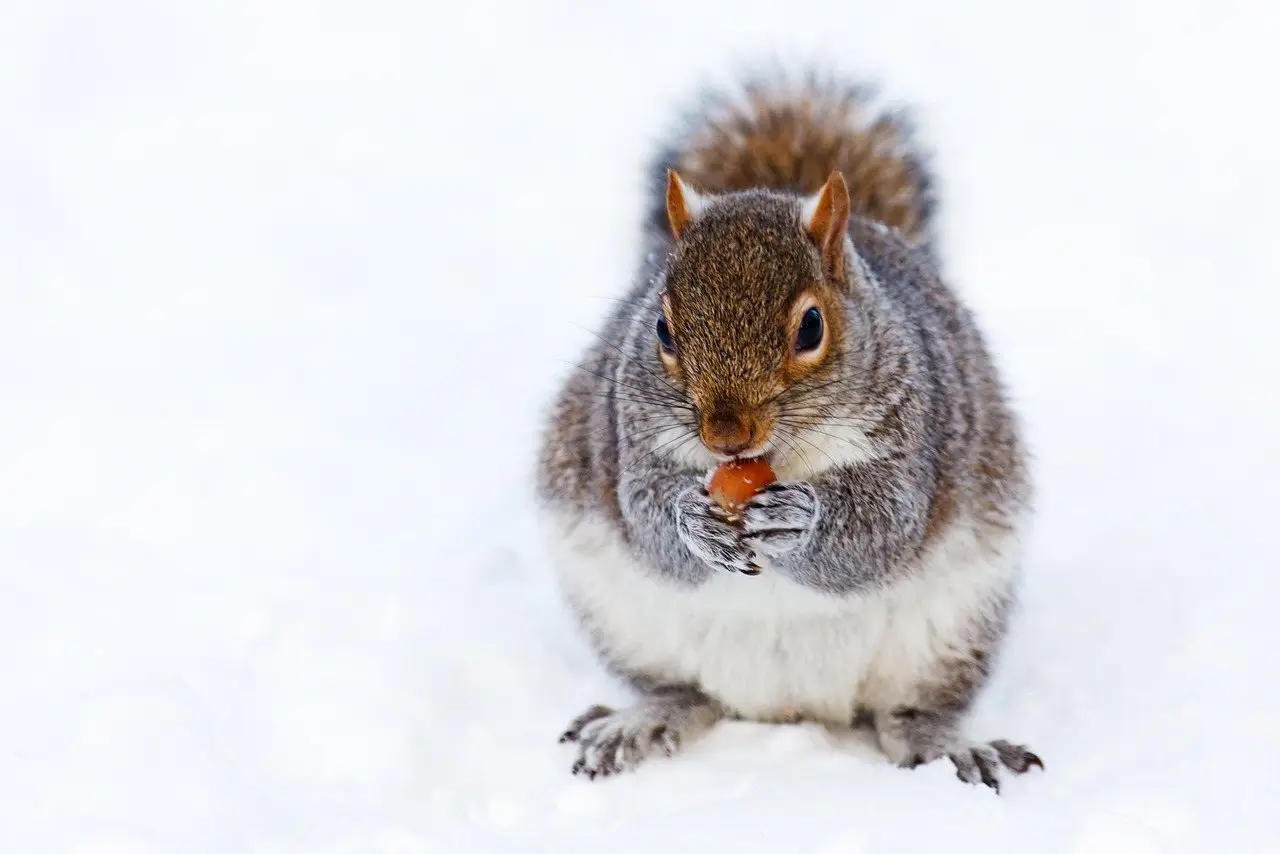
Tree squirrels get through a northern winter on insulation and stored food, not on sleep and fat. That is an unusual strategy for an animal their size, and it has a specific failure mode.
The four mechanisms
| mechanism | effect |
|---|---|
| Dense winter coat | longer guard hairs, thicker underfur |
| Insulated drey | woven sphere, bark and moss lining |
| Huddling | shared body heat on the worst nights |
| Tail over the body | a blanket with its own insulation |
| Cached food | the energy that makes all of it work |
Who hibernates and who does not
| animal | winter strategy |
|---|---|
| Grey, red, fox squirrel | active all winter |
| Flying squirrel | active, huddles in large groups |
| Chipmunk | extended torpor, waking to eat cached food |
| Ground squirrel | true hibernation |
| Marmot, groundhog | true hibernation |
Two days in the drey is not hibernation
A squirrel that is not seen for 48 hours during a blizzard has reduced activity, not reduced metabolism. It comes out as soon as conditions allow and goes straight to a cache.
Why late winter is the dangerous part
Autumn caches are finite and the squirrel has been drawing on them since November. By February and March the stores are depleted, the previous year’s mast crop is long gone, and no new food has appeared. A hard frost that locks the ground at that point is far more serious than the same frost in December.
If you feed at all, feed the right things
Unsalted nuts in shell, black oil sunflower and maize. Not salted or roasted nuts, not bread, not anything sweetened. And in Britain and Ireland, where greys are invasive and reds are protected, deliberately feeding greys is discouraged.
Common questions
Do squirrels hibernate through the cold?
What keeps them warm?
How do they find food under snow?
Do they lose weight over winter?
How cold can they tolerate?
Should I feed squirrels in hard winter weather?
Backyard Weekly
Know what to plant, week by week
Join the weekly email for seasonal jobs, fixes for what is going wrong, and gear worth buying.
Not ready to subscribe? The planting calendar is free and needs no email.
By subscribing you agree to our privacy policy. Grow In Backyard will never sell your address.
Keep reading
Where Do Squirrels Go When It Snows? Into the Drey, Together
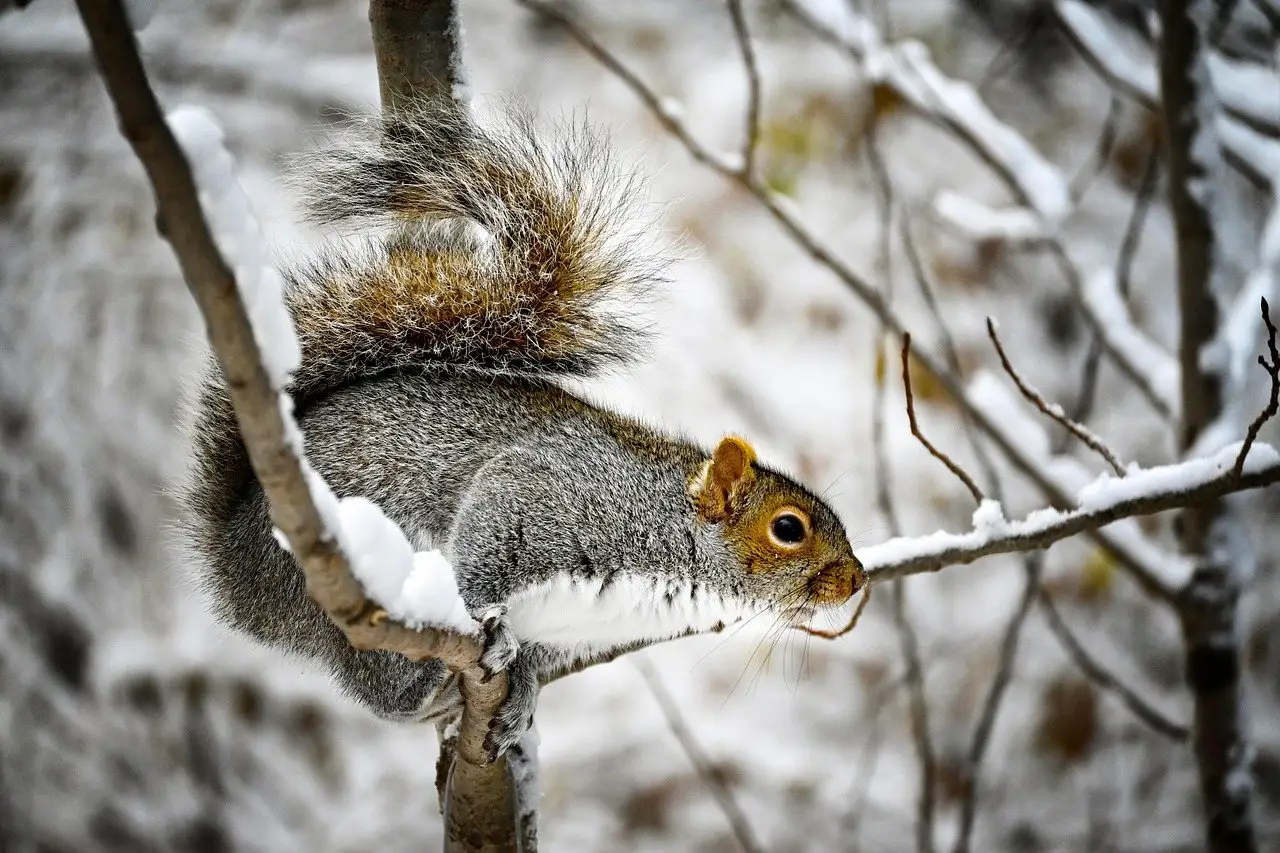
Grey and red squirrels do not hibernate. They wait out snow in a leaf drey or tree cavity, often huddled with others, and come out to dig for caches.
Do Squirrels Lose Their Winter Coat? Twice a Year
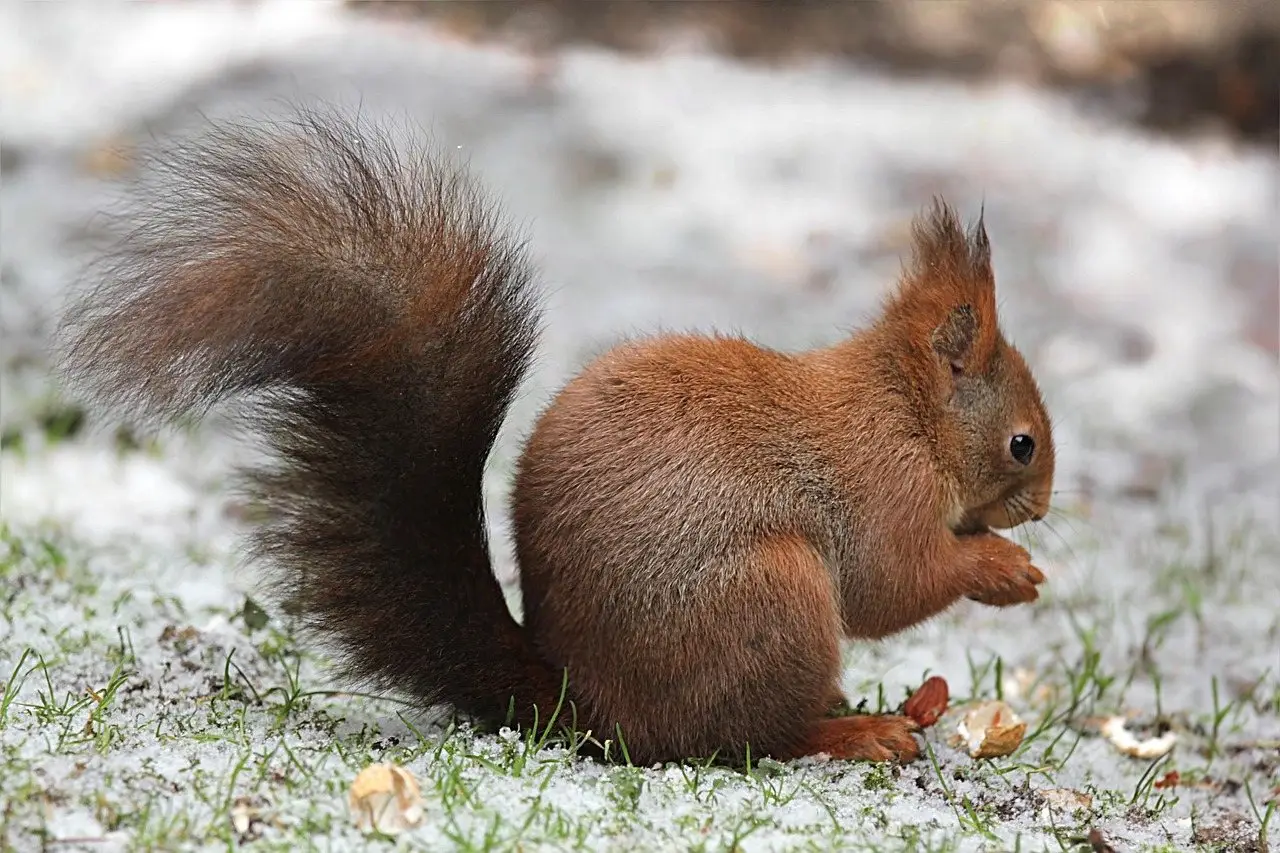
Squirrels moult in spring and again in autumn, head to tail one way and tail to head the other. What a patchy squirrel means, and when it does not.
Why Do Squirrels Bury Nuts? And How They Find Them Again
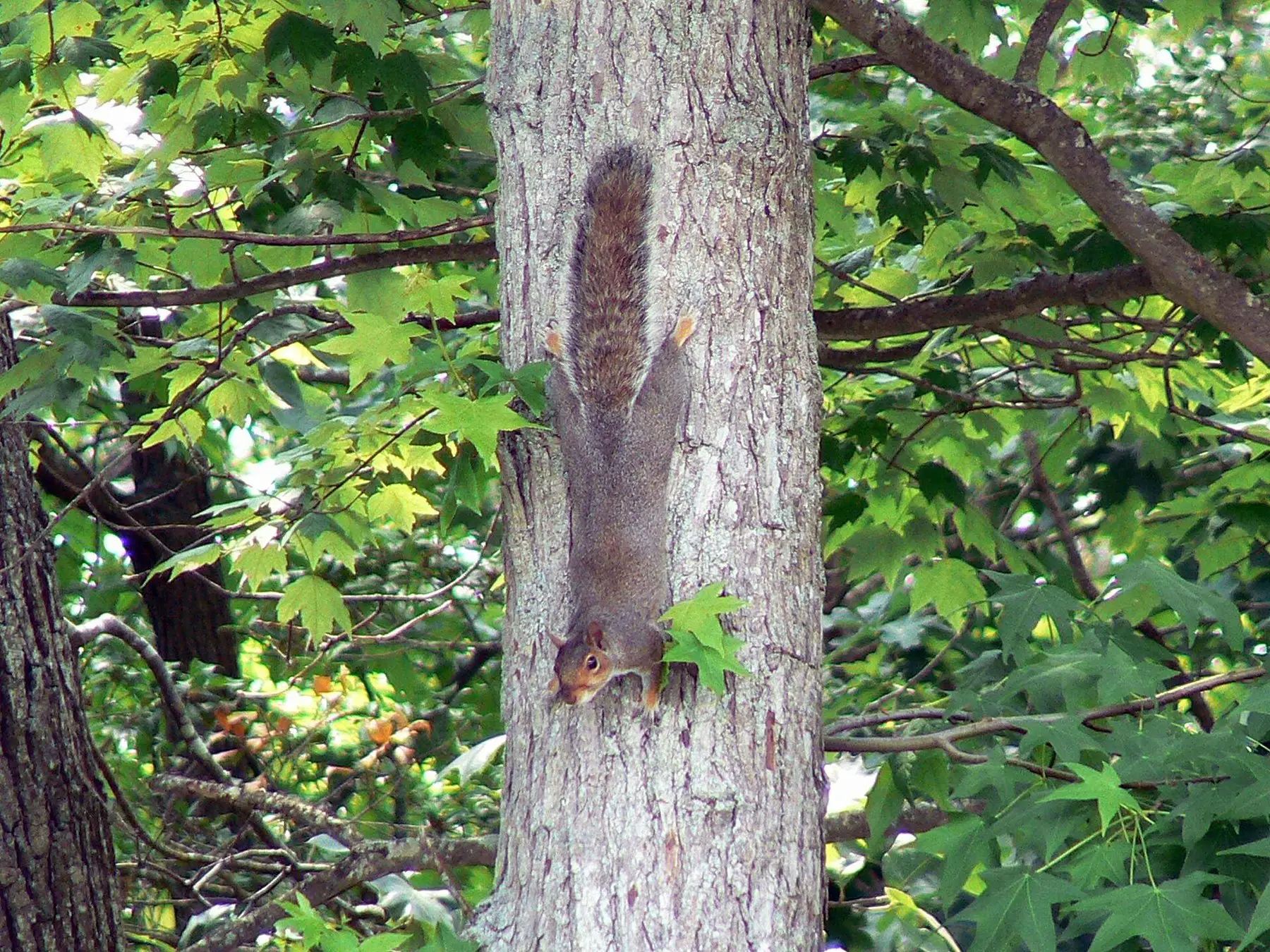
Squirrels cache thousands of nuts a year, in separate holes, and relocate them by memory and smell — while faking burials for any squirrel watching.
How Do Squirrels Transport Their Young? Carried by the Belly
A mother grips the kit's belly skin and it curls around her neck. When she moves a litter, how often, and what to do if one is dropped.