
Do Squirrels Lose Their Winter Coat? Twice a Year
Squirrels moult in spring and again in autumn, head to tail one way and tail to head the other. What a patchy squirrel means, and when it does not.
 By
On this page
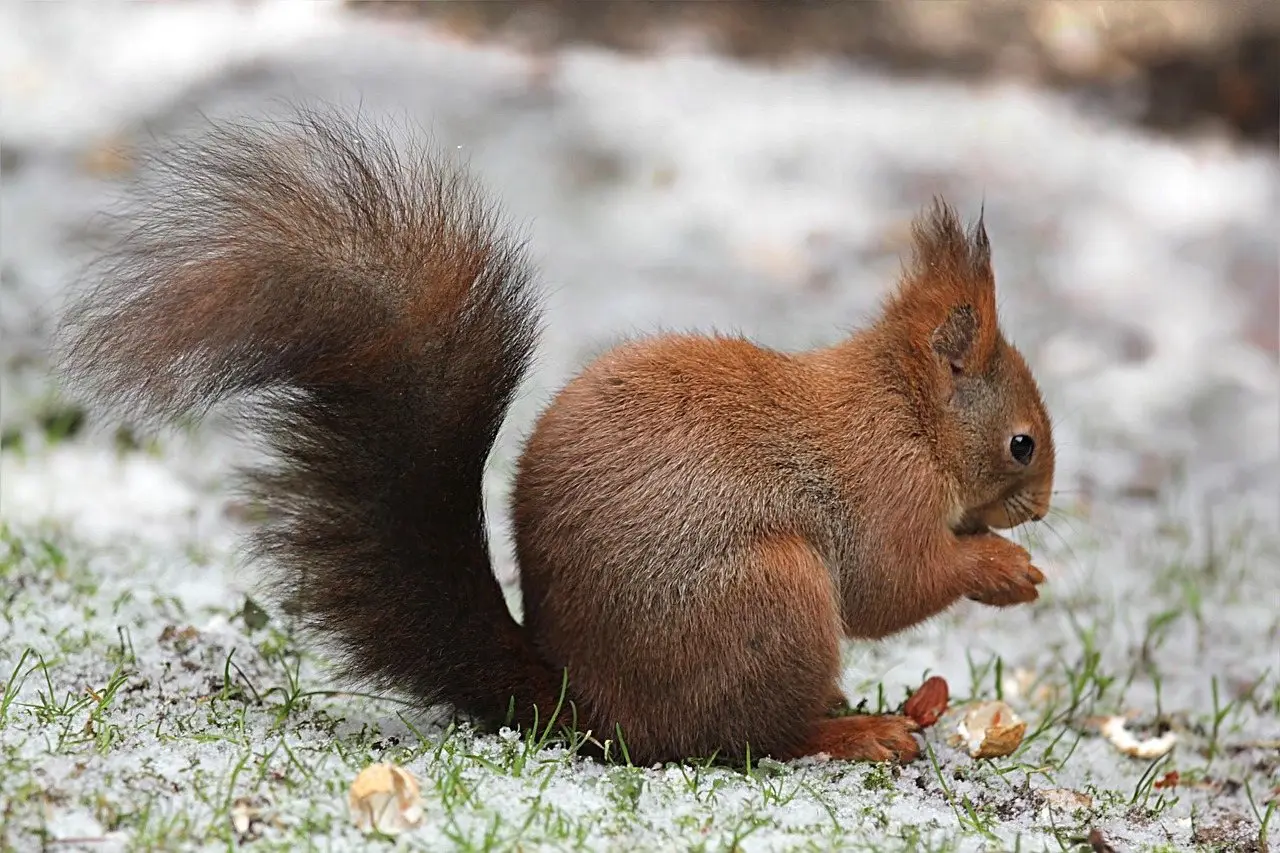
Squirrels moult twice a year, and the two moults run in opposite directions along the body. Most “something is wrong with that squirrel” sightings in May are a moult in progress.
The two moults
| spring moult | autumn moult | |
|---|---|---|
| Timing | April–June | September–November |
| Direction | head → tail | tail → head |
| Result | thin summer coat | dense winter coat |
| Ear tufts (reds) | lost | grown |
| Appearance mid-moult | two-toned, ragged | thickening, scruffy |
Moult or disease
| sign | moult | problem |
|---|---|---|
| Short new fur under the old | yes | — |
| Bare, grey, thickened skin | no | mange |
| Crusts and scabs | no | mange or pox |
| Clean-edged bald patches | no | fungal |
| Normal weight and behaviour | yes | — |
| Thin, lethargic, constant scratching | no | yes |
| Outside April–June / Sept–Nov | no | yes |
Do not medicate a wild squirrel
Putting livestock parasiticides into food for garden wildlife is unreliable at best — dose cannot be controlled, and other animals eat it — and it is illegal in many jurisdictions. A badly affected animal is a call to a wildlife rehabilitator.
What you will actually see
- May: a squirrel with a sleek head and a shaggy back half
- October: the reverse, plus visibly thicker flanks
- Midsummer: a thin, rat-like tail as the tail moult passes through
- Any season: individual greys ranging from pale brown to black, which is colour variation, not moult
The tail is the giveaway
A squirrel with a startlingly thin tail in July usually alarms people most, and it is the most normal thing on this page. The tail moults once a year and looks wrong for weeks while it does.
Common questions
Do squirrels moult?
Which direction does the moult run?
When is patchy fur a problem rather than a moult?
What causes bald squirrels in summer?
Do squirrels change colour as well as coat?
Does a bald squirrel survive the winter?
Backyard Weekly
Know what to plant, week by week
Join the weekly email for seasonal jobs, fixes for what is going wrong, and gear worth buying.
Not ready to subscribe? The planting calendar is free and needs no email.
By subscribing you agree to our privacy policy. Grow In Backyard will never sell your address.
Keep reading
Why Do Squirrels' Ears Turn White? Winter Coat and Age
White ear tufts are a seasonal coat change in grey and red squirrels, not illness. When they appear, which species get them, and what white patches mean.
Where Do Squirrels Go When It Snows? Into the Drey, Together
Grey and red squirrels do not hibernate. They wait out snow in a leaf drey or tree cavity, often huddled with others, and come out to dig for caches.
Are Black Squirrels Rare? Common in Some Towns, Absent Elsewhere
Black squirrels are grey squirrels with a pigment variant, not a separate species. Why they cluster in particular towns and what the colour buys them.
Do Squirrels Make Holes in the Ground? Small and Shallow
Tree squirrels dig shallow caching holes, not burrows. How to tell their 2-inch divots from chipmunk, vole, rat and ground squirrel holes.