
How Do Hummingbirds Die? Causes, Lifespan and What You Can Fix
Most hummingbirds die in their first year, and the biggest causes are ones a garden can influence — windows, cats, dirty feeders and pesticides.
 By

On this page
Most hummingbirds die young, and from ordinary causes — not old age. About half do not survive their first year. The useful part of the answer is that several of the biggest killers are things happening in gardens, and every one of them is fixable.
The real lifespan numbers
| First-year survival | Roughly half do not make it |
| Typical life after year one | 3–5 years |
| Average across all hatchlings | Under 2 years |
| Oldest recorded broad-tailed | 12+ years, from banding |
| Oldest recorded ruby-throated | 9 years, female |
The gap between “under two years” and “twelve years” is not a contradiction — it is the difference between counting the birds that die as juveniles and counting the ones that survive to breed. Both figures are true, and citing only one of them is how this question gets answered badly.
Natural causes
- Starvation and exhaustion. A hummingbird operates with almost no reserve. A bad weather day, a failed flower crop, or a territory lost to a stronger bird can be fatal within a day.
- Migration. Ruby-throateds cross the Gulf of Mexico non-stop — around 500 miles over open water with no possibility of resting. Losses on migration are substantial.
- Severe weather. Storms, late frosts that destroy the flowers they depend on, and hail.
- Predation. Hawks — particularly small accipiters — plus shrikes, roadrunners, frogs and fish taking birds at water. Also, genuinely, praying mantises sitting on feeders, and large orb-weaver spiders whose webs they blunder into.
- Disease and parasites, including avian pox and mites.
The praying mantis on the feeder is not a myth
Large mantises position themselves on hummingbird feeders and ambush birds at the ports. It is documented often enough to be worth acting on: if you find one on a feeder, move it — it will find plenty of insects elsewhere, and the bird has no defence against it.
What kills them in gardens — the fixable list
1. Windows. The single largest garden hazard, and the most fixable. Markers on the outside of the glass, no more than about 2 inches apart, because a bird will fly through any gap bigger than its body. Screens and external netting work best.
2. Cats. Keep them in, particularly at dawn and dusk. A bell does not solve it.
3. Spoiled nectar. Covered below, because it deserves its own section.
4. Pesticides. Two ways: directly, and by removing the small insects and spiders that hummingbirds feed their chicks. Chicks are not raised on nectar. A garden sprayed through the breeding season is a garden where broods fail.
5. Feeder placement. Either very close to a window — under about 3 feet, so a startled bird cannot build up speed — or well away from it, over about 30 feet.
The feeder, which cuts both ways
A clean feeder is a genuine help. A neglected one is a hazard.
| Recipe | 4 parts water to 1 part plain white sugar. Nothing else |
| Change it | Every 2 days in hot weather, 3–4 when cool |
| Clean it | Hot water and a bottle brush; rinse thoroughly |
| Never | Honey — grows a fungus that is lethal to hummingbirds |
| Never | Red dye, brown sugar, molasses, artificial sweetener |
| Watch for | Black mould in the ports, cloudy nectar, a sour smell |
Honey is the one that surprises people
It sounds like the natural choice and it is the dangerous one. Honey ferments quickly in water and supports a fungal growth that causes a fatal infection of the tongue and throat. Plain white sugar is what mimics flower nectar; nothing else belongs in the mix.
Cold, and the torpor answer
Hummingbirds survive cold nights by entering torpor — a controlled shutdown where body temperature and heart rate fall dramatically, cutting energy use by the large majority. A torpid bird looks dead: cold, unresponsive, sometimes hanging upside down. It takes twenty minutes or more to rouse.
So cold alone rarely kills. What kills is cold plus an empty stomach at dawn, because a bird coming out of torpor has to refuel immediately.
That is why a frozen feeder during a cold snap matters more than the temperature reading, and why leaving feeders up late in the season helps rather than harms.
If you find one that seems dead
It may be torpid, not dead
Leave it somewhere sheltered, safe from cats, and give it time — a torpid hummingbird can take twenty minutes or longer to become responsive as the sun warms it. Do not put it in a box in the dark, and do not try to force-feed it, which can drown a bird this small. If it is still unresponsive after an hour, or is visibly injured, call a licensed wildlife rehabilitator rather than attempting care yourself. Hummingbirds are federally protected in the US, and keeping one, even briefly and kindly, is regulated.
The migration myth, briefly
Taking feeders down in autumn does not make hummingbirds migrate, and leaving them up does not strand anyone. Migration is driven by day length and internal rhythm, not by whether food is available.
Leave feeders up for two to three weeks after your last sighting. Late migrants and stragglers — often young birds on their first journey — are exactly the ones who need a refuelling stop most.
Common questions
How do hummingbirds die?
How long do hummingbirds live?
Why did I find a dead hummingbird at my feeder?
What kills hummingbirds in a garden?
Do hummingbirds die from cold?
Should I take my feeder down so hummingbirds migrate?
Backyard Weekly
Know what to plant, week by week
Join the weekly email for seasonal jobs, fixes for what is going wrong, and gear worth buying.
Not ready to subscribe? The planting calendar is free and needs no email.
By subscribing you agree to our privacy policy. Grow In Backyard will never sell your address.
Keep reading
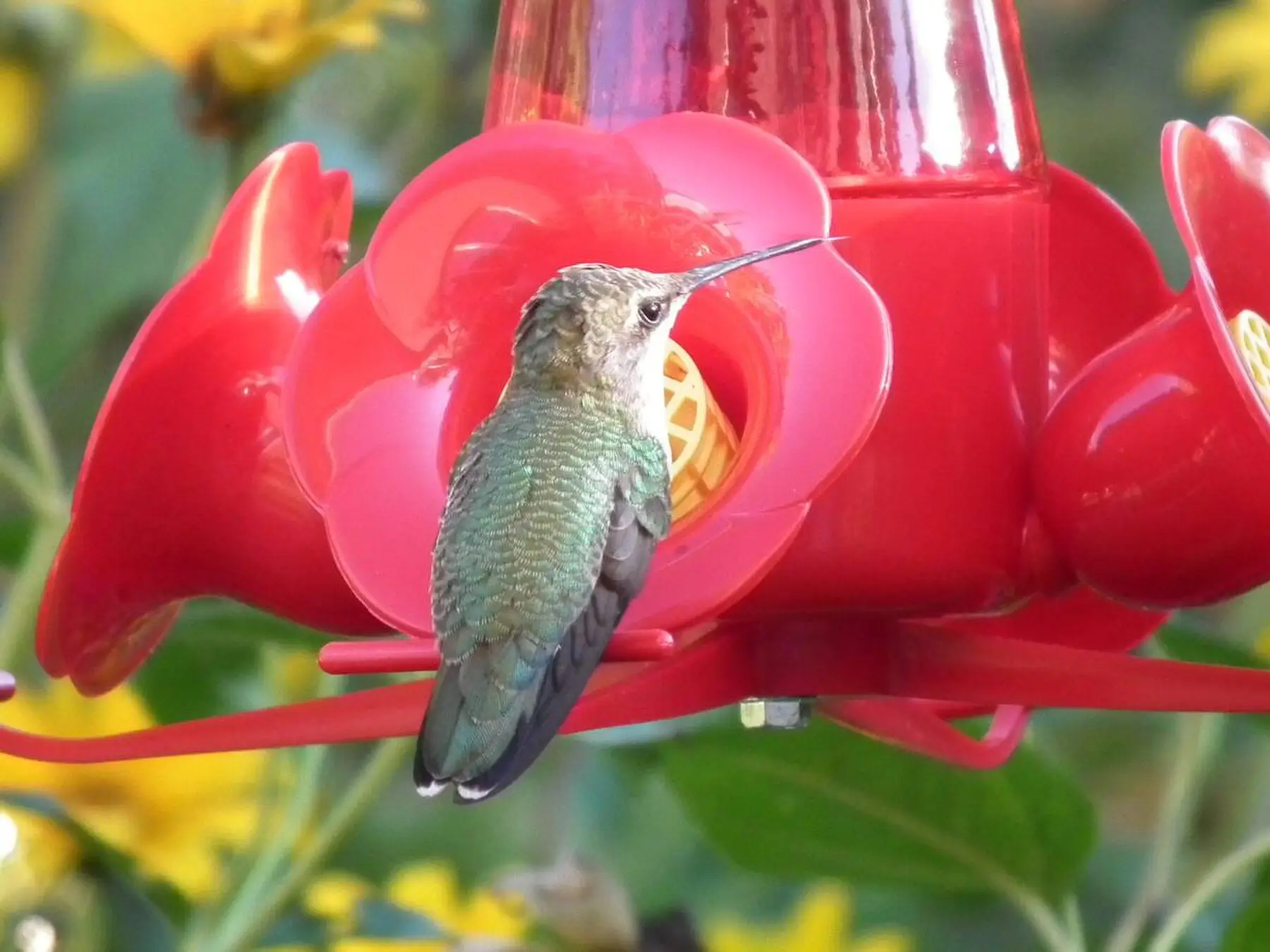
Why Hummingbirds Stopped Coming to Your Feeder
Spoiled nectar, natural flowers, migration, or one bird driving the rest off. The order to check them in, and the feeder mistake most people are making.
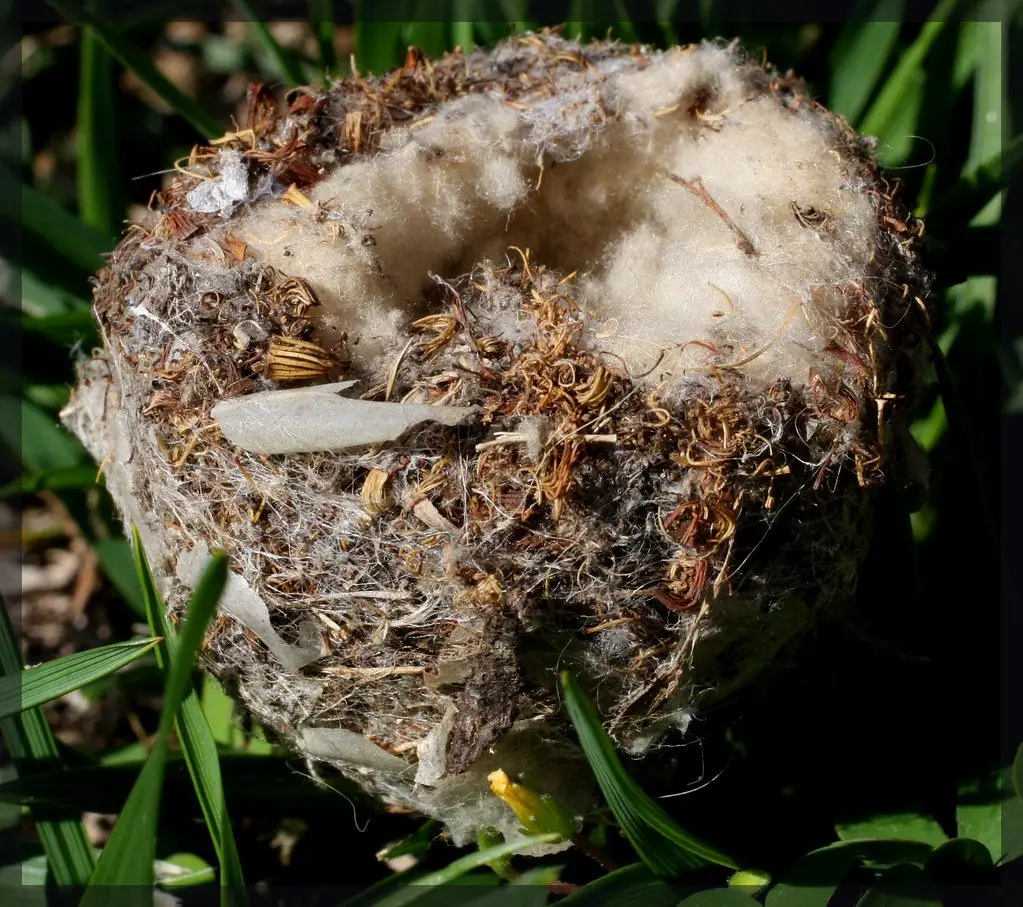
Do Hummingbirds Use Birdhouses? No — Here Is What They Need
Hummingbirds are not cavity nesters, so a birdhouse will never be used. What they actually build, and the four things that bring them in to nest instead.
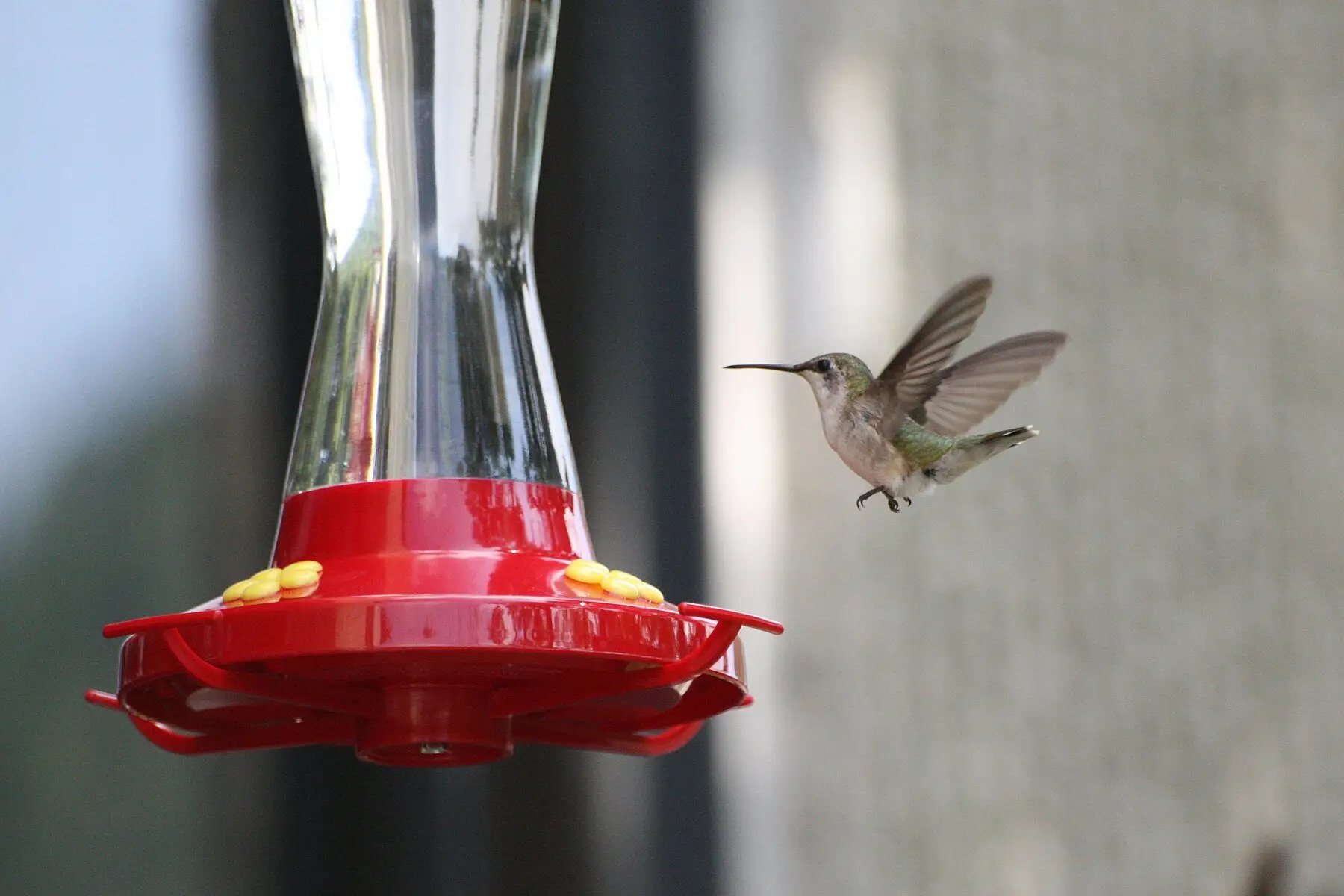
Why Do Hummingbirds Chase Each Other? Territory, Mostly
Hummingbirds are aggressively territorial over food, and a single bird will guard a feeder against all comers. How to stop one monopolising yours.
How Far Apart Should Birdhouses Be? It Depends on Species
Most songbirds want 100 to 200 feet between boxes, but bluebirds pair at 15 feet and martins nest in colonies. Spacing is a territory question.