
Do Deer Stay in the Same Area? Home Ranges and Daily Patterns
Most does live their whole lives within about a square mile. What that means for a garden, why bucks are different, and why removing deer never works.
 By

On this page
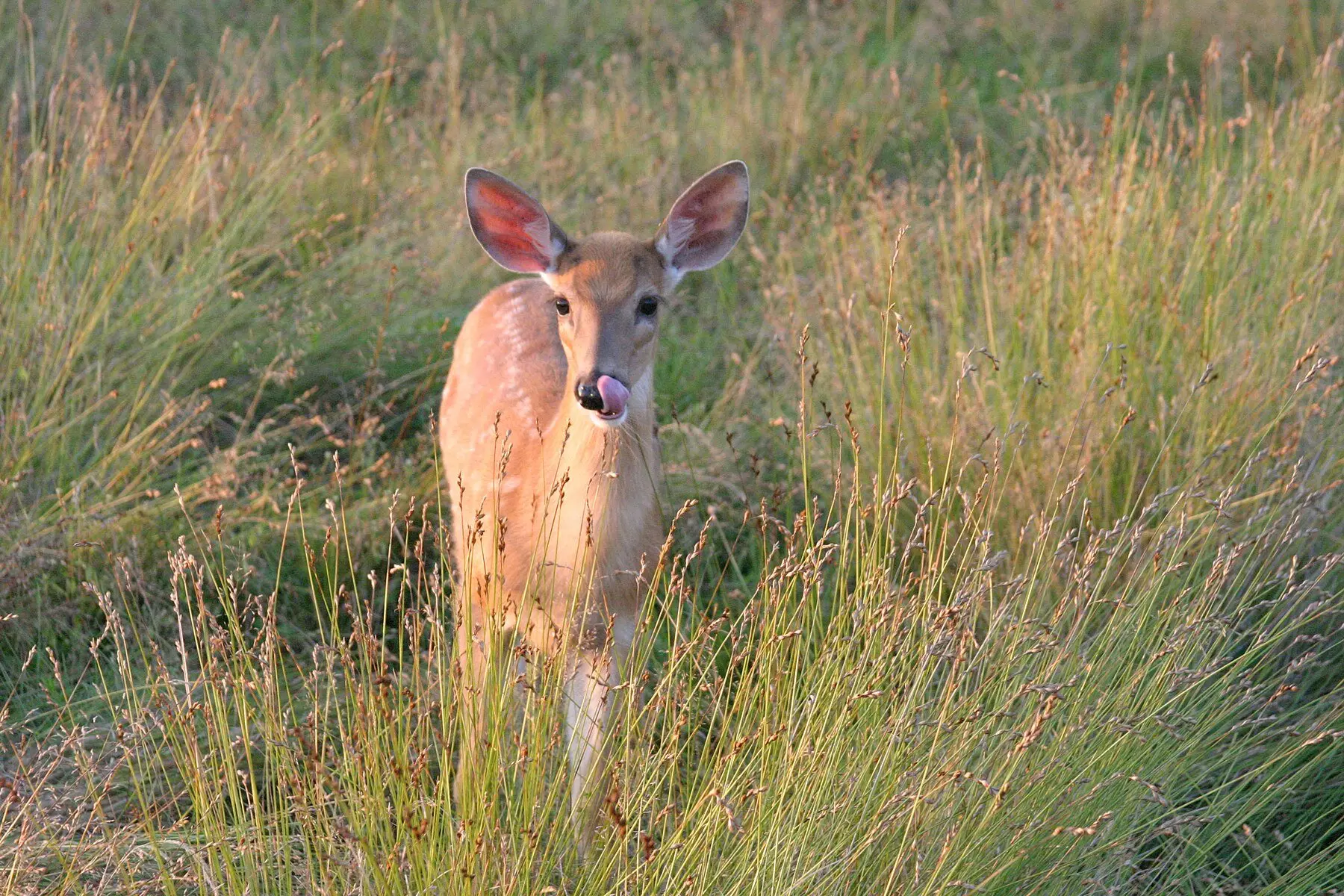
Yes — much more than people expect. A white-tailed doe often spends her entire life within about a square mile, frequently the same ground her mother used.
That single fact explains most of what is frustrating about deer in a garden.
Home range, by sex and season
| Typical range | |
|---|---|
| Whitetail doe, rural | ~600 acres to 1 sq mile |
| Whitetail doe, suburban with abundant food | Often under 100 acres |
| Whitetail buck, outside the rut | ~1 sq mile or more |
| Whitetail buck, during the rut | Several miles; may leave the range entirely |
| Young buck dispersing | A one-off move of several miles, at 1–2 years |
| Mule deer, some western populations | Migratory — long seasonal moves between summer and winter range |
Does are the philopatric sex — they stay on or near their birth range, and daughters often set up adjoining ranges, so a local group is frequently related. Young bucks disperse, which is nature’s way of avoiding inbreeding and the reason a new buck can appear from nowhere.
The daily pattern
Deer are crepuscular — most active at dawn and dusk — and the routine is strong:
- Dawn: move from bedding cover out to feeding areas
- Morning through afternoon: bed down in cover, chewing cud, getting up periodically
- Dusk: back out to feed, often on the same trails
- Night: feeding and moving, more so under a bright moon
- The same trails, worn in, used repeatedly
Trail cameras routinely record the same individuals at the same spots within the same half hour, week after week. That is not a coincidence — it is what a home range means in practice.
Why this matters for a garden
They are not passing through. They live here.
This is the point that changes how you approach the problem. A deer eating your hostas is not a wanderer who happened by — it is a resident whose daily circuit now includes your garden as a known, reliable food source.
Which is exactly why scare devices fail. Motion lights, radios, reflective tape, plastic wolves and ultrasonic units work on an animal that is unfamiliar with them. A resident deer tests the device, learns that nothing happens, and ignores it — usually within a week or two.
What follows from it:
- Rotate deterrents if you use them at all, and never rely on one indefinitely
- Repellent sprays need reapplying after rain and as new growth appears, because you are working against habit rather than curiosity
- Fencing is the reliable answer: 8 feet, or two shorter fences a few feet apart, since deer judge height well but depth poorly
- Protect individual plants where fencing the whole garden is impractical
- Plant what they avoid near the perimeter — strongly aromatic herbs, ferns, ornamental grasses, daffodils — remembering that “deer resistant” means last-choice, not inedible
- Stop feeding, including bird seed they can reach and fallen fruit
Why removal does not solve it
A home range with good food and cover that becomes vacant is occupied by neighbouring deer, and quickly. Wildlife managers see this pattern consistently: removing individuals creates an opening rather than a lasting reduction, and the population rebounds toward what the habitat supports.
Exclusion changes behaviour permanently. Removal changes the occupant.
This is also why suburban deer numbers are so persistent — abundant irrigated food, no hunting pressure, few predators, and ranges that shrink to fit, so more deer fit into the same area.
When the pattern does change
Deer do shift, and it is worth knowing what it means:
- The rut, October to December, when bucks abandon routine entirely
- Food failure — a poor acorn year moves deer substantially
- Hunting pressure, which pushes them to different cover and more nocturnal habits
- Severe weather, drawing them to sheltered areas or, in the north, to traditional winter yarding grounds
- Construction or disturbance in part of the range
- A new food source, such as a newly planted garden
What to do with this
Watch where they enter, not just what they eat. Because the trails are consistent, a few evenings of observation usually shows one or two regular entry points — and fencing or blocking those specific gaps is far cheaper and more effective than trying to defend the whole boundary.
Common questions
Do deer stay in the same area?
How big is a deer's home range?
Will the deer eating my garden come back?
Do deer return to the same spot every day?
If I remove the deer from my yard, will that solve it?
How far do deer travel in a day?
Backyard Weekly
Know what to plant, week by week
Join the weekly email for seasonal jobs, fixes for what is going wrong, and gear worth buying.
Not ready to subscribe? The planting calendar is free and needs no email.
By subscribing you agree to our privacy policy. Grow In Backyard will never sell your address.
Keep reading
How to Attract Deer to Your Property (Legally and Well)
Deer come for food, water, cover and quiet — in that order. What to plant, what they actually like, and why baiting is the wrong first move.
What Do Deer Eat? Garden Plants and What Not to Feed Them
Deer will eat far more of a garden than most plant lists admit, and a few backyard treats are genuinely dangerous. What is safe to feed, and what to skip.
Are Begonias Deer Resistant? Mostly Yes, With Caveats
Begonias are among the more reliably deer-resistant bedding plants, thanks to bitter sap and fleshy leaves. Why hungry deer still browse them sometimes.
Do Fake Owls Work for Squirrels? For About a Week
Plastic owls deter squirrels briefly, then get ignored or perched on. Why habituation beats the decoy, and what to do if you want to keep using one.