
Do Corn Snake Bites Hurt? What to Expect and What to Do
Corn snakes are non-venomous and a bite from one is closer to a scratch than a puncture. Why they bite, what it feels like, and how to handle the aftermath.
 By

On this page
Not much. A corn snake is non-venomous and has no fangs — just rows of small, backward-curving teeth built to hold a mouse. An adult bite reads as a sharp pinch or a scratch, and most people who describe it say the surprise was worse than the sensation.
What it actually feels like
| Snake | Sensation | Marks |
|---|---|---|
| Hatchling | Often not felt at all | Usually none |
| Juvenile | A pinprick, gone in seconds | Faint red dots |
| Adult | Sharp pinch, like a thorn catching | Curved row of pinpricks, brief bleeding |
| Adult, held on | Pressure more than pain | Same, occasionally a small tear |
The comparison people reach for most often is a cat’s claw catching your hand — a quick sting that fades in a minute and leaves a mark you have to look for by the next day.
Why they bite
Corn snakes are not aggressive animals. Nearly every bite falls into one of three categories:
1. A feeding response. By far the most common. Your hand smells of mice, or you reached in at the time of day the snake expects food. The snake strikes, grips, works out that you are not a rodent and releases. Wash your hands before handling and this mostly disappears.
2. Startled. Reaching in from directly above mimics how a bird of prey arrives. Approach from the side, let the snake see you coming, and support its body rather than grabbing it.
3. Stressed or shedding. A snake in blue — eyes clouded milky-blue ahead of a shed — sees poorly, feels vulnerable, and is far more likely to strike. Leave it alone until it has shed.
A defensive snake is often a husbandry message
A corn snake that bites repeatedly outside feeding time is usually not “mean”. It is more often too cold, too dry, without enough hides, or being handled too often or too soon after a meal. Fix the enclosure before working on the snake.
What to do when it happens
- Stay still. Do not yank your hand back. The teeth curve backward to stop prey escaping, so pulling is what causes tearing — and what breaks the snake’s teeth.
- Let it release. Most bites are over in under a second. If the snake has held on, put it down and give it a moment, or run a little cool water over its snout.
- Unhook, do not pull. If it is still attached, push gently toward the bite rather than away, so the teeth disengage the way they went in.
- Wash with soap and running water, and cover it if it is bleeding.
- Watch it for a few days. Spreading redness, swelling, heat or pus mean an ordinary wound infection and a trip to the doctor — not anything to do with venom.
No first aid for venom applies here
Tourniquets, suction devices, cutting the wound and ice are all wrong for a venomous bite and completely irrelevant for a non-venomous one. If there is genuine doubt about what bit you, skip all of that and go to an emergency department.
Make sure it was a corn snake
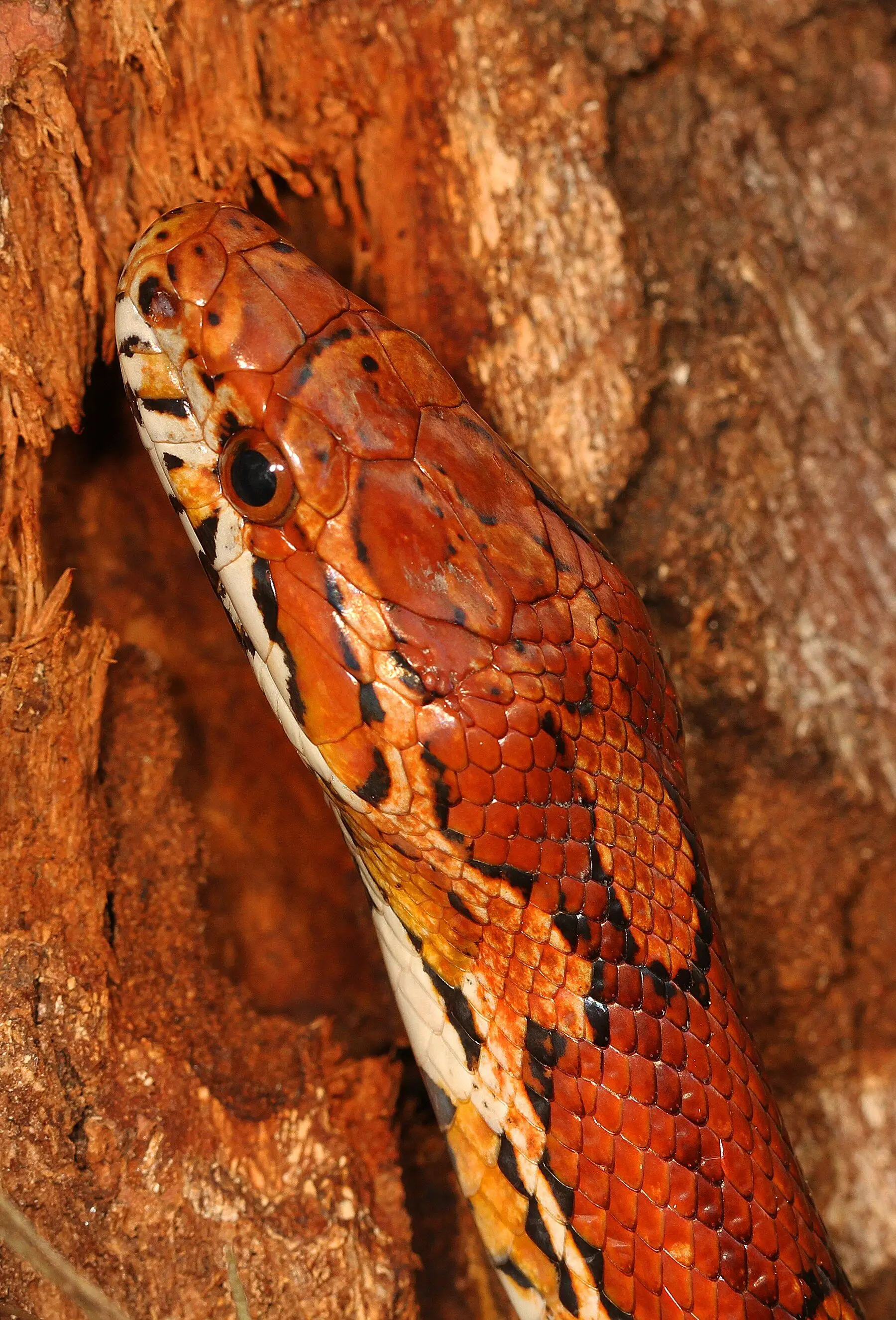
This is the part that actually matters. Corn snakes are frequently mistaken for copperheads, which are venomous, and the mistake goes both ways — people kill harmless corn snakes thinking they are copperheads, and occasionally assume a copperhead is a corn snake.
| Feature | Corn snake | Copperhead |
|---|---|---|
| Pattern | Bold blotches with black borders on orange-brown | Hourglass bands, narrow on top, wide at the sides |
| Head | Slender, barely wider than the neck | Distinctly broad, triangular |
| Pupils | Round | Vertical slit |
| Belly | Bold black-and-white checkerboard | Plain, unmarked |
| Bite result | Pinpricks, minimal pain | Immediate severe pain, rapid swelling |
Severe pain, fast swelling or heavy bleeding means it was not a corn snake. Go to an emergency department, and photograph the snake from a safe distance if you can do it without delay.
Preventing bites
- Wash your hands before handling, especially after touching frozen-thawed rodents.
- Do not handle within 48 hours of a meal, which risks a regurgitation as well as a bite.
- Use a snake hook to lift a food-motivated snake out of its enclosure, so the first thing it meets is not skin.
- Handle briefly and regularly rather than rarely and for a long time.
- Skip handling entirely during a shed, and for a few days after a move or a new enclosure.
A well-kept, routinely handled corn snake may go years without biting anyone. That reputation is most of why it is the snake people are told to start with.
Common questions
Do corn snake bites hurt?
Are corn snakes venomous or dangerous?
Why did my corn snake bite me?
What should I do if a corn snake bites me?
Will a corn snake bite make me bleed?
How do I stop my corn snake biting?
Backyard Weekly
Know what to plant, week by week
Join the weekly email for seasonal jobs, fixes for what is going wrong, and gear worth buying.
Not ready to subscribe? The planting calendar is free and needs no email.
By subscribing you agree to our privacy policy. Grow In Backyard will never sell your address.
Keep reading
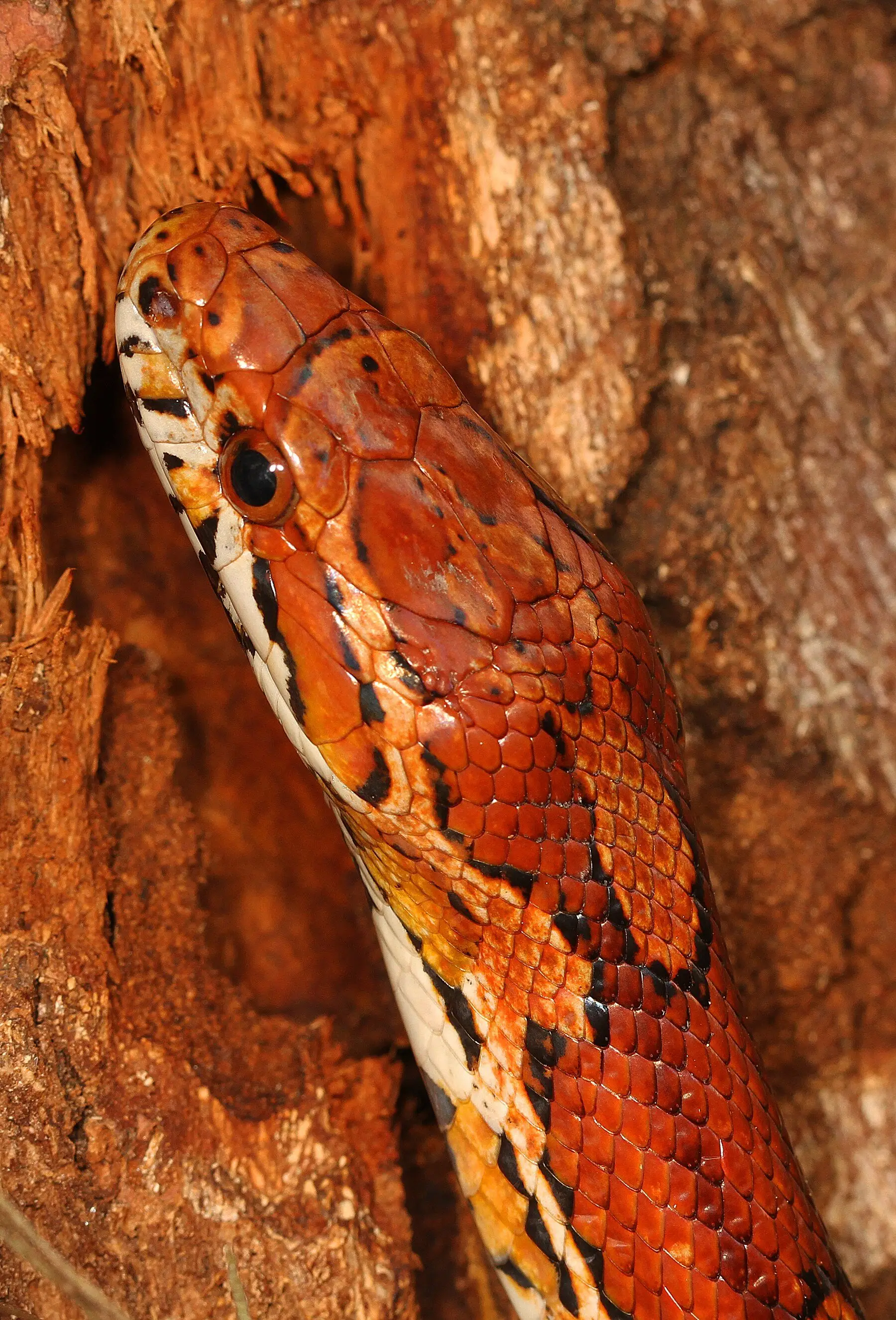
Are Corn Snakes Poisonous? No, and Not Venomous Either
Corn snakes are harmless constrictors often killed on sight because they mimic copperheads. How to tell them apart, and why one is worth keeping around.
Snakes in a Pond: Which Ones, and What to Do
Most pond snakes are harmless water-hunting species eating frogs and fish. How to tell them from a cottonmouth, and why removing the food removes the snake.
Does Lemongrass Repel Snakes? What the Evidence Says
Lemongrass is widely sold as a snake-repelling plant. The claim does not hold up — here is where it came from and what actually keeps snakes out of a yard.
Do Frogs Attract Snakes? Yes, and What That Means
Frogs are a staple food for several common snakes, so a frog population does draw them. What it means in practice, and what to change if you mind.