
Do Frogs Attract Snakes? Yes, and What That Means
Frogs are a staple food for several common snakes, so a frog population does draw them. What it means in practice, and what to change if you mind.
 By
On this page
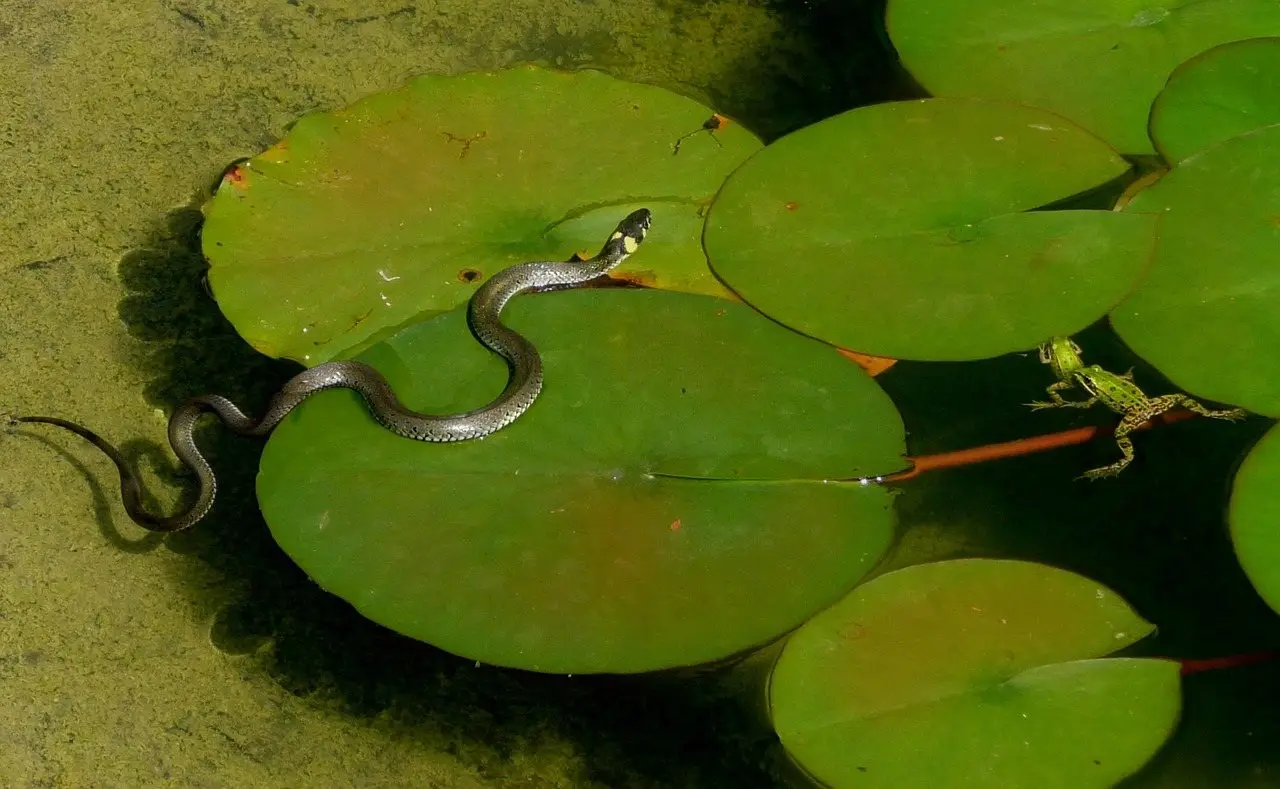
Yes, though less than the question usually implies. Frogs are a staple food for several common snakes — and those snakes are drawn far more strongly by rodents than by amphibians.
Which snakes are actually eating them
| Snake | Where | Frogs in the diet | Venomous |
|---|---|---|---|
| Grass snake | Europe | Most of it | No |
| Garter snake | North America | Heavy | No |
| Ribbon snake | North America | Heavy | No |
| Northern water snake | North America | Heavy | No |
| Cottonmouth | S. United States | Heavy | Yes |
| Rat snake, king snake | N. America | Occasional | No |
| Adder | Europe | Occasional | Yes, rarely in gardens |
The two most likely visitors to a garden pond — grass snake and garter snake — are both harmless, and both would far rather leave than meet you.
How much of a draw it really is
Worth keeping in proportion, because the fear usually exceeds the effect.
- A pond with frogs means an occasional hunting visit, mostly in warm weather, mostly brief
- A crawl space or shed with mice in it means a snake with a reason to stay, all season
- Dense cover against the house — log piles, rock piles, long grass, deep mulch — is what turns a visit into residency
- Frogs are seasonal and mobile. Rodents are not
So if you are trying to keep snakes thin, the rodents and the cover are the levers, and they work whether or not there are frogs.
A snake at the pond is usually a good sign, not a bad one
Grass snakes and garter snakes are both in decline across parts of their range, both are harmless, and both eat slugs, rodents and insects alongside the amphibians.
A pond that supports frogs, which supports an occasional snake, is a garden food chain doing what it should.
If you do want fewer snakes
None of this involves the frogs.
- Rodent control. Snap traps in protected boxes, feed and birdseed in lidded metal bins, no poison — poisoned rodents kill the snakes and owls that were doing the job free
- Short grass in a band along the foundation. Snakes avoid crossing open ground
- Move log piles, firewood and rock piles away from the house
- Thin dense ground cover and ivy off the walls
- Keep mulch shallow near the foundation
- Seal gaps at vents, thresholds and utility penetrations down to a quarter of an inch
- Clear up spilled birdseed and fallen fruit, which feed the rodents
Skip the mothballs and the sulphur granules. Neither repels snakes, mothballs used outdoors are illegal in most jurisdictions, and the granular products test no better than untreated ground.
And keep the frogs
- Slugs, snails, mosquitoes, beetles and flies eaten in volume, every night
- Protected in the UK, the EU and much of the United States, breeding sites included
- They damage nothing
- If you want them out of one specific spot, remove the damp cover and the standing water there — never a spray. Vinegar, salt and bleach all burn amphibian skin rather than repelling
A garden with frogs in it generally has a slug problem it has already solved without noticing.
Common questions
Do frogs attract snakes?
What kind of snakes eat frogs?
Will a garden pond attract snakes?
Should I get rid of frogs to keep snakes away?
What do frogs hate?
Are the snakes that eat frogs dangerous?
Backyard Weekly
Know what to plant, week by week
Join the weekly email for seasonal jobs, fixes for what is going wrong, and gear worth buying.
Not ready to subscribe? The planting calendar is free and needs no email.
By subscribing you agree to our privacy policy. Grow In Backyard will never sell your address.
Keep reading
Do Lizards Keep Snakes Away? And Do Frogs Attract Them?
Lizards do not repel snakes — they are prey. Frogs do not summon them either. What a yard's small animals actually tell you about its snakes.
What Eats Frogs in a Pond? The Predators, Stage by Stage
Frogs are eaten by something at every life stage, and the main predators change completely between spawn, tadpole and adult. What is taking yours.
Snakes in a Crawl Space or Under the House: What to Do
A snake under the house is following rodents and cool air. How to confirm it, get it out safely, and seal the gaps so the next one does not get in.
Do Garter Snakes Eat Chipmunks? Almost Never
A garter snake is the wrong size and the wrong hunter for a chipmunk. What they actually eat, and which garden snakes do take small mammals.