
Do Birds Like Hanging Bird Houses? What the Evidence Says
Hanging boxes swing, which most cavity nesters dislike and predators exploit. Which species accept them, and why a post-mounted box is safer.
 By

On this page
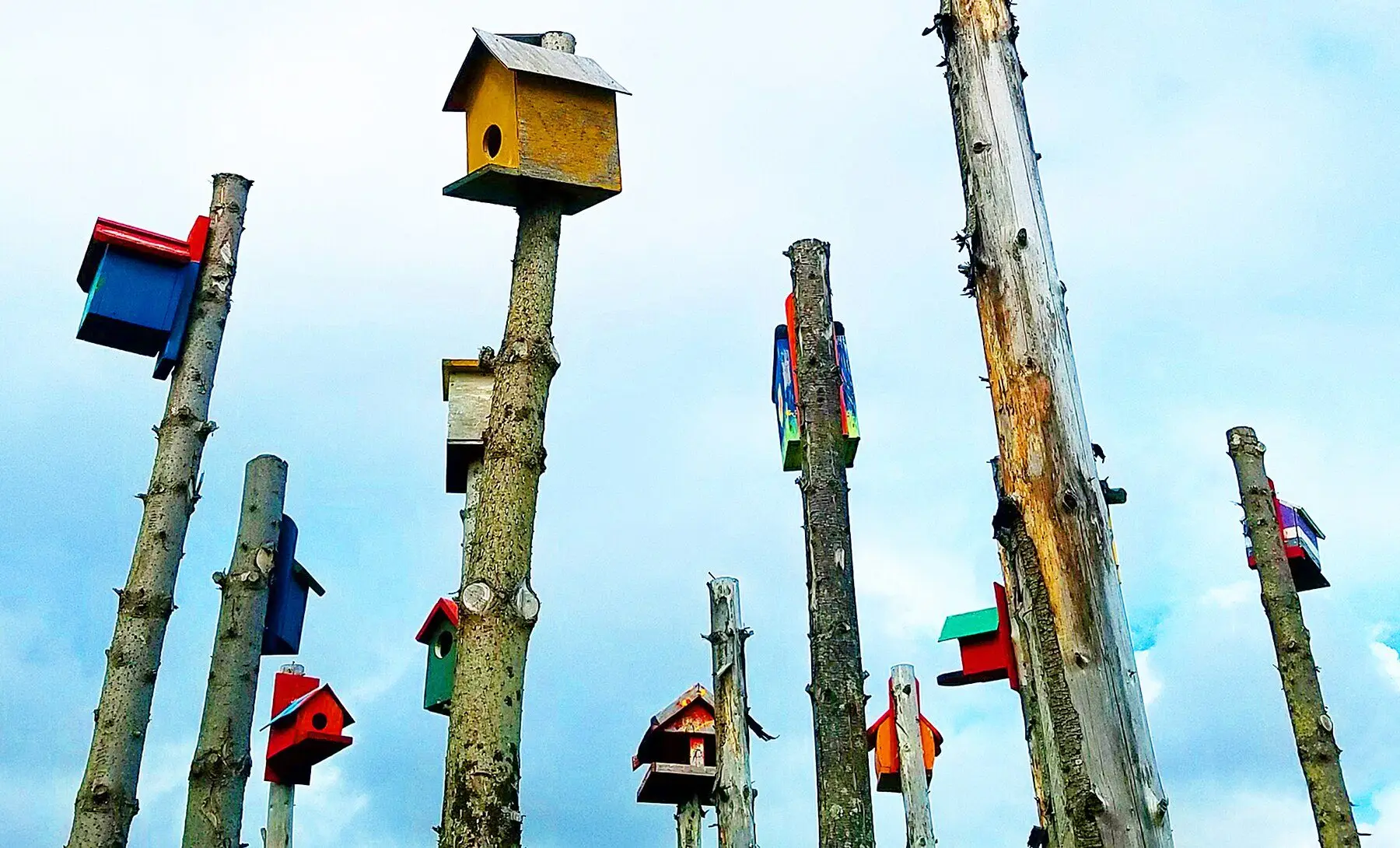
Some do. Most would rather you did not. A natural tree cavity does not move, and a swinging box is harder to enter, less secure for nestlings, and usually hung somewhere a predator can reach.
Wrens are the exception — and they are a genuine one.
Who accepts what
| Species | Hanging box? |
|---|---|
| House wren | Yes — genuinely unbothered. Nests in gourds, boots, mailboxes |
| Chickadee | Sometimes |
| Bluebird | No — strongly prefers a mounted box |
| Tree swallow | No |
| Nuthatch, titmouse | No |
| Woodpecker | No |
| Purple martin | Special case — gourds hang, but from a pole-mounted rack |
The purple martin case is worth understanding, because it looks like a counterexample and is not. The gourds do hang — but the whole assembly sits on a tall pole, well clear of anything a predator can climb, and usually with a baffle. The stability that matters is the mounting, not the individual gourd.
Why movement matters
- Entry is harder. A bird arriving with food has to land on a moving target.
- Nestlings are less secure. A box swinging in wind is a poor place for eggs.
- Predators exploit it. A hanging box is usually hung from a branch — and a branch is a walkway for raccoons, cats and snakes approaching from above, where no baffle can help.
- Weather gets in. A swinging box cannot be reliably angled away from driving rain.
The safest arrangement
Smooth metal pole, predator baffle, nothing overhanging
A box on a smooth metal pole with a stovepipe or cone baffle beneath it is the best setup available to a home gardener. The pole gives nothing to grip, and the baffle defeats climbing.
Two things ruin it: a branch or fence within jumping distance, and anything the pole leans against. Keep about 8 to 10 feet of clear space around it.
Also worth doing:
- Face the entrance away from prevailing wind and rain — often east or south-east
- Angle the box very slightly downward so rain runs out rather than in
- Ventilation gaps under the roof, drainage holes in the floor
- Untreated, unpainted wood, or a light colour outside at most. Dark boxes cook
- Rough or scored interior below the hole so chicks can climb out
- Space boxes apart — territorial species will not tolerate close neighbours
Hole size decides the tenant
The entrance diameter is the single most effective way to choose who moves in, and to keep starlings out.
| Species | Hole diameter |
|---|---|
| House wren | 1–1¼ in |
| Chickadee | 1⅛ in |
| Nuthatch, titmouse | 1¼ in |
| Bluebird | 1½ in |
| Tree swallow | 1⅜–1½ in |
| Downy woodpecker | 1¼ in |
| Screech owl | 3 in |
Anything above about 1½ inches lets starlings in, and starlings will evict natives. Precision here does more good than any other single decision.
Remove the perch
Cavity nesters grip the entrance edge; they have never needed a dowel. What a perch does provide is a handhold for house sparrows and starlings harassing a nest, and a foothold for predators reaching in.
Most decorative boxes sold in garden centres have one. Taking it off is a real improvement.
If you want to hang one anyway
Reasonable — they look good, and wrens will use them.
- Hang it for wrens, and size the hole at 1 to 1¼ inches
- Hang from a bracket or a pole arm, not from a branch a raccoon can walk along
- Use a short chain or wire so it swings as little as possible
- Somewhere sheltered from wind
- Keep it away from feeders, which draw predators and competition
- Clean it once a year, in late summer or early autumn
And be relaxed about the outcome: a hanging box that never gets a nest still makes a decent winter roost, which is a real benefit in its own right.
Why boxes get rejected
If nothing moves in, the cause is usually on this list:
- Wrong hole size for the species you hoped for
- A perch below the entrance
- Treated, painted or dark wood that overheats
- No ventilation or drainage
- It swings
- Poor siting — full afternoon sun, or facing the weather
- Too close to another box of the same species
- Never cleaned, so last year’s nest and its parasites are still in there
- Too close to a feeder, where traffic and predators concentrate
Common questions
Do birds like hanging bird houses?
Should a birdhouse hang or be mounted?
Which birds will use a hanging birdhouse?
How high should a birdhouse be?
Why do birds reject a birdhouse?
Does a birdhouse need a perch?
Backyard Weekly
Know what to plant, week by week
Join the weekly email for seasonal jobs, fixes for what is going wrong, and gear worth buying.
Not ready to subscribe? The planting calendar is free and needs no email.
By subscribing you agree to our privacy policy. Grow In Backyard will never sell your address.
Keep reading
Bird House Hole Size: The Number That Picks the Tenant
Entrance diameter decides which species can use a box and which predators cannot. A size chart, the dimensions that go with each, and why perches are harmful.
Do Birds Use Birdhouses in Winter? Yes — as Roosts, Not Nests
Birds shelter in boxes overnight through winter, sometimes a dozen at once. Why you should leave boxes up, and the two changes that make one a better roost.
Do Hummingbirds Use Birdhouses? No — Here Is What They Need
Hummingbirds are not cavity nesters, so a birdhouse will never be used. What they actually build, and the four things that bring them in to nest instead.
Do Birds Return to the Same Nest? Usually the Site, Not the Nest
Most songbirds build fresh each time, but return to the same territory year after year. Which species reuse nests, and what that means for your boxes.