
Can Trout Live in a Pond? Temperature Decides Everything
Trout need cold, oxygen-rich water most backyard ponds cannot hold through summer. The thresholds, the depth needed, and honest alternatives.
 By

On this page
Trout are not difficult fish. They are specific ones — and the specification is a summer water temperature most backyard ponds cannot hold.
The thresholds
| Temperature | Effect |
|---|---|
| 50–60°F | Optimum. Active, feeding, growing |
| 60–65°F | Comfortable |
| 65–68°F | Upper limit. Stress begins |
| 68–70°F | Serious stress, feeding stops |
| Above 70°F sustained | Lethal |
| Above 75°F | Rapid death |
Oxygen is the mechanism, not just heat
Warm water holds less dissolved oxygen, and a stressed fish needs more of it. The two curves cross in the worst possible way.
This is why summer die-offs happen suddenly and overnight rather than gradually — the pond runs out of oxygen in the small hours, when plants are respiring rather than photosynthesising.
What a trout pond actually needs
- Depth: 8 to 12 feet minimum over a real part of the area, and more is better. Depth gives a cold layer the fish retreat into through July and August. A uniformly 4 ft pond heats right through and has no refuge
- A cold inflow — a spring, a stream, or a deep well. This is what separates a pond that holds trout from one of identical size that does not
- Shade on the south and west sides
- Aeration — a bottom-diffused air system, a waterfall or a fountain
- Clean water. Trout tolerate silt, low oxygen and pollution far less well than warm-water species
- Size: a quarter-acre and up for a stocked pond. A garden pond is not a trout pond
Which trout
| Tolerance | Notes | |
|---|---|---|
| Brook trout | Least tolerant | Wants the coldest, cleanest water |
| Rainbow trout | Moderate | The usual stocking choice |
| Brown trout | Most tolerant | Warier, harder to catch |
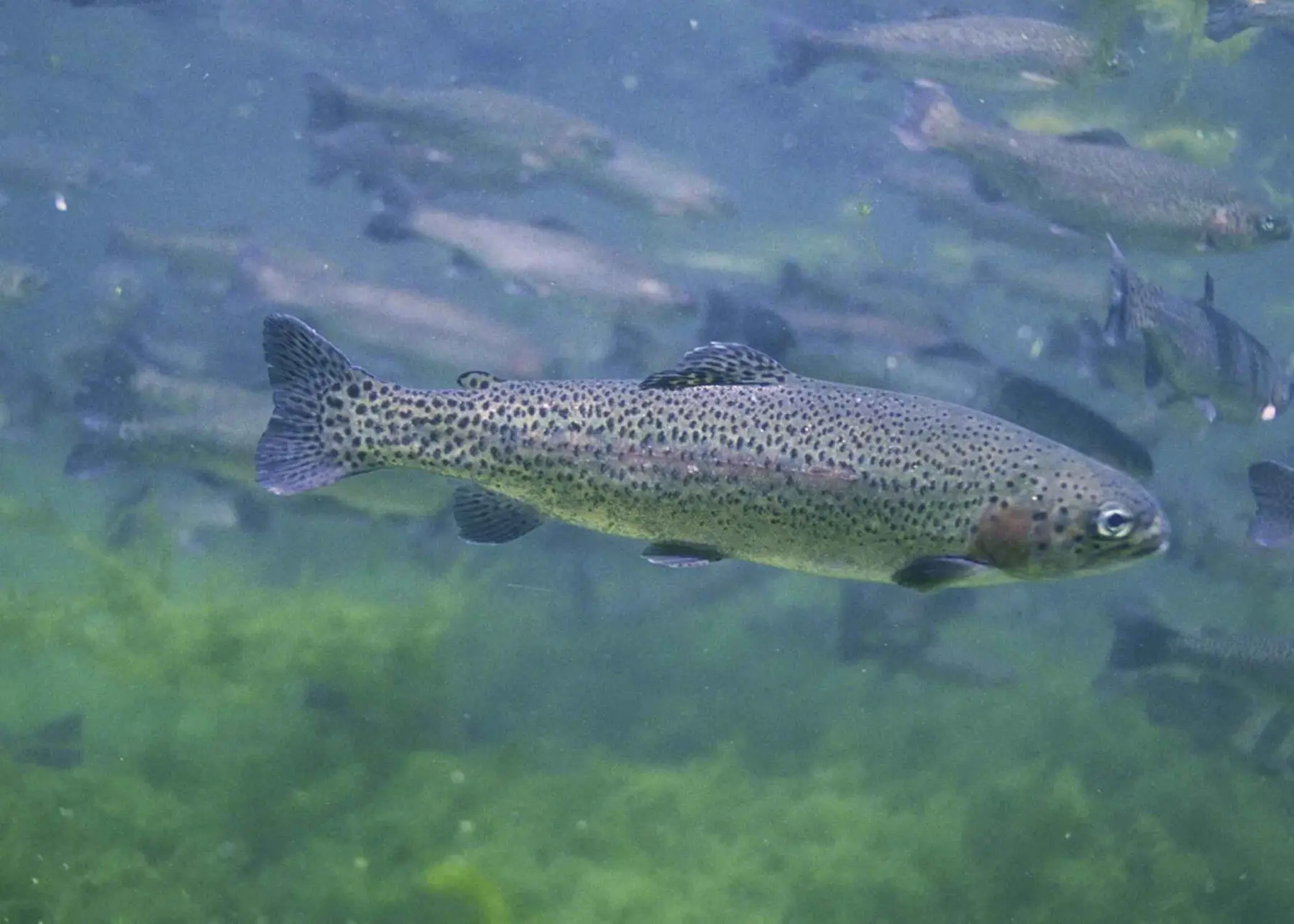
Rainbows are what most stocked ponds use — reasonably tolerant, widely available, and they grow quickly on pellets.
The seasonal approach
For most ponds this is the honest answer, and it works well.
- Stock catchable-size trout in autumn, once the water has cooled
- Fish through winter and spring
- Have them out by May or June, before the water warms
- Treat them as a crop, not a population
It avoids the summer die-off entirely, and it costs less than trying to engineer a pond into something it is not.
Trout rarely reproduce in a pond anyway. They spawn in flowing, gravel-bedded water, so a still pond population never renews itself — which means you are restocking regardless.
Before you stock anything
- Measure the water temperature at depth, in the hottest week of the year. Not in May
- Test dissolved oxygen at dawn in midsummer, which is when it bottoms out
- Check the depth profile properly
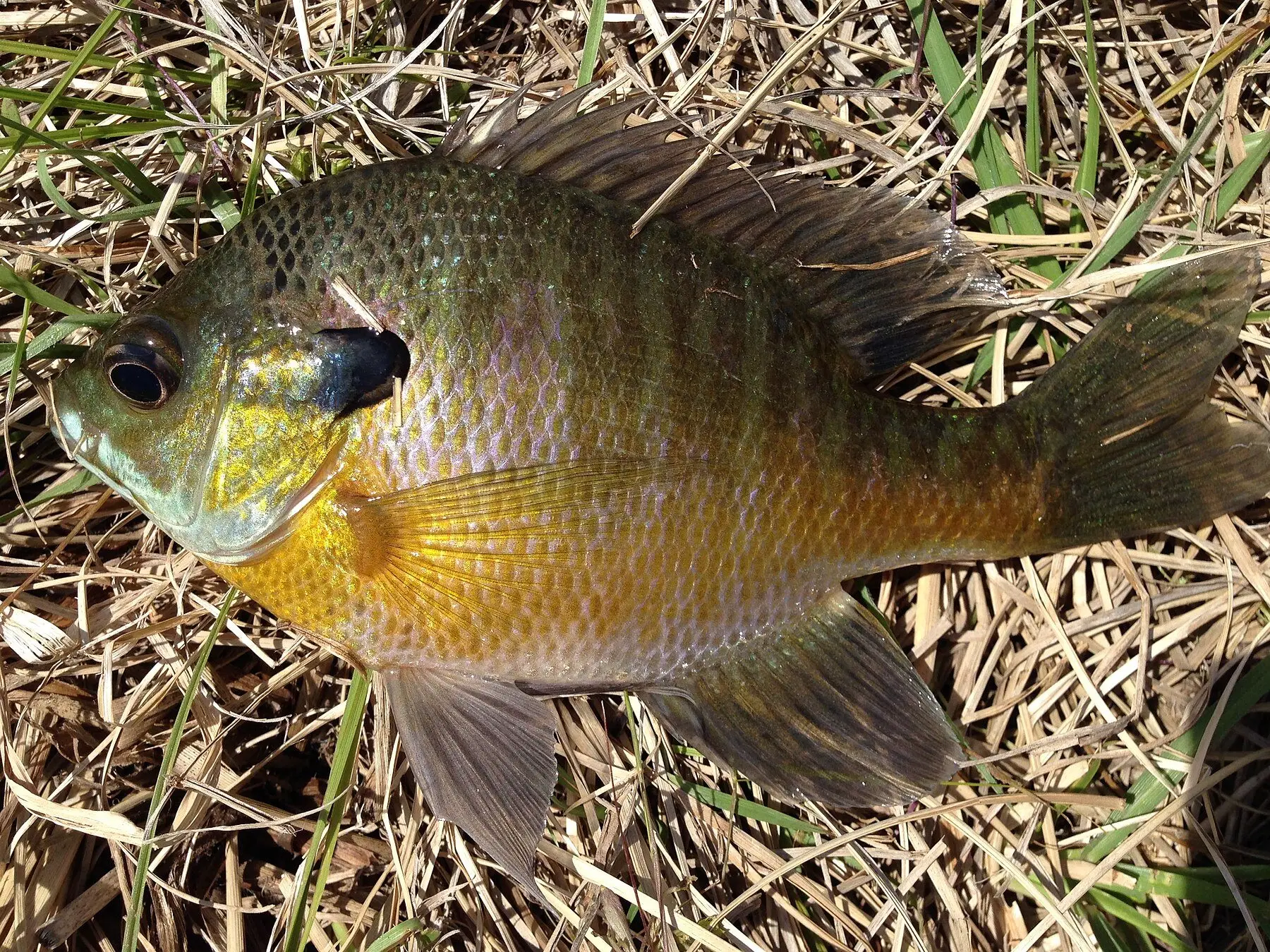
- Check what is already in there. Bass and bluegill will eat stocked trout
- Check the regulations. Stocking is licensed in many states and provinces, and moving live fish between waters is restricted
- Buy from a certified hatchery, disease-tested
If the pond is too warm
Choosing a fish that suits the water beats trying to make the water suit the fish.
- Largemouth bass with bluegill — the classic farm pond combination, self-sustaining and far easier to keep in balance
- Channel catfish — tolerant of warm water and poor conditions, grow large
- Yellow perch, crappie — cooler but not cold water
- Koi and goldfish — for an ornamental pond, tolerant of a wide range and of shallower water
- Golden shiners or fathead minnows as forage
Things that will not fix a warm pond
- Adding ice or cold water. The volume needed is impractical and the shock is harmful
- Shade cloth over the surface. Helps marginally; does not change the thermal mass
- More aeration alone. It raises oxygen but does not cool the water, and circulating a warm pond can mix the cold layer away entirely — which makes things worse
- Deepening one corner. A small deep hole does not hold a stable cold layer
The depth, the inflow and the shade have to be there from the start. Everything else is management.
Common questions
Can trout live in a backyard pond?
What temperature do trout need?
How deep does a trout pond need to be?
Do trout need moving water?
What can I keep instead if my pond gets too warm?
Can I stock trout just for the season?
Backyard Weekly
Know what to plant, week by week
Join the weekly email for seasonal jobs, fixes for what is going wrong, and gear worth buying.
Not ready to subscribe? The planting calendar is free and needs no email.
By subscribing you agree to our privacy policy. Grow In Backyard will never sell your address.
Keep reading
Backyard Fish Farming Kit — 6 Parts That Decide It Works
A backyard fish farming kit needs oxygen, filtration and heat first. We compare 6 components and the species each one suits. See which fits your climate.
How to Stock a Pond (Including for Free)
Stocking ratios that work, what it costs, and the free routes — state hatchery programs, pond transfers, and why natural colonisation is slower than claimed.

How Deep Should a Pond Be? Depths by Purpose and Climate
A wildlife pond wants shallow margins, koi want four feet, and freezing winters set the floor. The depths that matter, and the shelf plan that serves both.
Best Fish for a Small Pond (And How Many It Holds)
Goldfish and shubunkins suit small ponds; koi do not. Stocking limits by volume, which species survive a frozen winter, and what actually eats algae.