
Bird Repellent for Trees — 5 Options Ranked on Fruit
Bird repellent for trees works by movement, not smell. 5 options compared on fruit crops, plus the ones that fail. See which suits your tree.
 By
We may earn a commission when you buy through links on this page, at no extra cost to you.
On this page
Almost everything sold as a bird repellent for trees works by frightening birds, and birds are very good at learning that a thing which has never hurt them is not dangerous. The useful question about any scare device is not does it work but for how many days.
Netting is the exception, because it is not a repellent at all.
How long each method lasts
| Method | Effective for | Why |
|---|---|---|
| Fine netting, taut | The whole season | Excludes; nothing to habituate to |
| Net bags on clusters | The whole season | Same, on the fruit you can reach |
| Motion-activated sprinkler | Weeks to months | Does something each time |
| Reflective tape, moved often | 2–3 days per position | Movement and noise, then scenery |
| Reflective spinners | Days to a fortnight | Slightly slower habituation |
| Distress-call devices | Days | Habituation, and unneighbourly |
| Hawk silhouettes, plastic owls | Days at best | Static; usually become perches |
| Ultrasonic repellers | No effect | Birds do not hear the claimed range |
| Wind chimes | Days | Novel noise, then background |
The pattern across that table is consistent and worth stating as a principle: a deterrent lasts as long as the bird remains uncertain about it. Anything that produces a consequence — water, exclusion — keeps working. Anything that is only an appearance stops working as soon as it has been tested.
Why habituation is so fast
Birds are not being stubborn. They are doing arithmetic that favours them.
A tree in fruit is a large, reliable, high-energy food source. A strip of shiny tape is an unknown. On day one the unknown wins and the bird stays away. By day three it has watched other birds feed near the tape unharmed, and the value of the fruit outweighs a diminishing suspicion.
That is why moving a visual deterrent matters more than which one you bought. Novelty is the active ingredient, and it has a short half-life. Re-rig the tape every two or three days, in a different position, and you are repeatedly restoring the uncertainty.
The netting decision is really about tree size
Tip
If you are planting a fruit tree and birds are a known problem, plant a dwarf or trained form. Netting a dwarf tree takes ten minutes; netting a mature standard is a scaffolding job. The rootstock choice decides this for twenty years.
For a tree you can cover: fine netting over the whole canopy, gathered and tied at the trunk so there is no gap at the bottom, pulled taut rather than draped. That is the end of the problem.
For a mature standard: the honest answer is that you share it. Net or bag the reachable branches, run scare tape higher up and move it, and write off a proportion. That is not defeat — a mature cherry produces far more than a household eats, and the birds taking the top are also taking codling moth larvae from it.
Loose netting is the real hazard
This is the part to get right, because it has a body count.
Large-mesh netting left loose catches birds by the head and the leg. A bird that pushes through a one-inch mesh cannot reverse out, because the feathers catch going backwards, and it struggles until exhausted. Garter snakes, lizards and hedgehogs get caught mid-body and can go neither way.
Two rules remove nearly all of it: mesh around three-quarters of an inch or finer, and pulled taut. A taut fine net gives an animal nothing to push into. Check the edges weekly — a corner that has worked free during a windy night is the hazard, not the net itself.
The legal line, briefly
Nearly every native bird species in North America is protected under the Migratory Bird Treaty Act. In practice:
Allowed: netting, bagging, scare devices, sprinklers, reflective tape, removing attractants, picking early. All of it.
Not allowed: killing, trapping or possessing protected birds, and disturbing or destroying an active nest containing eggs or young.
European starlings and house sparrows are introduced species not covered by the Act, which does widen what is lawful where those are the problem. Exclusion is still the thing that works, and flocking species in particular overwhelm every deterrent on this page.
Try water and early picking first
Both are free, and between them they resolve a surprising share of cases.
Shallow pecks in the ripest fruit, left hanging, is a thirst signature — the bird wanted the moisture, not the meal. A shallow bird bath near the tree, kept filled through dry weather, often ends it.
And most tree fruit ripens perfectly off the tree once it has begun to colour. Picking at first blush removes the window in which the fruit is both ripe and still hanging, which is the only window the birds have.
How we picked
Methods assessed on published trials of visual and acoustic deterrents, documented habituation behaviour, and what orchard growers and gardeners report across a fruiting season. · Picks last checked October 2026.
- Exclusion or deterrence
- Netting physically excludes and does not stop working. Everything else relies on frightening a bird, and birds habituate to anything that never harms them.
- How long before habituation
- The useful question for any scare device is not whether it works but for how many days. Most answer in under a week unless moved and varied.
- Can it be deployed on your tree at all
- Netting a mature standard cherry is impractical. Tree size, more than anything, decides which options are real.
- Risk to the birds
- Loose large-mesh netting entangles and kills. Fine mesh pulled taut does not, and that difference is the main welfare decision here.
- Legality
- Nearly all native North American birds are federally protected. Deterring is fine; trapping, harming or destroying active nests is not.
Our picks
| # | Pick | Best for | Where to buy |
|---|---|---|---|
| 1 | Fine netting over the canopy | Best overall | Check price for Fine netting over the canopy → |
| 2 | Reflective scare tape | Best value | Check price for Reflective scare tape → |
| 3 | Reflective spinners and spirals | Best static-looking deterrent | Check price for Reflective spinners and spirals → |
| 4 | Motion-activated sprinkler | Best active deterrent | Check price for Motion-activated sprinkler → |
| 5 | Net bags over fruit clusters | Best for a few prized branches | Check price for Net bags over fruit clusters → |
Best overall
Fine netting over the canopy
Where it can be deployed, it ends the problem. Gather and tie it at the trunk so there is no gap at the bottom.
- Mesh
- About 3/4 in or finer
- Material
- Knitted UV-stabilised polyethylene
- Deploy
- Over the whole canopy, or a frame around it
- Habituation
- None — it excludes rather than frightens
What we liked
- The only method that works as well at the end of the season as the start
- Nothing to habituate to, because it is a barrier
- Fine mesh pulled taut is safe for birds
- Reusable for several seasons
Worth knowing
- Impractical on a large mature standard tree
- Fiddly to get on and off a dense canopy
- Must be tensioned, or it becomes a hazard
Best value
Reflective scare tape
Buy it and plan to move it every two or three days. Treated as a fixture it stops working; treated as a rotation it is good value.
- Type
- Holographic or metallic flash tape
- Works by
- Movement, flash and sound in wind
- Duration
- Days, not weeks, unless moved
- Cost
- Very low
What we liked
- Genuinely effective for the first few days
- Cheap enough to buy plenty and re-rig often
- Movement and noise, not just a static image
- Can buy the week you need to finish ripening
Worth knowing
- Habituation within about a week in one position
- Needs wind to do anything
- Rustles, which neighbours may notice
Best static-looking deterrent
Reflective spinners and spirals
A tidier alternative to scare tape with similar limits. Move them, and combine with something else.
- Type
- Hanging reflective discs or spirals
- Works by
- Movement and reflected light
- Duration
- Days to a couple of weeks if repositioned
- Also
- Looks less like a building site than tape
What we liked
- Continuous movement, so less static than a silhouette
- More presentable than flash tape in a visible garden
- Reusable each season
- Cheap
Worth knowing
- Still habituated to, just slightly more slowly
- Needs wind
- Small coverage per unit
Best active deterrent
Motion-activated sprinkler
The one active device worth buying, and better aimed at the ground and lower branches than at a treetop.
- Trigger
- Infrared motion
- Range
- 30–40 ft arc
- Power
- Battery, connected to a hose
- Habituation
- Slow — it does something each time
What we liked
- Birds do not habituate to being soaked the way they do to images
- Works on squirrels, cats and deer at the same time
- No netting, so the tree stays accessible
- Useful long after the fruit is picked
Worth knowing
- Needs a hose and water pressure
- Will soak you and visitors
- Less effective against a flock in a canopy than at ground level
Best for a few prized branches
Net bags over fruit clusters
The practical answer on a mature tree. Bag the branches you can reach and accept the rest.
- Covers
- Individual clusters or branches
- Mesh
- Fine drawstring bags
- Use
- Slip on as fruit begins to colour
- Reusable
- Yes
What we liked
- Protects the specific fruit you care about
- No frame, no canopy netting, no ladder work beyond reach
- Works on a large tree where netting cannot
- Very cheap
Worth knowing
- Only covers what you bag
- Fiddly and slow on a heavy crop
- Can hold humidity in muggy weather
Which should you buy?
Our verdict
- Best overall:
- Fine netting over the canopy or a frame
- Best value:
- Reflective scare tape, moved every few days
On any tree you can physically cover, netting is the answer and the rest of this page is a consolation prize — it excludes rather than frightens, so there is nothing to habituate to and it works as well in week eight as in week one. Use fine mesh pulled taut, never loose large mesh, which entangles and kills birds. Scare tape is the value pick because it genuinely buys a few days and costs almost nothing, provided you move it every two or three days; left in one place it becomes scenery within a week. And on a mature standard tree, the realistic answer is to net what you can reach and share the rest.
| If you… | Buy | Because |
|---|---|---|
| A dwarf or trained fruit tree you can reach | Fine netting over a frame or the whole canopy | The only method that does not degrade over the season. On a tree you can physically cover, nothing else comes close. |
| A large mature tree | Accept a share, and net the lowest branches | Netting a standard tree is rarely practical. Protecting the reachable fruit and leaving the top is the honest compromise. |
| You want a few more days before picking | Reflective scare tape, moved every two or three days | Visual deterrents work briefly. Moved and varied they can buy the week you need to finish ripening. |
| It is starlings or house sparrows in numbers | Netting, and remove other attractants | Flocking birds overwhelm any deterrent, and these two are not federally protected in the US, which widens the legal options. |
| You are losing fruit to pecking, not removal | Water, and pick at first blush | Shallow pecks in the ripest fruit usually mean thirst. A bird bath and early picking often ends it with no deterrent at all. |
When not to buy at all
Nearly all native North American birds are federally protected under the Migratory Bird Treaty Act, so deterring them is fine but trapping, harming or disturbing an active nest is not — that is the line to know before buying anything. Skip ultrasonic bird repellers, which have no reliable evidence and which birds largely cannot hear in the claimed range anyway. Skip static plastic owls and hawk silhouettes: a motionless predator that never does anything becomes a perch within days. And skip loose large-mesh netting entirely, which catches birds by the head and leg and kills what it traps.
Common questions
What is the best bird repellent for fruit trees?
Does bird scare tape actually work?
Do plastic owls keep birds out of trees?
Do ultrasonic bird repellers work?
Is it legal to deter birds from my fruit trees?
How do I protect a large mature fruit tree?
Why are birds pecking rather than eating my fruit?
Backyard Weekly
Know what to plant, week by week
Join the weekly email for seasonal jobs, fixes for what is going wrong, and gear worth buying.
Not ready to subscribe? The planting calendar is free and needs no email.
By subscribing you agree to our privacy policy. Grow In Backyard will never sell your address.
Keep reading
Bird Netting for Tomatoes — 5 Options, One Mesh Size
Bird netting for tomatoes works on mesh size, not strength. 5 options compared on framing, safety and cost. See which suits your plants.
Do Birds Eat Tomatoes? They Are Usually After the Water
Birds peck tomatoes for moisture more than food, which is why you find one hole in six fruits. A birdbath fixes more of it than netting does.
Best Bird Baths — 2 Inches Deep Is the Whole Secret
The best bird baths are 2 inches deep with a rough bottom. 6 picks compared on grip, depth and winter use. See which one birds will actually use.
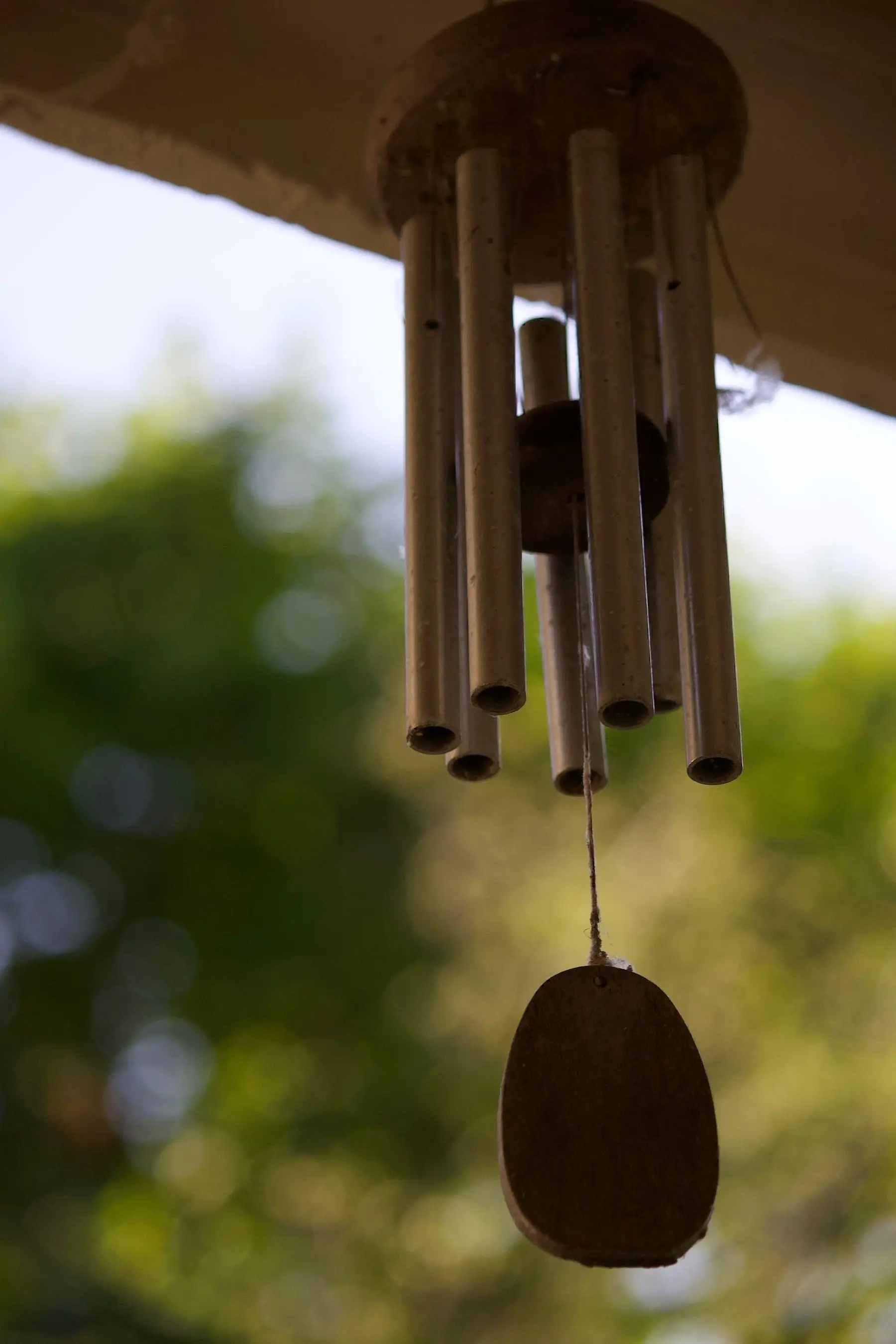
Will Wind Chimes Keep Birds Away? Only for a Week or Two
Wind chimes deter birds briefly and then stop working entirely. Why habituation defeats them, and the exclusion methods that actually hold.