
Best Goats for Clearing Brush — 4 Breeds and 1 to Avoid
The best goats for clearing brush are Spanish, Kiko and Boer crosses. 4 breeds compared, plus the one to avoid. See which suits your fencing.
 By
We may earn a commission when you buy through links on this page, at no extra cost to you.
On this page
Spanish and Kiko, or crosses of either. The breed matters less than most people expect — and the fence matters far more.
Why hardiness is the selection criterion
Every goat eats brush. What separates breeds over a season outdoors is whether they stay sound doing it.
A brush goat lives on rough ground, in wet, with a heavy parasite challenge from grazing close to the soil in warm weather. The breeds that work are the ones selected by survival rather than appearance — good hooves, worm resistance, and kidding without help. That is Spanish and Kiko in one sentence.
Stocking and timing
- 8–12 adults per acre of dense brush, for about a month
- Pull them before bare soil. The goal is repeated defoliation, not scorched earth
- Expect two to three seasons on established woody growth like multiflora rose or poison ivy — a single pass sets it back, it does not kill the roots
- Rotate paddocks to break the parasite cycle rather than leaving them in one place
Poison ivy transfers to the coat
Goats browse poison ivy happily and are unaffected by urushiol. The oil still ends up on their coat. Handling a goat that has been working an ivy patch is a genuine route to a rash for anyone sensitive — gloves, and wash afterwards.
The fence is the whole project
| Option | Verdict |
|---|---|
| 42 in electric netting | The standard for rotational clearing. Portable, effective when hot |
| Woven wire, 4 ft | Good for permanent paddocks. Expensive over acreage |
| Barbed wire | No. Goats go through or under it |
| Single-strand electric | No. They test, find the gap and leave |
| Cattle panels | Fine for small pens, impractical at scale |
Two failures account for most escapes: the energiser is not strong enough, and vegetation at the base shorts the netting out. Both are ongoing jobs, not setup tasks — strim the fence line before the goats go in and check the voltage regularly.
Rent or buy
Rent for a one-off overgrown lot. The outfit brings animals, fencing and responsibility, and takes them away again.
Buy only if there is work for them year-round. The goats still need feed, minerals, worming, hoof trimming and shelter in the eleven months they are not clearing anything, and that is the part that surprises people who bought four goats for a weekend’s brush.
Our picks
| # | Pick | Best for | Where to buy |
|---|---|---|---|
| 1 | Spanish goat | Best for hard clearing | Check price for Spanish goat → |
| 2 | Kiko goat | Best all-round hardiness | Check price for Kiko goat → |
| 3 | Boer cross | Best if you also want meat value | Check price for Boer cross → |
| 4 | Angora | The one to avoid for brush |
Best for hard clearing
Spanish goat
The benchmark for brush work. Buy these if the job is clearing and you do not need the animals to be friendly.
- Origin
- Feral-derived US landrace
- Temperament
- Independent, flighty with people
- Parasite resistance
- High
- Upkeep
- Low — the point of the breed
What we liked
- Bred by survival rather than for show — hardy and self-sufficient
- Excellent feet and parasite resistance over a long season
- Thrives on rough browse that would not maintain a dairy breed
- Kids easily with little intervention
Worth knowing
- Harder to handle and contain than a tame dairy goat
- Availability varies a lot by region
Best all-round hardiness
Kiko goat
What we would choose for a mixed job where the goats stay on the place year-round.
- Origin
- New Zealand, from feral stock
- Temperament
- Hardy, moderately tractable
- Parasite resistance
- High
- Growth
- Fast for a hardy breed
What we liked
- Selected explicitly for survivability without supplements
- Strong hooves — less lameness on rough ground
- Grows faster than Spanish, so a cull has more value
- Good mothering, minimal kidding assistance
Worth knowing
- Costs more to buy than a grade goat
- Still a browsing animal, not a lawnmower — pasture alone bores them
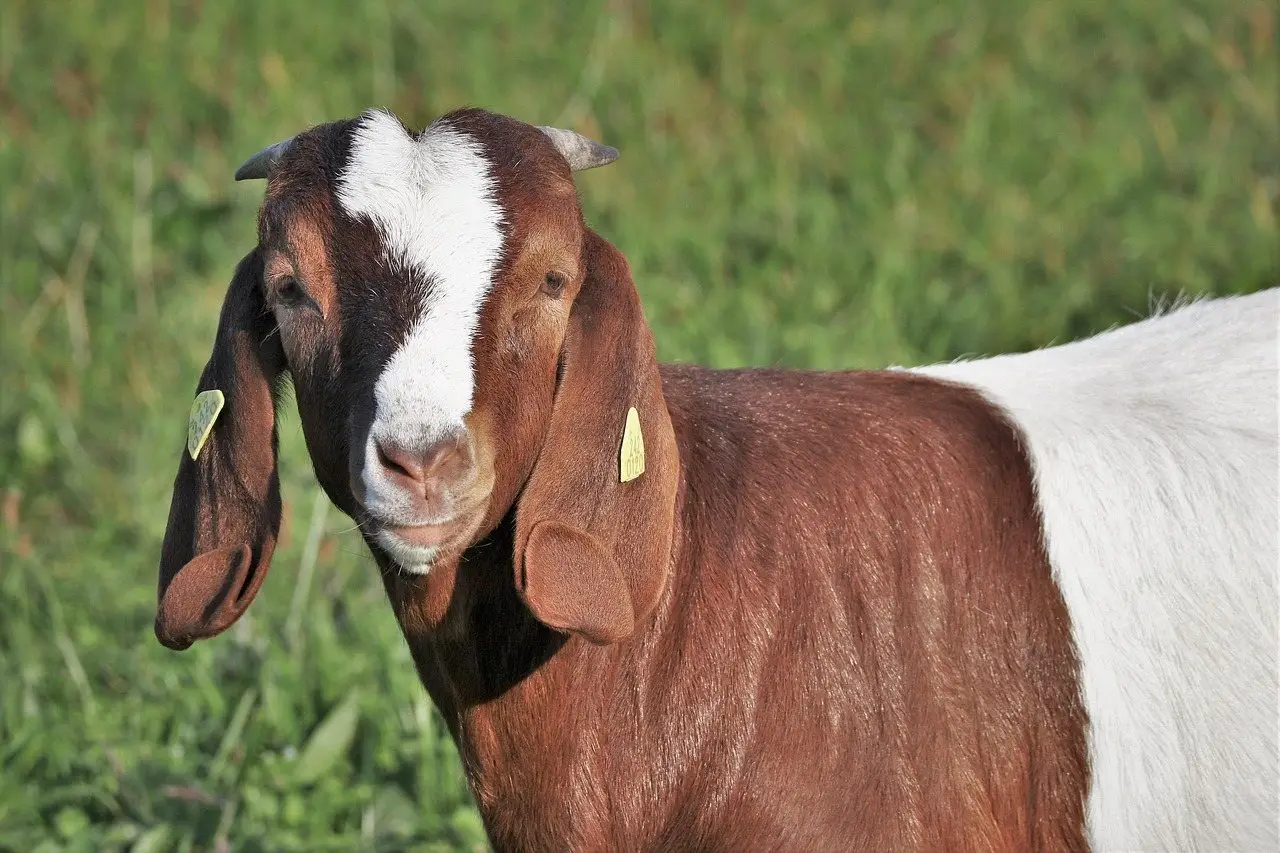
Best if you also want meat value
Boer cross
A sensible compromise for a smallholding. Cross it with Kiko or Spanish rather than running purebred on brush.
- Origin
- South Africa, via crossing
- Temperament
- Docile, easy to handle
- Parasite resistance
- Moderate — the trade-off
- Build
- Heavy, muscular
What we liked
- Much easier to handle and move than Spanish
- Real carcass value in surplus animals
- Crosses keep some hardiness from the other side
Worth knowing
- Purebred Boers are noticeably more parasite-prone on rough ground
- Heavier animals do more damage to wet soil
The one to avoid for brush
Angora
Keep Angoras for fibre on clean pasture. Running them through bramble is unfair to the goat and ruins the clip.
- Coat
- Mohair fleece
- Hardiness
- Low in wet and cold
- Suitability
- Poor for briars
What we liked
- Valuable fleece in the right setup
Worth knowing
- Fleece collects burrs, briars and thorns — a welfare problem in brush
- Less hardy than any breed above
- Needs shearing twice a year
Common questions
What is the best goat breed for clearing brush?
How many goats does it take to clear an acre?
Will goats eat poison ivy and brambles?
What fencing do you need for brush goats?
Is it cheaper to rent goats or buy them?
Backyard Weekly
Know what to plant, week by week
Join the weekly email for seasonal jobs, fixes for what is going wrong, and gear worth buying.
Not ready to subscribe? The planting calendar is free and needs no email.
By subscribing you agree to our privacy policy. Grow In Backyard will never sell your address.
Keep reading
Best Goats for Meat — 4 Breeds and Why Crosses Win
The best goats for meat trade growth against hardiness. 4 breeds compared on weight gain, input and carcass. See why a cross usually beats a purebred.
Best Tasting Goat Milk Breed — 4 Compared on Butterfat
The best tasting goat milk breed is Nubian, on butterfat. 4 breeds compared, plus the handling that matters more. See which suits your holding.

Can a Chipmunk Be a Pet? The Legal and Practical Answer
Taking a wild chipmunk is illegal in most states and a poor idea everywhere. What the law says, what captive Siberian chipmunks need, and the honest verdict.

Can a Deer Kill You? The Honest Risk, and When to Worry
Deer kill more people than bears and snakes combined — almost all in car collisions. Direct attacks are rare but real. When a deer is genuinely dangerous.