
Best Bird Seed for Cardinals — 5 Picks, Safflower First
The best bird seed for cardinals is safflower, which squirrels leave alone. 5 seeds compared on pull, cost and mess. See which suits your feeder.
 By
We may earn a commission when you buy through links on this page, at no extra cost to you.
On this page
Cardinals are not fussy birds, which is why so much cardinal advice is useless. They will eat most of what you put out. The question worth answering is narrower: which seed brings cardinals in without also feeding every squirrel, grackle and starling in the neighbourhood?
That has one answer, and it is safflower.
Why safflower is the lever
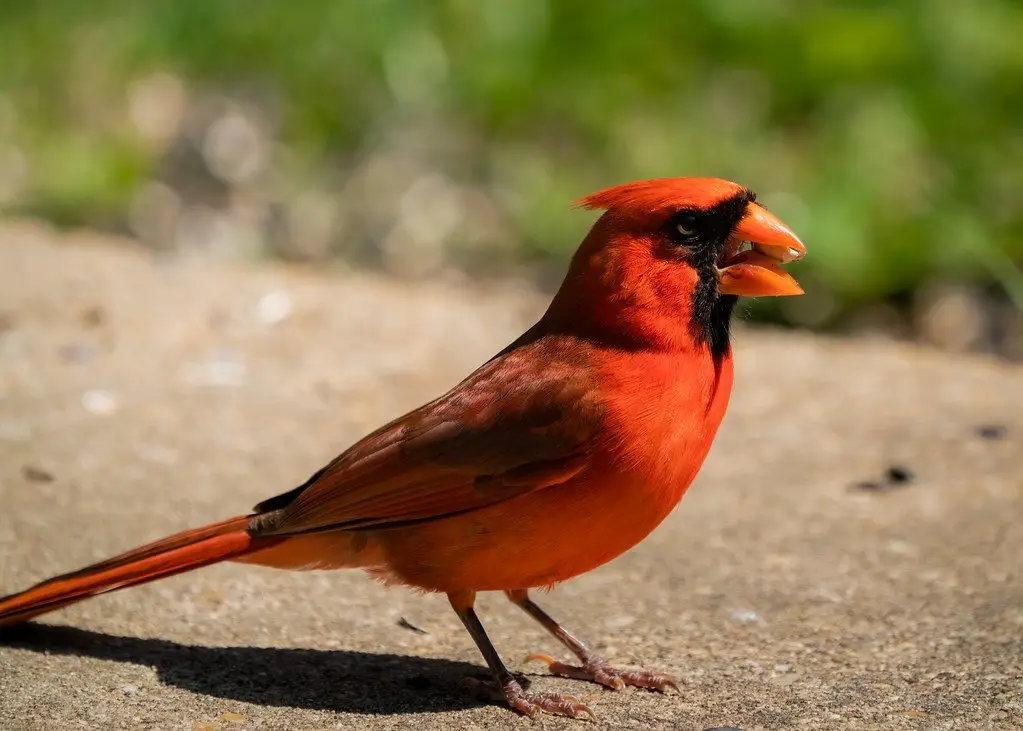
Cardinals have a short, deep, conical bill built to crush seeds, so a thick white safflower shell is no obstacle. Squirrels can crack it too — they simply find it bitter and go elsewhere when something better is available. The same goes for grackles, starlings and red-winged blackbirds, the three species most likely to arrive in a flock and strip a feeder in an hour.
The practical effect is not that safflower attracts cardinals harder. It is that a feeder full of safflower still has seed in it when the cardinals arrive.
Expect a transition period. Birds learn feeders by habit, and a feeder that has held sunflower for a year will look wrong to them for a week or two after you switch. Traffic drops, then recovers. The commonest mistake is reading that dip as “cardinals don’t like safflower” and switching back on day four.
Where feeder choice beats seed choice
A cardinal weighs about 45 grams and has no interest in clinging. It cannot use the two-inch perches on a standard tube feeder, and it will not hover like a chickadee or hang like a finch. So the seed in your tube feeder is almost irrelevant to cardinals — they need somewhere to sit.
| Feeder | Works for cardinals | Notes |
|---|---|---|
| Hopper | Yes | The default good choice. Wide ledge, holds a lot, sheds rain |
| Platform / tray | Yes, best | Most natural posture. Needs daily sweeping in wet weather |
| Tube with tray attachment | Yes | The cheapest fix if you already own a tube |
| Bare tube feeder | Rarely | Perches too short; occasional acrobatics, no steady feeding |
| Ground tray | Yes | Matches natural foraging. Lift it off the soil |
| Nyjer sock | No | Finch feeder. Cardinals cannot use it at all |
Tip
If you own one tube feeder and want cardinals, buy a $12 tray attachment before you buy a different seed. It is the single highest-return change most feeders can make.
Placement: edges, not middles
Cardinals are edge-habitat birds. In the wild they feed in the scrubby margin between woodland and open ground, and they stay close enough to cover to reach it in one short flight. A feeder in the middle of a lawn reads to a cardinal as exposed, and it will be used nervously or not at all.
Ten feet from a hedge, shrub or brush pile is roughly the sweet spot — far enough that a cat cannot ambush from inside the cover, close enough that a hawk’s shadow means one wingbeat to safety.
What the cheap mixes are actually made of
Pick up a supermarket wild-bird mix and read the order of ingredients. Red millet, milo (also labelled sorghum), cracked wheat and oat groats are in there because they are cheap agricultural by-products, not because songbirds want them. House sparrows and some doves eat millet. Cardinals mostly do not.
What happens is predictable: the cardinal tips through the mix looking for sunflower, throwing everything else out. You lose the seed, the ground below the feeder turns into a wet mat of spoiling grain, and that mat is what brings rats. A bag that costs half as much per pound and is two-thirds rejected is not cheaper.
Storage, which decides whether the bag was a bargain
Seed goes stale and seed goes mouldy, and both are commoner than people expect. Oil-rich seed like black oil sunflower oxidises over a few months in a warm shed; damp seed grows aspergillus mould, which is genuinely dangerous to birds.
- Decant into a sealed bin — metal if you have rodents, thick plastic otherwise
- Keep it cool, dark and dry; a garage floor beats a sunlit porch
- Buy sizes you will use in about two months in summer, three or four in winter
- Bin anything that smells musty or has visibly clumped, rather than putting it out
That last point is why the 25 lb sack is only a bargain once you know the birds are eating it.
A seed plan that works most places
Run two feeders if you can. A hopper or tray of safflower is the cardinal station, and it stays full. A second feeder of black oil sunflower is the everything-else station, and it carries the chickadees, finches, titmice and woodpeckers — plus the squirrels, which is fine, because they are then busy somewhere other than the cardinal feeder.
That arrangement costs a little more in seed and solves the two problems people usually try to solve with one feeder and a lot of frustration.
How we picked
Picks assembled from seed composition, published feeder-preference research and owner reports — nothing here was tested in our own yard. · Picks last checked October 2026.
- Seed cardinals actually prefer
- Feeder-preference studies put black oil sunflower and safflower at the top for cardinals. A blend heavy in red millet, wheat or milo is cheap because cardinals will not eat most of it.
- Shell strength suits a thick bill
- A cardinal's conical bill cracks hard shells easily, so it has no need of hulled seed — and whole-shell seed keeps far better in an open tray.
- Who else it feeds
- Safflower is the lever here. Squirrels, grackles and starlings largely refuse it; cardinals, chickadees and finches do not.
- Works in an open feeder
- Cardinals are too big for most tube perches and feed best from a hopper, platform or tray. Seed has to pour cleanly and not cake in the open.
- Cost per pound the birds eat
- The useful price is per pound consumed, not per pound bought. A $12 bag that is a third millet is dearer than a $20 bag of pure safflower.
Our picks
| # | Pick | Best for | Where to buy |
|---|---|---|---|
| 1 | Safflower seed (straight, no blend) | Best overall for cardinals | Check price for Safflower seed (straight, no blend) → |
| 2 | Black oil sunflower seed | Best for fast results | Check price for Black oil sunflower seed → |
| 3 | Cole's Blazing Hot Blend | Best where squirrels dominate | Check price for Cole's Blazing Hot Blend → |
| 4 | Kaytee Cardinal Blend | Best ready-made blend | Check price for Kaytee Cardinal Blend → |
| 5 | Bulk safflower, 25 lb or larger | Best value if you feed year-round | Check price for Bulk safflower, 25 lb or larger → |
Best overall for cardinals
Safflower seed (straight, no blend)
If you buy one seed for cardinals, buy this. It is the only widely available seed that selects for the birds you want and against the animals you do not.
- Seed
- 100% safflower
- Shell
- Thick white shell
- Feeder
- Hopper, tray or platform
- Also eats it
- Chickadees, finches, doves, titmice
What we liked
- Cardinals take it readily and feed on it through winter
- Squirrels, grackles and starlings largely refuse it
- Thick shell means it keeps well in an open tray
- No filler to sweep up under the feeder
Worth knowing
- Costs more per pound than sunflower
- Birds can take one to three weeks to switch to it
- Not every squirrel population ignores it
Best for fast results
Black oil sunflower seed
The seed to start a new feeder on, because something will come within days. Switch to safflower later if the squirrels take over.
- Seed
- 100% black oil sunflower
- Shell
- Thin, high oil content
- Feeder
- Any
- Also eats it
- Essentially every seed-eating bird
What we liked
- Highest-traffic seed at almost any feeder
- Thin shell suits small birds as well as cardinals
- Cheapest good seed per pound
- Very high fat content, which matters in cold weather
Worth knowing
- Squirrels, grackles and starlings love it too
- Shells build up into a mat that kills grass below the feeder
Best where squirrels dominate
Cole's Blazing Hot Blend
The option when safflower has not shifted the squirrels. Treat the dust with respect when you handle it.
- Seed
- Sunflower and blend, chili-pepper coated
- Mechanism
- Capsaicin deters mammals, not birds
- Feeder
- Hopper or tray, ideally not handled bare-handed
- Also eats it
- Cardinals, jays, finches, woodpeckers
What we liked
- Birds cannot taste capsaicin; squirrels and chipmunks can
- Keeps high-traffic sunflower on the menu without feeding squirrels
- Works where safflower alone has not
Worth knowing
- Wear gloves and keep it out of your eyes when filling
- Dearer than plain sunflower
- Powder blows about on a windy day
Best ready-made blend
Kaytee Cardinal Blend
A sensible starting bag if you would rather not think about seed composition. Once you know what your birds take, straight seed is cheaper.
- Seed
- Safflower, sunflower and peanut-based blend
- Shell
- Mixed
- Feeder
- Hopper or tray
- Also eats it
- Jays, woodpeckers, titmice
What we liked
- Cardinal-appropriate seeds already mixed, no filler millet
- Easier first buy than choosing straight seeds
- Widely stocked, so refills are easy to find
Worth knowing
- You pay a premium over buying the same seeds separately
- Peanut content draws squirrels and jays
Best value if you feed year-round
Bulk safflower, 25 lb or larger
Buy a small bag first to confirm your cardinals take safflower, then switch to sacks. Doing it in that order avoids a 25 lb mistake.
- Seed
- 100% safflower
- Size
- 25–50 lb sacks
- Storage
- Sealed metal or thick plastic bin, cool and dry
- Also eats it
- Same as straight safflower
What we liked
- Price per pound drops sharply at this size
- One purchase covers most of a winter
- Same selectivity as a small bag of safflower
Worth knowing
- Needs a rodent-proof bin, not the paper sack
- Not worth it until you know the birds are eating safflower
Which should you buy?
Our verdict
- Best overall:
- Safflower seed (straight, no blend)
- Best value:
- Black oil sunflower seed
Safflower is the seed to buy if you want cardinals and not squirrels, and that is the problem most people actually have. Black oil sunflower brings cardinals in faster and costs less, so start there on a brand-new feeder and switch once the competition arrives.
| If you… | Buy | Because |
|---|---|---|
| Squirrels or grackles own your feeder | Straight safflower | It is the one common seed cardinals eat and squirrels, grackles and starlings mostly will not. Expect a week or two of slow traffic while the birds learn it. |
| You want cardinals fast, cost no object | Black oil sunflower | The highest-traffic seed at almost any feeder, cardinals included. It also feeds everything else in the yard, squirrels included. |
| Tight budget, big flock | Bulk safflower or sunflower, 25 lb or more | Price per pound falls sharply above about 20 lb, and both seeds keep for months in a sealed bin kept cool and dry. |
| You only have a tube feeder | Sunflower hearts, and add a tray | Cardinals need a perch they can sit across. A tray attachment under the tube does more for cardinal traffic than any change of seed. |
When not to buy at all
Skip the cheap supermarket 'wild bird mix' entirely. Red millet, milo and cracked wheat are filler cardinals kick to the ground, where it rots and draws rodents. Half a bag of it costs more than a full bag of safflower in practice.
Common questions
What is the single best seed for cardinals?
Do cardinals prefer safflower or sunflower?
Why won't cardinals come to my feeder?
What time of day do cardinals feed?
Should I feed cardinals cracked corn or millet?
Do cardinals eat from the ground?
Backyard Weekly
Know what to plant, week by week
Join the weekly email for seasonal jobs, fixes for what is going wrong, and gear worth buying.
Not ready to subscribe? The planting calendar is free and needs no email.
By subscribing you agree to our privacy policy. Grow In Backyard will never sell your address.
Keep reading
Best Bird Baths — 2 Inches Deep Is the Whole Secret
The best bird baths are 2 inches deep with a rough bottom. 6 picks compared on grip, depth and winter use. See which one birds will actually use.
Mourning Dove Bird Feeder — 5 Trays and Platforms
A mourning dove bird feeder needs a flat surface, not a perch. 5 trays and platforms compared, plus the seed. See which fits your yard.
Blue Jay Proof Bird Feeder — 5 Designs, 1 That Works
A blue jay proof bird feeder has to beat agility, not weight. 5 designs compared, including a decoy feeder. See which fits your yard.
Wireless Bird Feeder Camera — 5 Checks Before Buying
A wireless bird feeder camera lives or dies on power and Wi-Fi reach. 5 picks compared on both, plus hummingbird use. See which fits your yard.