
Blue Jay Proof Bird Feeder — 5 Designs, 1 That Works
A blue jay proof bird feeder has to beat agility, not weight. 5 designs compared, including a decoy feeder. See which fits your yard.
 By
We may earn a commission when you buy through links on this page, at no extra cost to you.
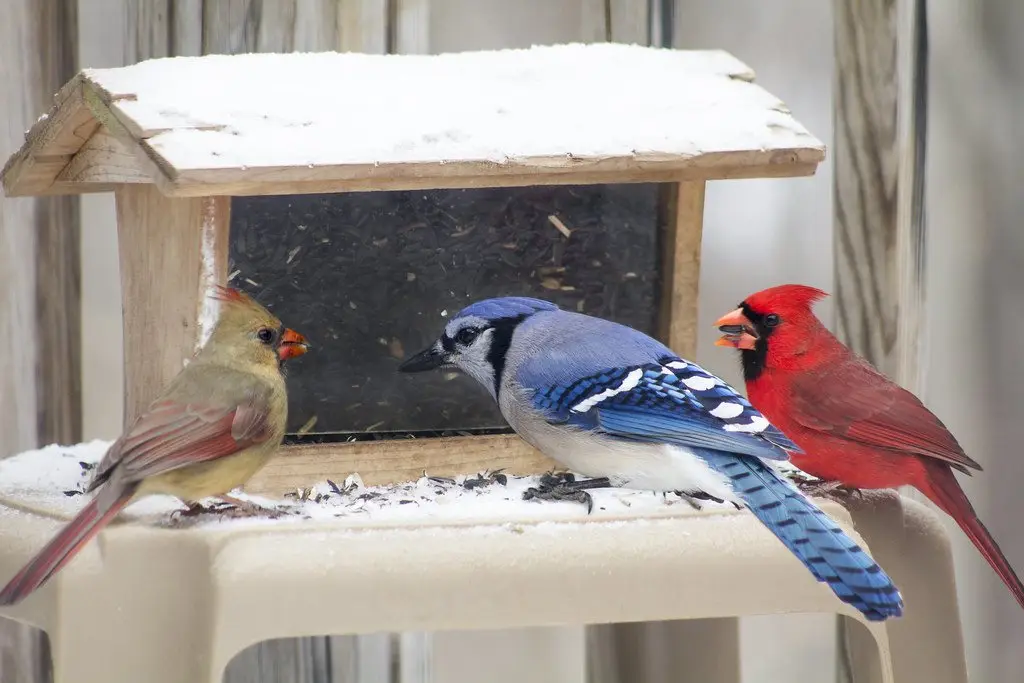
On this page
Jays are the awkward case in feeder design. They are big enough to dominate a feeder and light enough that weight-based mechanisms set for squirrels ignore them completely — a grey squirrel is around 500 grams, a blue jay 70 to 100.
So the two things that work are mesh sized to their body and, better, giving them something they prefer somewhere else.
The weight numbers, which explain most failures
| Animal | Weight | Closes a 500 g trigger? | Passes 1.5 in mesh? |
|---|---|---|---|
| Grey squirrel | ~500 g | Yes | No |
| Mourning dove | ~120 g | No | No |
| Blue jay | 70–100 g | No | No |
| Common grackle | ~115 g | No | No |
| Northern cardinal | ~45 g | No | No |
| House finch | ~21 g | No | Yes |
| Black-capped chickadee | ~11 g | No | Yes |
| Goldfinch | ~13 g | No | Yes |
Two things fall out of that table. A feeder sold as squirrel-proof on a fixed weight trigger does nothing to any bird, jays included — which is why so many people buy one and find the jays unaffected. And a 1.5 inch cage excludes the cardinal along with the jay, because a cardinal is compact but deep-bodied.
Why the decoy is the better answer
Jays are not competing with chickadees for the same preferred food. Given a free choice they take whole peanuts and cracked corn over sunflower, and they take them in a characteristic way — arriving, loading several items, and flying off to cache them.
That behaviour is what makes a decoy work so well. A peanut feeder at the opposite end of the garden gives them a better food source, and the caching instinct means they work it hard and leave quickly rather than sitting on your seed feeder.
Cost is a few dollars. Nothing is excluded. And you keep the jays, which is worth more than most people assume.
Watch out
Keep peanuts dry. Damp peanuts grow moulds that produce aflatoxins, which are genuinely toxic to birds. A mesh peanut feeder under cover, emptied and refilled rather than topped up, is the safe way to offer them.
Perch geometry, the quiet variable
Beyond cages and weights there is a third lever that costs nothing: where the bird has to stand.
A jay needs a solid perch it can plant both feet on, and it feeds facing the port. Chickadees, nuthatches and titmice cling, hang sideways, and will feed upside down without complaint.
So feeders with very short perches, or with ports positioned under an overhanging baffle so the bird has to reach up and in, are awkward for a jay and unremarkable for a clinging bird. It is not exclusion, but it changes the ratio.
What does not work
Scare devices, reflective tape, plastic owls. Jays are corvids. They are among the most intelligent birds in a garden, they are social, and they share information. A novel object produces caution for a day or two and then becomes furniture — frequently a perch.
Ultrasonic devices. No reliable evidence, and birds’ hearing ranges do not line up with the claims in the first place.
Removing the ground spill and nothing else. It helps with doves and grackles, which are ground feeders. Jays come to the feeder itself.
The question worth asking first
Blue jays are native, spectacular, and genuinely useful. They mob hawks and owls aggressively and give alarm calls that the rest of the garden responds to, so a garden with jays has better predator warning than one without. They also cache acorns in quantity and are significant dispersers of oak.
If the real complaint is that they empty one feeder, the decoy solves it and keeps the bird. That is a better outcome than a cage, and it is cheaper.
How we picked
Designs compared on mesh aperture against bird body size, perch geometry and trigger weights, drawn from published feeder specifications and what feeder owners report. · Picks last checked October 2026.
- Mesh aperture, measured
- This is the whole specification for a caged feeder. Around 1.5 in admits chickadees, titmice, nuthatches and finches and excludes a jay; 2 in lets jays through.
- Perch length and position
- Jays need somewhere to stand. Short perches and feeding ports placed under a baffle make the posture awkward without affecting clinging birds.
- Trigger weight, if weight-activated
- A jay is 70–100 g and a grackle similar, so a mechanism set for squirrels at 300 g does nothing. Look for an adjustable spring.
- Whether it stops them taking it away
- Jays carry food off to cache it, several pieces per trip. A feeder that dispenses slowly matters more than one that holds a lot.
- Is there a decoy option
- Jays prefer whole peanuts and corn to sunflower. Offering what they prefer elsewhere works better than any barrier, and keeps a handsome bird in the garden.
Our picks
| # | Pick | Best for | Where to buy |
|---|---|---|---|
| 1 | Caged tube feeder, ~1.5 in mesh | Best overall | Check price for Caged tube feeder, ~1.5 in mesh → |
| 2 | Add-on cage for an existing feeder | Best value | Check price for Add-on cage for an existing feeder → |
| 3 | Weight-activated feeder with adjustable spring | Best for jays and squirrels together | Check price for Weight-activated feeder with adjustable spring → |
| 4 | Peanut feeder, as a decoy | Best approach overall, not just best barrier | Check price for Peanut feeder, as a decoy → |
| 5 | Safflower seed | Best seed-based measure | Check price for Safflower seed → |
Best overall
Caged tube feeder, ~1.5 in mesh
The reliable answer. Accept that it also excludes cardinals — if you want both, run a second hopper for them.
- Mesh
- About 1.5 in — the critical number
- Admits
- Chickadees, titmice, nuthatches, finches, downy woodpeckers
- Excludes
- Jays, grackles, starlings, doves, squirrels
- Seed
- Any — sunflower, safflower, chips
What we liked
- Excludes by body size, so there is nothing to habituate to
- Also keeps out grackles, starlings and squirrels
- Small birds pass through without hesitation
- No mechanism to fail or adjust
Worth knowing
- Excludes cardinals too, which many people do want
- Harder to clean than a bare tube
- Mesh gets a build-up of seed hulls
Best value
Add-on cage for an existing feeder
The first thing to try. If you already have a tube feeder you are most of the way there.
- Mesh
- About 1.5 in
- Fits
- Standard tube feeders
- Install
- Slides over and clips
- Cost
- A fraction of a new caged feeder
What we liked
- Uses the feeder you already own and like
- Same exclusion as a purpose-built caged feeder
- Removable, so you can try it and revert
- Several sizes to match common tube diameters
Worth knowing
- Fit varies; measure your tube first
- Looks like an add-on, because it is
Best for jays and squirrels together
Weight-activated feeder with adjustable spring
Only worth buying with an adjustable spring. The fixed squirrel-rated versions miss jays entirely, which is the usual disappointment.
- Mechanism
- Perch drops and closes the ports under weight
- Adjustable
- Set down to roughly 70–100 g for jays
- Excludes
- Jays, grackles, doves, squirrels
- Admits
- Chickadees, finches, titmice, nuthatches
What we liked
- One feeder handles jays, grackles and squirrels
- Adjustable spring is what makes it work on a light bird
- Cardinals can be let through by raising the setting slightly
- Satisfying to watch work
Worth knowing
- Fixed squirrel-weight models do nothing to jays
- Mechanisms stick when dirty or frozen
- Dearer than a cage
Best approach overall, not just best barrier
Peanut feeder, as a decoy
The move we would make first. Redirect them rather than fight them, and keep the peanuts dry.
- Holds
- Whole peanuts in shell, or peanut halves
- Mesh
- About 1/2 in grid for halves; wider for whole
- Attracts
- Jays, woodpeckers, titmice, nuthatches
- Place
- Far end of the garden from the seed feeders
What we liked
- Jays genuinely prefer peanuts to sunflower
- Takes pressure off the seed feeders without excluding anything
- Keeps a spectacular bird in the garden where you can see it
- Cheap and lasts for years
Worth knowing
- Squirrels love peanuts just as much
- Whole peanuts get carried off and cached quickly
- Peanuts must be dry; damp ones grow aflatoxin-producing mould
Best seed-based measure
Safflower seed
The one measure that reduces jay traffic without excluding cardinals. Expect a week or two while birds learn the change.
- Seed
- 100% safflower
- Liked by
- Cardinals, chickadees, finches, titmice
- Disliked by
- Jays, grackles, starlings, squirrels
- Feeder
- Hopper or tray
What we liked
- Jays take it far less readily than sunflower
- Cardinals eat it happily, unlike with a cage
- Also deters grackles, starlings and squirrels
- No mechanism, no cage, no adjustment
Worth knowing
- Dearer per pound than sunflower
- Birds take one to three weeks to switch
- Reduces rather than eliminates jay visits
Which should you buy?
Our verdict
- Best overall:
- Caged tube feeder, ~1.5 in mesh
- Best value:
- Add-on cage for a feeder you already own
A cage with roughly one-and-a-half-inch mesh is the only design that excludes jays by physics — their body simply will not pass, while chickadees, titmice, nuthatches and finches go through without hesitating. If you already own a tube feeder, buy the cage separately for a fraction of a new feeder. But the better answer for most gardens is the decoy: jays genuinely prefer whole peanuts to sunflower, so a peanut feeder at the far end of the garden takes the pressure off the seed feeders and keeps a striking bird where you can watch it.
| If you… | Buy | Because |
|---|---|---|
| You want small birds only, reliably | A caged tube feeder with roughly 1.5 in mesh | It is the one design that excludes jays by body size rather than by making things difficult. Chickadees, titmice, nuthatches and finches pass through freely. |
| You already own a tube feeder | An add-on cage, plus shorter perches | Cages are sold separately to fit standard tubes. Cheaper than a new feeder and the same exclusion. |
| Jays and squirrels both | A weight-activated feeder with an adjustable spring | Set the trigger down to around 70–100 g and it closes under a jay as well as a squirrel. A fixed squirrel-weight setting will not. |
| You do not mind jays, just want them off the sunflower | A separate peanut feeder at the far end of the garden | Jays prefer whole peanuts and cracked corn. Give them their own station and they largely leave the seed feeders alone. |
| It is really about the mess and the ground | Safflower in the main feeder, swept beneath | Jays dislike safflower more than cardinals and finches do, and spilled seed on the ground is what draws a flock back. |
When not to buy at all
Do not buy a squirrel-rated weight-activated feeder expecting it to stop jays — a grey squirrel is around 500 g and a blue jay 70 to 100 g, so a fixed trigger set for squirrels is nowhere near sensitive enough. Skip any cage with 2 in mesh, which a jay passes through easily, and check the measurement rather than the marketing. Skip scare devices, reflective tape and plastic owls: jays are intelligent, social birds that habituate within days and will sit on the decoy. And consider whether you need to do anything at all — jays are native birds that mob hawks and give the alarm calls the whole garden relies on.
Common questions
What kind of feeder keeps blue jays out?
Will a squirrel-proof feeder stop blue jays?
What do blue jays prefer over sunflower seed?
Do blue jays scare other birds away from feeders?
Does safflower keep jays away?
Should I keep blue jays away at all?
Backyard Weekly
Know what to plant, week by week
Join the weekly email for seasonal jobs, fixes for what is going wrong, and gear worth buying.
Not ready to subscribe? The planting calendar is free and needs no email.
By subscribing you agree to our privacy policy. Grow In Backyard will never sell your address.
Keep reading
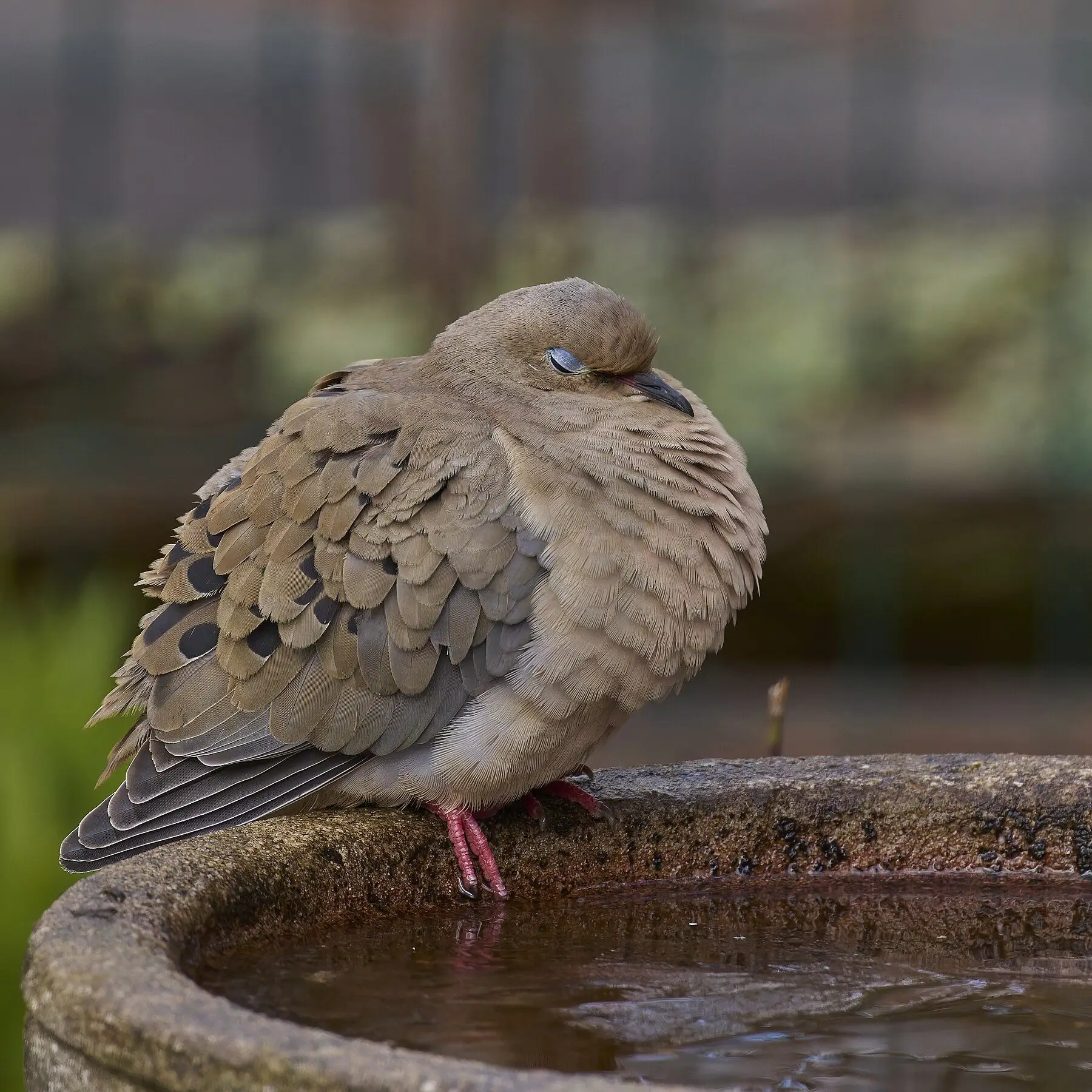
How to Keep Doves Off Bird Feeders — 3 Changes
How to keep doves off bird feeders is a perch and seed question. 3 changes compared, plus the ground problem underneath. See which suits your setup.
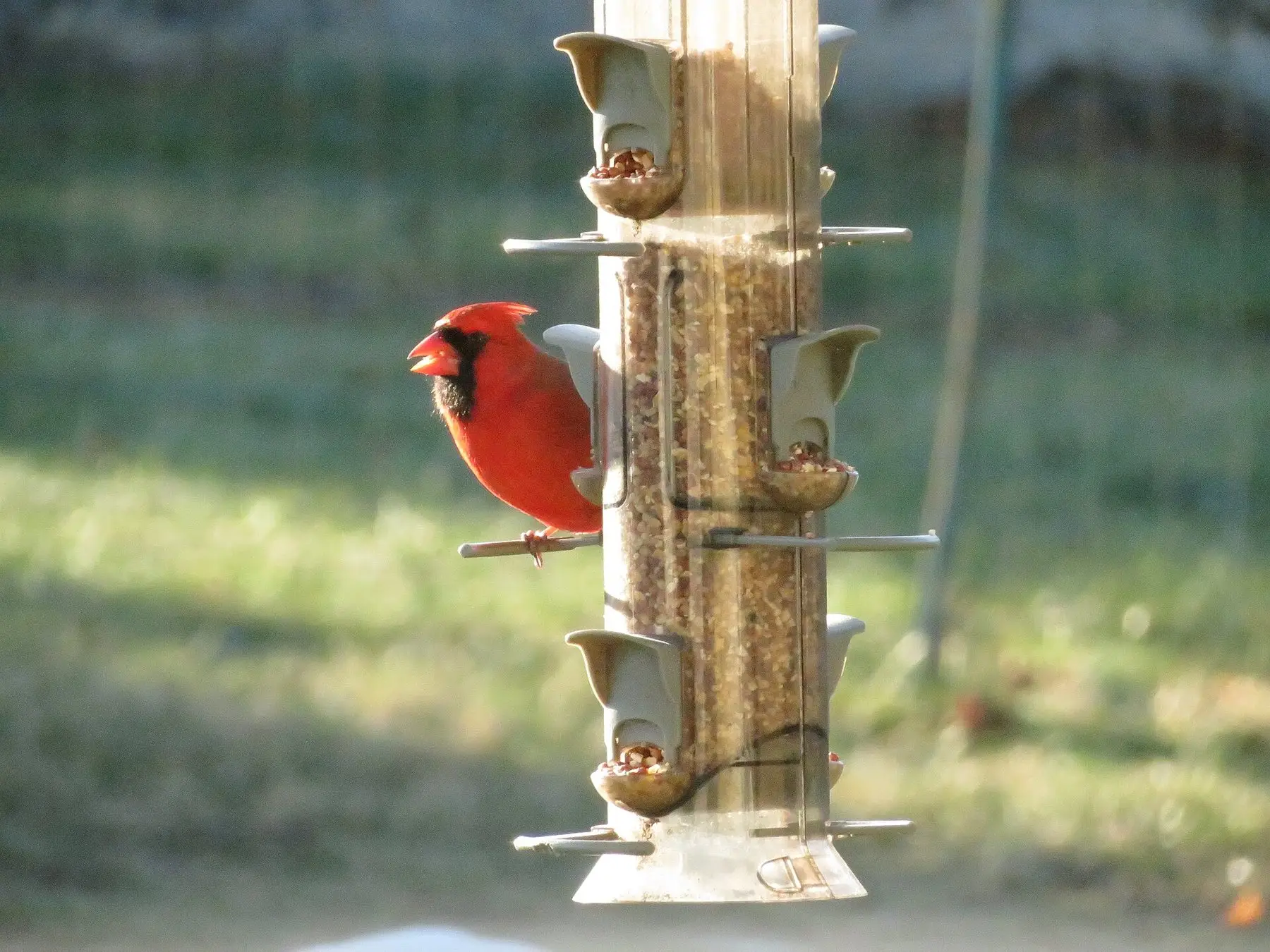
Squirrel-Proof Bird Feeders — 5 Measures That Stop Them
Squirrel-proof bird feeders work on distance and mechanism, not claims. 5 measures compared on cost and success. See which suits your yard.
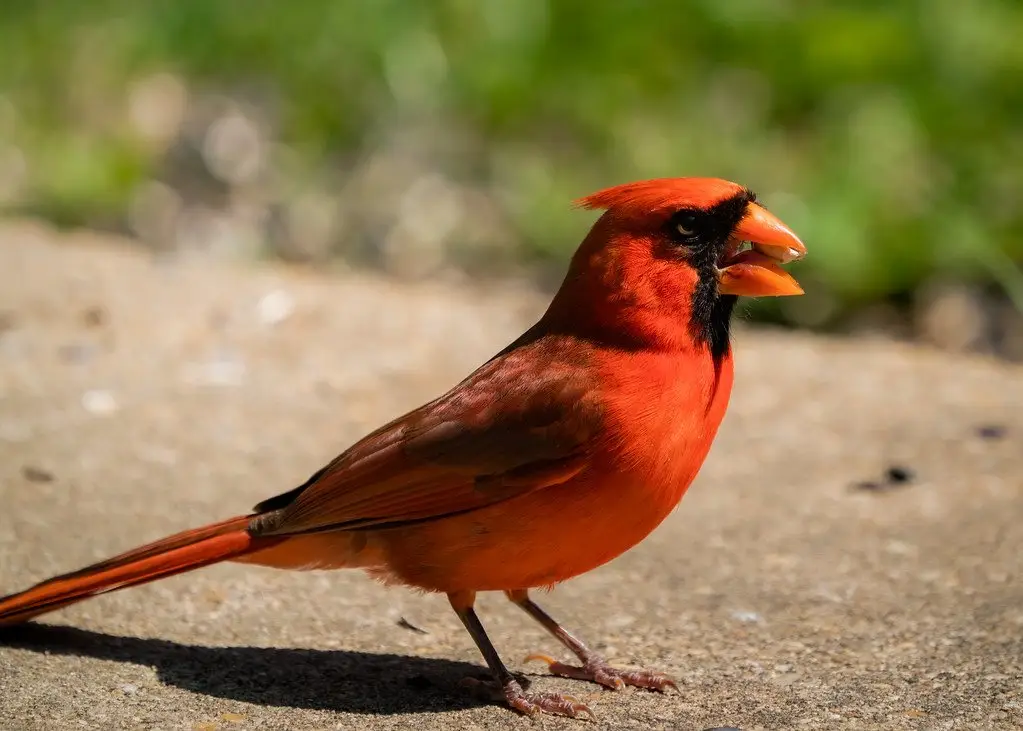
Best Bird Seed for Cardinals — 5 Picks, Safflower First
The best bird seed for cardinals is safflower, which squirrels leave alone. 5 seeds compared on pull, cost and mess. See which suits your feeder.
Best Bird Seed for Tube Feeders — 5 That Never Clog
The best bird seed for tube feeders is sized to the port. 5 seeds compared on pouring, clogging and mess. See which matches your feeder's ports.