
How to Keep Doves Off Bird Feeders — 3 Changes
How to keep doves off bird feeders is a perch and seed question. 3 changes compared, plus the ground problem underneath. See which suits your setup.
 By
We may earn a commission when you buy through links on this page, at no extra cost to you.

On this page
Nothing startles a hungry pigeon for long. Big birds are excluded by geometry — cage mesh, perch length and what is lying on the ground — and by nothing else.
Start with the ground
The feeder is usually not the problem
Doves and pigeons are ground feeders by preference. What brings them is the scatter of spilled seed underneath, not the feeder above it.
Clear that and a large part of the problem leaves on its own — which is why this step comes before buying anything.
- Fit a seed tray or catcher beneath the feeder
- Rake or sweep underneath regularly
- Move the feeder off grass onto a hard surface you can sweep
- Do not scatter seed on the ground at all, if doves are the complaint
Seed
| Seed | Small birds | Large birds |
|---|---|---|
| Cheap mixed seed | Picks out the sunflower | All of them. Millet and corn on the floor |
| Sunflower hearts | Nearly everything | Some — but no husk waste |
| Black oil sunflower | Nearly everything | Some; husks below |
| Safflower | Cardinals, finches, chickadees | Refused by grackles and starlings |
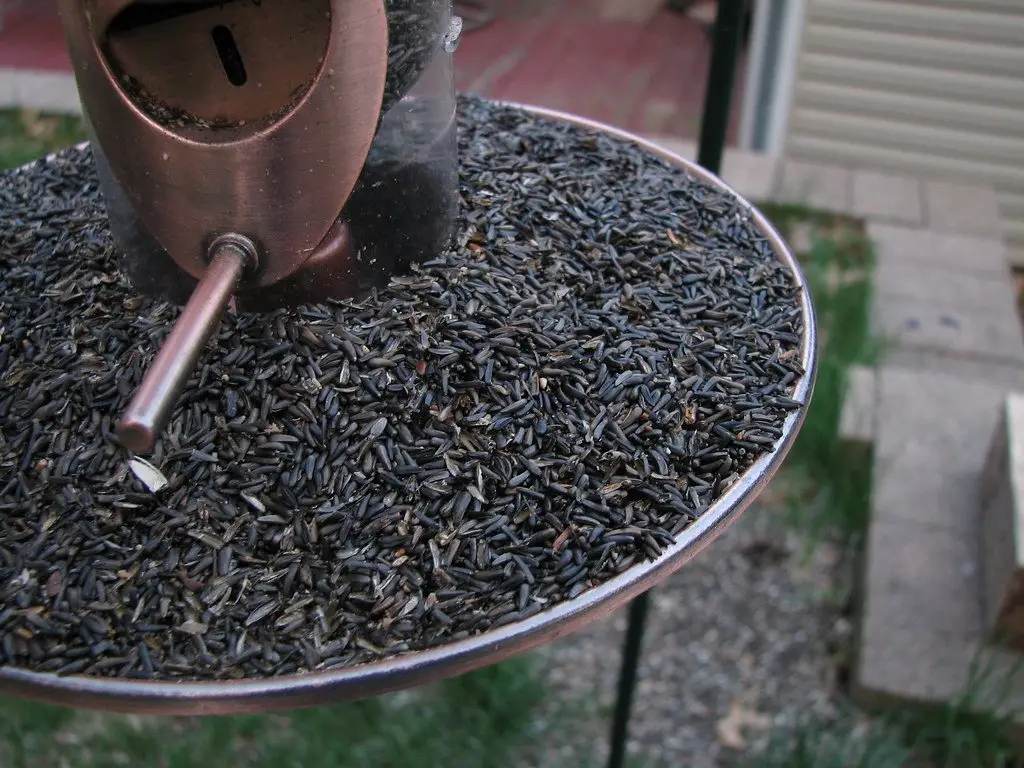
| Nyjer | Goldfinches, siskins | Almost nothing large |
| Peanuts, whole | Tits, nuthatches | Jays love them — useful as a decoy |
| Cracked corn, milo | Little interest | Doves, pigeons, starlings |
| Suet, no-mess | Woodpeckers, wrens | Starlings — use a cage |
Cheap mixed seed is the root of most large-bird complaints. It is mostly millet, cracked corn, wheat and milo — exactly what doves, pigeons, starlings and house sparrows want. Small birds flick it all onto the ground to reach the sunflower, which feeds the large birds twice over.
Which straight seed to switch to depends on what you want at the feeder: see bird seed for tube feeders for what flows reliably in one, or bird seed for finches if goldfinches are the goal.
Feeder design
| Feeder | Excludes |
|---|---|
| Caged tube, ~1½ in mesh | Doves, pigeons, jays, starlings, grackles |
| Short-perch tube | Birds that need to stand |
| Weight-activated | Anything heavier than the trigger |
| Nyjer / thistle sock | Nearly everything large |
| Caged suet feeder | Starlings |
| Upside-down suet feeder | Starlings; goldfinches and woodpeckers manage |
| Open tray or platform | Nothing. Doves love them |
| Open hopper | Little |
The cage is the workhorse. One and a half inch mesh lets chickadees, titmice, nuthatches, finches and small woodpeckers through, and stops everything bigger. It also excludes squirrels.
Check the gap between cage and feeder. Too close and a long-necked bird reaches through; too far and the small birds are inside a room they cannot easily leave.
Blue jays
A slightly different problem, because jays are large but agile and persistent — they work at a feeder rather than giving up.
- Caged feeders exclude them
- Short perches make feeding awkward
- Weight-activated feeders close under them
- Or feed them deliberately. Jays take whole peanuts and corn readily, so a peanut feeder at the far end of the garden often keeps them off the seed feeders entirely
Jays are worth having. They cache acorns and plant oak trees, they mob hawks and warn everything else, and they are among the most striking birds at any feeder. The aim is usually sharing rather than exclusion.
What does not work
- Spinners, shiny tape, reflectors — a few days
- Fake owls and plastic hawks — almost immediately ignored
- Ultrasonic deterrents — do not work on birds
- Spikes — useful on a ledge, useless at a food source
- Moving the feeder — they find it within a day
- Taking the feeder down for a week — works until you put it back
Anything that works by frightening a bird stops working once the bird learns nothing happens. A food source overrides fear quickly.
Pigeons specifically
Feral pigeons are the hardest case, because a flock builds fast and keeps returning.
- Caged feeders only. No open trays, no platforms, anywhere
- Nothing on the ground, ever
- Sweep daily while the flock is still visiting
- Ask the neighbours. One person scattering bread two doors down sustains the whole flock
- Take everything down for two or three weeks if the flock is established, then restart with caged feeders and sunflower hearts only
The flock disperses when the supply genuinely ends — but only if it ends completely, which is usually the part that fails.
Jays are the related but different case, because weight-based mechanisms set for squirrels miss them entirely — see blue jay proof bird feeders. And if you actually want doves, the right feeder for mourning doves is a flat tray, not a tube.
Doves are not the enemy
Mourning doves are native birds, and the complaint is usually that they monopolise a feeder meant for songbirds rather than that they exist.
Scatter a little seed on a tray at the far end of the garden, keep the caged feeders for the small birds, and both groups get fed. Feral pigeons and house sparrows are the case where ending the ground supply outright is the right call.
Our picks
| # | Pick | Best for | Where to buy |
|---|---|---|---|
| 1 | Caged feeder, ~1.5 in mesh | Best overall | Check price for Caged feeder, ~1.5 in mesh → |
| 2 | Sunflower hearts (hulled) | Best seed change | Check price for Sunflower hearts (hulled) → |
| 3 | Seed catcher tray | Best for the ground problem | Check price for Seed catcher tray → |
Best overall
Caged feeder, ~1.5 in mesh
The design that works. Doves are stopped by physical exclusion, not by anything that startles them.
- Mesh
- About 1.5 in
- Excludes
- Doves, pigeons, starlings, grackles, jays, squirrels
- Admits
- Chickadees, titmice, nuthatches, finches
- Note
- Excludes cardinals too
What we liked
- Stops large birds by body size rather than by deterrence
- Handles squirrels in the same purchase
- Nothing to adjust, nothing to habituate to
Worth knowing
- Cardinals cannot get in either
- Seed hulls build up on the mesh
Best seed change
Sunflower hearts (hulled)
The other half of the fix. A cage stops them at the feeder; this stops the buffet underneath it.
- Seed
- Hulled sunflower kernels
- Waste
- Near zero — no husks
- Why
- Ground spill is what keeps doves returning
- Feeder
- Any tube, hopper or tray
What we liked
- No husks and almost no waste, so nothing accumulates below
- Removes the ground supply that draws doves and pigeons
- Eaten completely by the small birds you are feeding
Worth knowing
- Two to three times the price per pound of in-shell
- Spoils faster when wet
Best for the ground problem
Seed catcher tray
Only works if you actually empty it. Left full, it is a platform feeder for exactly the birds you are excluding.
- Fits
- Under a tube or hopper feeder
- Catches
- Seed knocked out by clinging birds
- Why
- Doves and pigeons are ground feeders by preference
- Clean
- Sweep or tip every few days
What we liked
- Catches spill before it reaches the ground
- Cuts the rodent risk as well as the dove traffic
- Cheap and fits most feeders
Worth knowing
- Needs emptying, or it becomes the ground feeder
- Large birds may perch on the tray itself
Common questions
How do I keep doves off my bird feeder?
Why are doves and pigeons at my feeder at all?
What seed keeps large birds away?
Do blue jays need a different approach?
Do spikes, spinners and fake owls work on pigeons?
Is it worth feeding doves separately?
Backyard Weekly
Know what to plant, week by week
Join the weekly email for seasonal jobs, fixes for what is going wrong, and gear worth buying.
Not ready to subscribe? The planting calendar is free and needs no email.
By subscribing you agree to our privacy policy. Grow In Backyard will never sell your address.
Keep reading
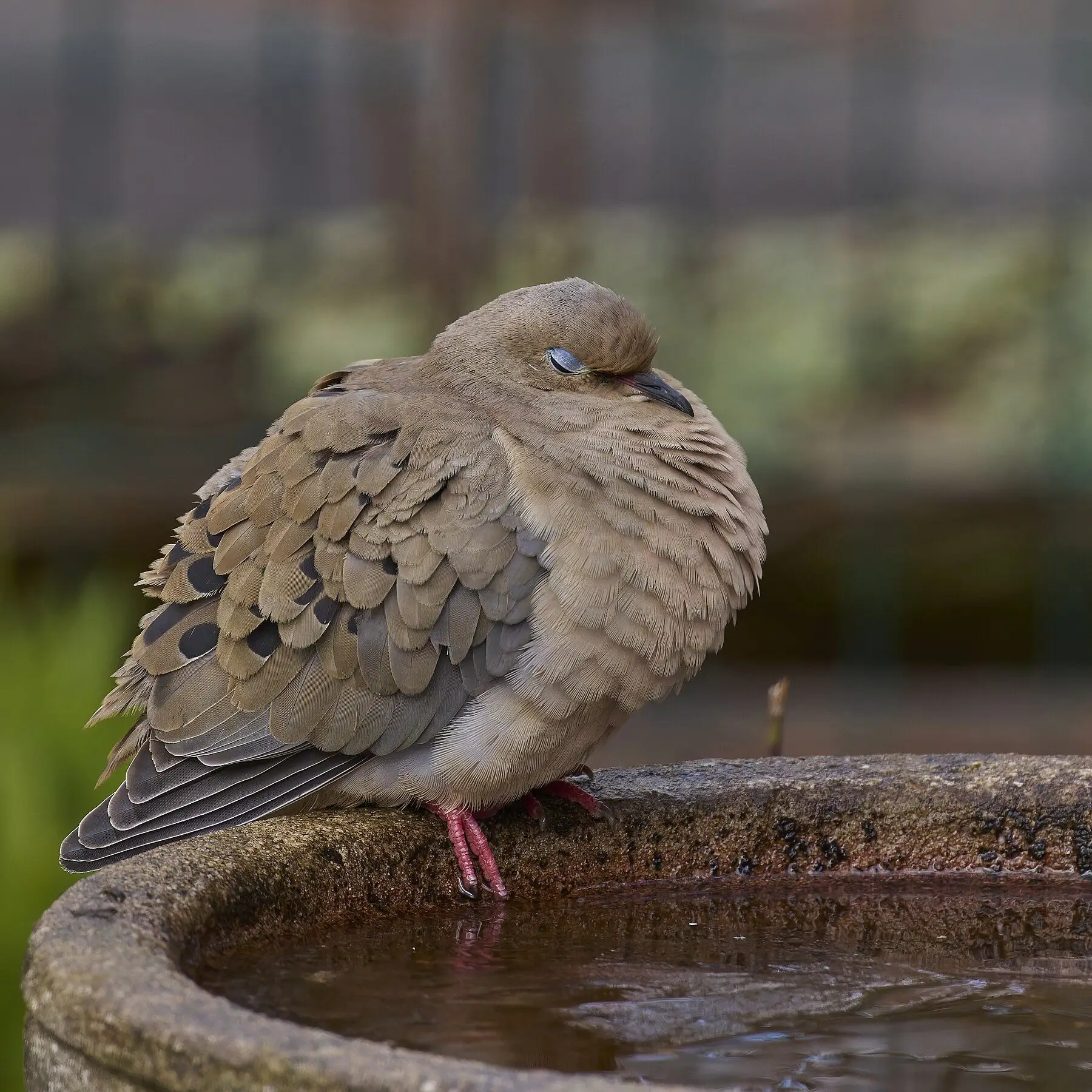
Mourning Dove Bird Feeder — 5 Trays and Platforms
A mourning dove bird feeder needs a flat surface, not a perch. 5 trays and platforms compared, plus the seed. See which fits your yard.
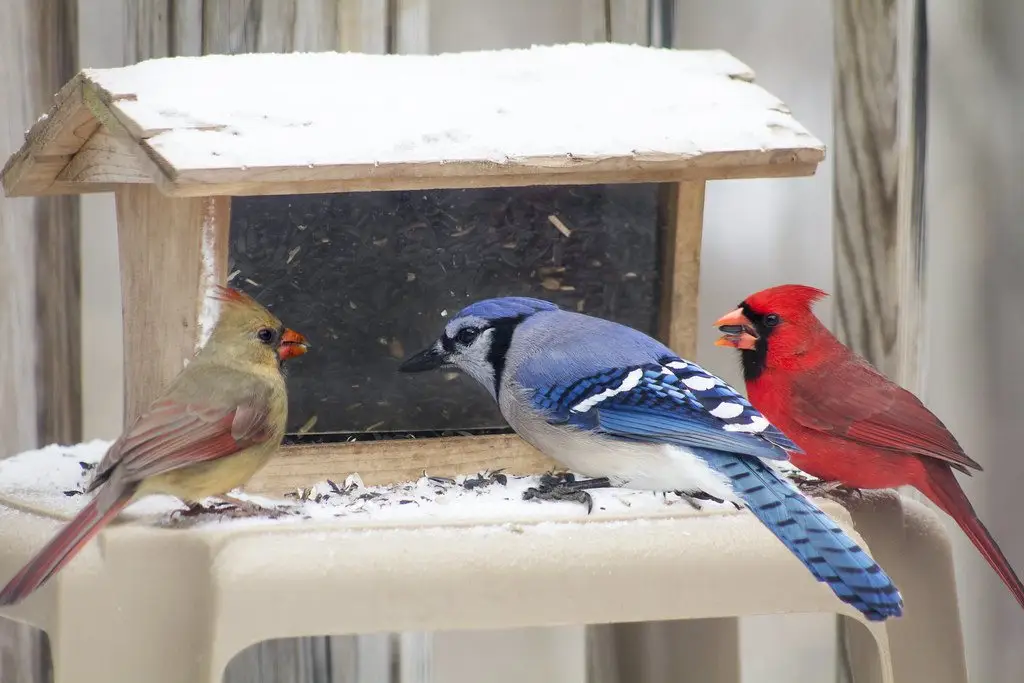
Blue Jay Proof Bird Feeder — 5 Designs, 1 That Works
A blue jay proof bird feeder has to beat agility, not weight. 5 designs compared, including a decoy feeder. See which fits your yard.
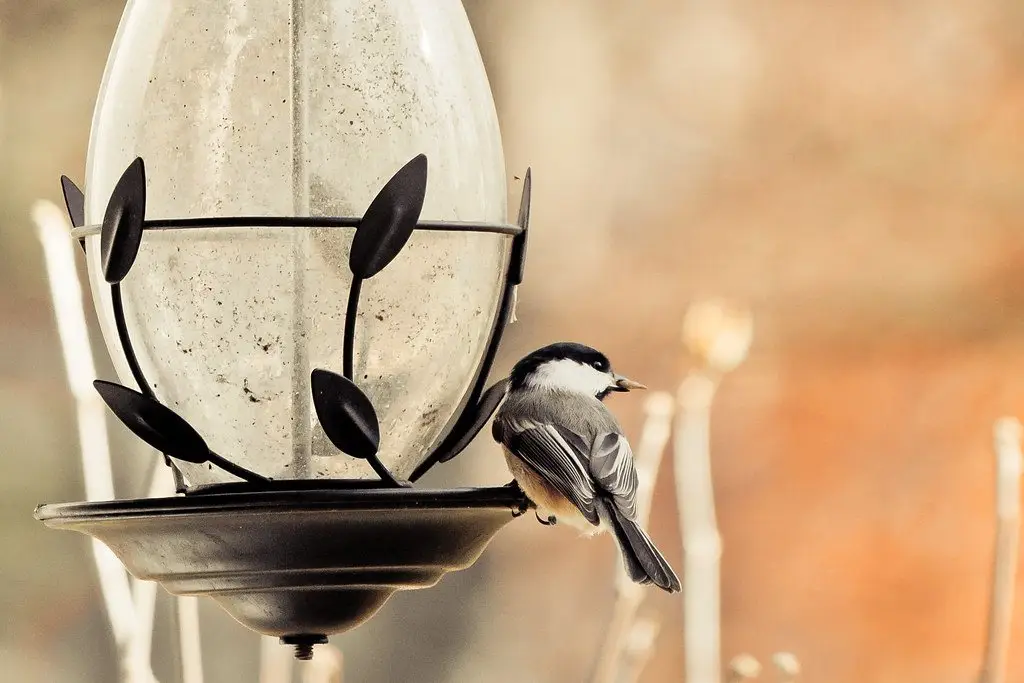
Best Bird Seed for Tube Feeders — 5 That Never Clog
The best bird seed for tube feeders is sized to the port. 5 seeds compared on pouring, clogging and mess. See which matches your feeder's ports.
Best Bird Seed for Finches — 5 Picks, 2 They Actually Eat
The best bird seed for finches is nyjer or sunflower hearts, little else. 5 options compared with the feeders they need. See which fits yours.